Artwork
A Monumental Portrait of a Monkey
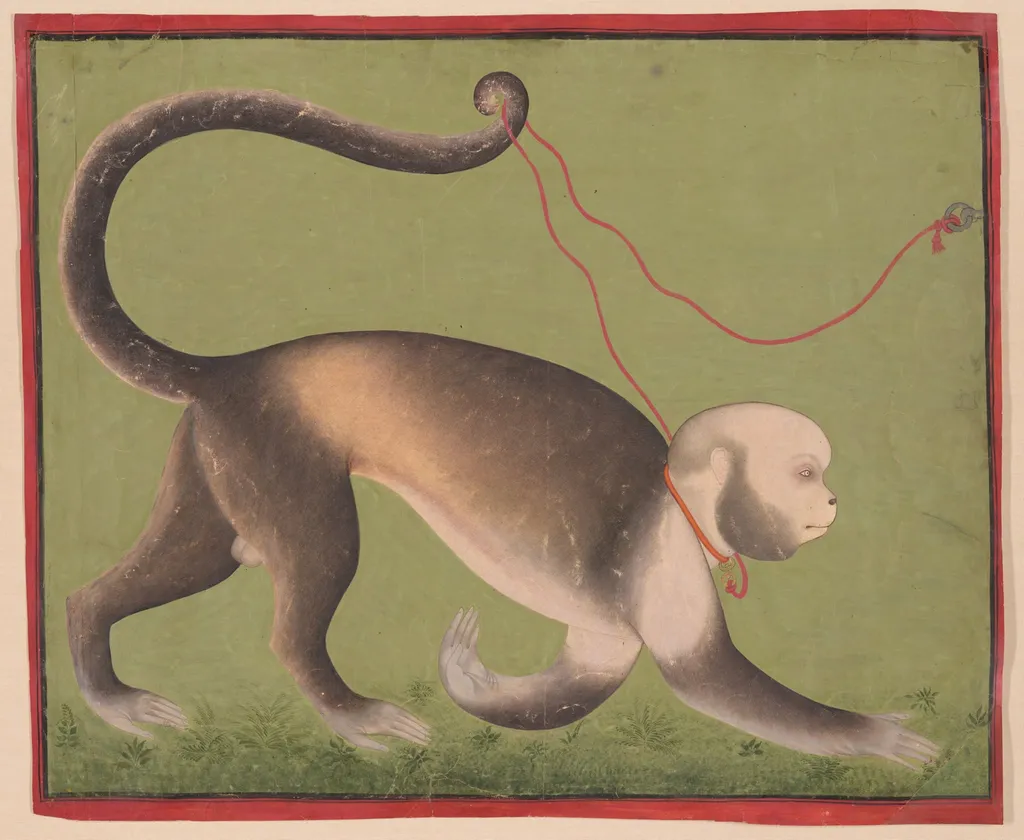
A Monumental Portrait of a Monkey is a watercolor painting by the Baroque artist Unknown. It dates from 1708 and is held in the collection of the Art Institute of Chicago. This large-scale work presents a solitary monkey seated on a rock, rendered in opaque watercolor with gold accents.
About this work
Overview
The composition is dominated by soft brown tones punctuated by fine gold detailing, emphasizing both the creature’s fur and the luxurious quality of the medium.
This large-scale work presents a solitary monkey seated on a rock, rendered in opaque watercolor with gold accents. The animal is depicted with anthropomorphic traits—a beard, pale eyes, and elongated fingers—giving it a human-like presence. The composition is dominated by soft brown tones punctuated by fine gold detailing, emphasizing both the creature’s fur and the luxurious quality of the medium.
Subject & Meaning
Unlike the frequent religious portrayals of the deity Hanuman, this portrait captures an ordinary monkey named Husaini, identified by a Devanagari inscription on the reverse. The animal’s humanized features suggest a playful or affectionate view of the pet, reflecting the owner’s personal attachment rather than any mythological symbolism.
Technique & Style
Executed in opaque watercolor, the artist employs delicate brushwork to model the monkey’s fur, while minute gold flecks highlight texture and depth. The rendering aligns with the emerging Mewar style of the early eighteenth century, characterized by precise stippling and a refined, courtly aesthetic that balances realism with decorative elegance.
History & Provenance
The inscription links the monkey to Nawab Daud Khan, a Mughal faujdar active from Aurangzeb to Farrukhsiyar. Dated to circa 1705–1710, the painting is attributed to the anonymous “Stipple Master,” who worked closely with Maharana Amar Singh II of Mewar. It belongs to a corpus of roughly forty‑six works produced by this artist‑patron partnership.
Context
During the late seventeenth and early eighteenth centuries, Mewar courts fostered a new artistic direction that blended traditional Indian motifs with heightened naturalism. This portrait exemplifies that trend, illustrating how elite patrons commissioned personalized animal studies that diverged from conventional religious iconography.
Artist & collection

 Domestic Scene
 Giacomo and Cardinal Marco, investing Andrea, Abbot of San Zeno, with his Benefice
 The Nymph of Fontainebleau
 Portrait of a Woman
 Madonna and Child with Saints in the Enclosed Garden
 Venus and Minerva
 Family Group of Four on Sofa
 Wall painting from Room H of the Villa of P. Fannius Synistor at Boscoreale
 A royal ram with a gold chain
 A royal ram with a gold chain
 Hanuman, Rama and Lakshmana
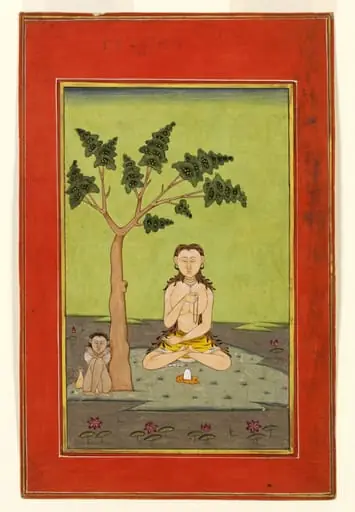 Devagandhari Ragini
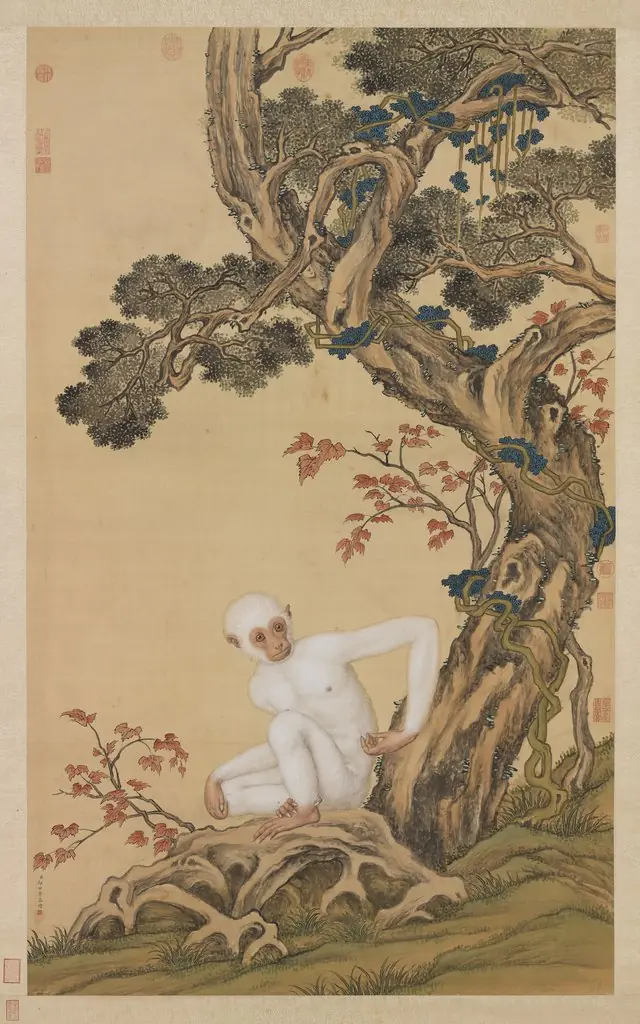 White Gibbon
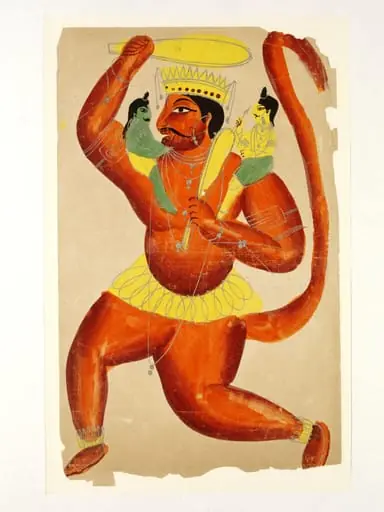 Mahabir. Rama and Lakshmana
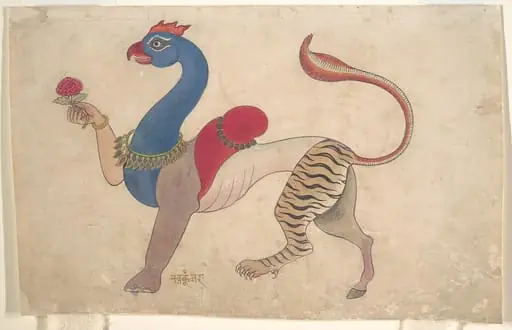 Untitled
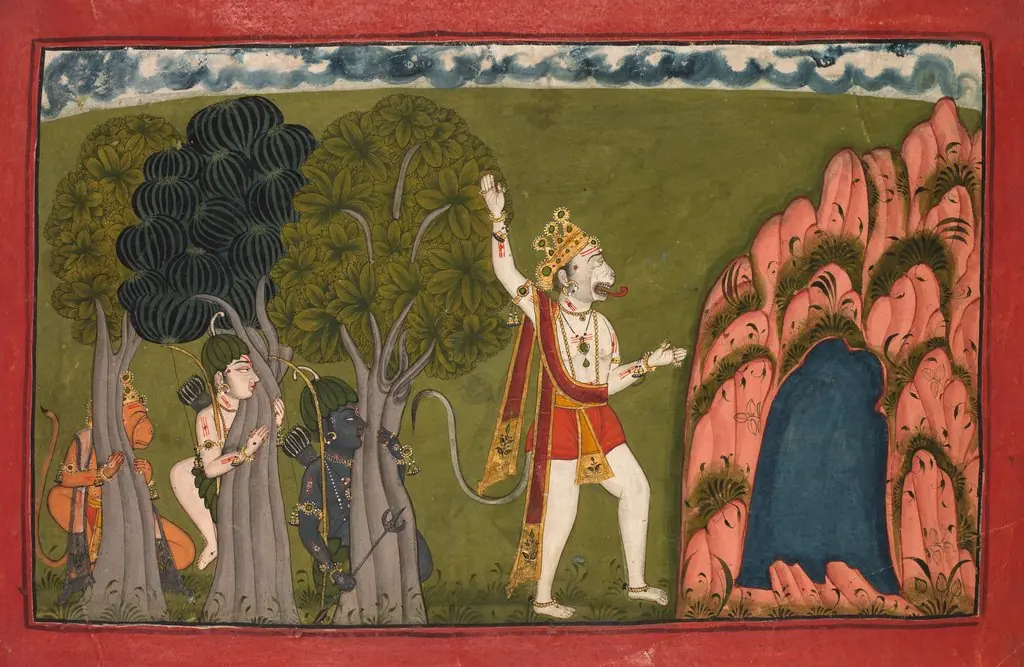 Sugriva challenges his brother Vali, King of the Forest Dwellers, to a duel, folio 10 from the Kishkindha Kanda (Book of Kishkindha) of a Ramayana (Rama’s Journey)