Artwork
Hanuman, Rama and Lakshmana
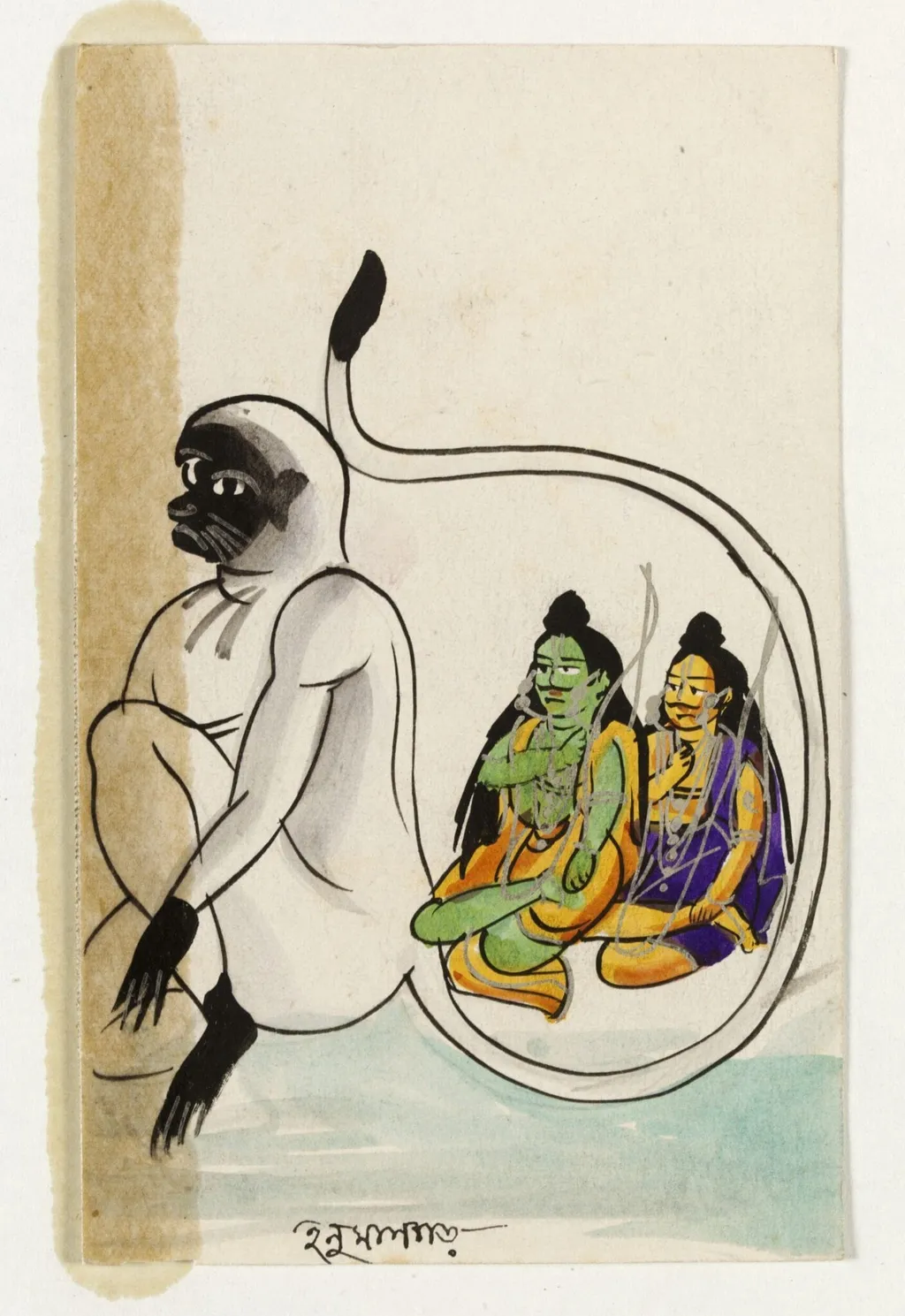
Hanuman, Rama and Lakshmana is a paint painting by the Impressionist artist Unknown. It dates from 1890 and is held in the collection of the Victoria and Albert Museum.
About this work
Overview
This 1890 watercolour and tin alloy on cardboard painting portrays a pivotal moment from Hindu mythology, featuring Hanuman, Rama, and Lakshmana in a distinctive composition.
Subject & Meaning
The painting depicts Hanuman, recognizable by his monkey-like features and long tail, clad in a white hooded outfit, supporting Rama and Lakshmana. The three figures on the right, seated cross-legged within a circular frame, wear colorful, traditional robes and have long black hair, emphasizing their divine or royal status.
Technique & Style
The artwork blends realistic depictions of figures with impressionistic elements, characterized by bold lines, vivid color palette, and the effective use of chiaroscuro to create depth and volume, particularly in the rendering of the subjects' forms.
History & Provenance
Created in 1890, the painting's materials (watercolour, tin alloy on cardboard) reflect common artistic practices of the late 19th century. However, specific details about its creation, artist, or ownership history are not provided.
Context
While the painting's style shows some alignment with broader Realist movements in its attention to detail and use of chiaroscuro, its subject matter roots it deeply in Indian mythology, suggesting an artist interested in blending technical Western influences with Eastern thematic content.
Legacy
The painting's impact or influence on subsequent artistic movements or its reception over time is not detailed, though it remains a notable example of late 19th-century artistic interpretation of Hindu mythological themes.
Artist & collection

 Domestic Scene
 Giacomo and Cardinal Marco, investing Andrea, Abbot of San Zeno, with his Benefice
 The Nymph of Fontainebleau
 Portrait of a Woman
 Madonna and Child with Saints in the Enclosed Garden
 Venus and Minerva
 Family Group of Four on Sofa
 Wall painting from Room H of the Villa of P. Fannius Synistor at Boscoreale
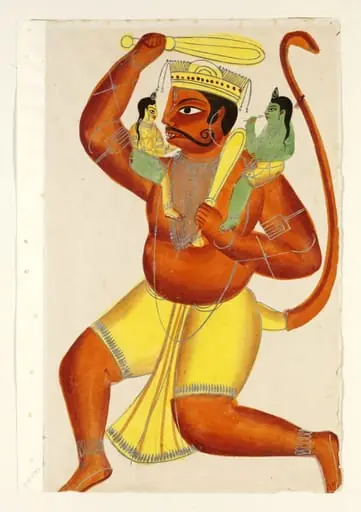 Hanuman, Rama and Lakshmana
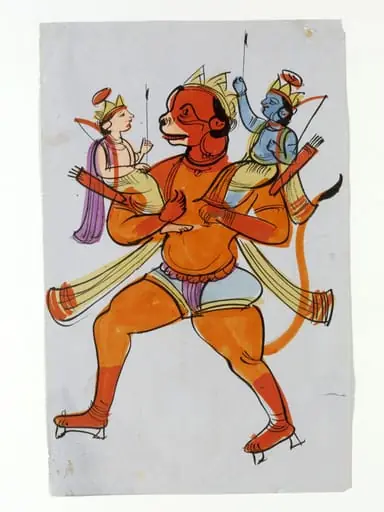 Hanuman carrying Rama and Lakshmana
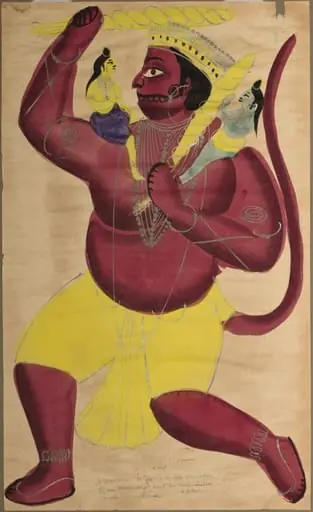 Hanuman
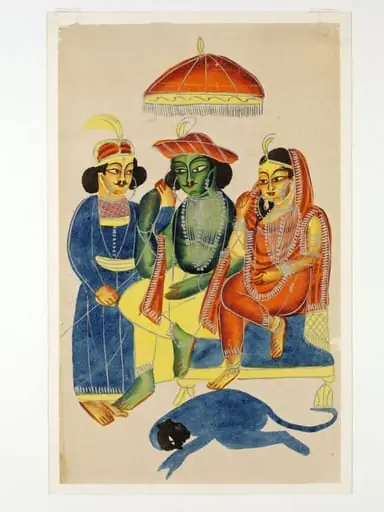 Hanuman, Rama, Sita and Lakshmana
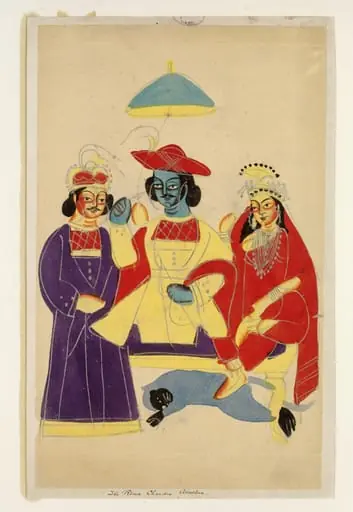 Rama, Sita, Hanuman and Lakshmana
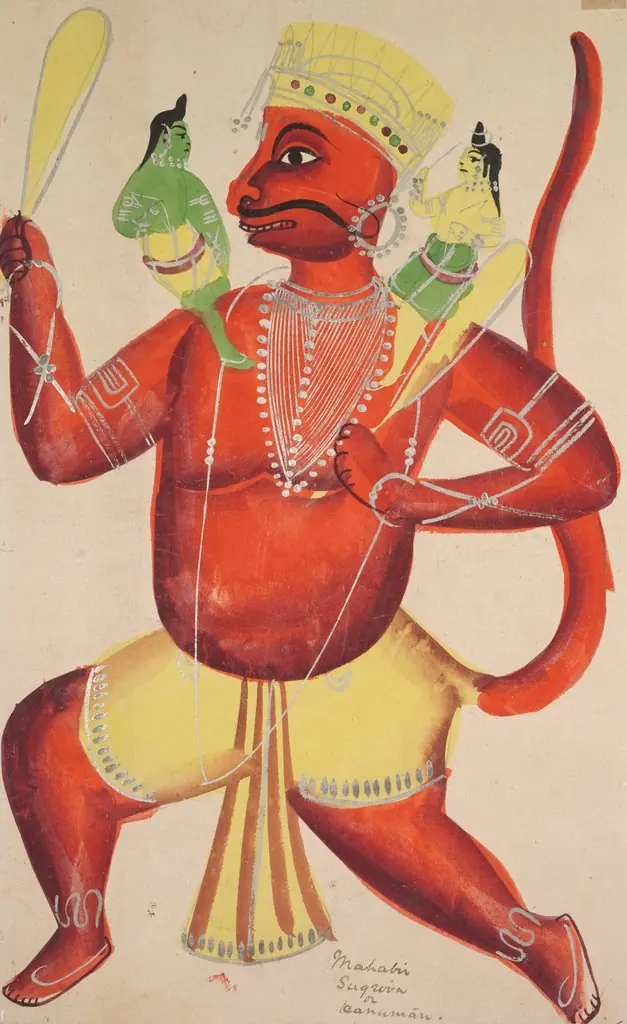 Hanuman with Rama and Lakshmana on his shoulders, from a Kalighat album
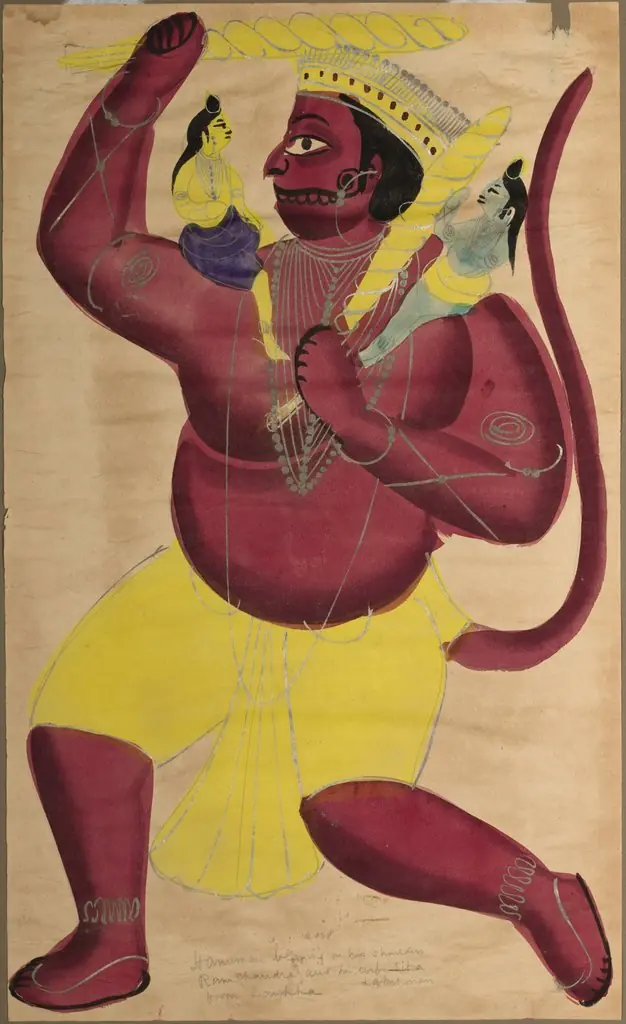 Hanuman
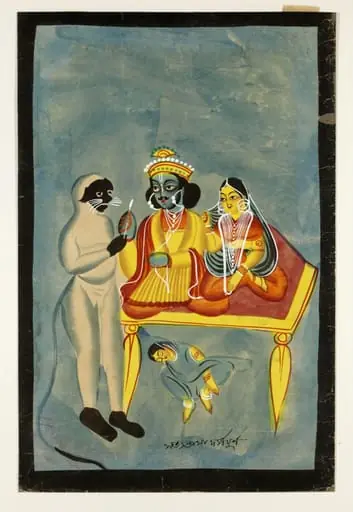 Rama and Sita, Hanuman and Satyabhama
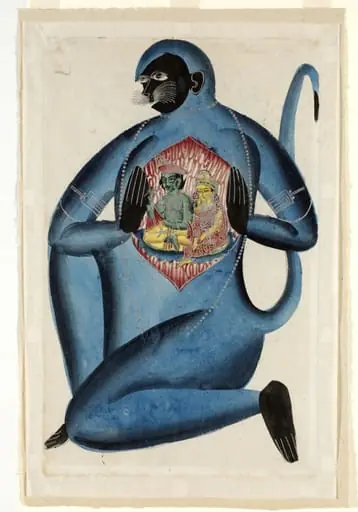 Hanuman revealing Rama and Sita in his heart
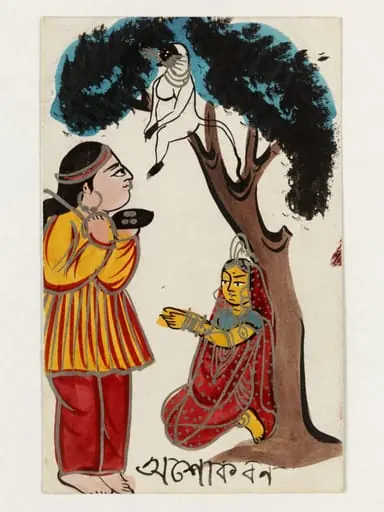 Hanuman and Sita
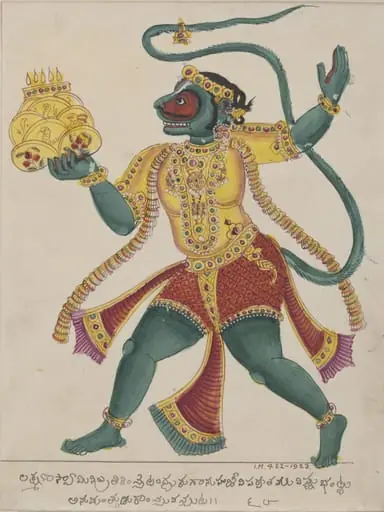 Hanuman