Artwork
A Muslim Man and woman
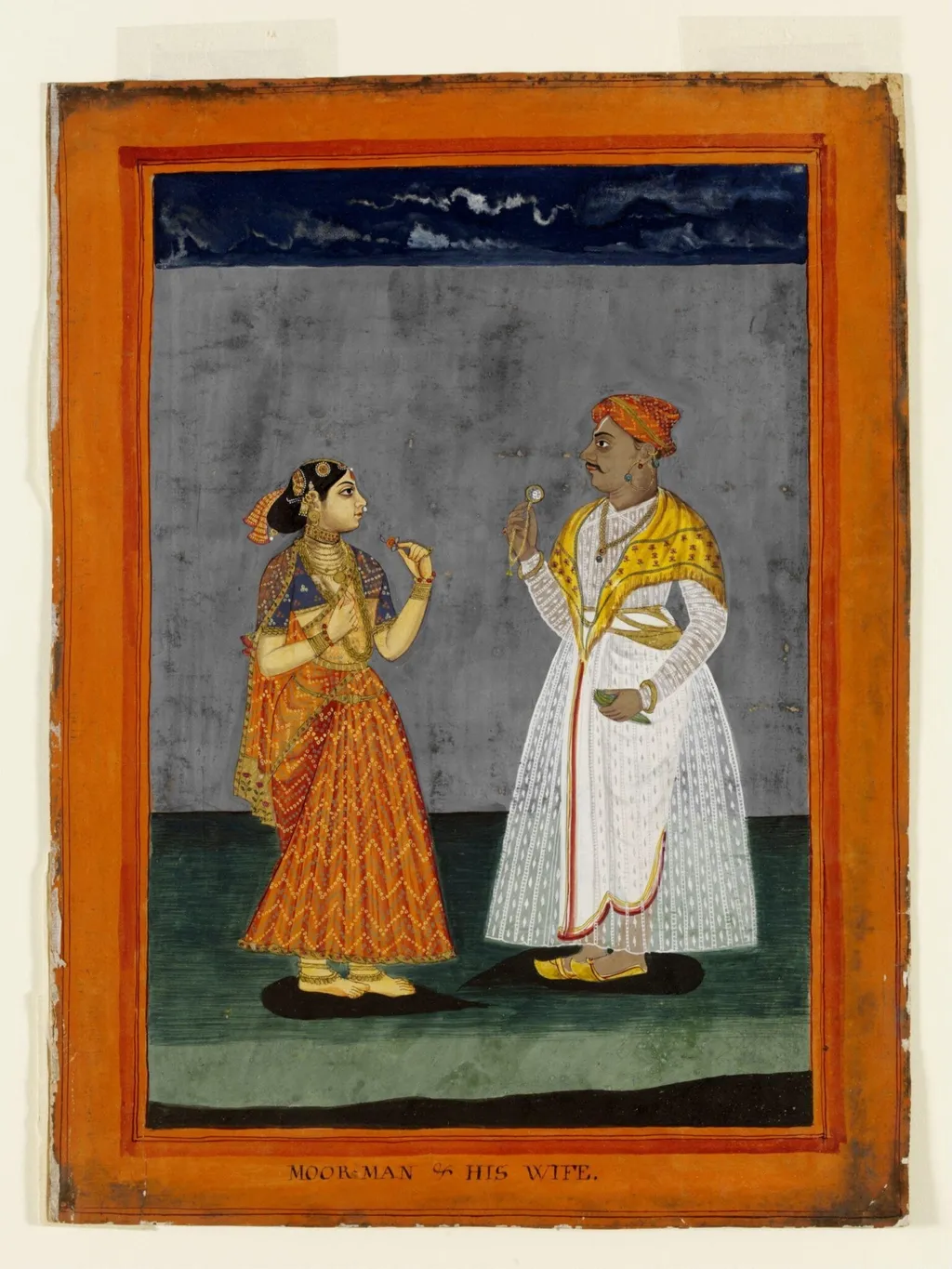
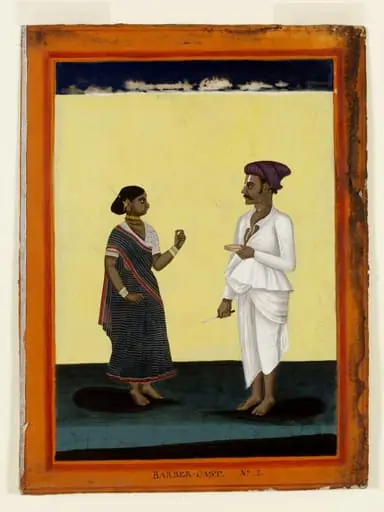
A Muslim Man and woman is a paint painting by the Rococo painting artist Unknown. It dates from 1770 and is held in the collection of the Victoria and Albert Museum. This painting is one of thirty-six in a series depicting South Indian occupational and caste groups, created around the late 18th century.
About this work
Overview
This painting is one of thirty-six in a series depicting South Indian occupational and caste groups, created around the late 18th century.
This painting is one of thirty-six in a series depicting South Indian occupational and caste groups, created around the late 18th century. Each work features a pair, often a man and woman, engaged in or identified by their social role. The image is framed in red, with a decorative cloud band above and pronounced shadows beneath the figures. The label beneath identifies the subjects as 'Muslim Bhoje,' reflecting colonial-era categorizations of local communities.
Subject & Meaning
The seated Muslim couple is portrayed with objects associated with domestic or ritual life: a brass lamp and hookah suggest a setting of leisure or spiritual practice. The man holds a fan, a symbol of status or service, while the woman’s red sari with gold edging indicates attention to adornment. Their identification as 'Muslim Bhoje' reflects British administrative attempts to classify South Indian society, though the term itself is not a recognized caste in traditional Hindu systems, hinting at colonial reinterpretation.
Technique & Style
The painting employs a flat, two-dimensional style with minimal spatial depth. Figures are outlined with clarity, set against a dark green ground and framed by heavy, looped shadows beneath their feet. The top border features stylized, tangled clouds, a recurring motif across the series. Color use varies within the album—this piece uses red, gold, and green with restrained detail, aligning with a group of works characterized by softer modeling and muted backgrounds.
History & Provenance
The album containing this painting was assembled around 1799, bearing the watermark of J. Ruse and the bookplate of Joseph Whatley, with the Latin motto 'Pelle Timorem.' The works were likely commissioned by British officials or collectors seeking to document regional diversity. The consistent format and inscriptions suggest a coordinated project, though stylistic differences indicate multiple artists contributed, possibly under loose supervision.
Context
Created during British colonial expansion in South India, the series reflects an emerging interest in ethnographic documentation. While intended as a record of local life, the paintings also reveal colonial frameworks of classification, often imposing rigid labels on fluid social identities. The inclusion of Muslim figures among predominantly Hindu caste depictions highlights the complexity of religious and occupational categories under colonial administration.
Legacy
The album remains a significant resource for understanding 18th-century South Indian society as perceived by British observers. Though stylistically uneven, the series offers insight into how colonial powers visualized and categorized indigenous communities. Today, the paintings are held in institutions like the Victoria and Albert Museum, where they serve as historical artifacts rather than ethnographic truth, prompting critical reflection on representation and power.
Artist & collection

 Domestic Scene
 Giacomo and Cardinal Marco, investing Andrea, Abbot of San Zeno, with his Benefice
 The Nymph of Fontainebleau
 Portrait of a Woman
 Madonna and Child with Saints in the Enclosed Garden
 Venus and Minerva
 Family Group of Four on Sofa
 Wall painting from Room H of the Villa of P. Fannius Synistor at Boscoreale
 A Muslim man and his wife
 A clerk and his wife
 A Maratha couple
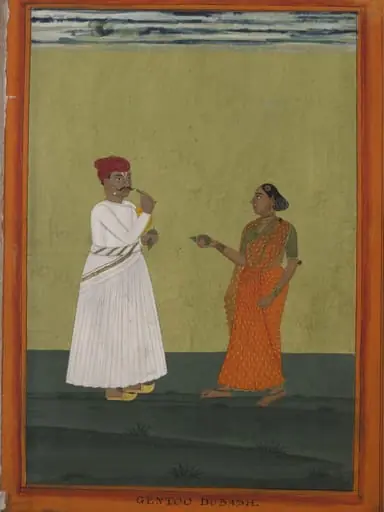 An interpreter and his wife
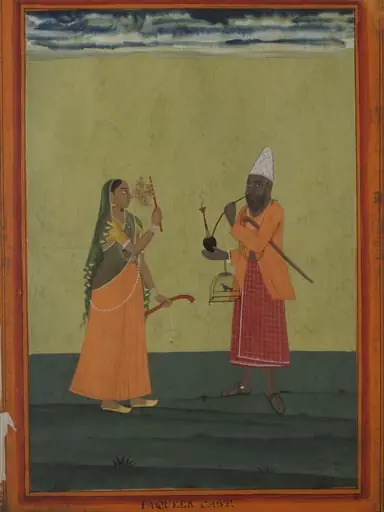 A Muslim ascetic and his wife
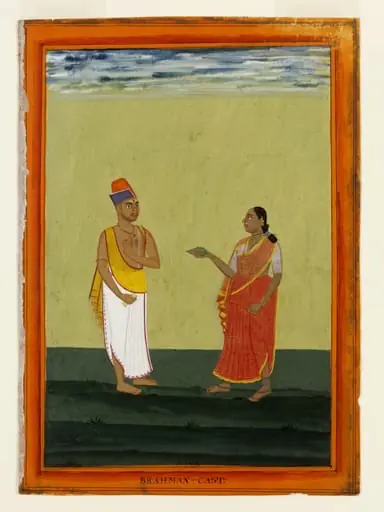 A Brahmin fortune-teller and his wife
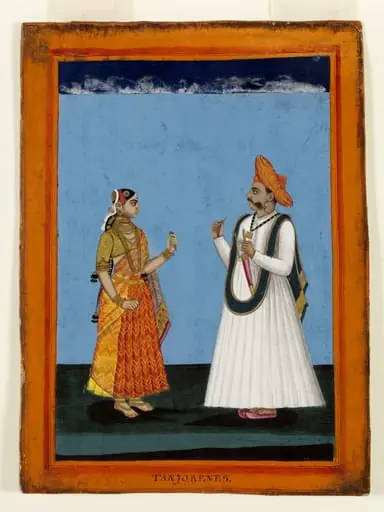 A Tanjore man in a white 'jama' holding 'pan' .
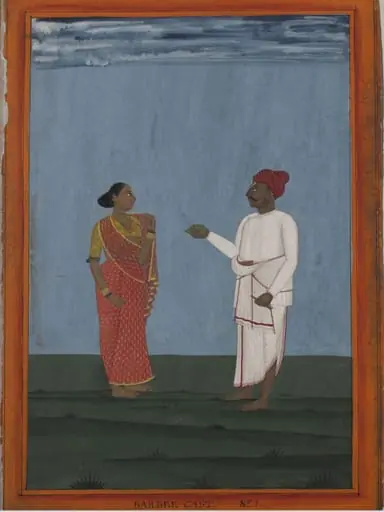 A barber and his wife
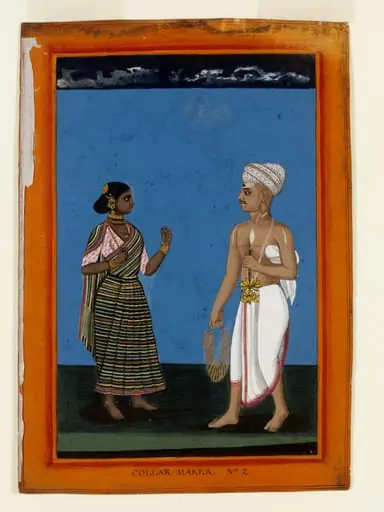 A necklace-seller and his wife
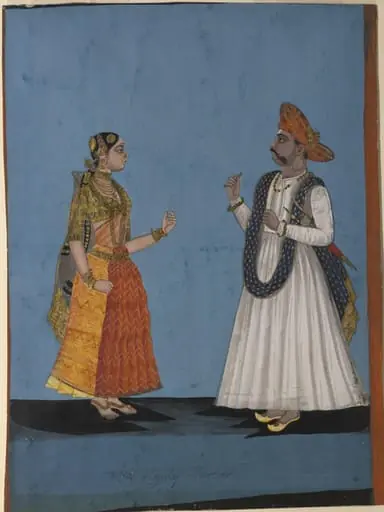 A warrior and his wife
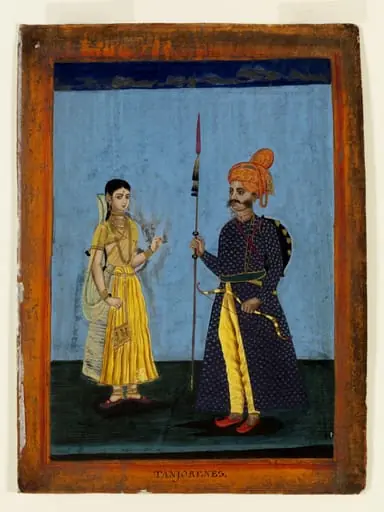 A Tanjore couple
 A Barber holding a razor