Artwork
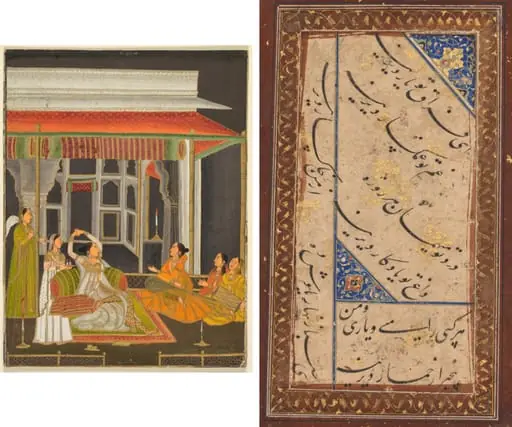
A prince conversing with a woman while taking refreshments on a terrace (recto)
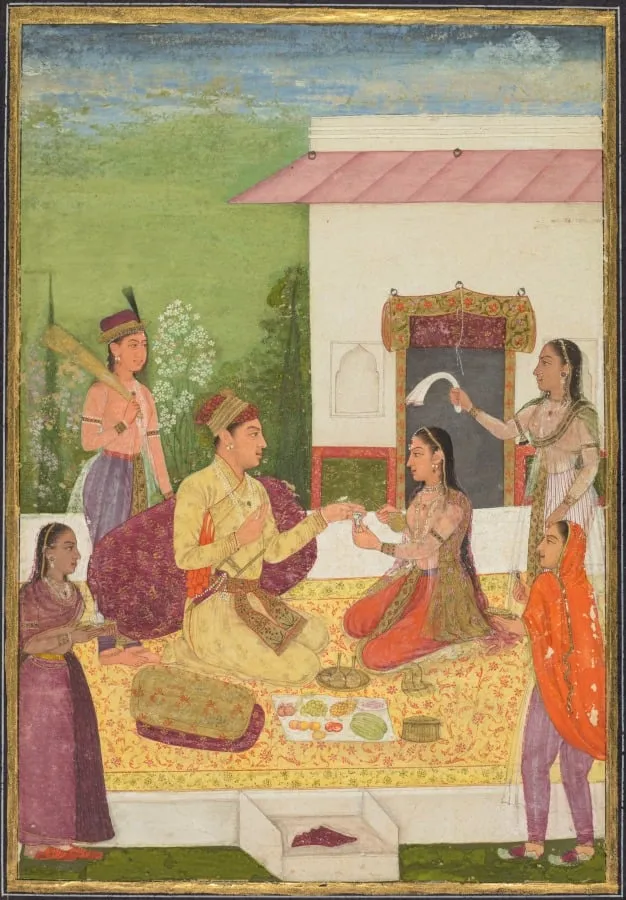
A prince conversing with a woman while taking refreshments on a terrace (recto) is an unspecified painting by the Baroque artist Unknown. It dates from 1715 and is held in the collection of the Cleveland Museum of Art. The painting depicts a princely figure seated on a terrace alongside a woman, both engaged in a leisurely gathering of wine and fruit.
About this work
Overview
The painting depicts a princely figure seated on a terrace alongside a woman, both engaged in a leisurely gathering of wine and fruit. A carpet covers the floor, while a marble step nearby holds the prince’s discarded shoes, emphasizing a relaxed, informal atmosphere within a royal setting.
Subject & Meaning
The scene illustrates a private courtly encounter: a princess pours liquor from a gilded bottle into a diminutive blue‑and‑white ceramic cup, while attendants present betel‑nut packets, jewels, and a vial of perfume for the couple’s appraisal. The presence of servants holding a white cloth and fanning with peacock‑feather whisks underscores the ceremonial care surrounding the interaction.
Technique & Style
Executed with meticulous brushwork, the work combines fine detail with a subdued palette, characteristic of Mughal court painting. The inclusion of a Chinese‑style blue‑and‑white cup reflects the period’s engagement with East Asian trade, while the rendering of textures—carpet, marble, and silk—demonstrates the artist’s skill in depicting material richness.
History & Provenance
The artist’s identity remains unknown, and the painting’s provenance is not recorded in surviving documents. It likely originated in a Mughal atelier as a depiction of elite leisure, intended for private enjoyment rather than public display, which explains its intimate composition.
Context
Set within the Mughal cultural milieu, the work captures the conventions of aristocratic hospitality: removal of shoes, presentation of betel nut for chewing, and the use of small, ornate drinking vessels for strong spirits. Such details reveal the synthesis of Persian courtly customs with Indian material culture during the empire’s zenith.
Artist & collection

 Domestic Scene
 Giacomo and Cardinal Marco, investing Andrea, Abbot of San Zeno, with his Benefice
 The Nymph of Fontainebleau
 Portrait of a Woman
 Madonna and Child with Saints in the Enclosed Garden
 Venus and Minerva
 Family Group of Four on Sofa
 Wall painting from Room H of the Villa of P. Fannius Synistor at Boscoreale
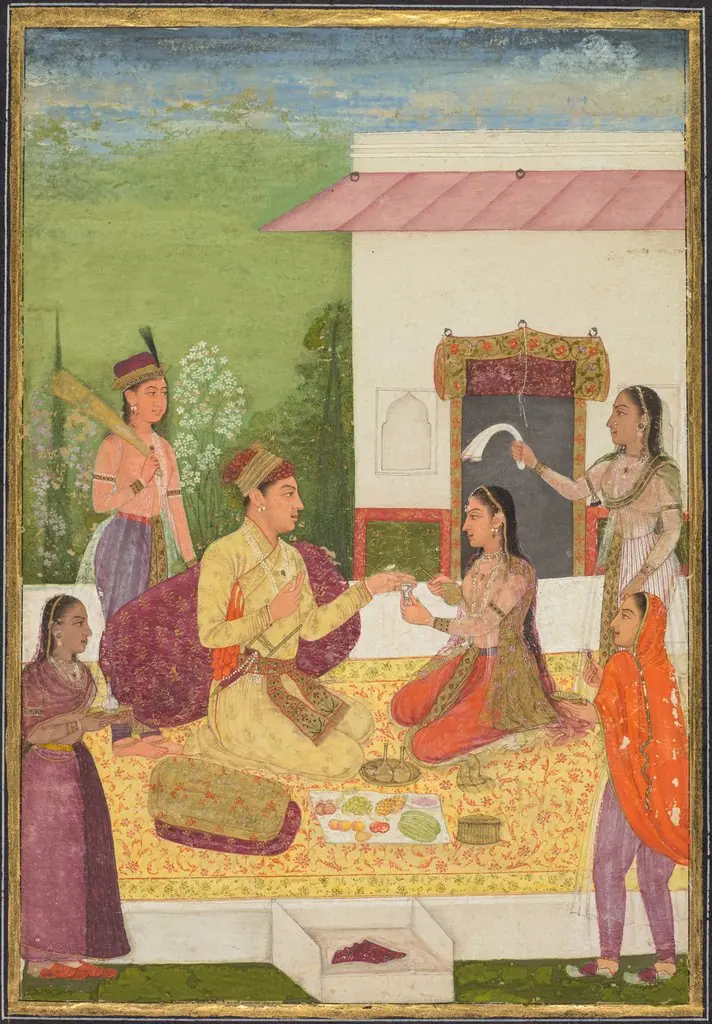 A prince conversing with a woman while taking refreshments on a terrace (recto)
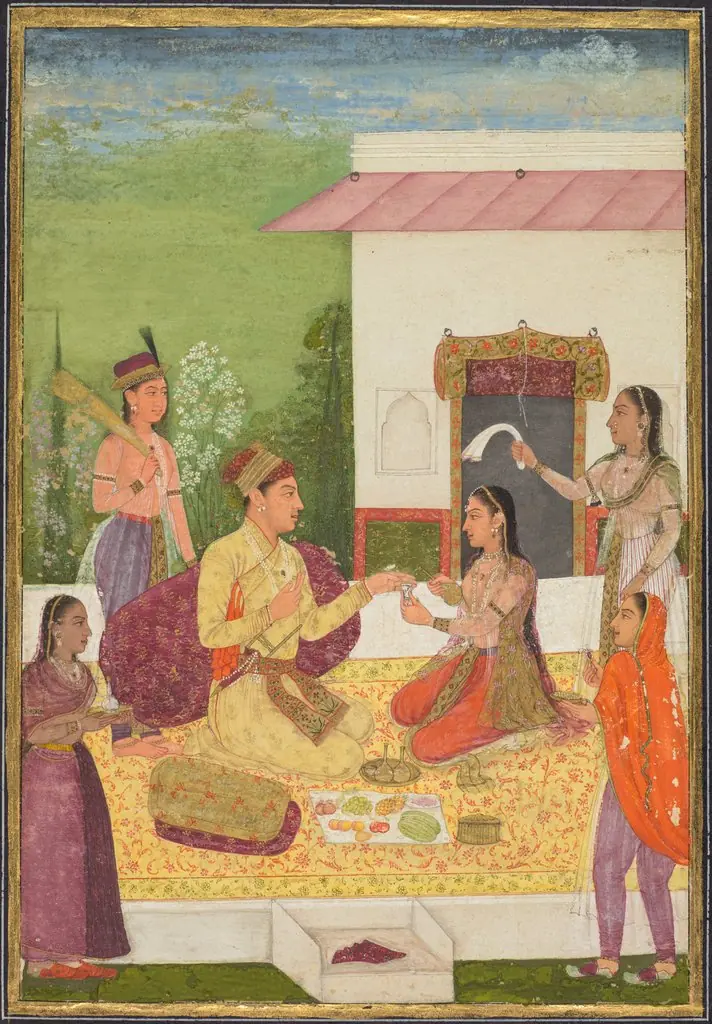 A prince conversing with a woman while taking refreshments on a terrace (recto); Calligraphy (verso)
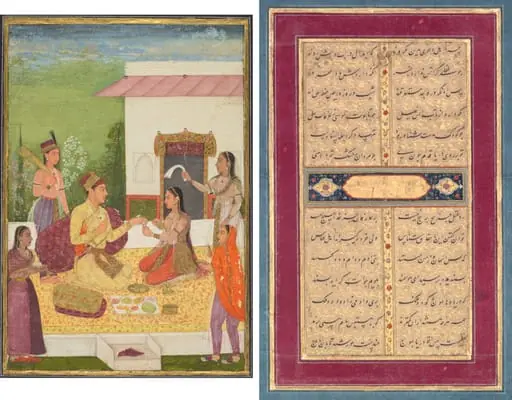 A prince conversing with a woman while taking refreshments on a terrace (recto); Calligraphy (verso)
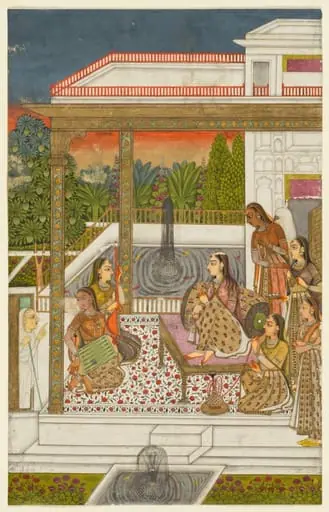 A princess with attendants on a terrace
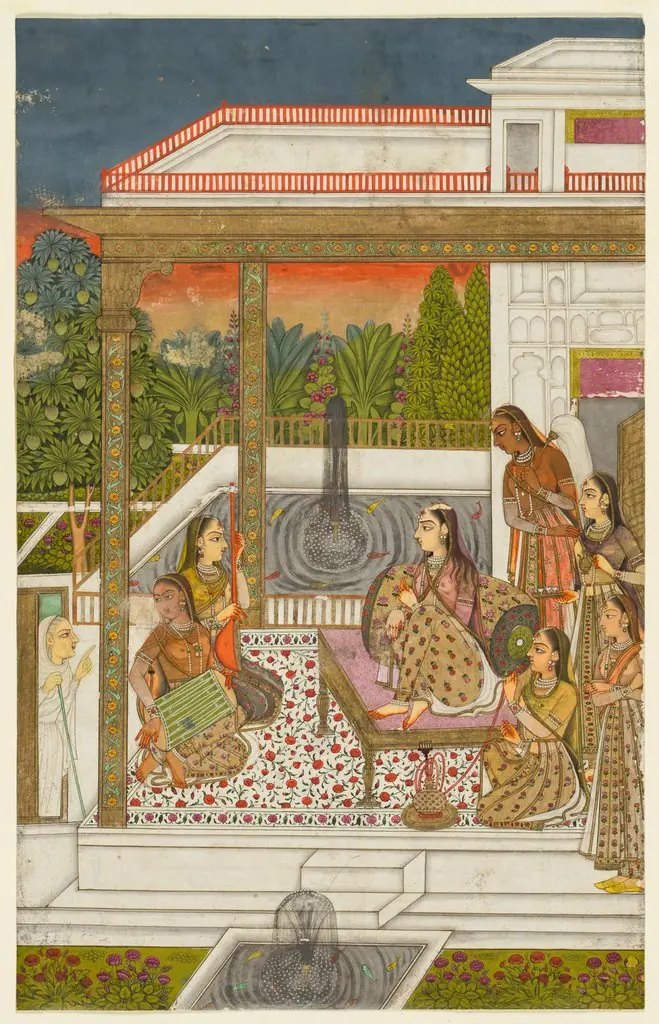 A princess with attendants on a terrace
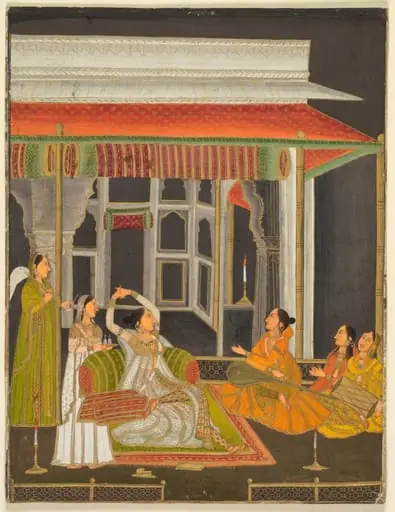 A Princess on a Terrace with Attendants at Night (recto)
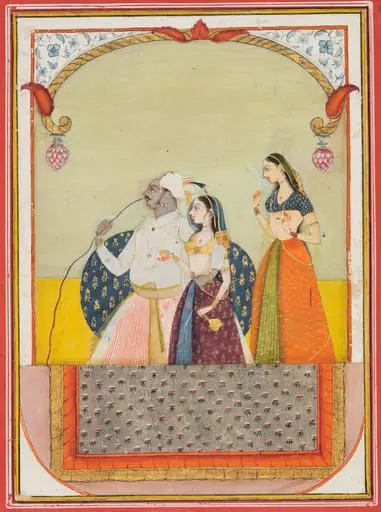 Maharaja Shri Anand Singh-ji and His Consort
 A princess on a terrace with attendants at night (recto); Calligraphy (verso)