Artwork
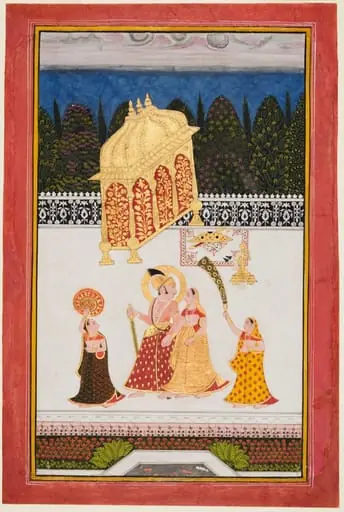
Maharaja Shri Anand Singh-ji and His Consort
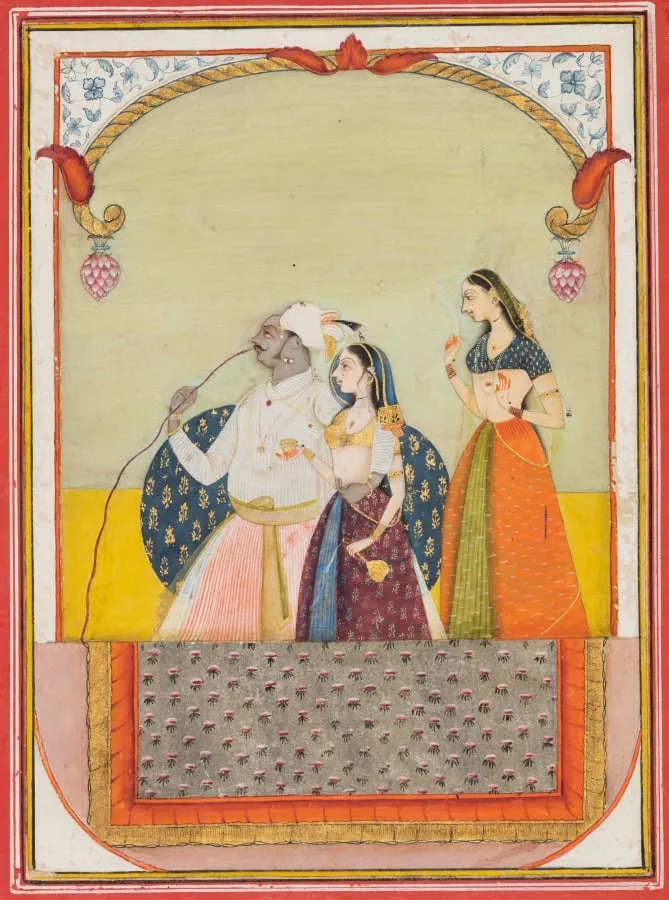
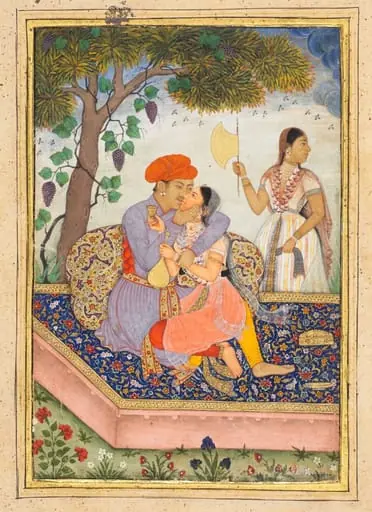
Maharaja Shri Anand Singh-ji and His Consort is an unspecified painting by the Baroque artist Ustad Murad. It dates from 1729 and is held in the collection of the Cleveland Museum of Art. This painting depicts Maharaja Anand Singh-ji of Bikaner and his consort in an intimate, unguarded moment.
About this work
Overview
Rendered with fine brushwork and metallic pigments, the scene captures the couple seated together on a floral carpet, surrounded by opulent textures.
This painting depicts Maharaja Anand Singh-ji of Bikaner and his consort in an intimate, unguarded moment. Rendered with fine brushwork and metallic pigments, the scene captures the couple seated together on a floral carpet, surrounded by opulent textures. The composition isolates them from attendants, emphasizing their private connection amid displays of wealth and refined taste characteristic of late 18th-century Rajput court culture.
Subject & Meaning
The royal pair are shown in a moment of casual intimacy: the king’s arm rests gently on his consort’s shoulder, while she lets wine spill from the bottle, suggesting ease and familiarity. This departure from formal portraiture conveys personal affection rather than ceremonial authority. The spilled wine may imply indulgence or the transient nature of pleasure, subtly contrasting with the permanence of their status.
Technique & Style
The artist employed real gold and silver pigments to render the shimmer of silk, jewelry, and embroidered textiles, enhancing the tactile richness of the scene. The carpet’s roses and the massive cushion behind them are rendered with meticulous detail, while the background’s blue-and-white arabesques are painted with precision. These elements reflect a blend of indigenous Rajput aesthetics with imported decorative motifs, executed in a delicate, refined style typical of Bikaner’s atelier.
History & Provenance
Created in the late 1700s, the painting originates from the court of Bikaner in northwestern India, a region known for its active trade networks. It likely served as a private devotional or commemorative object rather than a public display. The use of imported ceramic and tile designs in the spandrels suggests the Maharaja’s engagement with global luxury goods, particularly Dutch and Chinese imports, which were prized among elite Indian courts of the period.
Context
In the context of Rajput painting, this work stands out for its psychological intimacy and domestic tone. While many royal portraits emphasized power and lineage, this scene prioritizes personal connection. The inclusion of foreign-inspired blue-and-white patterns reflects Bikaner’s participation in transregional trade, where porcelain and tiles from Asia and Europe became symbols of cosmopolitan taste among Indian nobility.
Legacy
The painting remains a key example of Bikaner’s distinctive court style, noted for its sensitivity to individual expression and material luxury. Its blend of local tradition with global influences offers insight into how Indian rulers negotiated identity through art. Later artists in the region continued to explore similar themes of private royal life, though few matched the quiet elegance and technical refinement of this work.
Artist & collection

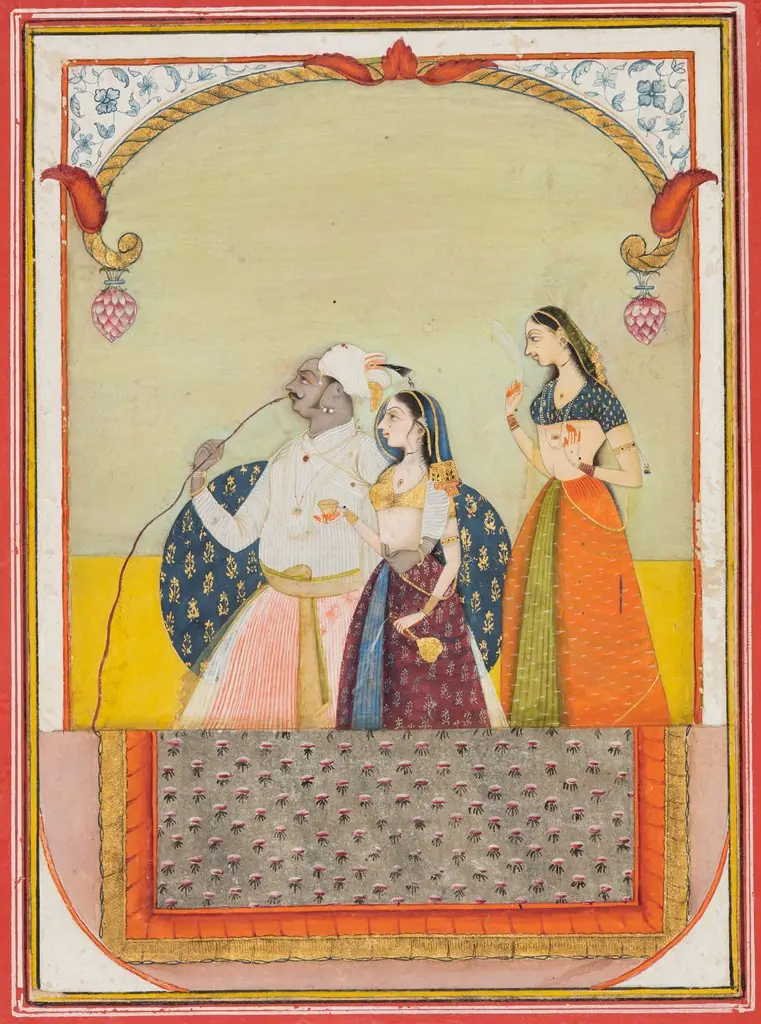 Maharaja Shri Anand Singh-ji and His Consort
 Lovers Embracing
 A prince conversing with a woman while taking refreshments on a terrace (recto)
 A prince conversing with a woman while taking refreshments on a terrace (recto); Calligraphy (verso)
 A Disconsolate Lady on a Terrace with Attendants
 Maharana Ari Singh II of Mewar (r. 1761–73) with His Consort on a Terrace