Artwork
Akbar Crosses the Ganges on an Elephant
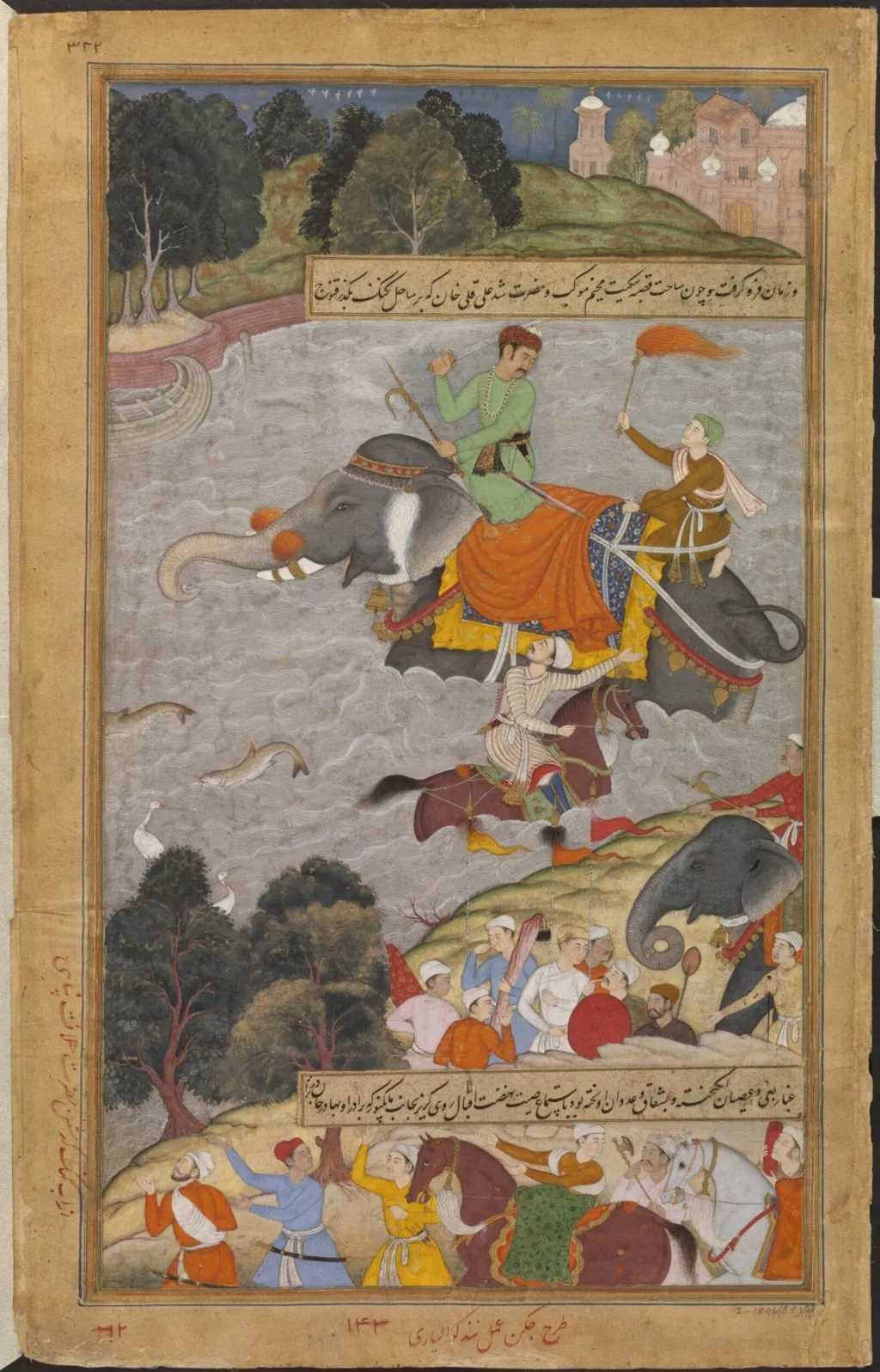
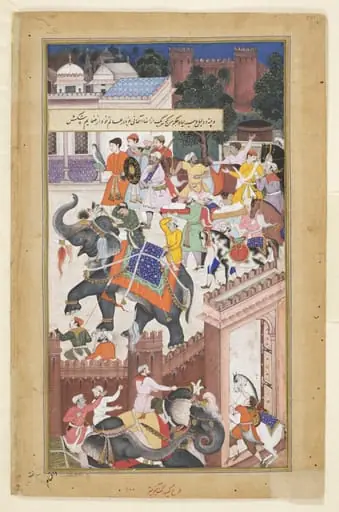
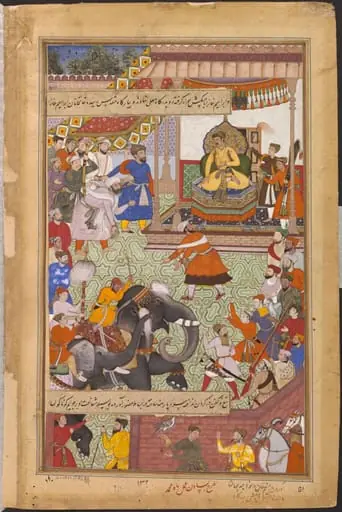
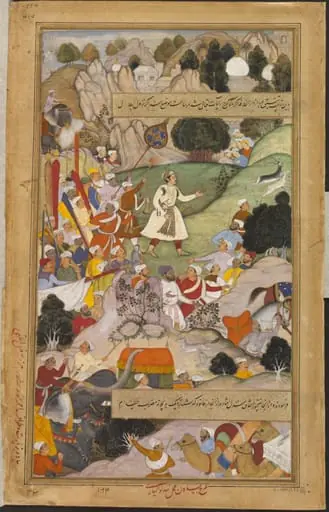
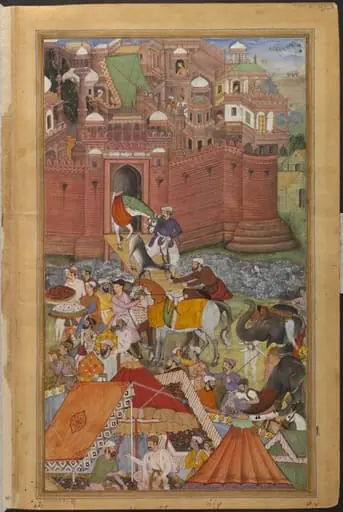
Akbar Crosses the Ganges on an Elephant is a paint painting by the Mughal Painting artist Jagan. It dates from 1592 and is held in the collection of the Victoria and Albert Museum. This painting is part of the Akbarnama, an official historical record commissioned by Emperor Akbar to document his rule.
About this work
Overview
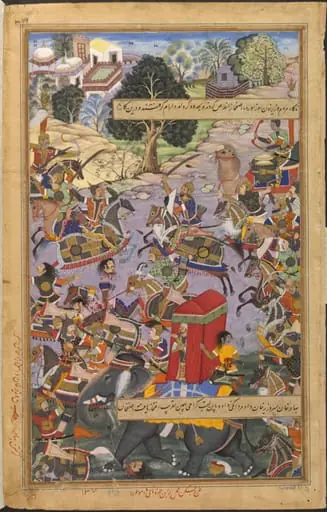
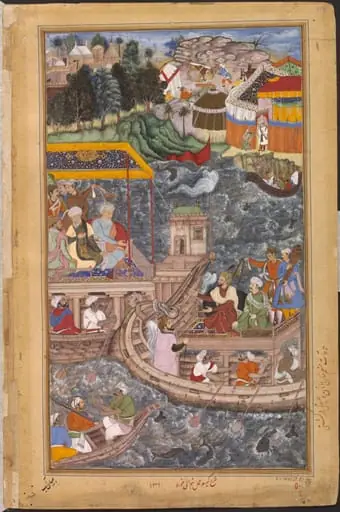
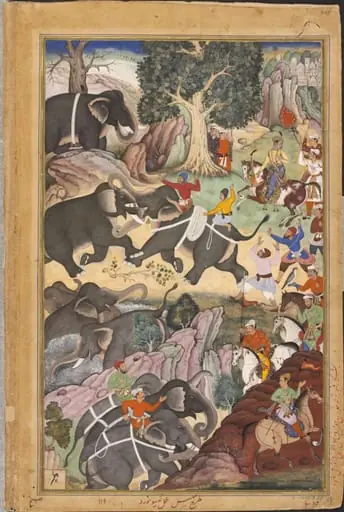
Created between 1592 and 1595, it illustrates a key moment in his military campaign: crossing the Ganges on his elephant, Udiya, to pursue rebel leaders.
This painting is part of the Akbarnama, an official historical record commissioned by Emperor Akbar to document his rule. Created between 1592 and 1595, it illustrates a key moment in his military campaign: crossing the Ganges on his elephant, Udiya, to pursue rebel leaders. The work was produced by leading artists of the Mughal court and is among the earliest known illustrated versions of the text, reflecting the emperor’s commitment to a visually rich chronicle of his reign.
Subject & Meaning
The scene captures Akbar’s personal leadership during a campaign against rebels Khan Zaman and Bahadur Khan. His mounted crossing of the Ganges symbolizes imperial authority and decisive action. The elephant, Udiya, with its trunk splashing water, conveys movement and power, while Akbar’s upright posture and spear emphasize control. The moment is not merely logistical but ceremonial, reinforcing the emperor’s role as both warrior and sovereign navigating the challenges of governance.
Technique & Style
The composition was conceived by Jagan, who structured the narrative space, while Nand Gwaliari executed the fine details with precision. The painting employs delicate brushwork, muted earth tones, and careful attention to natural elements like water and foliage. Figures are rendered with subtle modeling, and the river’s flow is suggested through rhythmic lines rather than realistic perspective. Inscriptions in red ink beneath the image identify the artists, a rare practice that underscores the imperial workshop’s collaborative nature.
History & Provenance
The manuscript remained in the imperial library after Akbar’s death, passing to his son Jahangir and later to Shah Jahan. It entered private hands in the 19th century after being acquired by Major General John Clarke during his service in Oudh. Following his death, his widow Frances Clarke sold the volume to the Victoria and Albert Museum in 1896. Its survival as a partial but well-preserved copy offers rare insight into early Mughal manuscript production under direct royal patronage.
Context
The Akbarnama was conceived as both historical record and political statement, blending factual chronicle with idealized imagery. Its creation coincided with Akbar’s efforts to consolidate Mughal authority through cultural patronage. The involvement of named artists, documented in Abu’l Fazl’s A’in-i Akbari, reflects a deliberate elevation of the visual arts within courtly life. This painting exemplifies how imperial power was communicated not only through conquest but through meticulously crafted visual narratives.
Legacy
As one of the earliest illustrated copies of the Akbarnama, this work set a precedent for later Mughal manuscript illustration. Its combination of narrative clarity, artistic collaboration, and imperial documentation influenced subsequent court histories. The survival of artist attributions within the manuscript provides unique evidence of individual contributions in a system often seen as anonymous. Today, it remains a critical artifact for understanding the intersection of power, art, and historiography in early modern South Asia.
Artist & collection
Artist
In the late 1500s, Jagan painted vibrant Mughal miniatures that put emperors and nobles on paper.