Artwork
Adormirea Maicii Domnului
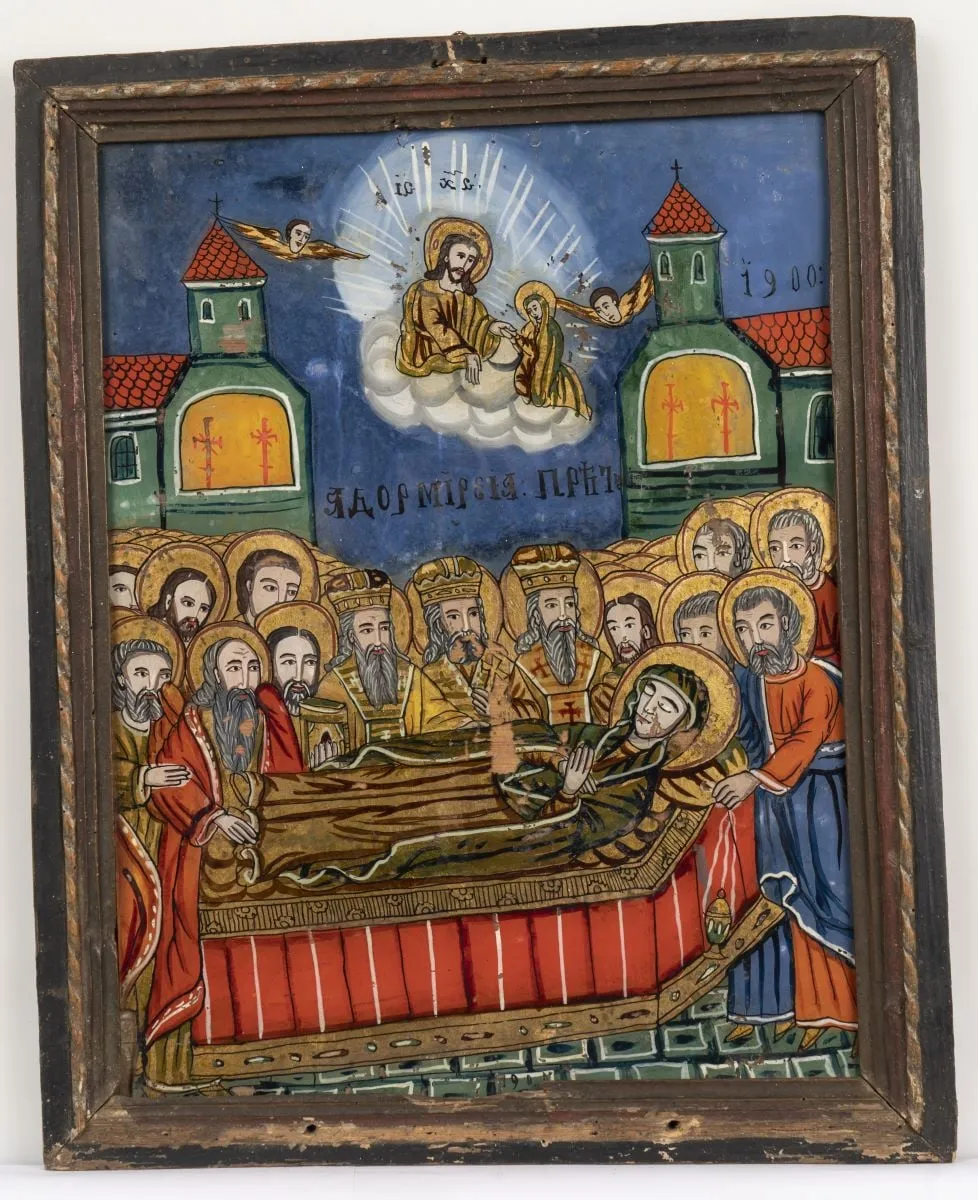
Adormirea Maicii Domnului is a drawing by Unknown. It dates from 1900 and is held in the collection of the Ethnographical Museum of Transylvania. This drawing depicts the Dormition of the Virgin Mary, a subject central to Eastern Christian tradition.
About this work
Overview
Its modest scale and restrained detail suggest a devotional purpose, intended for private contemplation rather than public display.
This drawing depicts the Dormition of the Virgin Mary, a subject central to Eastern Christian tradition. Executed with delicate, controlled lines, the image conveys stillness and reverence. The composition centers on Mary’s recumbent form, surrounded by angels in quiet attendance. Its modest scale and restrained detail suggest a devotional purpose, intended for private contemplation rather than public display.
Subject & Meaning
The scene illustrates Mary’s peaceful passing, known as the Dormition, where her soul is received by Christ amid angels. Her calm posture and closed eyes emphasize acceptance, not death. The absence of dramatic gestures or emotion reflects a theological focus on serenity and divine transition. The image functions as a visual aid for prayer, inviting the viewer into meditative reflection on mortality and grace.
Technique & Style
Fine, precise linework defines the figures and folds of Mary’s robes, with subtle shading to suggest volume without heavy contrast. The faces are rendered with minimal detail, avoiding individualized expression in favor of spiritual stillness. The style avoids ornamentation, prioritizing clarity and quietude. The medium’s simplicity aligns with ascetic devotional practices, where form serves function.
History & Provenance
The drawing likely originates from a Byzantine or post-Byzantine devotional context, possibly created in the Balkans or Anatolia during the late medieval or early modern period. Its intimate scale and lack of signature suggest it was made for personal or monastic use. No documented provenance exists, but its aesthetic aligns with portable icons and manuscript illuminations of the era.
Context
This image belongs to a tradition of Eastern Orthodox iconography that emphasizes spiritual presence over naturalism. Similar depictions appear in liturgical books and household icons, used in daily prayer. The quiet tone reflects theological priorities: the Virgin’s dormition as a transition to eternal life, not a moment of grief. Its simplicity echoes the broader ascetic values of monastic communities.
Legacy
Though unsigned and unattributed, the drawing exemplifies a widespread devotional practice in Orthodox Christianity. Its aesthetic continues to inform modern icon painting, particularly in regions preserving Byzantine traditions. Collections such as those at the Museum of Ethnography preserve comparable works, offering insight into how faith shaped visual culture beyond grand ecclesiastical art.
Artist & collection
Museum
Ethnographical Museum of Transylvania
Continue through works from the same source collection.
 Domestic Scene
 Giacomo and Cardinal Marco, investing Andrea, Abbot of San Zeno, with his Benefice
 The Nymph of Fontainebleau
 Portrait of a Woman
 Madonna and Child with Saints in the Enclosed Garden
 Venus and Minerva
 Family Group of Four on Sofa
 Wall painting from Room H of the Villa of P. Fannius Synistor at Boscoreale
 Adormirea Maicii Domnului
 Adormirea Maicii Domnului
 Judecata de Apoi
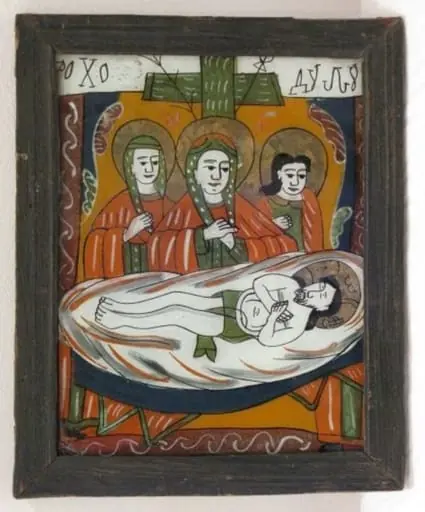 Plângerea lui Iisus
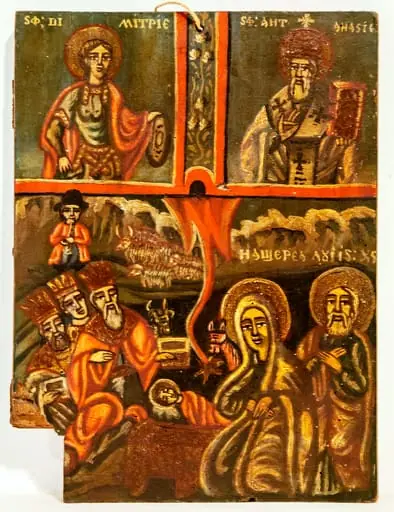 Câmpul icoanei împărțit în 2 registre orizontale inegale(cel de se 1/3 din suprafața icoanei, la rândul lui împărțit în 2 casete separate de o bandă verticală pe care este pictat un lujer cu flori albe. În registru inferior: Nașterea Domnului. În prim plan, Maria si Iosif îngenuncheați, central Pruncul Isus înfășat, așezat în iesle, în stânga lui cei trei magi, cu coroane împărătești pe cap, aducându-i daruri, în plan îndepărtat un cioban(în veșminte orășenești, cu pălărie neagră pe cap, cântând din fluier turmei de oi. În spatele Pruncului se văd capetele animalelor din grajd și o iesle. Steaua își revarsă razele asupra Pruncului(zonă incandescentă, terminată cu o stea deasupra acestuia). Pe fundalul întunecat, nori cu marginile albe. Sfinții din registrul superior sunt redați 3/4, sfântul Dimitrie tânăr, în veșminte militare, lorică, mantie roșie, scut în stânga, suliță în dreapta, Sfântul Atanasie, în veșminte arhierești, binecuvintează cu dreapta, în stânga ține cartea Evangheliilor ridicată. Părul și barba albe, mustățile lungi, veșmintele deschise la culoare, mitra înaltă, surmontată de o cruce albă. Cromatica: roșu, brun, alb, albastru, galben. Colț stânga jos lipsă. Stil naiv, popular.
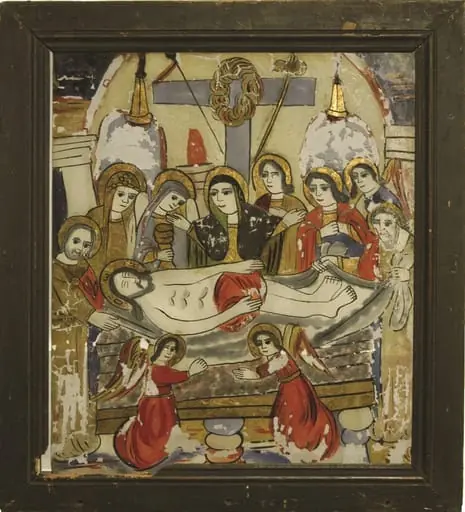 Prohodul lui Iisus
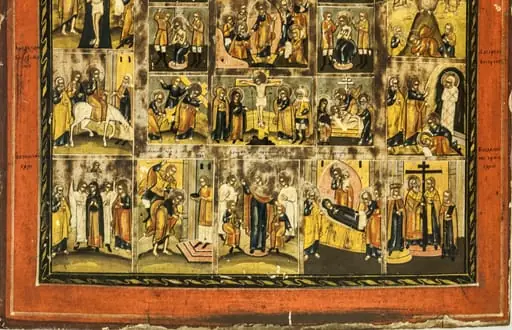 Dubl al
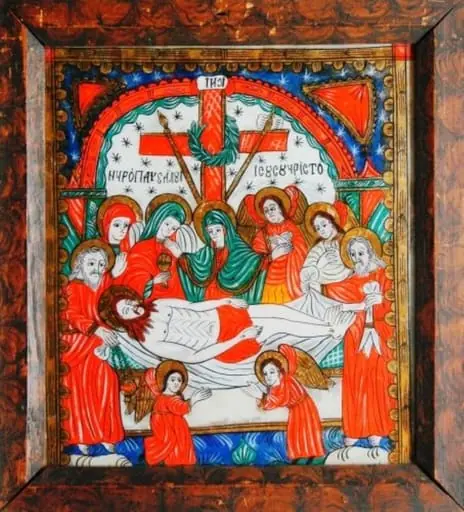 Îngroparea lui Iisus Hristos (Plângerea; Prohodul)
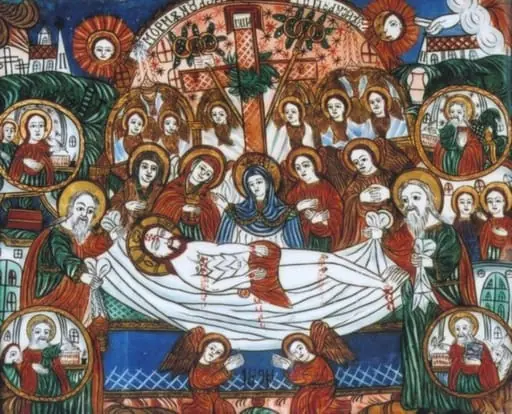 Îngroparea lui Iisus (Prohodul Domnului)