Artwork
akvarell, painting
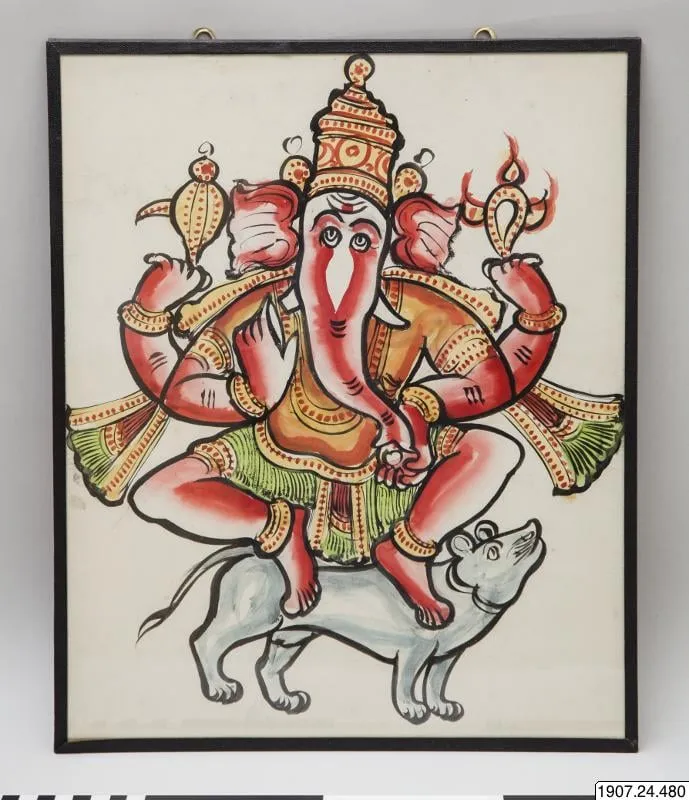
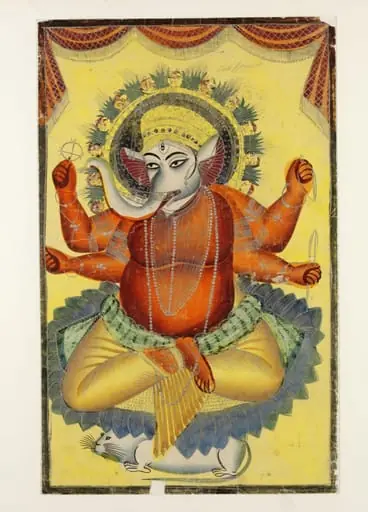
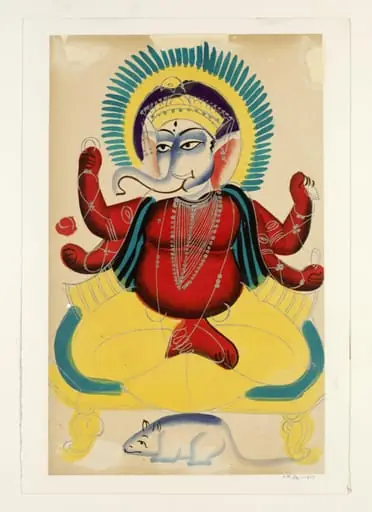
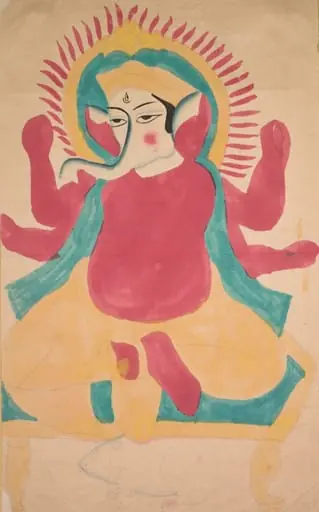
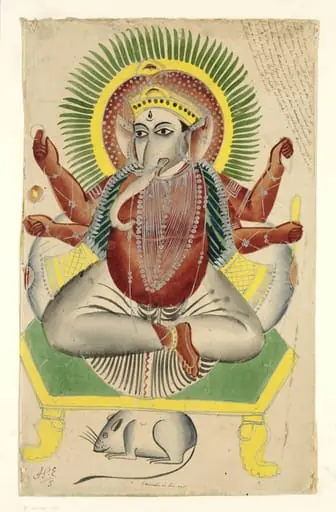
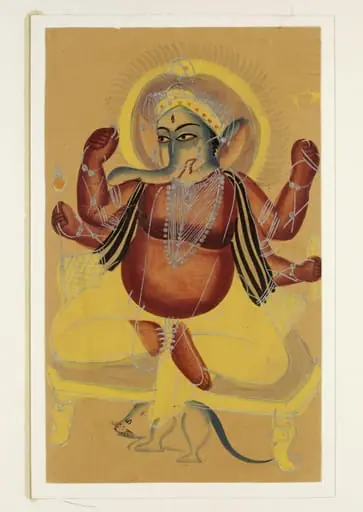
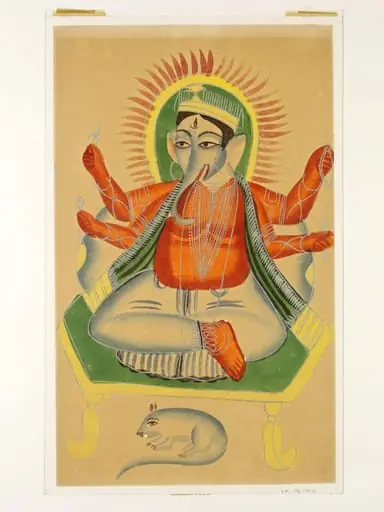
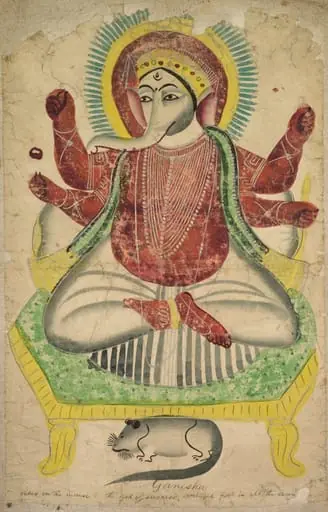
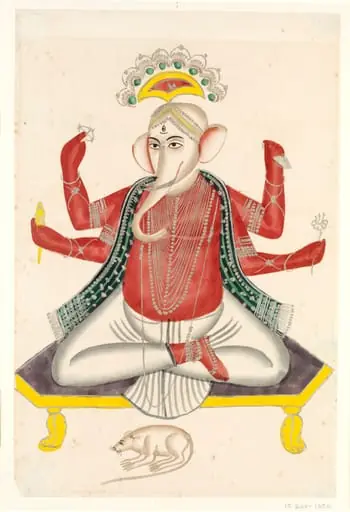
akvarell, painting is a paint painting by Unknown. It dates from 1850 and is held in the collection of the ethnographic museum. This watercolor depicts Ganesha, the elephant-headed deity, seated on a throne in a traditional South Indian style.
About this work
Overview
This watercolor depicts Ganesha, the elephant-headed deity, seated on a throne in a traditional South Indian style. The composition centers on his plump form, rendered in soft pink tones, with a small rat at his feet. Bright, unmodulated colors and loose brushwork define the piece, reflecting regional artistic conventions rather than detailed realism.
Subject & Meaning
Ganesha is shown holding a broken tusk, a snake, and a bowl of sweets—symbols of sacrifice, control over fear, and the offering of earthly pleasures. The rat, his vehicle, represents the taming of desire. Together, these elements convey his role as a remover of obstacles and a guardian of beginnings, consistent with devotional imagery from Tamil Nadu.
Technique & Style
The painting employs a light, rapid brush technique with minimal shading. Colors are vivid but flat, applied in clear areas without gradation. This approach aligns with folk and temple art traditions of South India, where clarity and symbolic legibility take precedence over naturalism or depth.
History & Provenance
The work originates from a South Indian devotional context, likely created for private worship or festival use. While its exact origin and maker are unknown, its style matches watercolor panels produced by itinerant artists in Tamil Nadu during the 19th or early 20th century, often sold at temple markets.
Context
In South Indian visual culture, Ganesha is frequently portrayed with a rat, emphasizing his dominion over obstacles and base impulses. Such images were commonly reproduced in watercolor, ink, or tempera for domestic altars. The simplicity of form and color reflects accessibility and ritual function over ornamental complexity.
Legacy
This watercolor exemplifies a living tradition of devotional art that continues in rural South India. Though not part of elite academic painting, such works sustain religious iconography through generations, preserving symbolic language in everyday practice rather than museum display.
Artist & collection
 Domestic Scene
 Giacomo and Cardinal Marco, investing Andrea, Abbot of San Zeno, with his Benefice
 The Nymph of Fontainebleau
 Portrait of a Woman
 Madonna and Child with Saints in the Enclosed Garden
 Venus and Minerva
 Family Group of Four on Sofa
 Wall painting from Room H of the Villa of P. Fannius Synistor at Boscoreale