Artwork
Ganesha
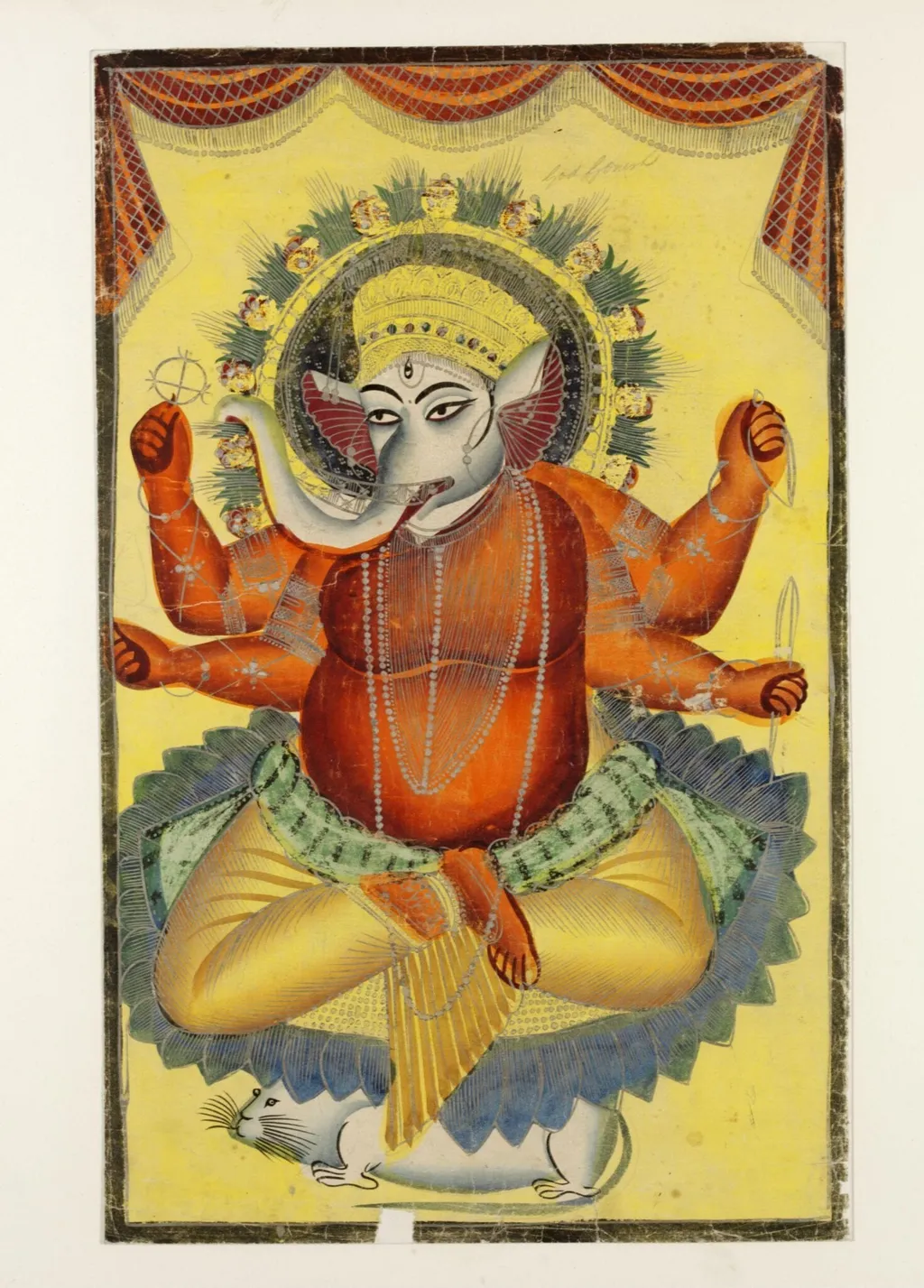
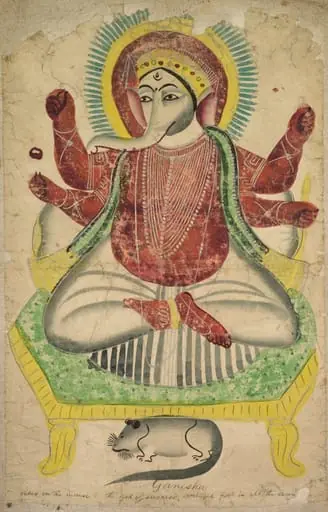
Ganesha is a paint painting by the Impressionist artist Unknown. It dates from 1860 and is held in the collection of the Victoria and Albert Museum.
About this work
Overview
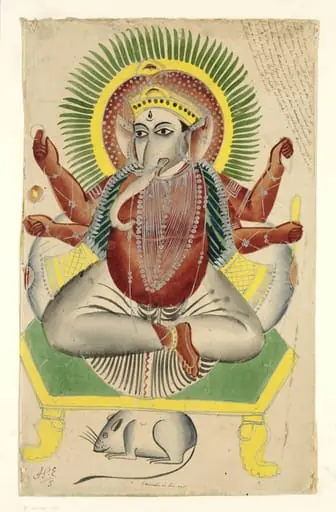
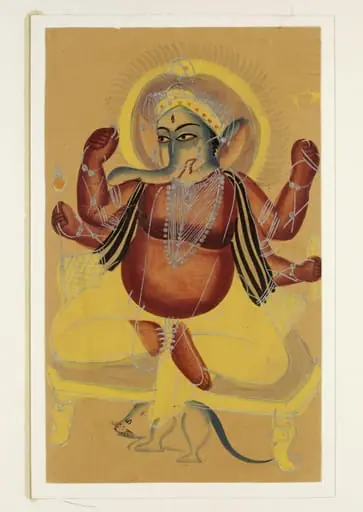
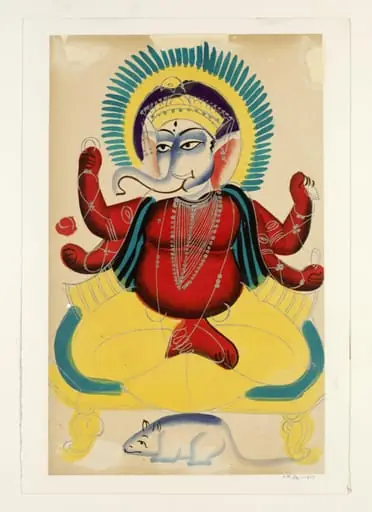
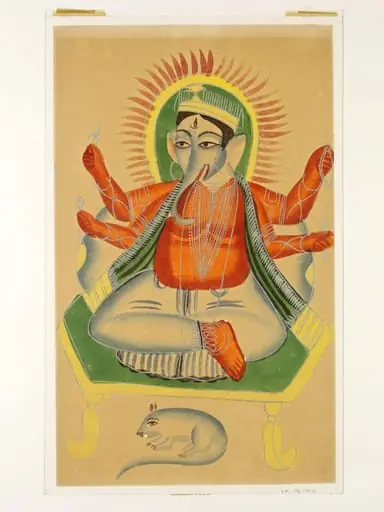
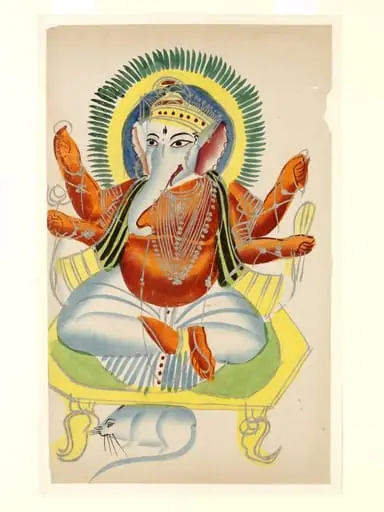
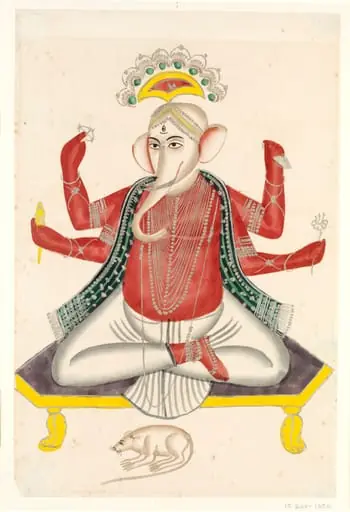
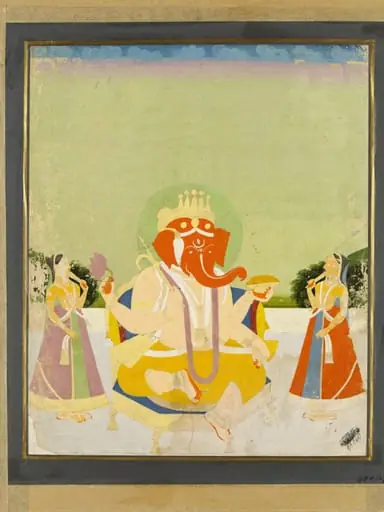
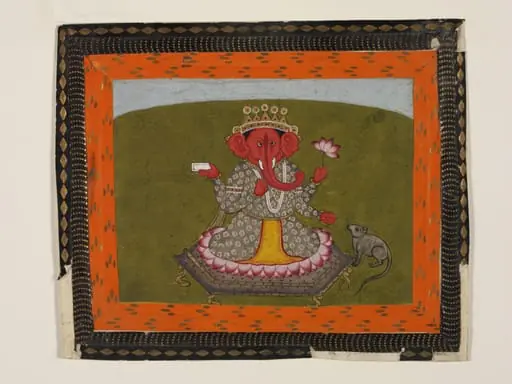
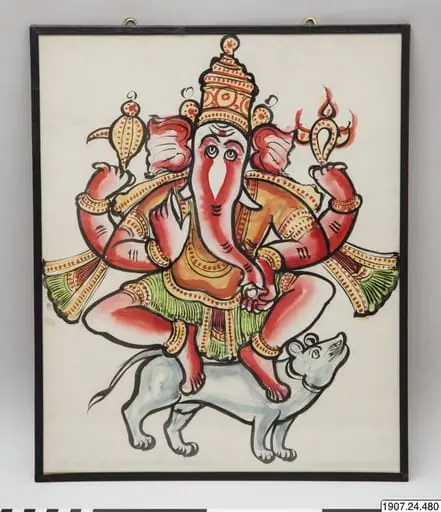
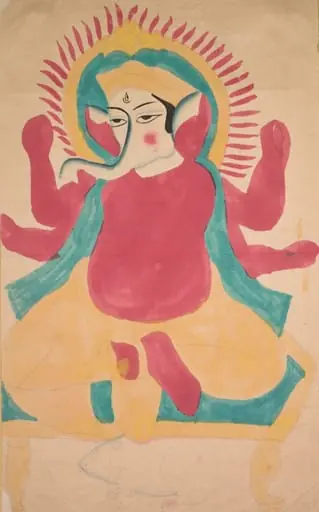
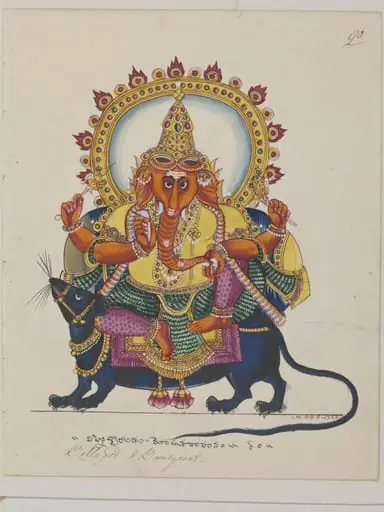
This 19th‑century work is an opaque water‑colour painting on paper that portrays the Hindu god Ganesha. The deity is shown seated on a lotus blossom, accompanied by his traditional vehicle, a rat, and rendered in bright, flat colours typical of the period’s popular visual language.
Subject & Meaning
Ganesha, recognizable by his elephant head and four arms, is depicted in a cross‑legged pose, wearing a red and gold garment, a leaf crown, and beaded necklaces. One hand grasps a golden object while another rests on his knee, symbols that reference his role as remover of obstacles and patron of the arts within Hindu mythology.
Technique & Style
The painting follows the Kalighat school of Calcutta, noted for rapid brushwork, simplified forms and vivid, unmodulated colour fields. The artist employed opaque water‑colour to achieve flat planes of blue skin, bright yellow background and stark white‑red facial detailing, creating an instantly legible image.
History & Provenance
Created in Calcutta when the city functioned as the capital of British India, the piece reflects a period when local artisans produced affordable devotional images for a growing urban market. Its survival suggests it entered a collection of colonial‑era artworks, though specific ownership records are not documented.
Context
Kalighat paintings emerged from the bustling shrine precincts along the Ganges, catering to pilgrims and residents alike. This work exemplifies how indigenous religious iconography was rendered in a style that appealed to both native audiences and colonial observers, bridging devotional practice and commercial art.
Artist & collection

 Domestic Scene
 Giacomo and Cardinal Marco, investing Andrea, Abbot of San Zeno, with his Benefice
 The Nymph of Fontainebleau
 Portrait of a Woman
 Madonna and Child with Saints in the Enclosed Garden
 Venus and Minerva
 Family Group of Four on Sofa
 Wall painting from Room H of the Villa of P. Fannius Synistor at Boscoreale