Artwork
Ganesha
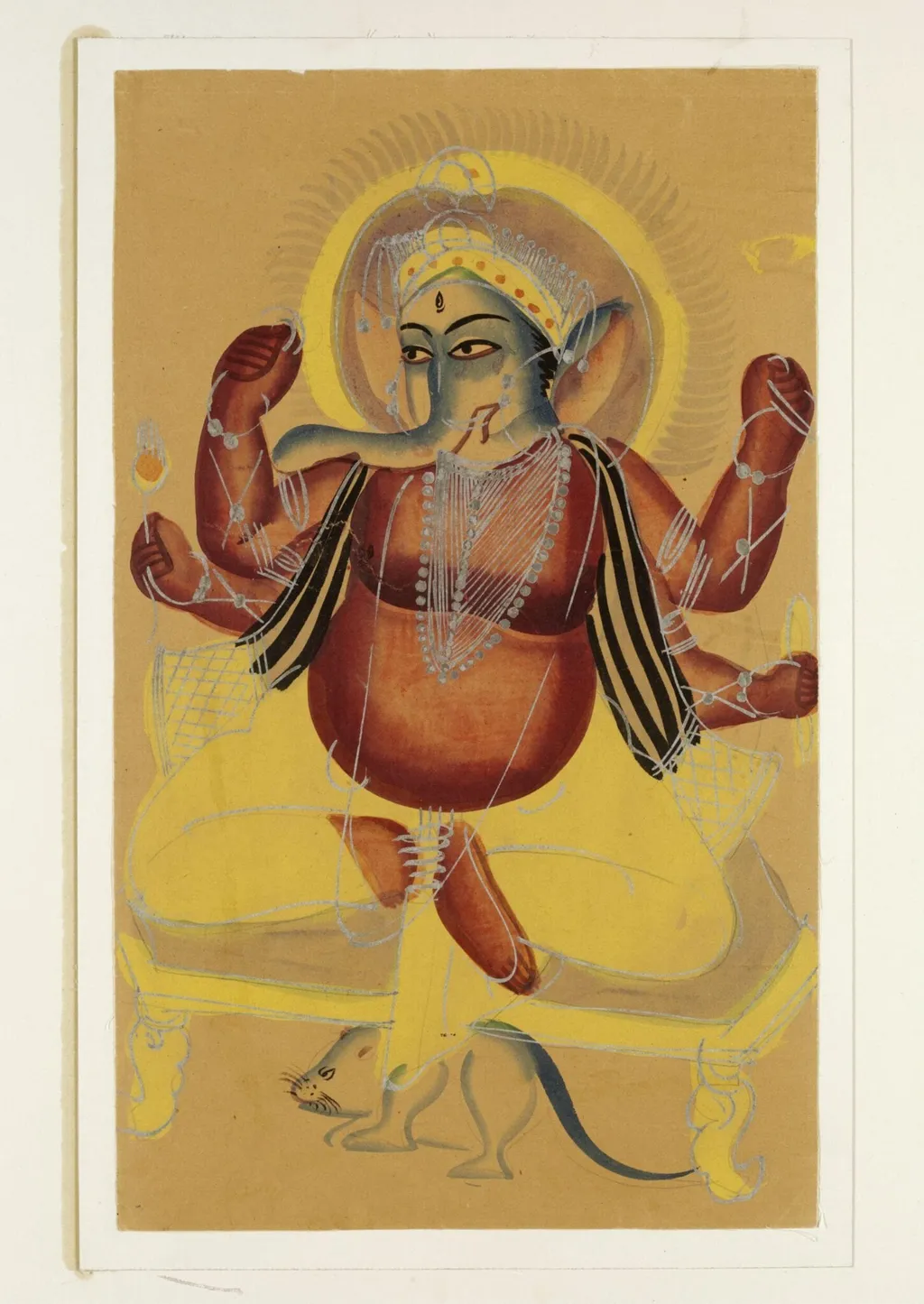
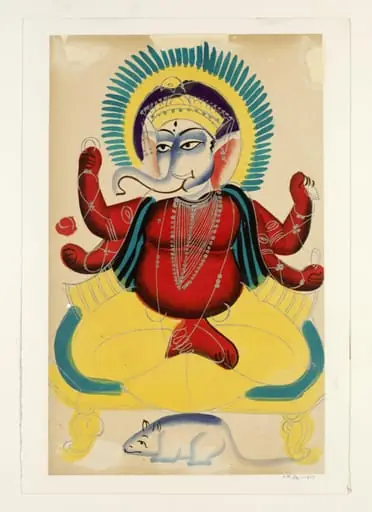
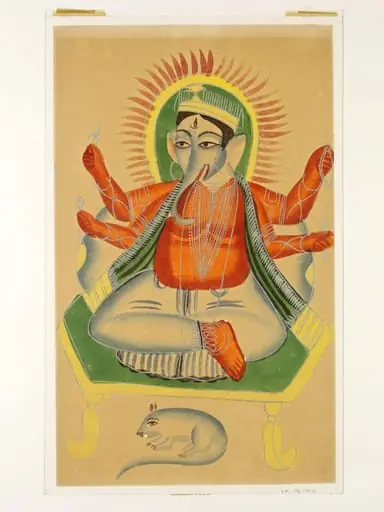
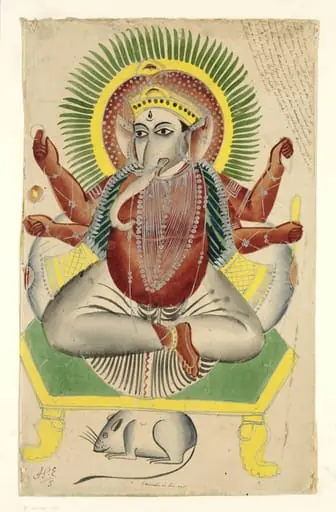
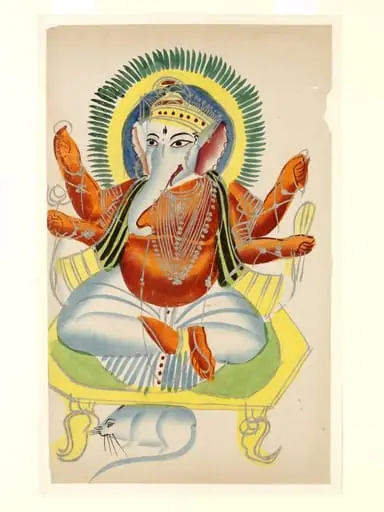
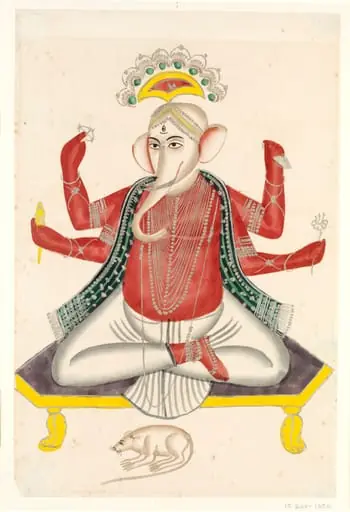
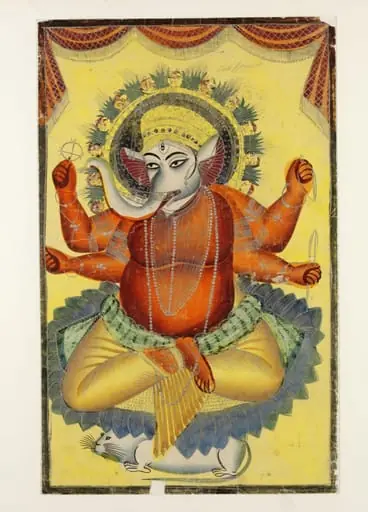
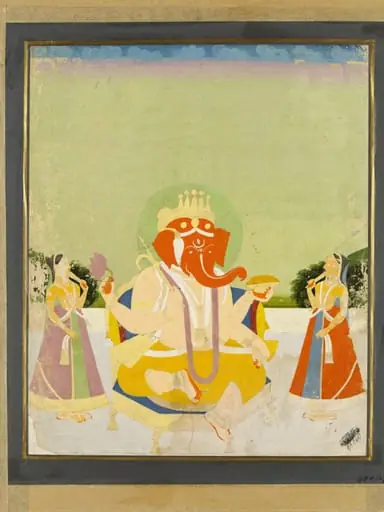
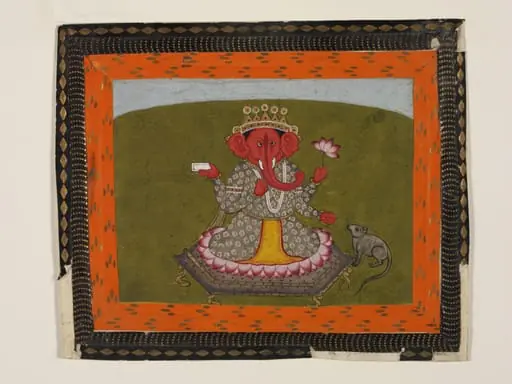
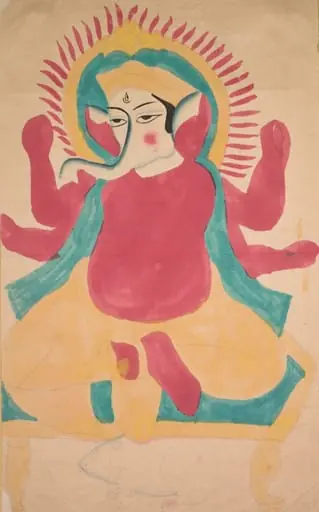
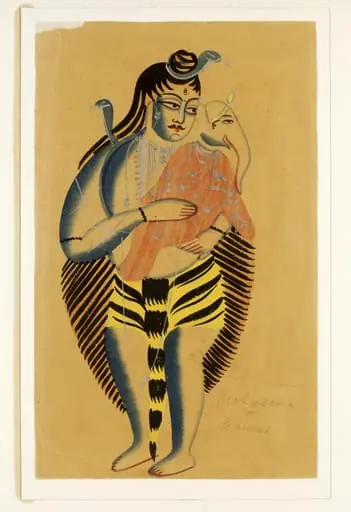
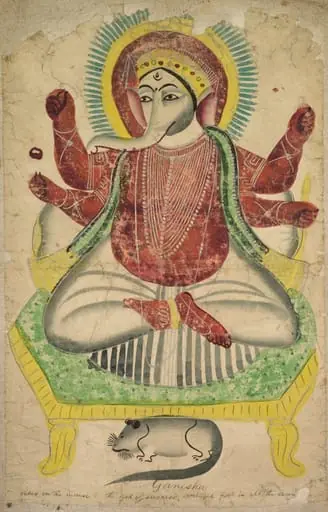
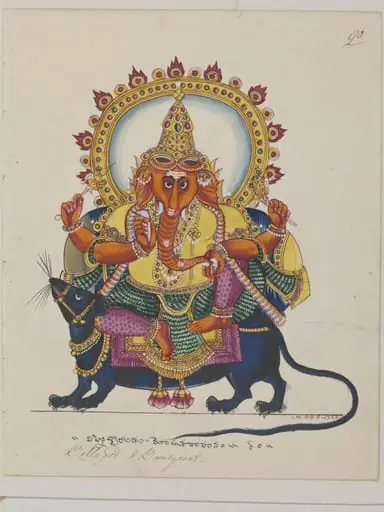
Ganesha is a paint painting by the Impressionist artist Unknown. It dates from 1885 and is held in the collection of the Victoria and Albert Museum.
About this work
Overview
Created in 1885, this work is an opaque watercolor on paper depicting the Hindu deity Ganesha enthroned. The figure is rendered with vivid hues and a loose handling of paint, presenting a striking visual presence that combines devotional iconography with a painterly approach.
Subject & Meaning
The central figure shows Ganesha with his characteristic elephant head, blue complexion, and four arms, each grasping an attribute. He is adorned in a richly decorated red and gold costume, surrounded by a golden aureole, while a diminutive creature with a feline body and an elephantine trunk rests at his feet, adding a whimsical element to the composition.
Technique & Style
The artist employed opaque watercolour, allowing for saturated tones and a certain opacity uncommon in traditional washes. Broad, fluid brushstrokes convey a sense of immediacy, while the bright palette reflects an interest in everyday visual experiences. The style suggests an amalgamation of movements that emphasize realistic light effects and a more expressive, colour‑driven approach.
History & Provenance
The painting entered the museum's collection in 1950, purchased from Miss M. Steele. The work had been part of a family assemblage inherited from Steele's mother, a Sanskrit scholar at Cambridge in the late 19th century. According to Steele, the collection may have originally been assembled by her grandmother, who spent a period residing in India.
Context
The piece reflects the 19th‑century European fascination with Indian religious imagery, coinciding with increased scholarly interest in Sanskrit and Hindu traditions. Its production date places it within a period when artists were experimenting with non‑Western subjects, integrating them into contemporary artistic vocabularies that balanced realism with decorative colour.
Artist & collection

 Domestic Scene
 Giacomo and Cardinal Marco, investing Andrea, Abbot of San Zeno, with his Benefice
 The Nymph of Fontainebleau
 Portrait of a Woman
 Madonna and Child with Saints in the Enclosed Garden
 Venus and Minerva
 Family Group of Four on Sofa
 Wall painting from Room H of the Villa of P. Fannius Synistor at Boscoreale