Artwork
Ganesha
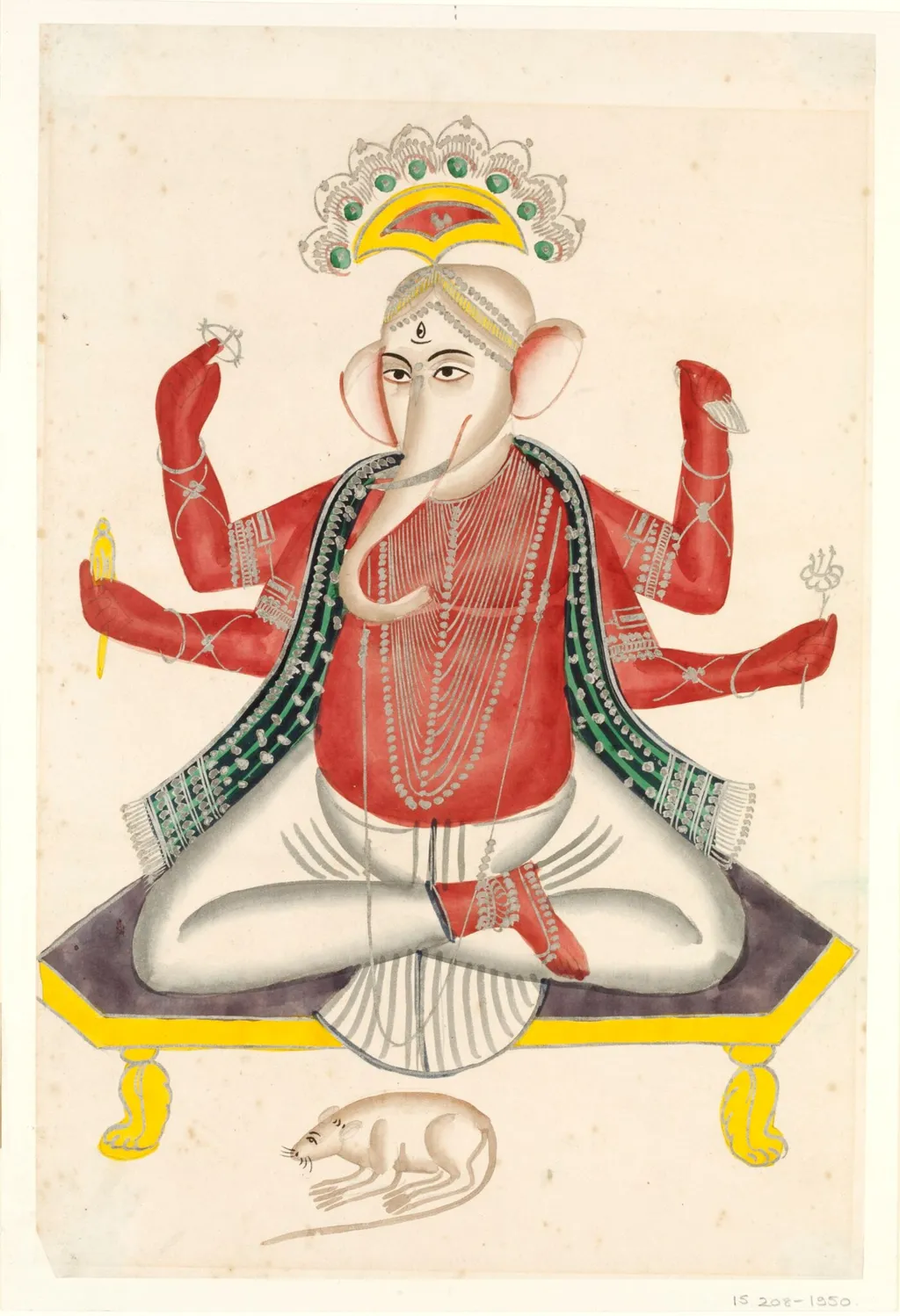
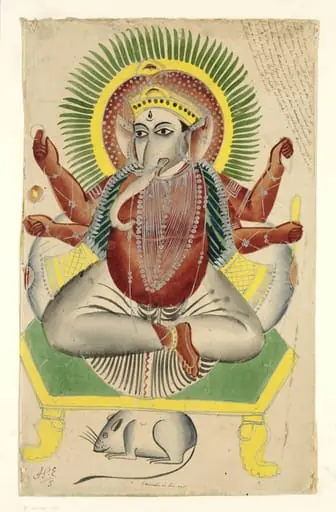
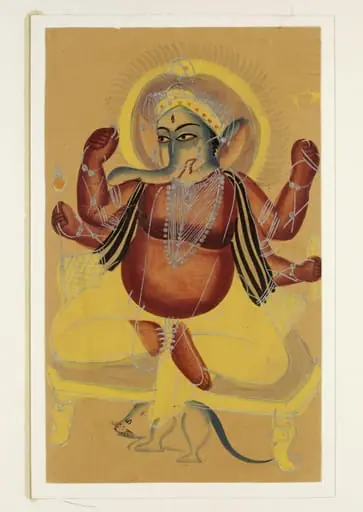
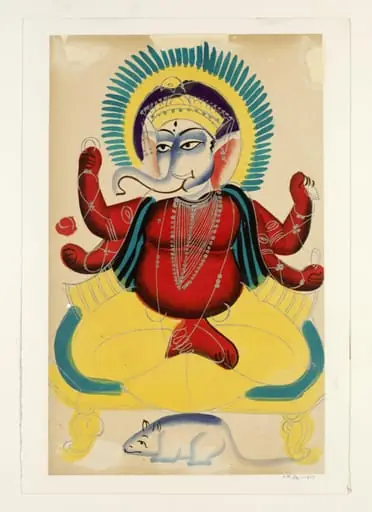
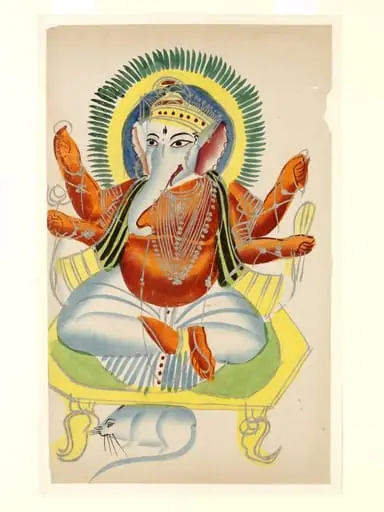
Ganesha is a paint painting by the Romanticist artist Unknown. It dates from 1830 and is held in the collection of the Victoria and Albert Museum.
About this work
Overview
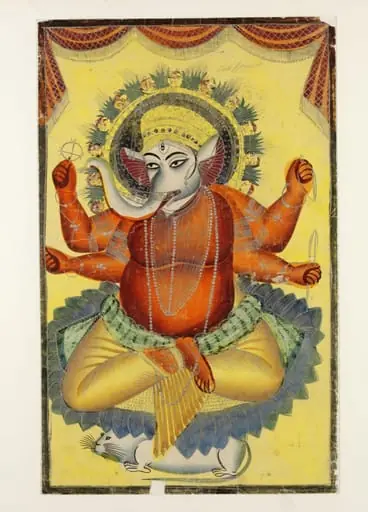
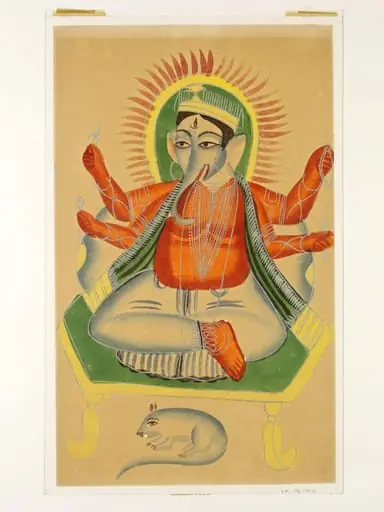
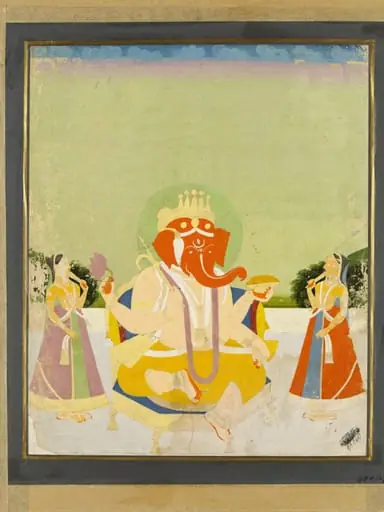
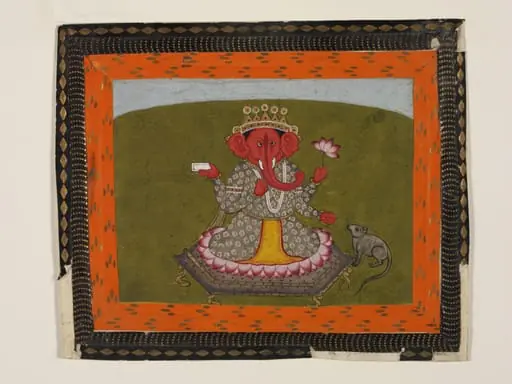
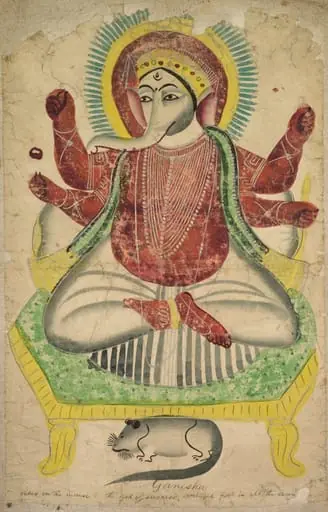
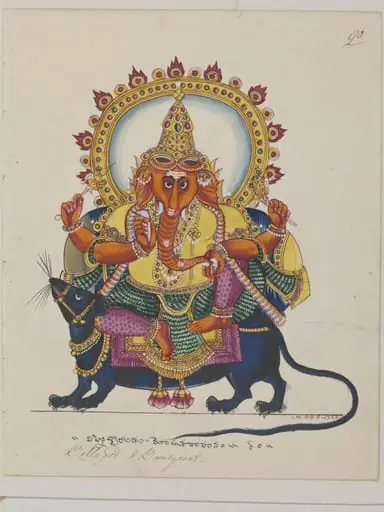
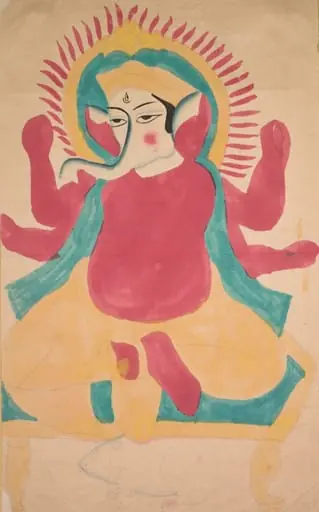
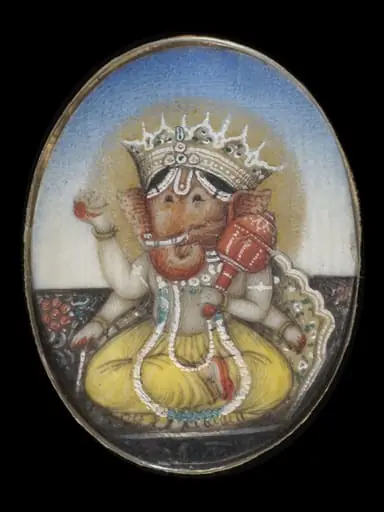
The work portrays the Hindu deity Ganesha, recognizable by his elephantine head and four arms, seated on a low, yellow‑purple platform. He is flanked by a small mouse, his traditional vehicle, positioned at his feet. The figure is rendered in vivid hues, with a plain backdrop that emphasizes the bright colors and simplified forms.
Subject & Meaning
Ganesha, the son of Shiva and Parvati, is shown in a calm, seated pose, embodying his role as remover of obstacles and patron of the arts. The accompanying mouse symbolizes humility and the ability to navigate even the smallest spaces, reinforcing the deity’s association with both grandeur and modesty.
Technique & Style
The painting employs flat, saturated colors—pink for the body, white for the head, and red robes trimmed in green and white—creating a graphic, almost decorative quality. The figure’s jewelry and bejeweled headdress are rendered with simple outlines, while the composition relies on clear, bold shapes rather than detailed modeling.
History & Provenance
The piece is catalogued as a painting of Ganesha, though specific details about its creation date, artist, or original collection are not provided. Its presence alongside comparable works at institutions such as the Victoria and Albert Museum suggests it belongs to a broader tradition of devotional imagery reproduced for both worship and aesthetic appreciation.
Context
Depictions of Ganesha are common in South Asian religious art, where the deity is frequently shown with a mouse and holding symbolic objects. While this particular work omits the typical implements—club, discus, conch, and lotus—it retains the essential iconography of the elephant head, multiple arms, and attendant, aligning it with established visual conventions.
Artist & collection

 Domestic Scene
 Giacomo and Cardinal Marco, investing Andrea, Abbot of San Zeno, with his Benefice
 The Nymph of Fontainebleau
 Portrait of a Woman
 Madonna and Child with Saints in the Enclosed Garden
 Venus and Minerva
 Family Group of Four on Sofa
 Wall painting from Room H of the Villa of P. Fannius Synistor at Boscoreale