Artwork
Album of Daoist and Buddhist Themes: Kings of Hells: Leaf 29
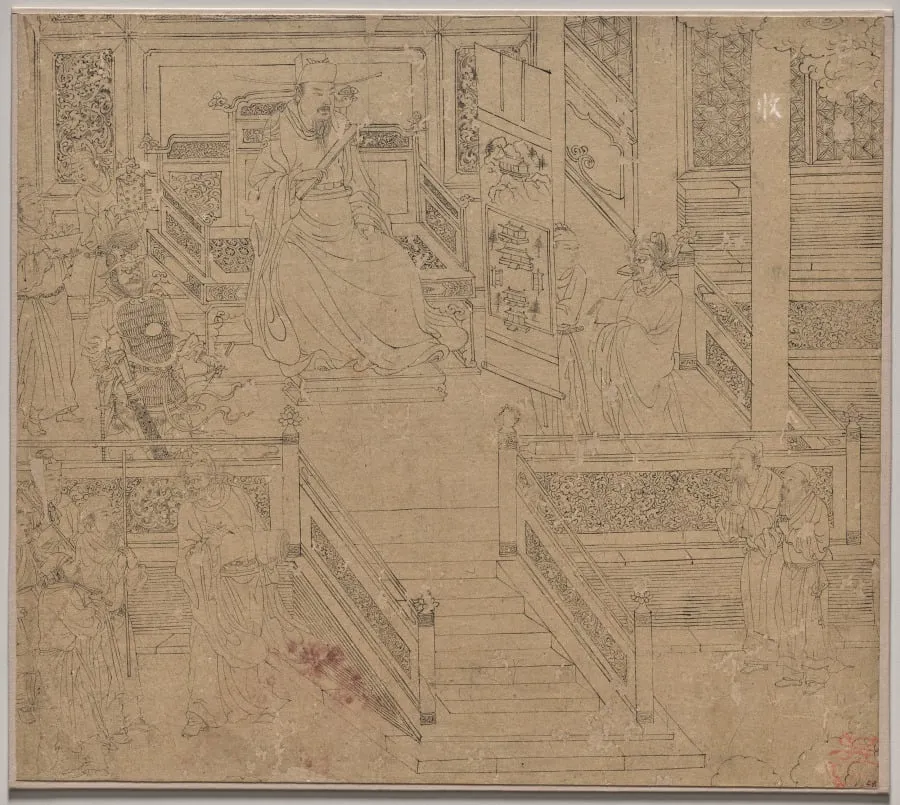
Album of Daoist and Buddhist Themes: Kings of Hells: Leaf 29 is an unspecified painting by the Ming dynasty painting artist Unknown. It dates from 1204 and is held in the collection of the Cleveland Museum of Art. This painting is part of an album's second series, depicting the Ten Kings of Hells from Chinese Buddhist tradition.
About this work
To see more works like this, look up subject: china, southern song dynasty (1127-1279).
A robed figure sits on a throne, holding a flat ivory plaque. Behind him, a long scroll shows a map-like plan of buildings. The colors are soft—reds, blues, and golds—with fine black outlines.
This is one of the Ten Kings of Hell from Chinese Buddhist tradition. Each king rules a different underworld realm. Here, the king looks kind, not scary, which is unusual. The scroll next to him might be a record of deeds or a map of punishments.
To see more works like this, look up subject: china, southern song dynasty (1127-1279).
Overview
This painting is part of an album's second series, depicting the Ten Kings of Hells from Chinese Buddhist tradition. It is one of ten leaves representing the rulers of different underworld realms.
Subject & Meaning
The king is shown in a benevolent manner, holding an ivory plaque and seated on a throne. A scroll beside him displays a plan of symmetrical buildings, possibly a temple or shrine, and a mountain scene above.
Technique & Style
The painting features soft colors, including reds, blues, and golds, with fine black outlines defining the forms. The style is characteristic of the Southern Song Dynasty.
Context
The Ten Kings of Hell are part of Chinese Buddhist cosmology, with each king governing a distinct realm in the underworld. The depiction of the king and the accompanying scroll may represent a unique interpretation of one of these figures.
Artist & collection

 Domestic Scene
 Giacomo and Cardinal Marco, investing Andrea, Abbot of San Zeno, with his Benefice
 The Nymph of Fontainebleau
 Portrait of a Woman
 Madonna and Child with Saints in the Enclosed Garden
 Venus and Minerva
 Family Group of Four on Sofa
 Wall painting from Room H of the Villa of P. Fannius Synistor at Boscoreale
 Album of Daoist and Buddhist Themes: Kings of Hells: Leaf 27
 Album of Daoist and Buddhist Themes: Kings of Hells: Leaf 33
 Album of Daoist and Buddhist Themes: Kings of Hells: Leaf 34
 Album of Daoist and Buddhist Themes: Kings of Hells: Leaf 35
 Album of Daoist and Buddhist Themes: Kings of Hells: Leaf 40
 Album of Daoist and Buddhist Themes: Kings of Hells: Leaf 36
 Album of Daoist and Buddhist Themes: Kings of Hells: Leaf 28
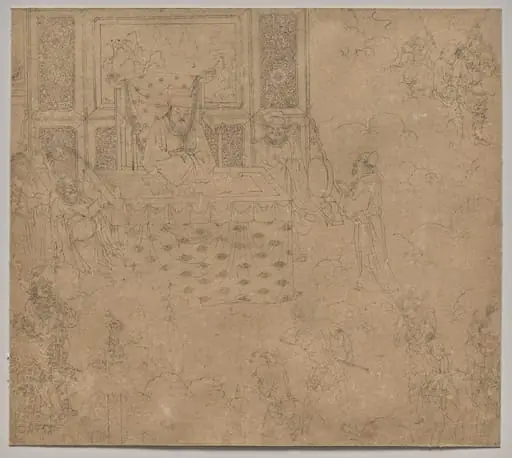 Album of Daoist and Buddhist Themes: Kings of Hells: Leaf 31
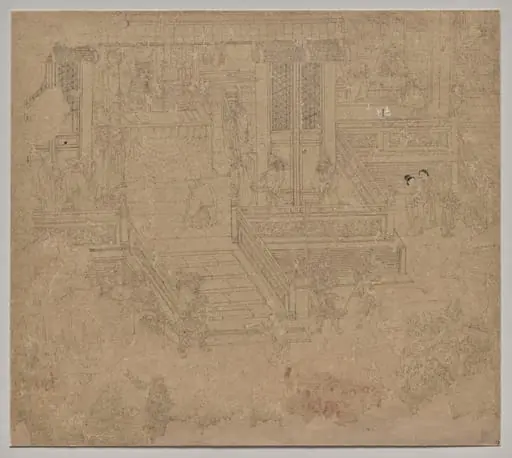 Album of Daoist and Buddhist Themes: Kings of Hells: Leaf 37
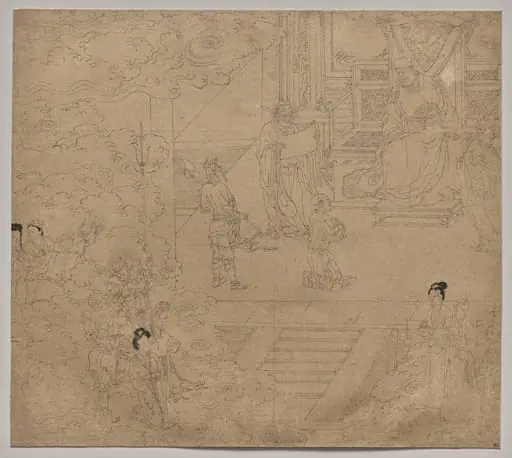 Album of Daoist and Buddhist Themes: Kings of Hells: Leaf 32