Artwork
Album of Daoist and Buddhist Themes: Procession of Daoist Deities: Leaf 3
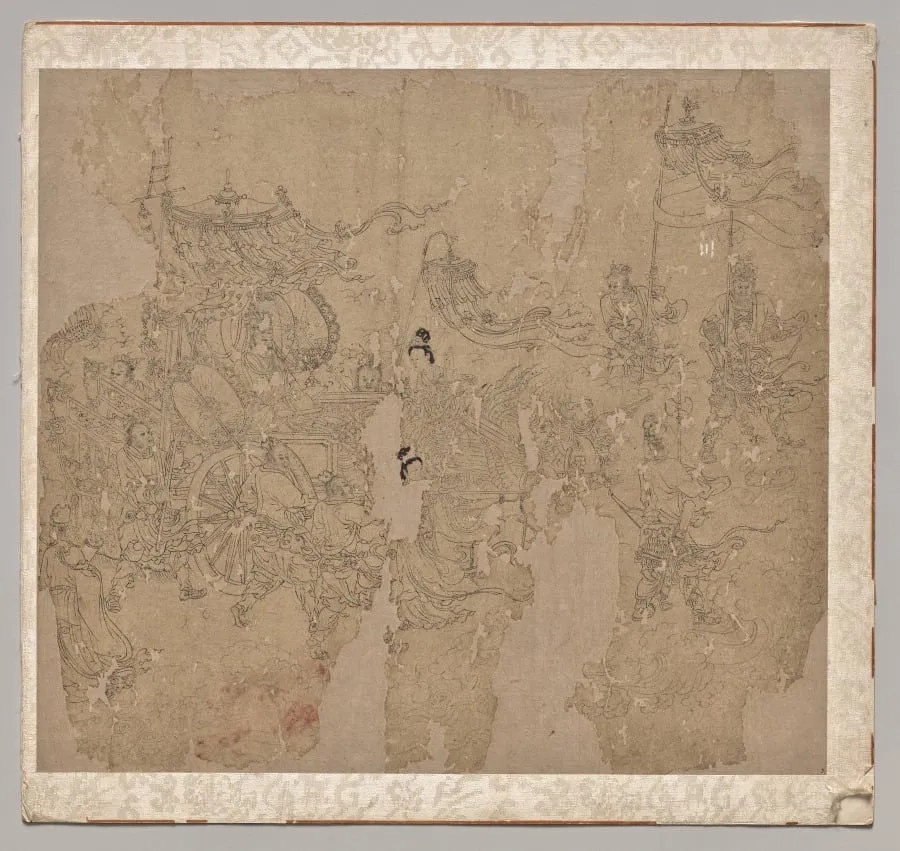
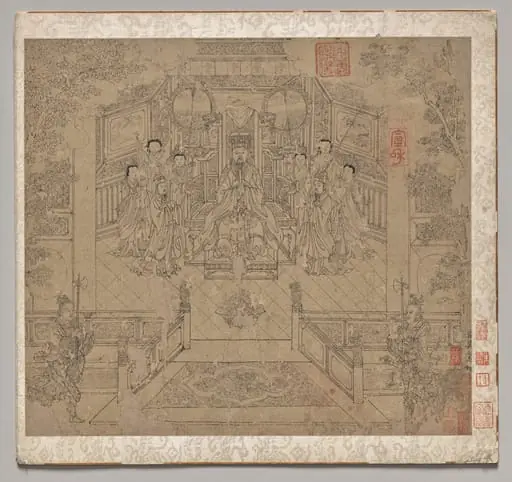
Album of Daoist and Buddhist Themes: Procession of Daoist Deities: Leaf 3 is an unspecified painting by the Ming dynasty painting artist Unknown. It dates from 1204 and is held in the collection of the Cleveland Museum of Art. The work is a leaf from a 50‑page album that illustrates a range of Daoist and Buddhist subjects.
About this work
You see a line of gods in bright robes floating on clouds, led by the Jade Emperor in a chariot pulled by cranes.
You see a line of gods in bright robes floating on clouds, led by the Jade Emperor in a chariot pulled by cranes.
This painting comes from a teaching album—like a sketchbook for artists learning to paint religious scenes. Fifty pages show different gods and punishments, probably used in a workshop to train new painters.
To see more paintings like this, look up china, southern song dynasty (1127-1279).
Overview
The work is a leaf from a 50‑page album that illustrates a range of Daoist and Buddhist subjects. This particular sheet belongs to the opening segment devoted to Daoist deities, depicting the Jade Emperor travelling on a cloud‑borne chariot accompanied by a procession of similarly attired figures.
Subject & Meaning
At the centre of the scene the Jade Emperor, ruler of the heavens, is shown seated in a chariot drawn by cranes, a symbol of longevity. He is flanked by a retinue of gods in vivid robes, all floating on clouds, emphasizing their celestial status and the orderly hierarchy of the Daoist pantheon.
Technique & Style
The painting employs fine brushwork typical of Southern Song workshop practice, with delicate lines defining the figures and subtle ink washes to render clouds and atmosphere. Bright mineral pigments highlight the robes, while the composition is organized in a linear procession that guides the viewer’s eye across the page.
History & Provenance
The album was likely produced in a Southern Song studio as a teaching tool for apprentices, offering model compositions for future commissions. Multiple master artists contributed, suggesting a collaborative workshop environment. The leaf is part of the first 26 pages that focus on the Daoist hierarchy before the album shifts to Buddhist themes.
Context
During the Southern Song period, religious art served both devotional and instructional purposes. Albums such as this one provided visual references for painters tasked with creating temple murals or portable screens, ensuring consistency in the portrayal of complex mythological narratives.
Legacy
The album illustrates the pedagogical methods of Song‑era workshops and offers scholars insight into the visual conventions used to depict Daoist deities. Its preservation allows comparative study with later religious paintings and informs understanding of the transmission of artistic standards across generations.
Artist & collection

 Domestic Scene
 Giacomo and Cardinal Marco, investing Andrea, Abbot of San Zeno, with his Benefice
 The Nymph of Fontainebleau
 Portrait of a Woman
 Madonna and Child with Saints in the Enclosed Garden
 Venus and Minerva
 Family Group of Four on Sofa
 Wall painting from Room H of the Villa of P. Fannius Synistor at Boscoreale
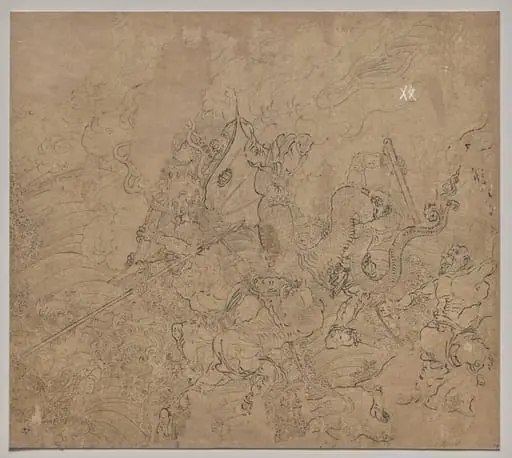 Album of Daoist and Buddhist Themes: Search the Mountain: Leaf 49
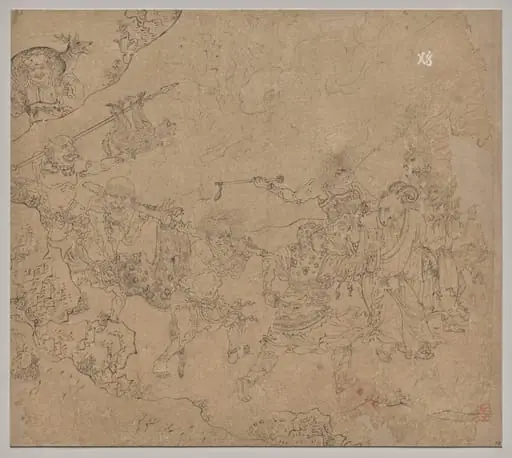 Album of Daoist and Buddhist Themes: Search the Mountain: Leaf 45
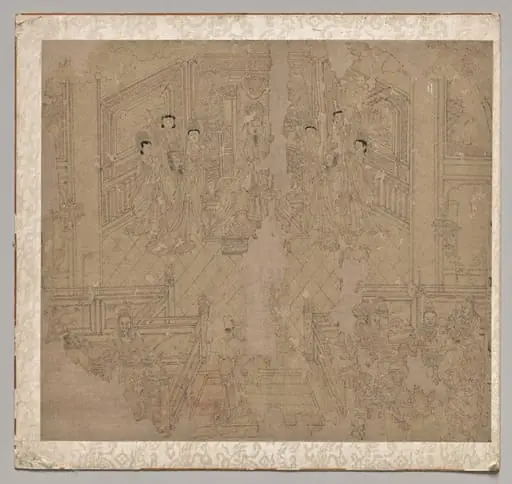 Album of Daoist and Buddhist Themes: Procession of Daoist Deities: Leaf 2
 Album of Daoist and Buddhist Themes: Search the Mountain: Leaf 47
 Album of Daoist and Buddhist Themes: Search the Mountain: Leaf 50
 Album of Daoist and Buddhist Themes: Kings of Hells: Leaf 28
 Album of Daoist and Buddhist Themes: Procession of Daoist Deities: Leaf 21
 Album of Daoist and Buddhist Themes: Kings of Hells: Leaf 37
 Album of Daoist and Buddhist Themes: Procession of Daoist Deities: Leaf 16
 Album of Daoist and Buddhist Themes: Search the Mountain: Leaf 41
 Album of Daoist and Buddhist Themes: Procession of Daoist Deities: Leaf 11
 Album of Daoist and Buddhist Themes: Procession of Daoist Deities: Leaf 1