Artwork
Apostolul Toma
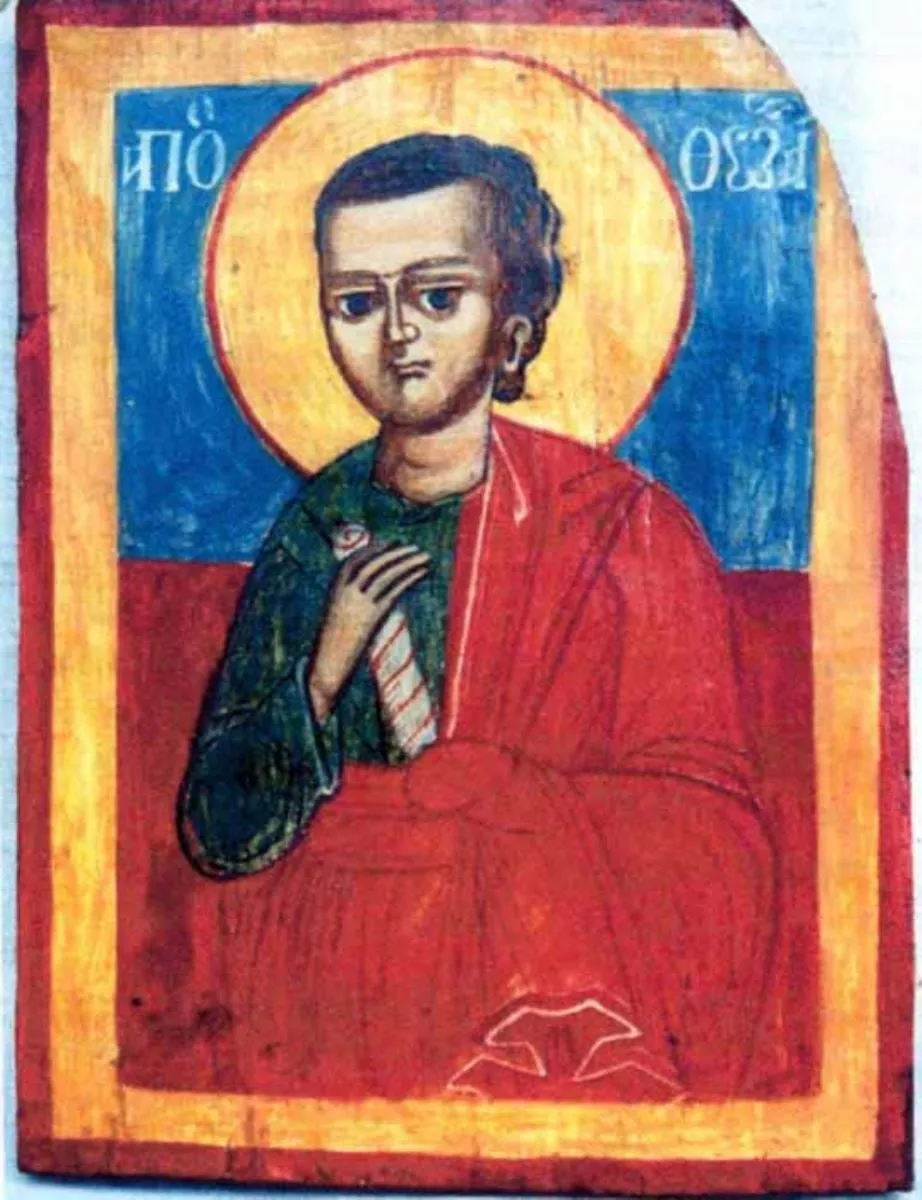
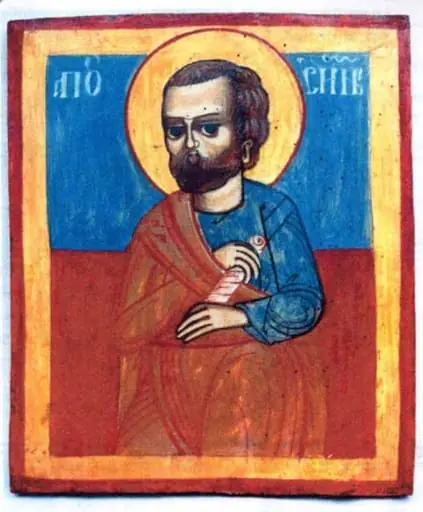
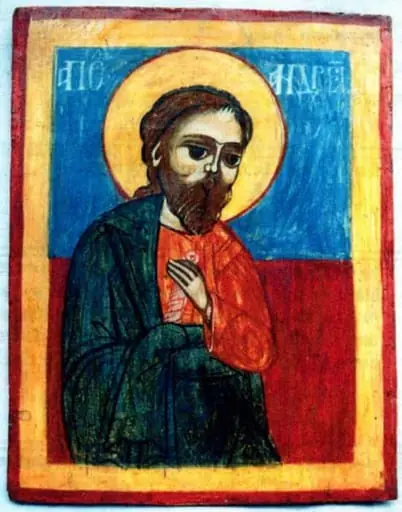
Apostolul Toma is a drawing by the Romanticist artist Unknown. It dates from 1773 and is held in the collection of the "Dimitrie Gusti" National Village Museum. This panel depicts the Apostle Thomas, identified by his halo and solemn expression.
About this work
Overview
Rendered in flat, bold colors—red, green, blue, and gold—the figure stands against a plain background, emphasizing spiritual presence over naturalism.
This panel depicts the Apostle Thomas, identified by his halo and solemn expression. Rendered in flat, bold colors—red, green, blue, and gold—the figure stands against a plain background, emphasizing spiritual presence over naturalism. The small boat at the lower edge suggests a narrative element tied to his life, though rendered minimally. The composition follows Byzantine conventions, prioritizing symbolic clarity over spatial depth.
Subject & Meaning
Thomas, one of Christ’s twelve apostles, is shown with a beard and dark hair, typical of early Christian iconography. His clasped hands convey reverence, while the golden halo signifies sanctity. The inclusion of a boat may reference his role as a fisherman or his later missionary journeys by sea. The image serves not as a portrait but as a devotional aid, inviting contemplation of his faith and witness.
Technique & Style
The painting employs a stylized approach common in medieval religious art: clean outlines, unmodulated color fields, and no attempt at perspective. The halo, a raised gold band against a blue field, draws attention to the figure’s holiness. The red robe and green tunic contrast sharply, reinforcing visual hierarchy. Details are reduced to essential forms, reflecting a focus on spiritual meaning rather than physical realism.
History & Provenance
The work’s origins are not documented, but its style aligns with Eastern Orthodox or Italo-Byzantine traditions from the late medieval period. Such panels were often created for private devotion or church use. The simplicity of materials and technique suggests it may have been produced in a regional workshop rather than a major urban center, though its preservation indicates it held enduring religious value.
Context
In the medieval Christian world, images of apostles functioned as both teaching tools and objects of veneration. The use of halos, symbolic colors, and minimal background elements followed established iconographic rules meant to convey theological truths quickly and clearly. This image would have been understood by viewers familiar with biblical narratives, even if illiterate.
Legacy
This painting exemplifies the enduring tradition of religious iconography that prioritized spiritual representation over naturalism. Its formal qualities influenced later devotional art across Eastern and Western Christendom. Though modest in scale and detail, it reflects a broader cultural practice of using visual symbols to communicate sacred stories and reinforce faith across generations.
Artist & collection
Museum
"Dimitrie Gusti" National Village Museum
Continue through works from the same source collection.
 Domestic Scene
 Giacomo and Cardinal Marco, investing Andrea, Abbot of San Zeno, with his Benefice
 The Nymph of Fontainebleau
 Portrait of a Woman
 Madonna and Child with Saints in the Enclosed Garden
 Venus and Minerva
 Family Group of Four on Sofa
 Wall painting from Room H of the Villa of P. Fannius Synistor at Boscoreale