Artwork
Apostolul Matei
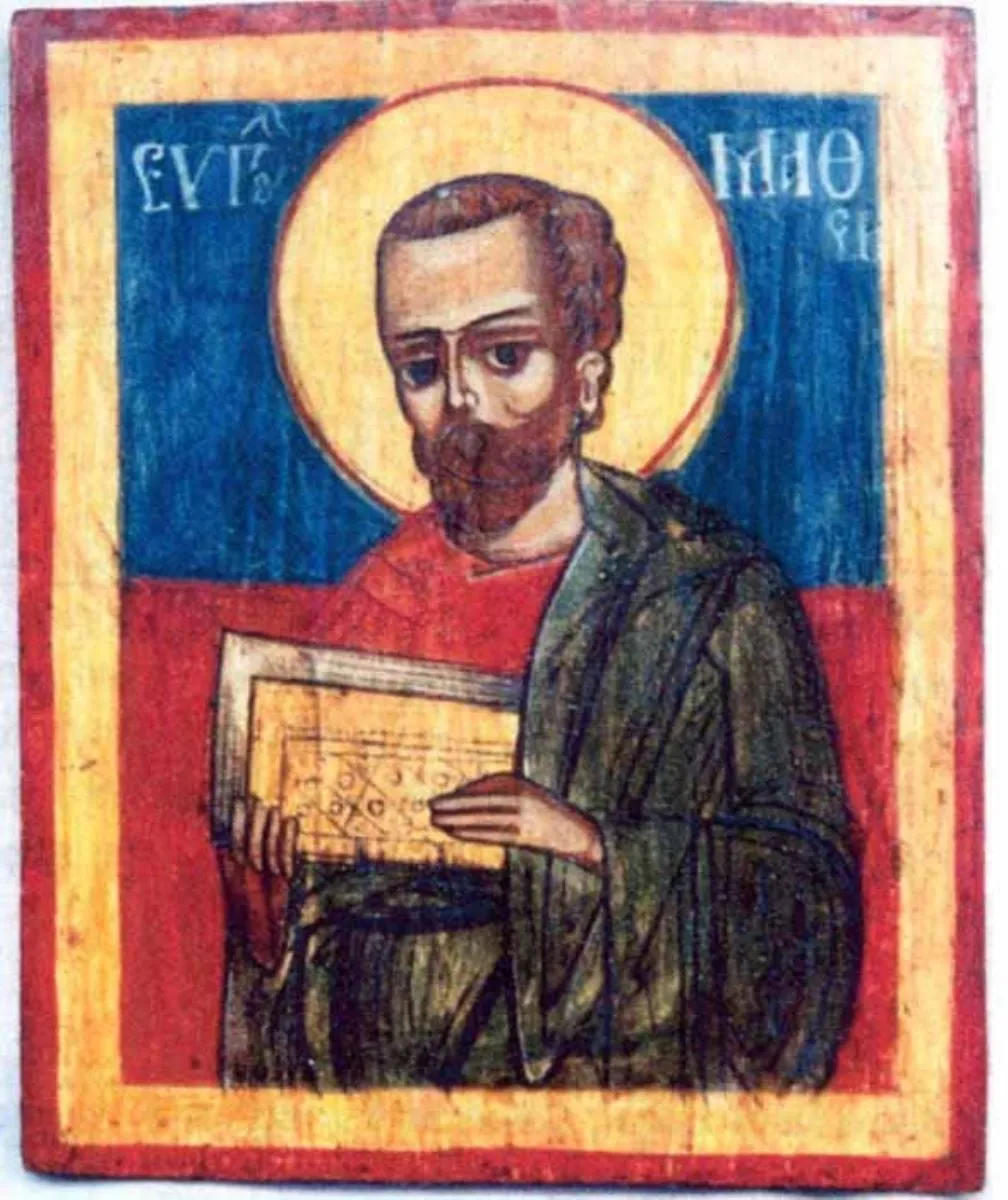
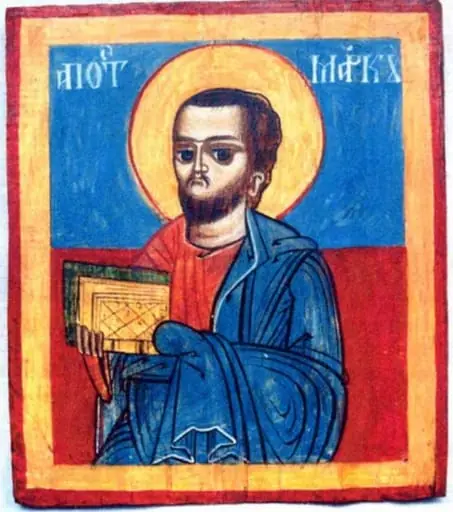
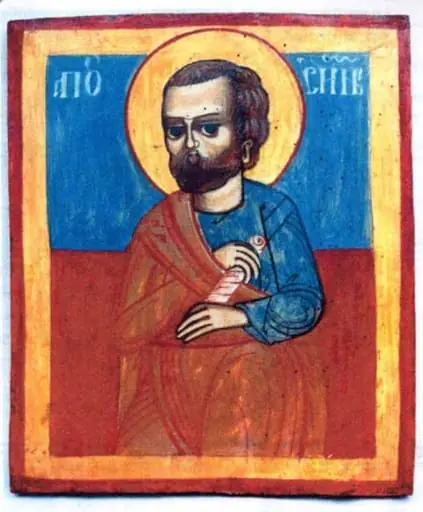
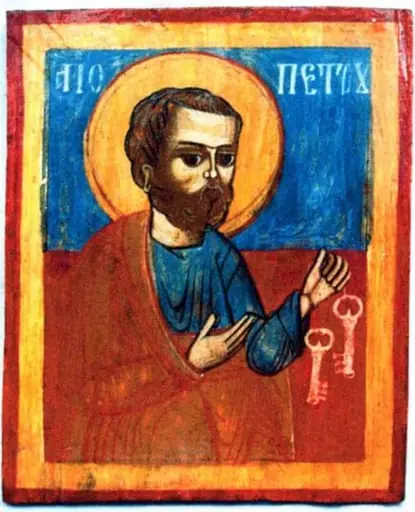
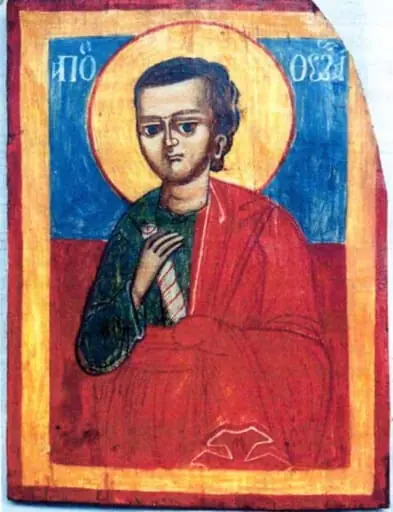
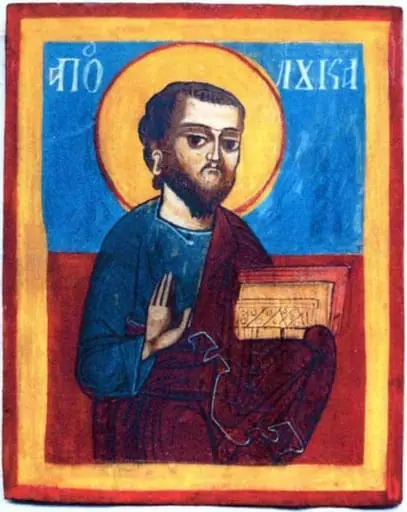
Apostolul Matei is a drawing by the Romanticist artist Unknown. It dates from 1773 and is held in the collection of the "Dimitrie Gusti" National Village Museum. This artwork depicts Saint Matthew, one of the four Evangelists, rendered in a traditional Eastern European iconographic style.
About this work
Overview
This artwork depicts Saint Matthew, one of the four Evangelists, rendered in a traditional Eastern European iconographic style.
This artwork depicts Saint Matthew, one of the four Evangelists, rendered in a traditional Eastern European iconographic style. He is shown seated, dressed in a red robe and green cloak, holding a small book inscribed with symbolic script. A golden halo encircles his head, and the background features a blue field with gold lettering along the upper and lower edges, reinforcing its liturgical purpose.
Subject & Meaning
Saint Matthew is portrayed as the author of the Gospel, identified by the evangeliary he holds—a book containing selected passages used in church services. The golden halo signifies his sanctity, while the symbolic script within the book alludes to divine revelation. The composition emphasizes his role as a transmitter of sacred text, not as a historical figure but as a spiritual witness.
Technique & Style
The painting employs flat, unmodulated colors and simplified forms typical of medieval Eastern European icon painting. Gold leaf outlines and lettering enhance the sacred atmosphere, while the lack of perspective and naturalistic shading reflects a focus on spiritual presence over physical realism. The contrast between the rich reds, greens, and golds serves to draw attention to the figure and his sacred object.
History & Provenance
Though the exact origin and artist are undocumented, the style aligns with devotional panels produced in Orthodox Christian regions during the late medieval or early modern period. Such images were commonly displayed in churches or monasteries, often as part of an iconostasis. The use of gold and durable pigments suggests it was created for liturgical use rather than private devotion.
Context
In Eastern Christian tradition, icons of the Evangelists were essential in worship, serving as visual aids during liturgy and reminders of scriptural authority. The evangeliary, often carried in processions or placed on the altar, was a sacred object in its own right. This image would have been viewed not as art but as a window to the divine, connecting the faithful to the Word.
Legacy
This work exemplifies the enduring conventions of Orthodox iconography, where symbolic representation supersedes individual expression. Its preservation reflects the continuity of religious practice in Eastern Europe, where such images maintained their liturgical function for centuries. Today, it stands as a testament to the role of visual tradition in sustaining theological identity across generations.
Artist & collection
Museum
"Dimitrie Gusti" National Village Museum
Continue through works from the same source collection.
 Domestic Scene
 Giacomo and Cardinal Marco, investing Andrea, Abbot of San Zeno, with his Benefice
 The Nymph of Fontainebleau
 Portrait of a Woman
 Madonna and Child with Saints in the Enclosed Garden
 Venus and Minerva
 Family Group of Four on Sofa
 Wall painting from Room H of the Villa of P. Fannius Synistor at Boscoreale