Artwork
Arjumand Banu Begum
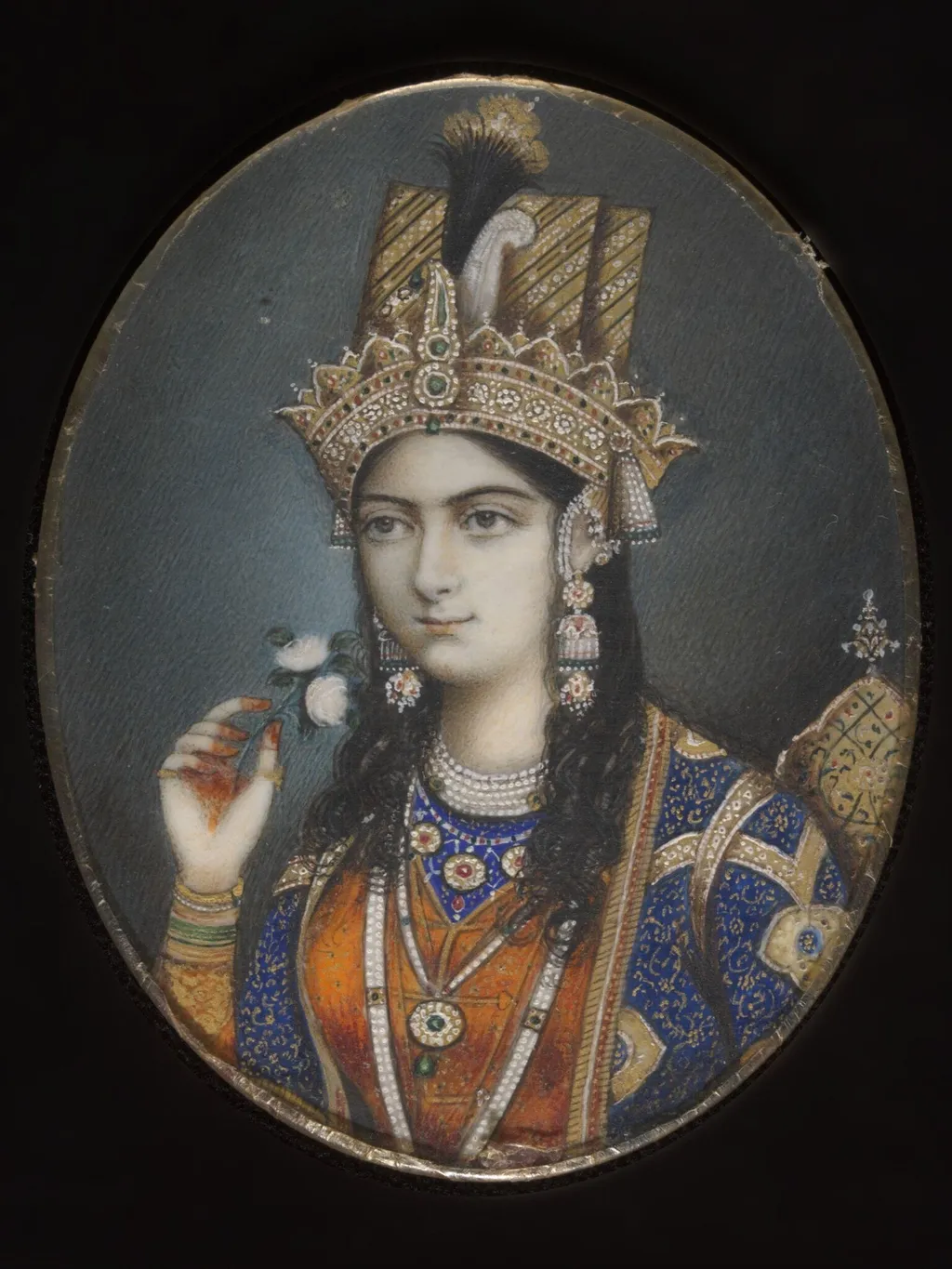
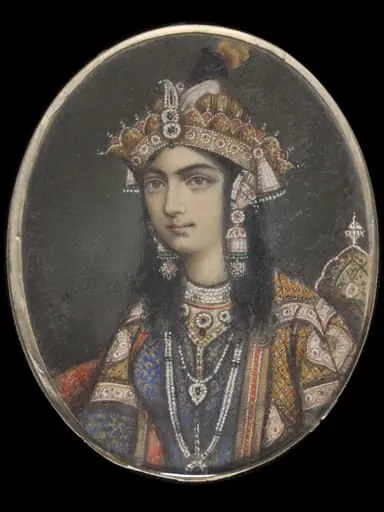
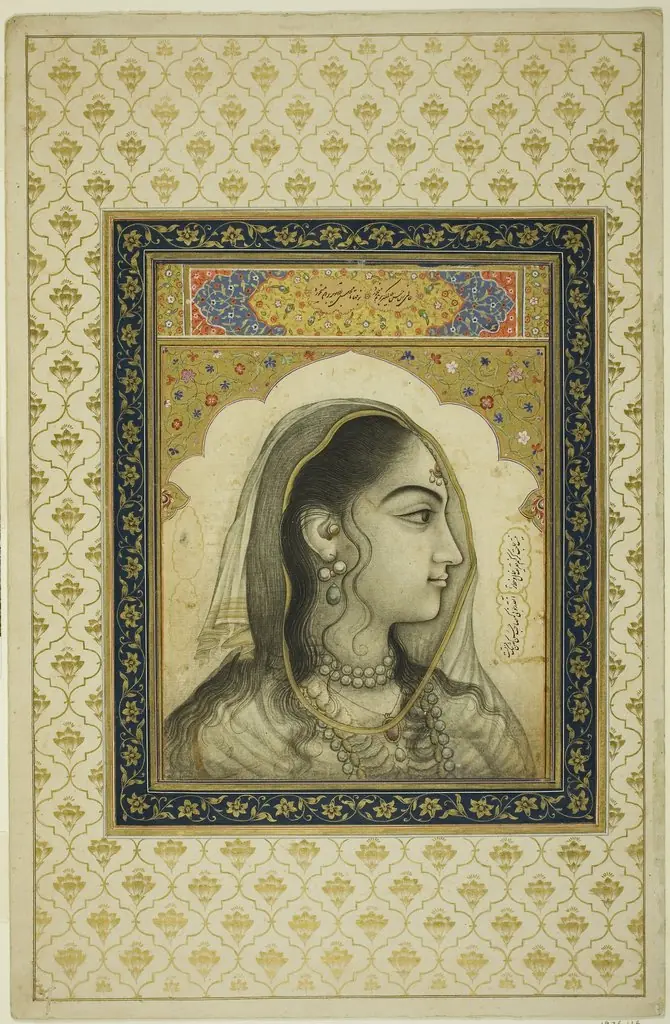
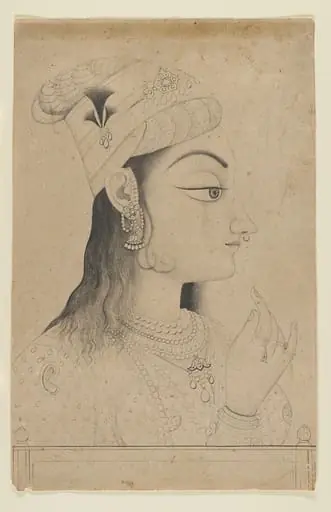
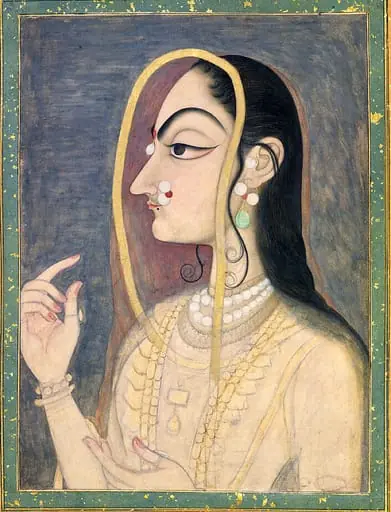
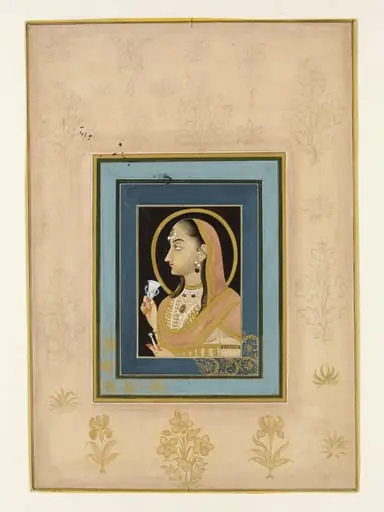
Arjumand Banu Begum is a paint painting by the Patna School of Painting artist Unknown. It dates from 1820 and is held in the collection of the Victoria and Albert Museum.
About this work
Overview
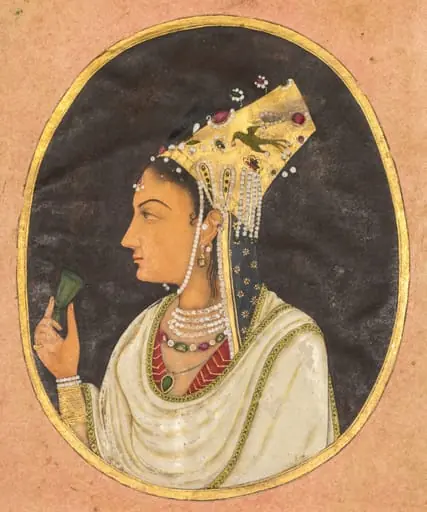
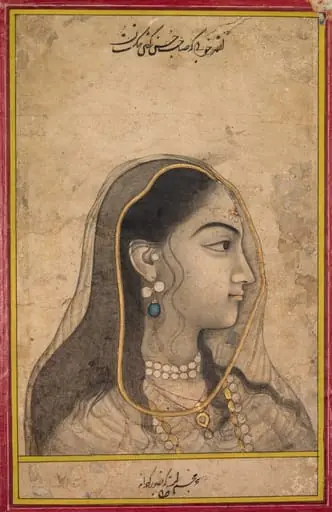
It depicts Arjumand Banu Begum, historically known as Mumtaz Mahal, though no authentic contemporary likeness of her exists.
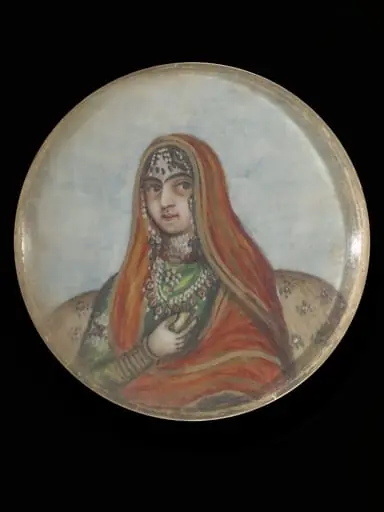
This watercolor portrait on ivory, created around 1830 by an unidentified artist in Delhi, belongs to the genre of Company Painting—a style developed in India to meet British colonial demand for visual records. It depicts Arjumand Banu Begum, historically known as Mumtaz Mahal, though no authentic contemporary likeness of her exists. The image is a later imaginative reconstruction, one of many produced to satisfy fascination with the Mughal empress.
Subject & Meaning
Arjumand Banu Begum, or Mumtaz Mahal, was the beloved wife of Emperor Shah Jahan, whose death in 1631 after childbirth prompted the construction of the Taj Mahal. Though the portrait does not reflect her actual appearance, it symbolizes her enduring cultural significance. The image serves less as a historical record and more as a romanticized tribute, reflecting the British and Indian audiences’ fascination with Mughal royalty and its legacy.
Technique & Style
The artist employed watercolor on ivory, a medium refined under British influence in the 18th century. Unlike traditional Indian miniature techniques relying on bold outlines and opaque pigments, this work uses delicate stippling and translucent washes to model form and texture. The fine detail in her jewelry and garments reflects adaptation to European portraiture conventions, while retaining Indian decorative sensibilities in costume and ornamentation.
History & Provenance
Commissioned by British patrons in early 19th-century Delhi, the painting emerged from a flourishing trade in visual artifacts catering to colonial tastes. It was produced nearly two centuries after Mumtaz Mahal’s death, during a period when Indian artists increasingly worked for East India Company officials. Such portraits were often sold as souvenirs or collected as curiosities, embedding Mughal memory into colonial households.
Context
Company Paintings arose as Indian artists negotiated new markets under colonial rule, blending indigenous aesthetics with Western techniques. While ivory portraiture had ancient roots in South Asia, its use for realistic human likeness expanded under British patronage. This work reflects a broader cultural exchange: Indian skill met European demand, resulting in hybrid forms that preserved local craftsmanship while conforming to foreign expectations of portraiture.
Legacy
Though not a historical document, this portrait contributed to the visual mythology surrounding Mumtaz Mahal and the Taj Mahal. It exemplifies how colonial-era art shaped global perceptions of Mughal history, transforming a figure of the 17th century into an enduring icon. The technique it employs continues in some Indian studios today, preserving a unique fusion of artistic traditions born from cross-cultural encounter.
Artist & collection

 Domestic Scene
 Giacomo and Cardinal Marco, investing Andrea, Abbot of San Zeno, with his Benefice
 The Nymph of Fontainebleau
 Portrait of a Woman
 Madonna and Child with Saints in the Enclosed Garden
 Venus and Minerva
 Family Group of Four on Sofa
 Wall painting from Room H of the Villa of P. Fannius Synistor at Boscoreale