Artwork
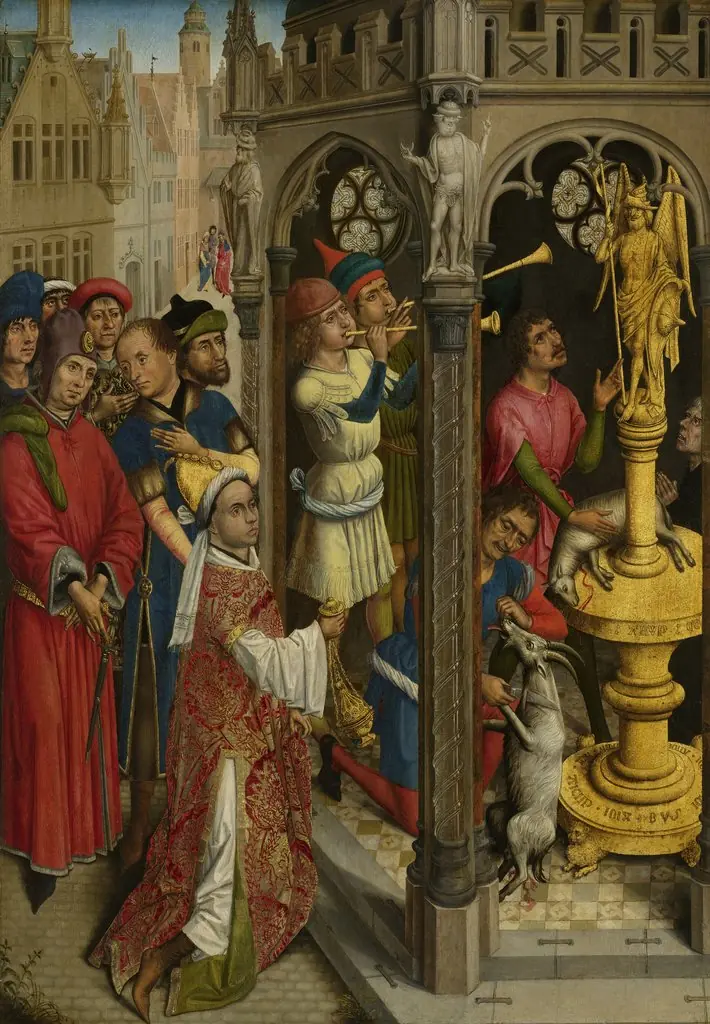
Augustinus offert aan een afgod der Manicheeërs (?)
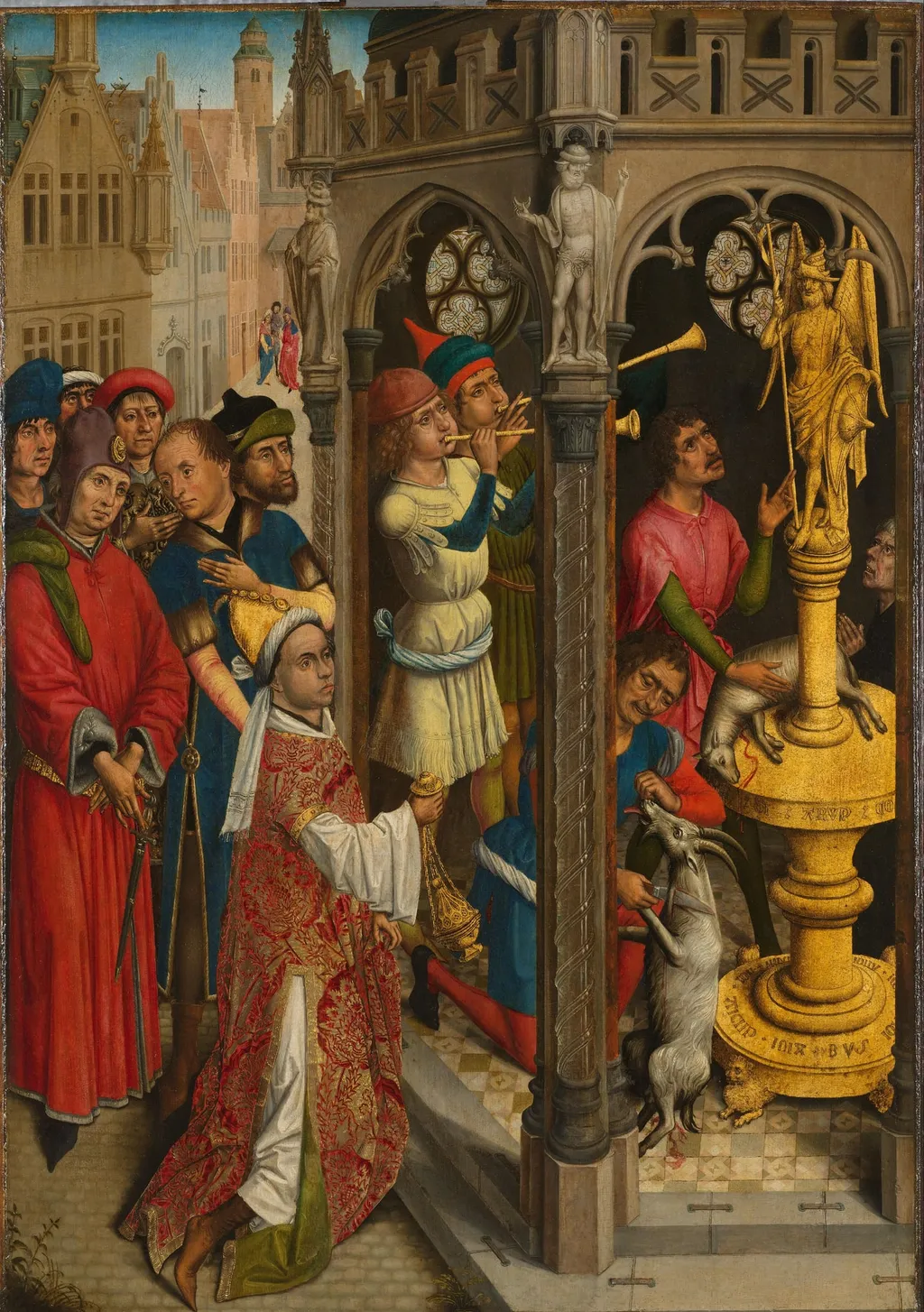
Augustinus offert aan een afgod der Manicheeërs (?) is an unspecified painting by the Northern Renaissance artist Unknown. It dates from 1795 and is held in the collection of the Rijksmuseum. The panel depicts a nocturnal town square in which a golden idol dominates a modest pedestal.
About this work
The artist isn’t known, but the careful details—like the folds in the priest’s robe—suggest someone trained in Brussels around 1480.
You see a small town square at dusk. A golden statue stands on a pedestal while a priest in a red robe kneels before it. A lamb and a goat lie slaughtered on the cobblestones.
This scene might show St. Augustine before he became a Christian. He once followed Manichaeism, a religion that saw the world as a battle between light and dark. The painting was likely part of a larger altarpiece telling his life story. The artist isn’t known, but the careful details—like the folds in the priest’s robe—suggest someone trained in Brussels around 1480.
To see more works like this, visit the Rijksmuseum.
Overview
The panel depicts a nocturnal town square in which a golden idol dominates a modest pedestal. A priest dressed in red kneels before the statue, while a lamb and a goat lie slain on the cobblestones. The composition is rendered in the late‑Gothic style typical of Brussels workshops around the 1480s, suggesting its original function as part of a larger devotional ensemble.
Subject & Meaning
The kneeling figure is commonly identified as Augustine of Hippo in his youthful phase, when he was attracted to Manichaeism—a dualistic sect that framed existence as a struggle between light and darkness. The sacrificial animals and the golden idol symbolize the ritual practices of that faith, providing a visual contrast to Augustine’s later rejection of Manichaeism and his embrace of orthodox Christianity.
Technique & Style
Executed in tempera on wood, the painting displays meticulous attention to drapery, particularly the deep folds of the priest’s red robe, and a careful rendering of architectural details in the surrounding townscape. The use of chiaroscuro to suggest dusk, together with a restrained palette of gold, red, and earth tones, reflects the training of Brussels painters in the late fifteenth century.
History & Provenance
The work originates from Brussels and was likely commissioned as a panel within an altarpiece or a series illustrating episodes from Augustine’s life. Its precise patron remains unknown, but the format and quality indicate a devotional context for a church or a wealthy confraternity. The panel entered museum collections in the twentieth century after passing through several private hands.
Context
During the late medieval period, Augustine’s conversion story was a popular subject for visual narratives, serving as a moral exemplar of repentance. The depiction of his Manichaean phase reflects contemporary concerns about heretical movements and the triumph of orthodox doctrine, aligning the artwork with the didactic aims of late Gothic ecclesiastical art.
Artist & collection

 Domestic Scene
 Giacomo and Cardinal Marco, investing Andrea, Abbot of San Zeno, with his Benefice
 The Nymph of Fontainebleau
 Portrait of a Woman
 Madonna and Child with Saints in the Enclosed Garden
 Venus and Minerva
 Family Group of Four on Sofa
 Wall painting from Room H of the Villa of P. Fannius Synistor at Boscoreale
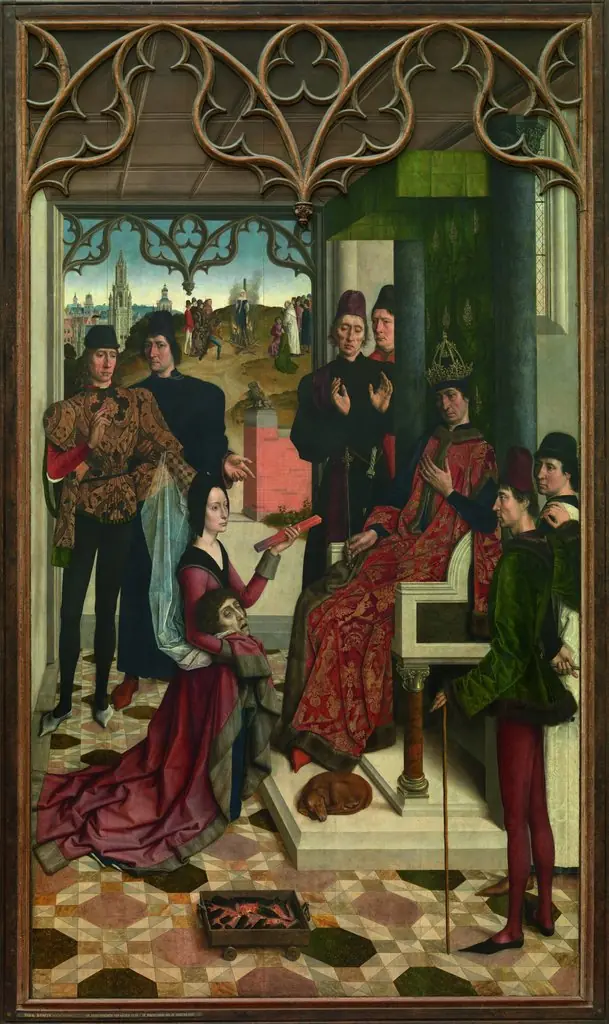 Justice of Emperor Otto III: The Trial by Fire
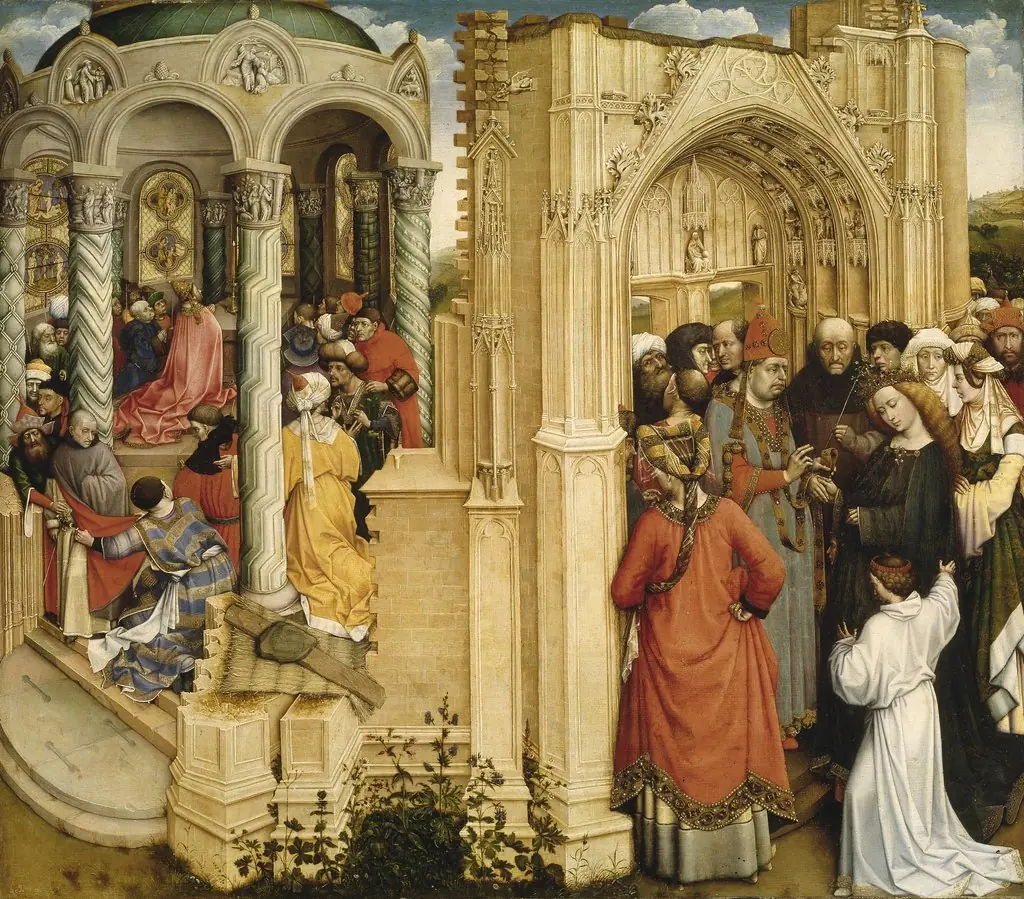 Marriage of the Virgin
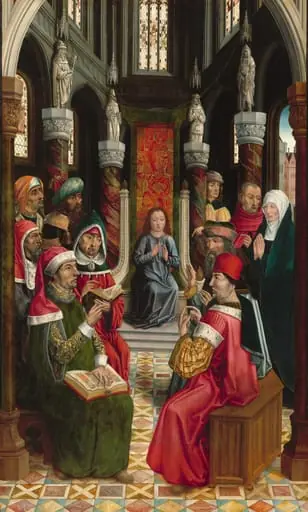 Christ among the Doctors
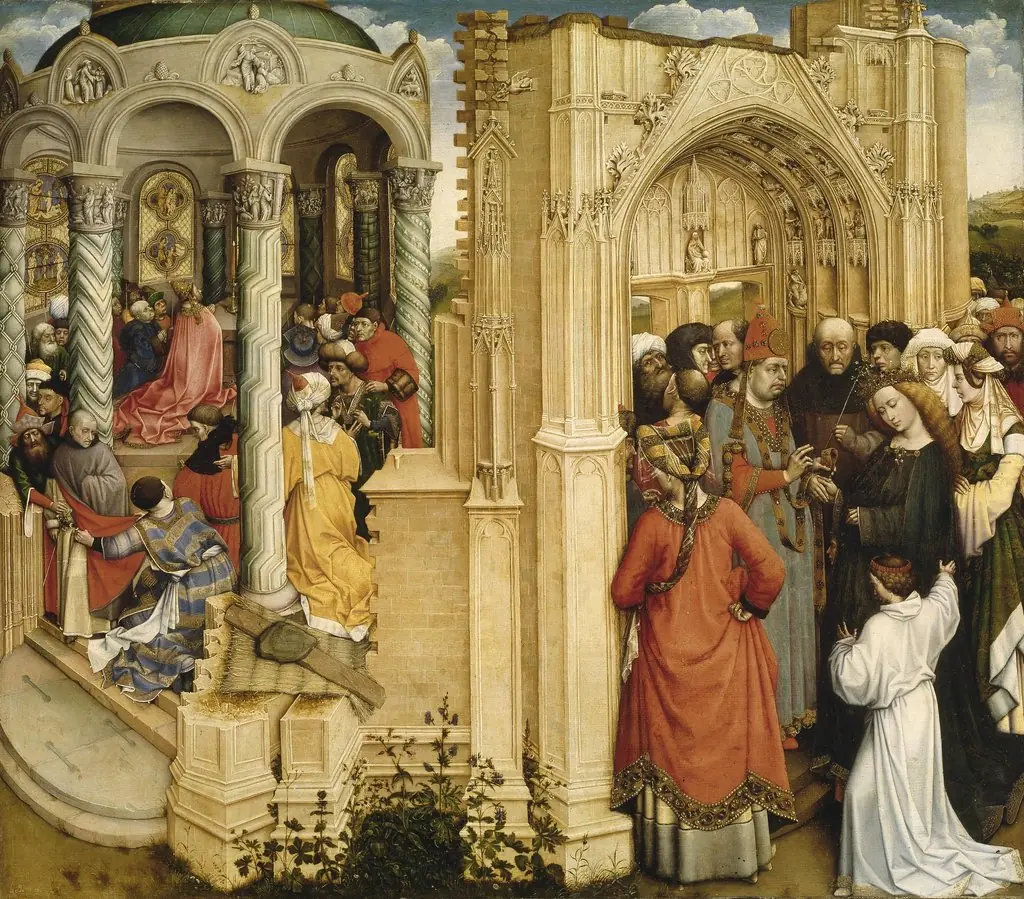 The miracle of the flowering rod (left); the marriage of Mary and Joseph (right)
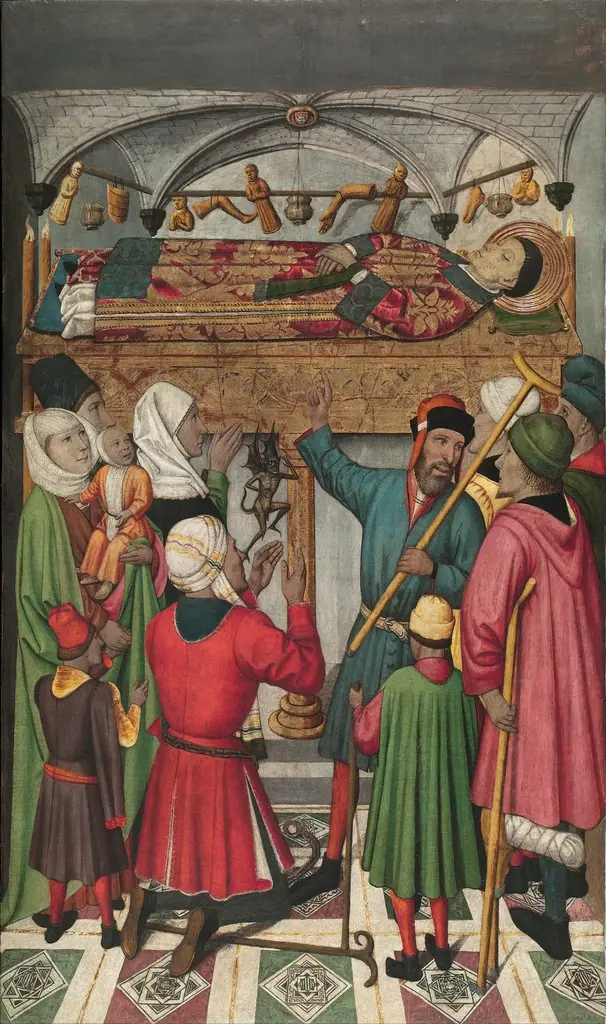 Posthumous Miracles by Saint Vincent
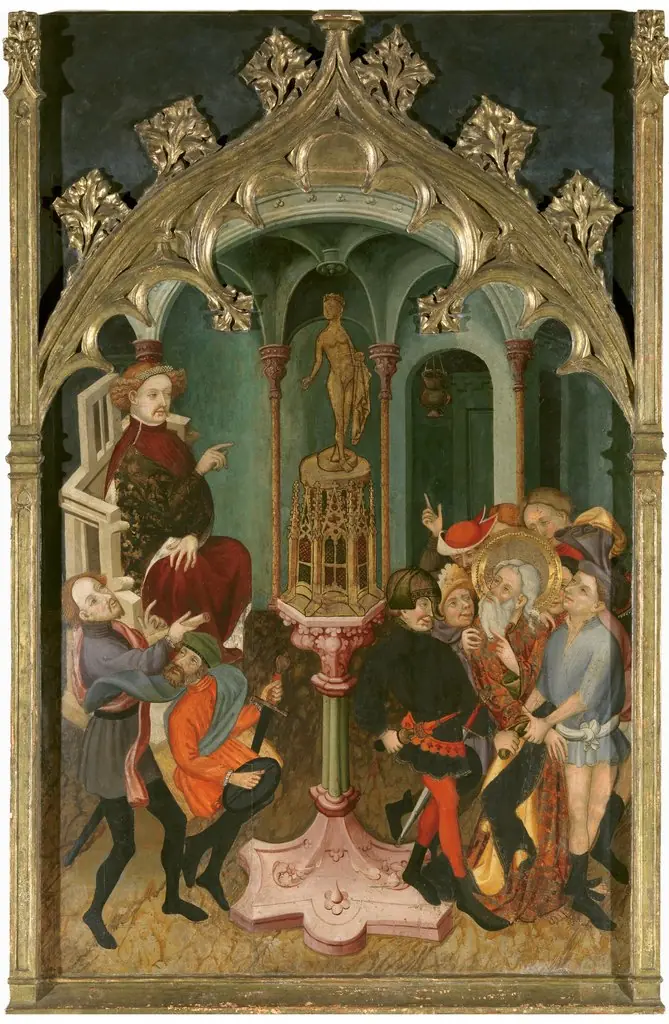 Saint Andrew refusing to worship the Idol
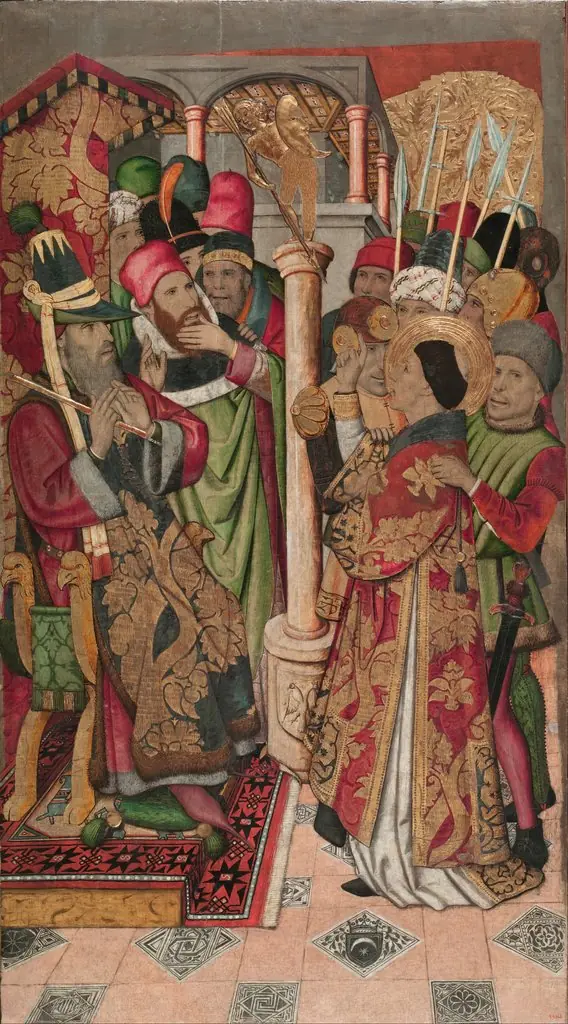 Saint Vincent before Dacian
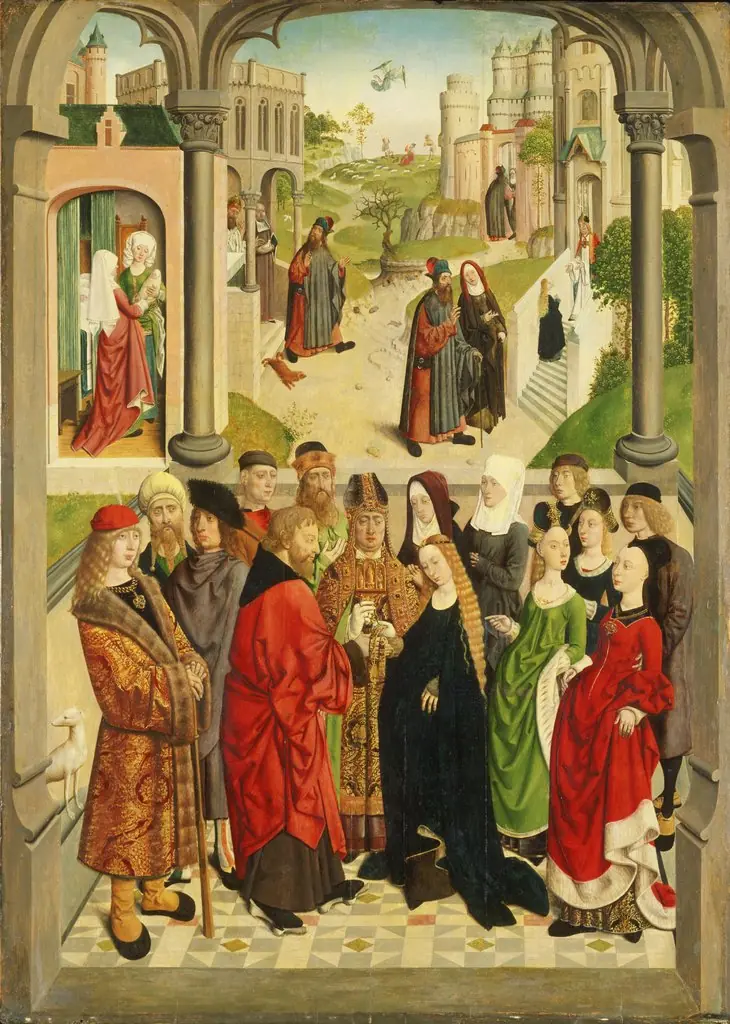 The Marriage of the Virgin, with the Expulsion of Saint Joachim from the Temple, the Angel Appearing to Saint Joachim, the Meeting at the Golden Gate, the Birth of the Virgin, and the Presentation of the Virgin
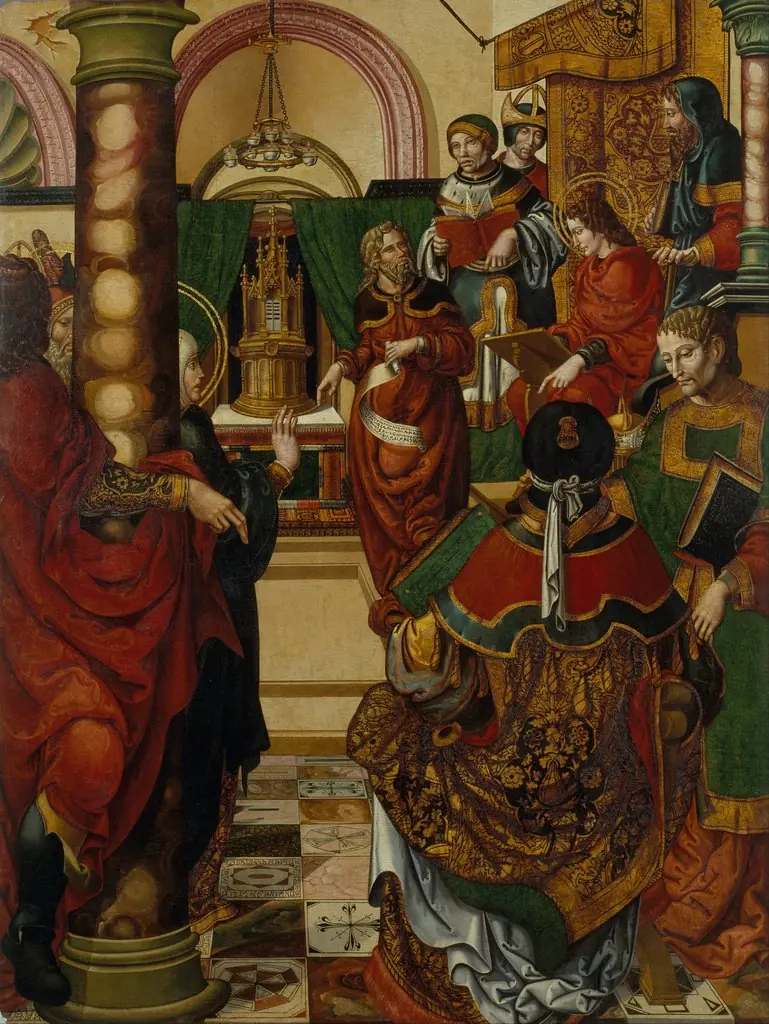 Jesus amongst the Doctors of the Law
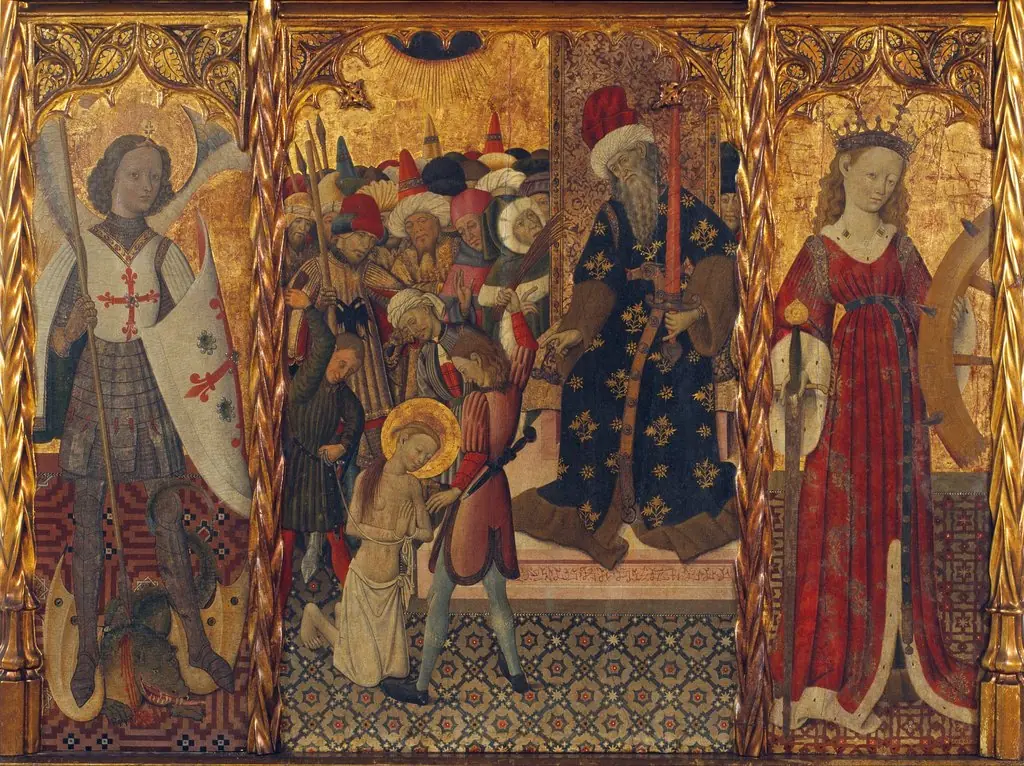 Saint Michael, Martyrdom of Saint Eulalia and Saint Catherine
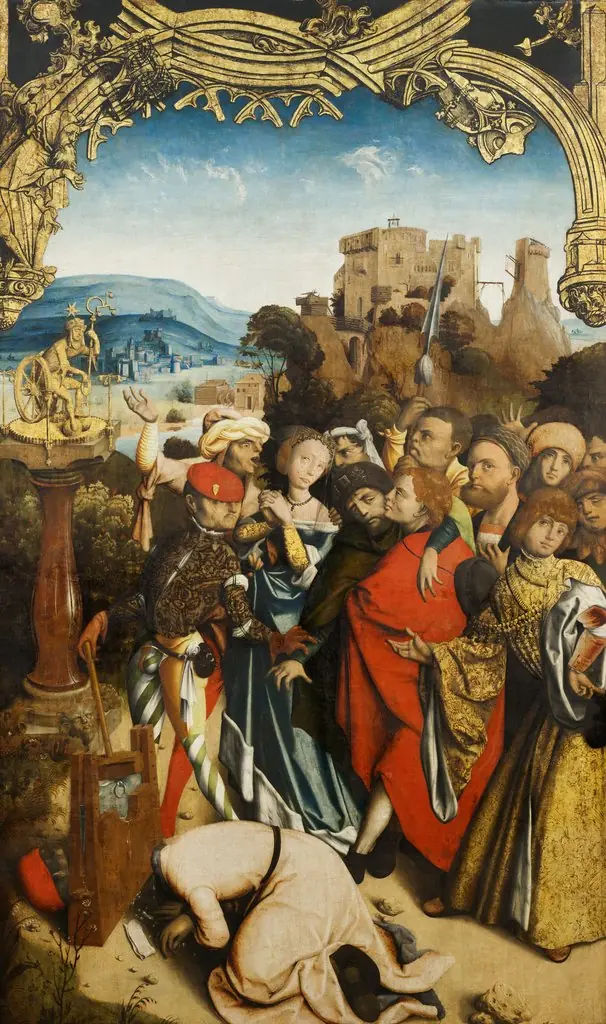 Martyrium der hll. Cantius, Cantianus und Cantianilla (Innenseite); Auferstehung Christi (Außenseite)
 Augustine sacrificing to an idol of the Manichaeans (?)