Artwork
Untitled
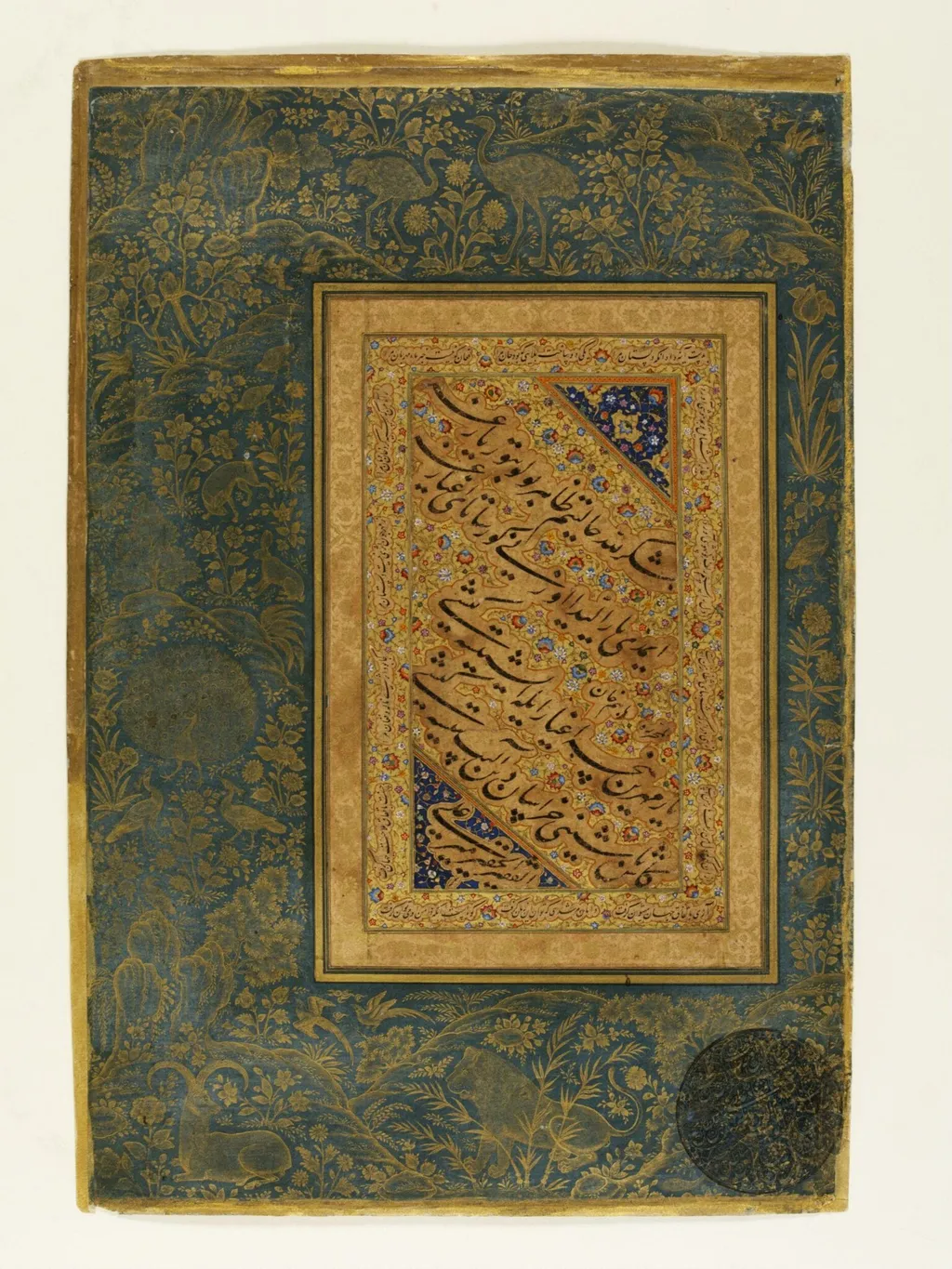
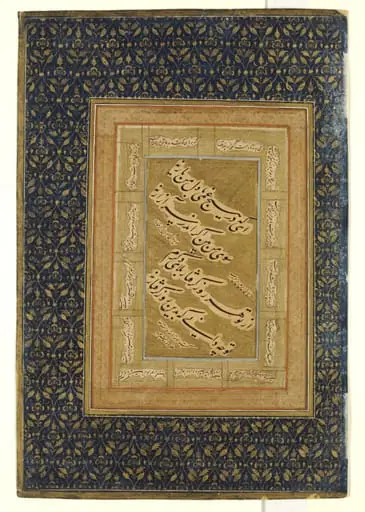
Untitled is a paint painting by the Baroque artist Mir 'Ali. It dates from 1625 and is held in the collection of the Victoria and Albert Museum.
About this work
Overview
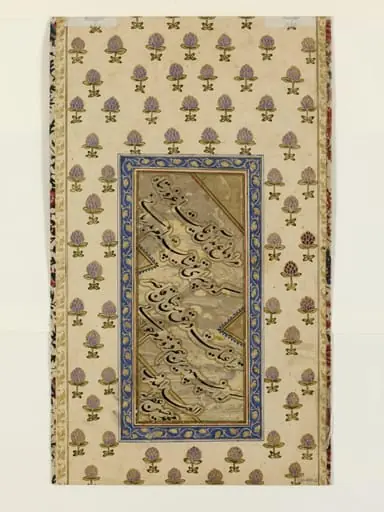
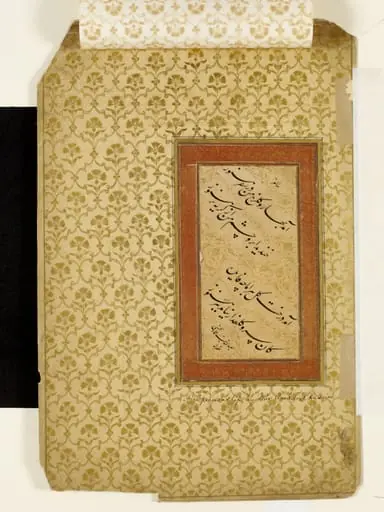
This work is a calligraphic panel executed in 1625 by Mir 'Ali of Herat, using opaque watercolour on paper.
This work is a calligraphic panel executed in 1625 by Mir 'Ali of Herat, using opaque watercolour on paper. It was later included in the bequest of Harriet Sarah, Baroness Wantage, following her death in 1920. The piece is mounted within a layered frame, with an inner decorative border of gold-leafed floral motifs and an outer gilded edge that enhances its luminous presence. Its format suggests it was designed as a devotional or ornamental object for display.
Subject & Meaning
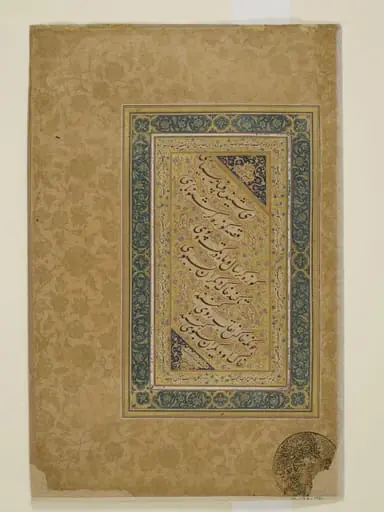
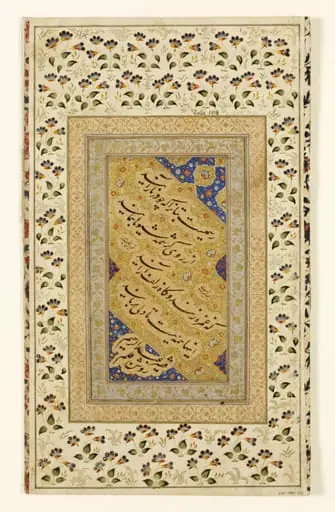
The central text is written in a flowing Persian or Arabic script, typical of Islamic calligraphic traditions. While the exact content is not specified, such panels often conveyed religious verses, poetic lines, or invocations. The emphasis on elegance and rhythm over literal legibility points to its role as a spiritual or aesthetic object, where the beauty of the script itself carried symbolic weight.
Technique & Style
The script is rendered in dark ink with precise, rhythmic strokes, contrasting against a pale paper ground. The surrounding border features intricate gold-leaf vines and blossoms, applied with meticulous handwork. A fine gold line traces the outer edge of the panel, creating a luminous halo effect. The composition balances textual gravity with ornamental flourish, reflecting the refined aesthetics of Safavid-era book arts.
History & Provenance
Created in the early 17th century in Herat, the panel entered the collection of Harriet Sarah, Baroness Wantage, before being bequeathed to a public institution upon her death in 1920. Its journey from a regional artistic center to a European private collection reflects the broader 19th- and early 20th-century interest in Islamic manuscripts among Western collectors.
Context
This work belongs to a tradition of Islamic calligraphy that elevated writing to a fine art, particularly under Safavid patronage. Similar panels were often integrated into album collections or displayed in domestic and religious spaces. The elaborate gold decoration aligns with courtly tastes of the period, where ornamentation served both aesthetic and devotional purposes.
Legacy
The panel remains a representative example of Persian calligraphic art preserved in Western institutional collections. Its framing and preservation reflect early 20th-century conservation practices that prioritized display over original context. It continues to serve as a reference for the enduring value placed on script as visual art within Islamic cultural traditions.
Artist & collection
Artist
Persian calligrapher in the 17th-century Isfahan atelier tradition, Mir ‘Ali left flowing black-ink compositions on paper and albums that trained eyes as much as hands.

 Aurangzeb
 Untitled
 Untitled
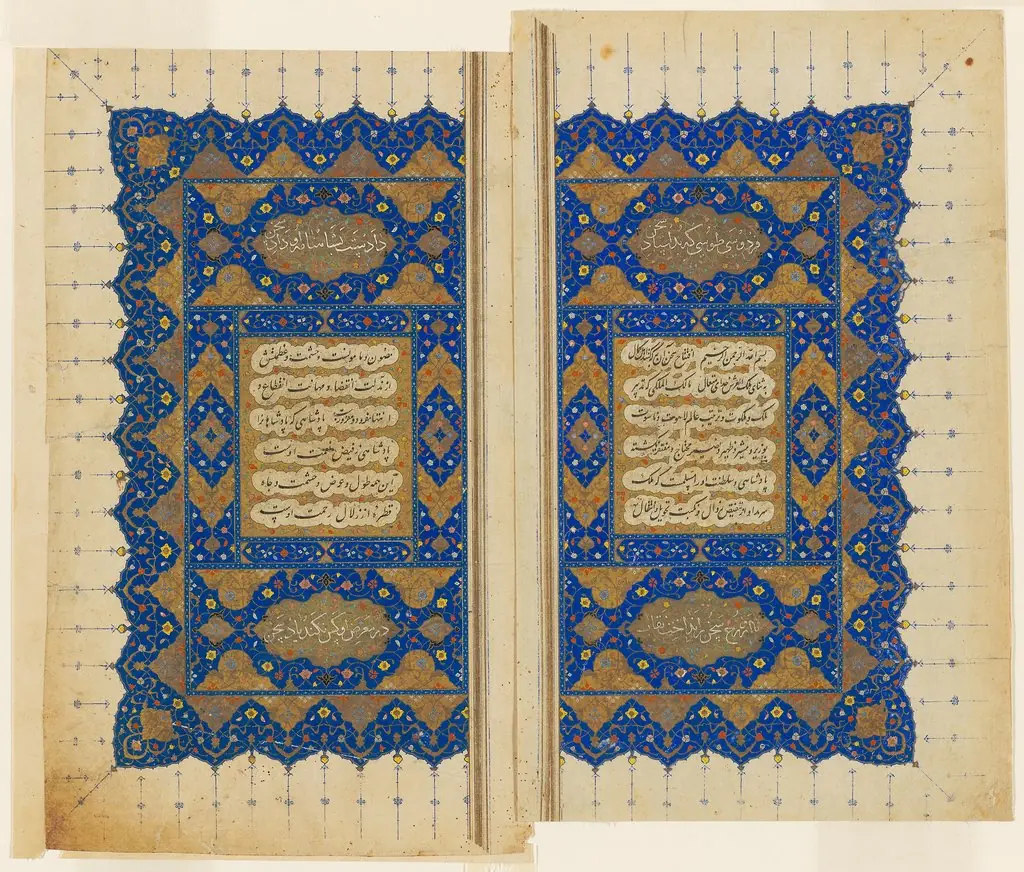 Double Title Page of a copy of the Shahnama of Firdausi
 Untitled
 Untitled
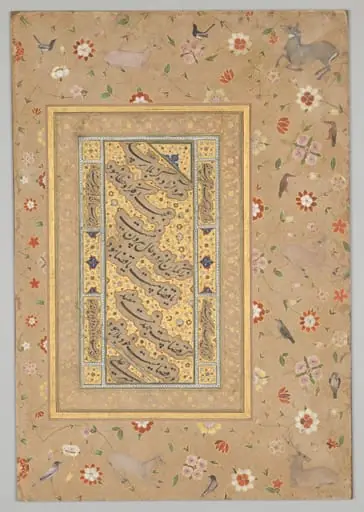 Persian calligraphy framed by an ornamental border of flowers, birds, and deer, from the Late Shah Jahan Album
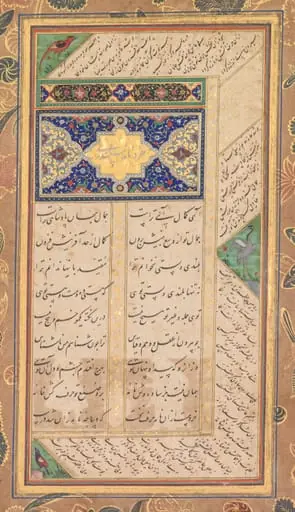 Illuminated page (verso), from a Panj Ganj (Five Treasures) of Abd al- Rahman Jami (Persian, 1414–1492) with two Persian masnavis: Yusuf va Zulaykha (Joseph and Zulaykha) and Khirad-nama-i Iskandari (Alexander’s Book of Wisdom)
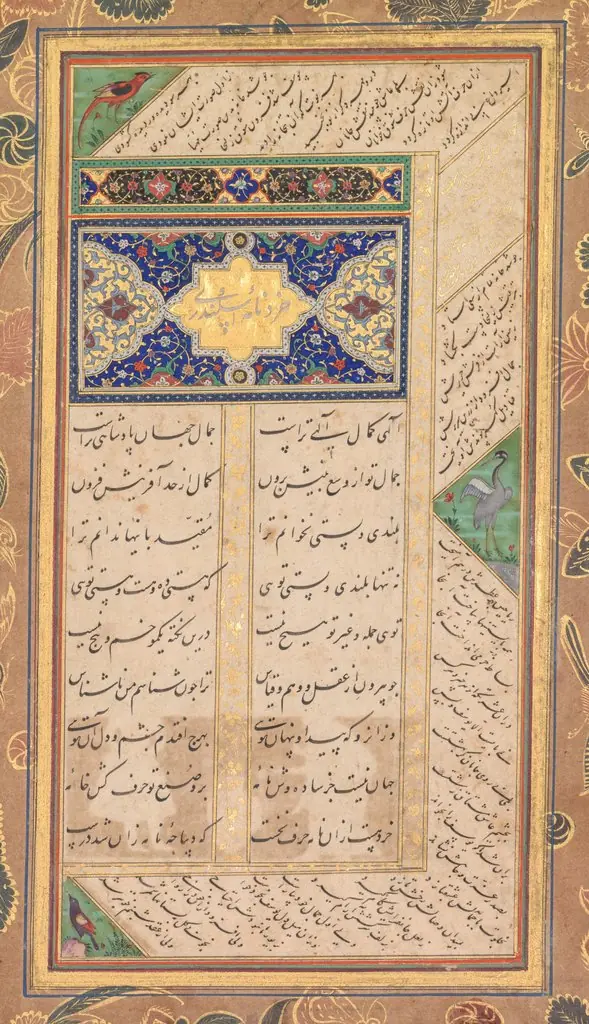 Illuminated page (verso), from a Panj Ganj (Five Treasures) of Abd al- Rahman Jami (Persian, 1414–1492) with two Persian masnavis: Yusuf va Zulaykha (Joseph and Zulaykha) and Khirad-nama-i Iskandari (Alexander’s Book of Wisdom)
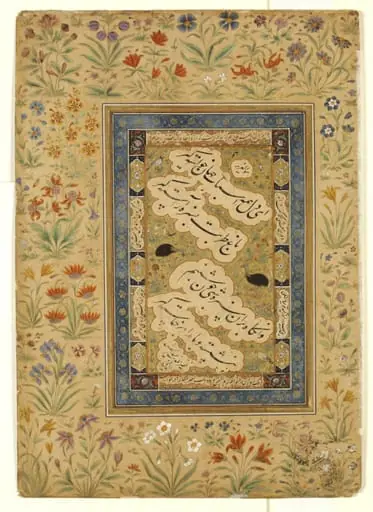 Untitled