Artwork
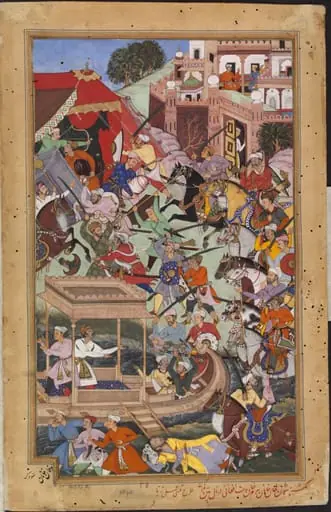
Babur meeting with Sultan Ali Mirza at the Kohik River, from a Babur-nama (Memoirs of Babur)
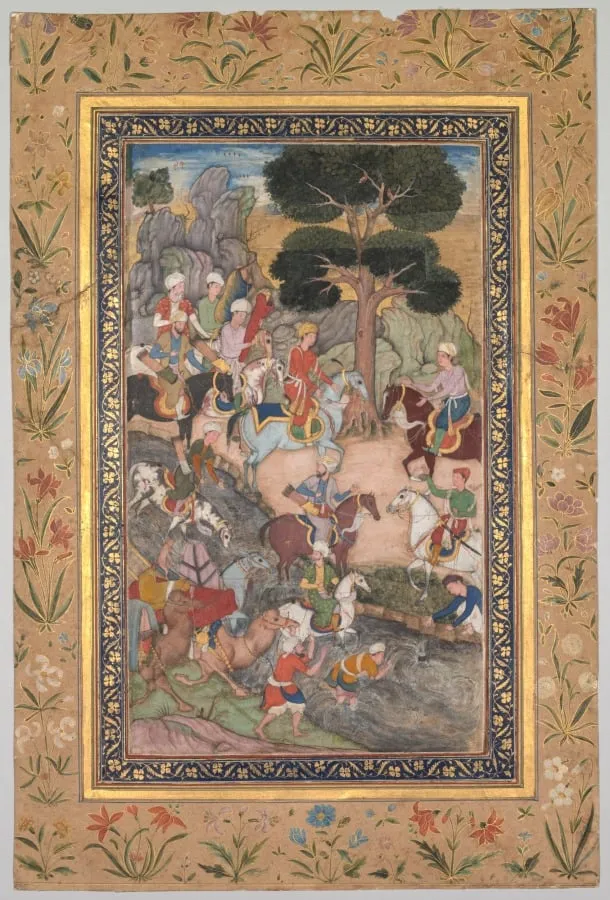
Babur meeting with Sultan Ali Mirza at the Kohik River, from a Babur-nama (Memoirs of Babur) is an unspecified painting by the Mughal Painting artist Unknown. It dates from 1590 and is held in the collection of the Cleveland Museum of Art.
About this work
Overview
This 16th-century painting depicts a pivotal encounter from 1496, thirty years prior to Babur's conquest of Delhi and the founding of the Mughal Empire. The scene shows Babur, then 13, meeting Sultan Ali Mirza by the Kohik River, a convergence that underscored their competing ambitions to capture Samarkand, a city steeped in the legacy of their common ancestor, Timur.
Subject & Meaning
The painting captures a strategic meeting between two youthful rivals, Babur and Sultan Ali Mirza, as they vie for control of Samarkand. This encounter signifies the early beginnings of Babur's expansionist endeavors, highlighting his precocious leadership at the age of 13.
Technique & Style
Executed in the Mughal school tradition, the artwork transforms a historical event into a vibrant, dynamic scene. Characterized by bright colors and a crowded composition, the style bears resemblance to sequential storytelling, akin to a 'comic strip' of imperial history.
History & Provenance
This painting is part of a handwritten copy of the Babur-nama (Memoirs of Babur), crafted decades after the event for Babur's grandson. The manuscript's creation context suggests it was intended to narrate Babur's life story for familial or dynastic purposes.
Context
The painting reflects the political turmoil of Central Asia in the late 15th century, where descendants of Timur competed for key cities like Samarkand. Babur's early actions, as depicted, laid the groundwork for his eventual rise to power.
Legacy
As part of the Babur-nama illustrations, this painting contributes to the visual legacy of the Mughal Empire's foundational narratives. It also exemplifies the Mughal school's distinctive artistic approach to recounting historical events.
Artist & collection

 Domestic Scene
 Giacomo and Cardinal Marco, investing Andrea, Abbot of San Zeno, with his Benefice
 The Nymph of Fontainebleau
 Portrait of a Woman
 Madonna and Child with Saints in the Enclosed Garden
 Venus and Minerva
 Family Group of Four on Sofa
 Wall painting from Room H of the Villa of P. Fannius Synistor at Boscoreale