Artwork
Akbar's entry into the fort of Ranthambhor
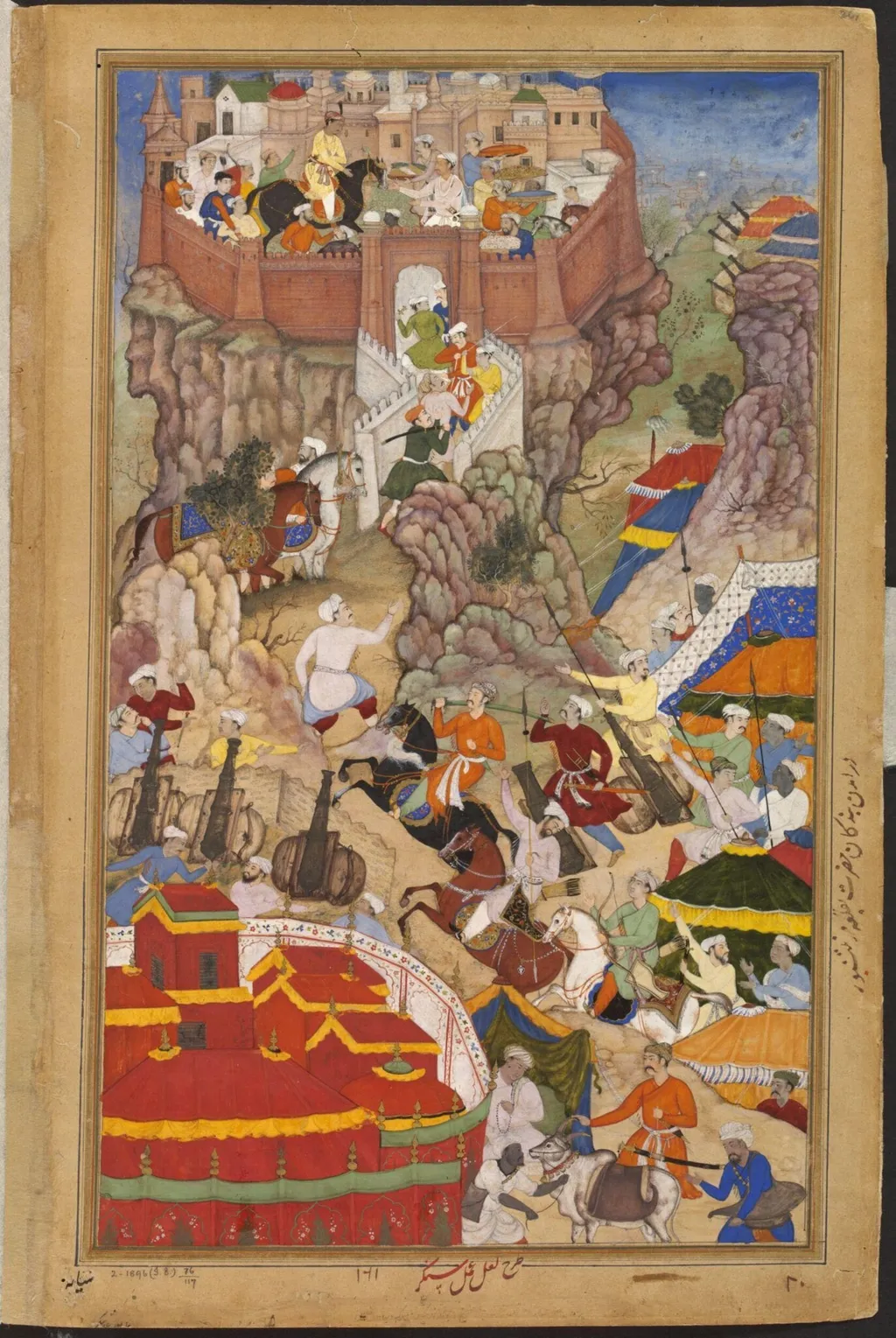
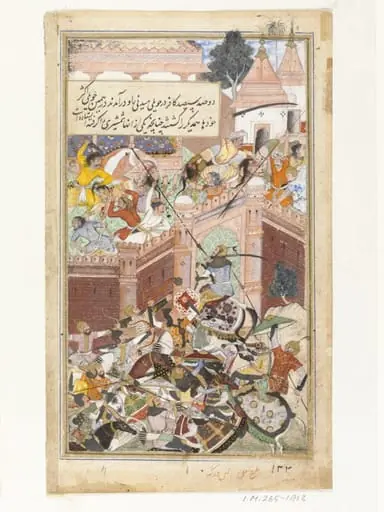
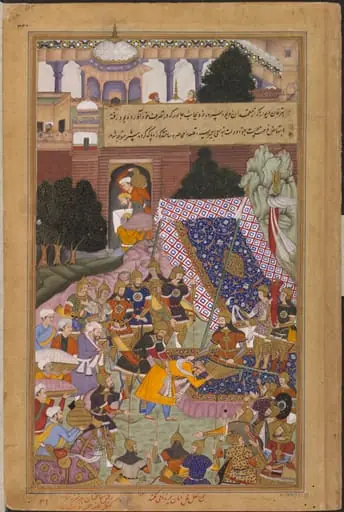
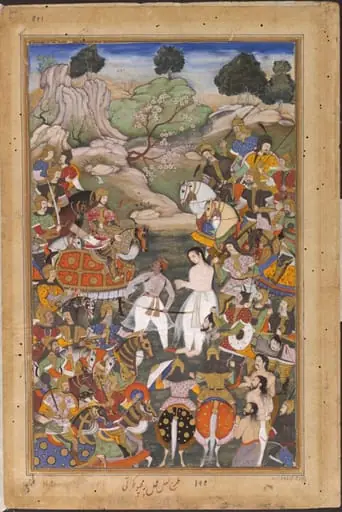
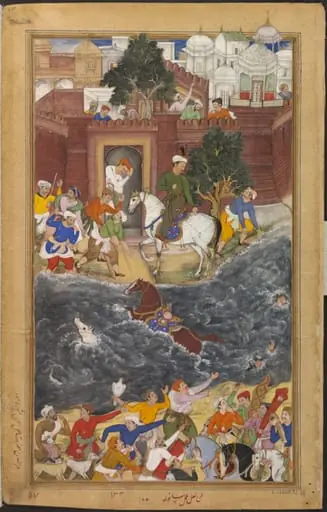
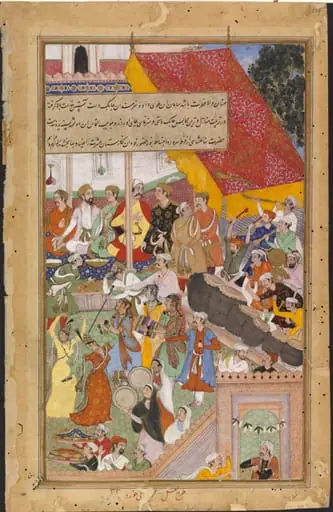
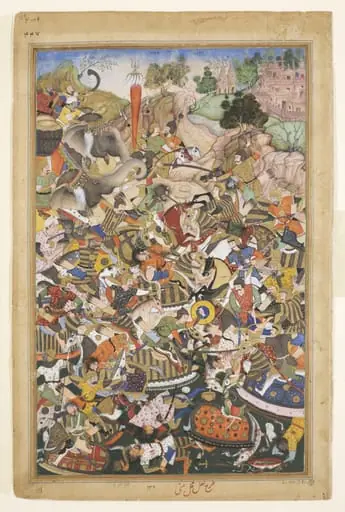
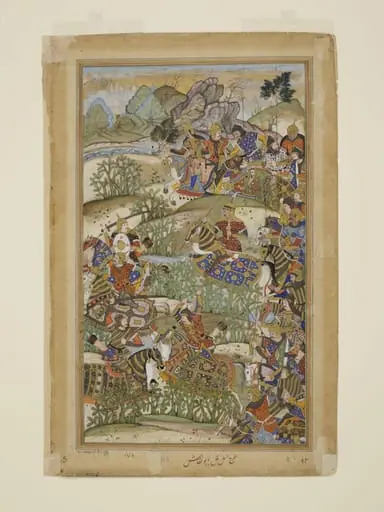
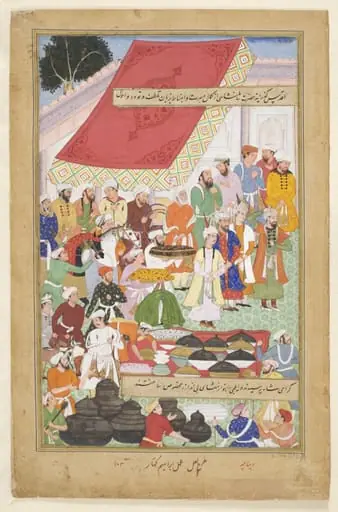
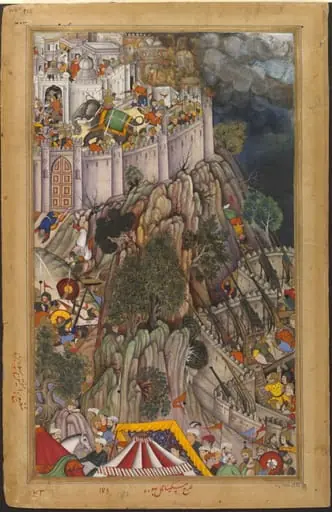
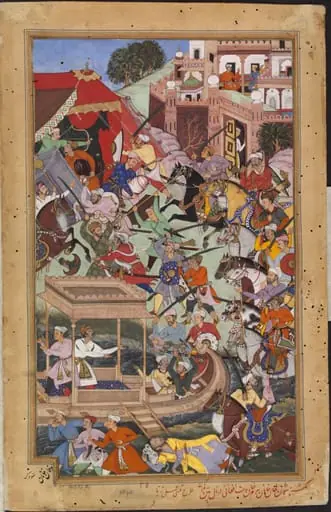
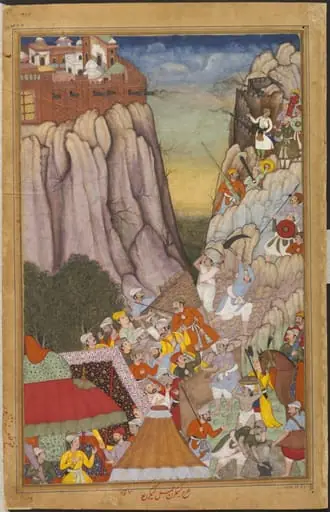
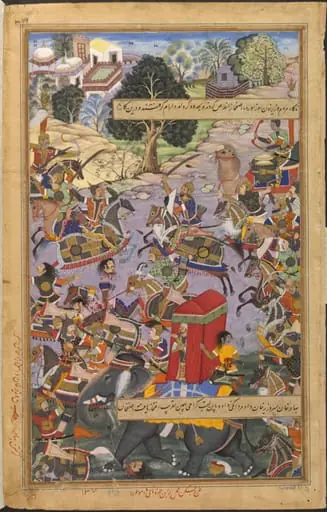
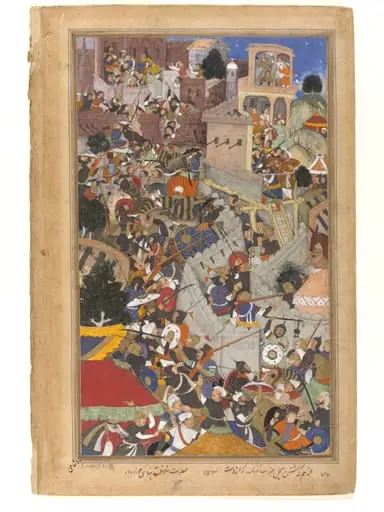
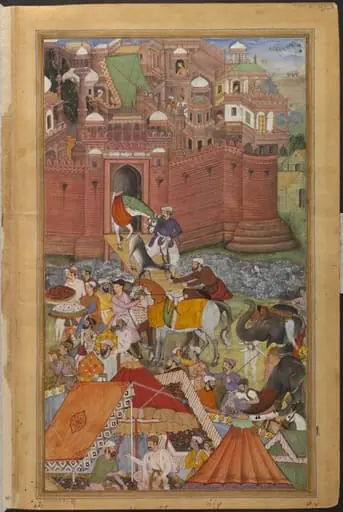
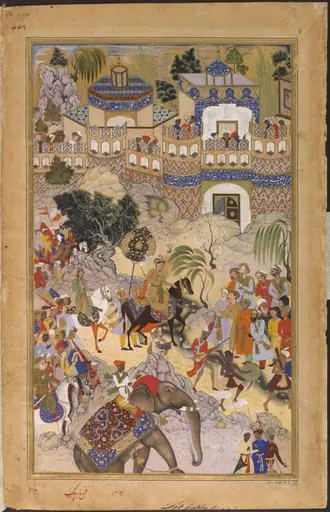
Akbar's entry into the fort of Ranthambhor is a paint painting by the Mughal Painting artist La'l. It dates from 1592 and is held in the collection of the Victoria and Albert Museum. This painting illustrates the Mughal emperor Akbar’s successful siege and entry into the Rajput fortress of Ranthambhor in 1569.
About this work
Overview
Commissioned as part of the Akbarnama, the imperial chronicle, it captures a pivotal moment in Akbar’s campaign to consolidate control over northern India.
This painting illustrates the Mughal emperor Akbar’s successful siege and entry into the Rajput fortress of Ranthambhor in 1569. Commissioned as part of the Akbarnama, the imperial chronicle, it captures a pivotal moment in Akbar’s campaign to consolidate control over northern India. The scene emphasizes strategic innovation and imperial authority, rendered in the vibrant, detailed style of Mughal court painting.
Subject & Meaning
The painting depicts Akbar’s ceremonial entry into Ranthambhor after its surrender, symbolizing the consolidation of Mughal power over resistant Rajput strongholds. The surrender of Raja Surjan Hara and his subsequent integration into Akbar’s administration reflect the emperor’s policy of co-opting local elites. The scene underscores military triumph and political diplomacy, not merely conquest.
Technique & Style
The artist La’l blends stylized architectural forms with subtle naturalism in the distant landscape, where hazy blue hills suggest European influence. The fort’s massive walls and orderly troop formations are rendered with precision, prioritizing narrative clarity over spatial realism. Bright pigments and intricate detailing serve the chronicle’s purpose: to document imperial achievement with visual authority.
History & Provenance
Created for the Akbarnama manuscript, this painting was produced under Akbar’s direct patronage by court artists including La’l, a leading painter of the period. The work was part of a larger illustrated project commissioned to legitimize Mughal rule through historical record. It remained within imperial collections until later dispersal, eventually entering the Victoria and Albert Museum’s holdings.
Context
The siege of Ranthambhor marked a turning point in Akbar’s military strategy, showcasing the use of covered trenches—sabats—to position artillery close to fortifications. This tactic, developed with the help of Hindu minister Todar Mal, allowed Akbar to capture the fortress in a month, a feat that had taken the Delhi Sultan Al’a ad-Din Khalji a year in 1303. The victory reinforced Akbar’s reputation as a pragmatic and innovative ruler.
Legacy
La’l’s composition set a standard for Mughal historical painting, blending Persian conventions with emerging naturalistic elements. The painting’s inclusion in the Akbarnama ensured its role as both record and propaganda, influencing later imperial visual narratives. Raja Surjan’s integration into the Mughal court also exemplified Akbar’s broader policy of religious and political inclusivity.
Artist & collection
Artist
Lal (La'l) sometimes called Lal wa Sarjangal is a town and the administrative center of Lal wa Sarjangal District, Ghor province in central Afghanistan.