Artwork
Bairam Khan is Assassinated by an Afghan at Patan
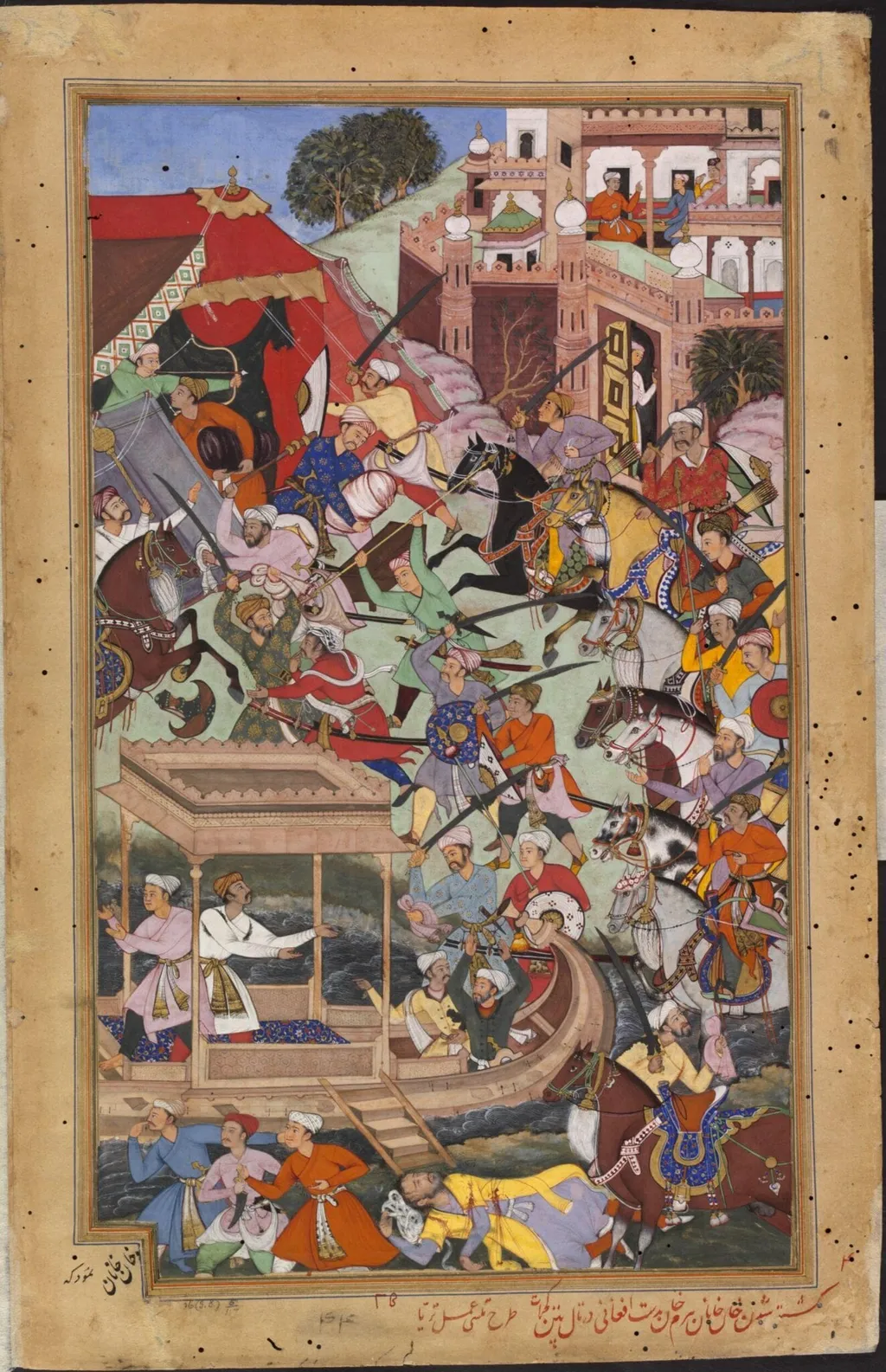
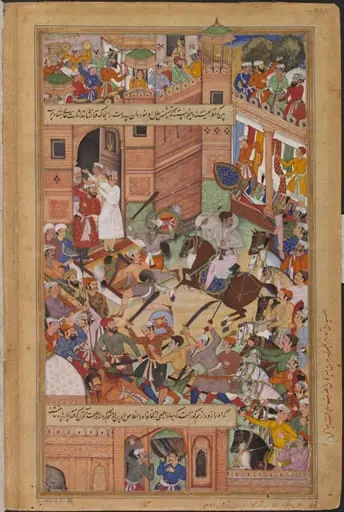
Bairam Khan is Assassinated by an Afghan at Patan is a paint painting by the Mughal Painting artist Tulsi. It dates from 1592 and is held in the collection of the Victoria and Albert Museum. This painting is part of the Akbarnama, a commissioned chronicle of Emperor Akbar’s reign, created between 1592 and 1595.
About this work
The scene happens at night with torches lighting the dark water and faces.
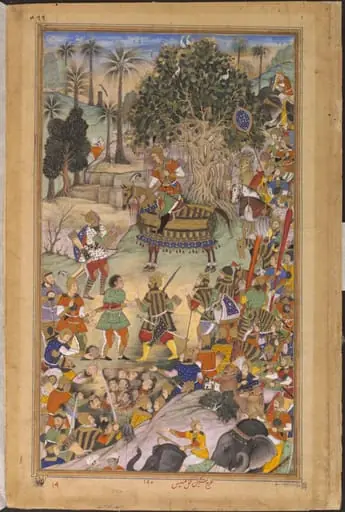
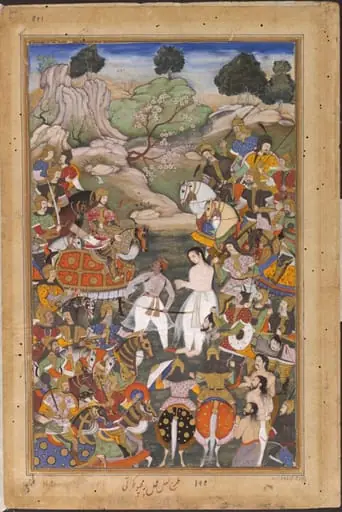
The painting shows a man falling to the ground beside a lake. A group of men with weapons stand around him. The scene happens at night with torches lighting the dark water and faces.
This comes from the Akbarnama, a book about Mughal emperor Akbar. He started ruling at age 13 and had Bairam Khan as his advisor. By 1561, their relationship had turned bad.
If you want to see more Mughal art, check out Tulsi.
Overview
This painting is part of the Akbarnama, a commissioned chronicle of Emperor Akbar’s reign, created between 1592 and 1595. It illustrates a pivotal moment from 1561: the murder of Bairam Khan, a former regent and military leader, near Patan in north-west India. The scene is rendered in the Mughal court style, with precise detail and atmospheric lighting. The work was produced by artists Tulsi and Tiriyya, whose names appear in red ink beneath the image, a rare practice that identifies individual contributors to the manuscript.
Subject & Meaning
The painting captures the violent end of Bairam Khan, who had guided the young Akbar after his father’s death but later fell from favor. His assassination, carried out by Afghan rivals while he traveled toward Mecca, symbolizes the perilous nature of court politics. Though his death was politically motivated, the scene also underscores Akbar’s eventual clemency: Bairam Khan’s young son, Abd’ur-Rahim, was adopted by the emperor and later became one of his most trusted nobles.
Technique & Style
The composition employs a nocturnal setting, illuminated by flickering torches that cast sharp contrasts on faces and water. Figures are arranged dynamically around the fallen Bairam Khan, their weapons and postures conveying urgency. The artists used fine brushwork to render textures—fabric, skin, and ripples on the lake—while maintaining the flattened perspective typical of Mughal manuscript painting. The use of red ink to label the artists reflects a deliberate effort to acknowledge individual craftsmanship within a collaborative imperial project.
History & Provenance
Commissioned by Akbar, the Akbarnama was written by Abu’l Fazl between 1590 and 1596. The illustrated version held by the V&A is among the earliest known, produced shortly after the text’s completion. The manuscript was likely assembled in the imperial atelier, drawing on the finest painters of the era. The inclusion of artists’ names in the margins suggests a shift toward recognizing individual artistry, a practice documented in Abu’l Fazl’s A’in-i Akbari, which lists many of the painters involved.
Context
The assassination occurred during a period of intense political realignment in the early Mughal court. Bairam Khan’s fall from power mirrored broader tensions between Persian-influenced elites and Afghan factions. His murder was not an isolated act but part of a larger struggle for influence over the young emperor. The painting, created decades later, served not only as historical record but also as a visual reminder of the consequences of ambition and the emperor’s role as arbiter of justice.
Legacy
The Akbarnama’s illustrations, including this scene, established a visual language for Mughal historiography that influenced later imperial manuscripts. By naming individual artists and integrating detailed narrative, the work elevated manuscript painting to a respected imperial art form. The legacy of Bairam Khan’s son, Abd’ur-Rahim, further extended the political resonance of the image, as his rise under Akbar transformed a moment of violence into a narrative of imperial mercy and continuity.
Artist & collection
Artist
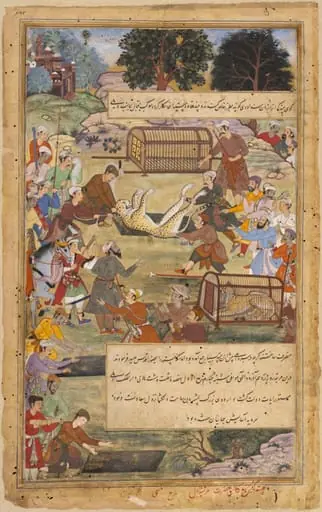
Tulsi painted delicate scenes from the Mughal court in the late 1500s. His brush traced Akbar’s hunts, portraits, and battles—like *Sultan Adam* and *Akbar assists in capturing a cheetah*—full of fine fabrics and sharp…