Artwork
Akbar
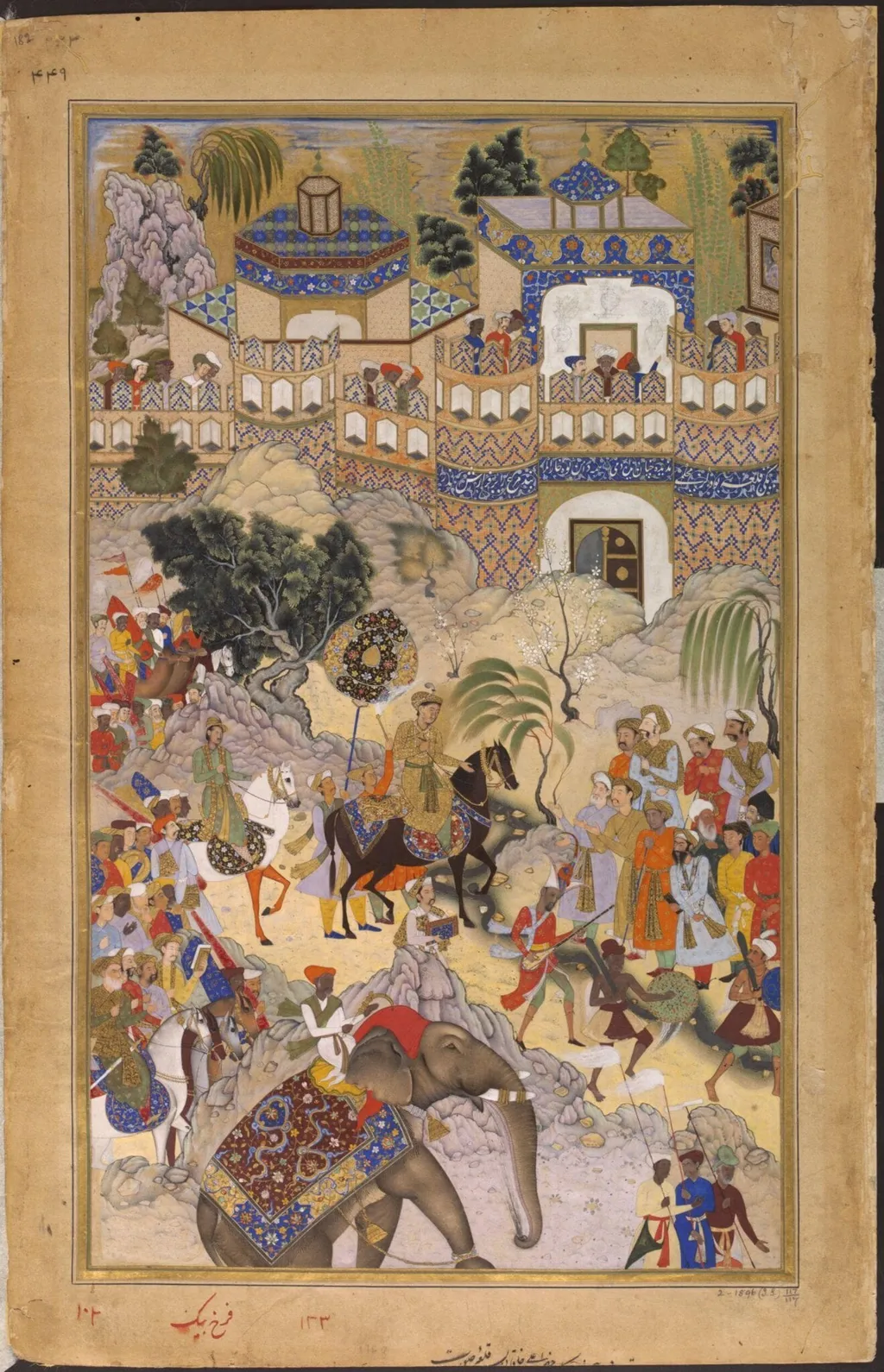
Akbar is a paint painting by the Mughal Painting artist Farrukh. It dates from 1592 and is held in the collection of the Victoria and Albert Museum.
About this work
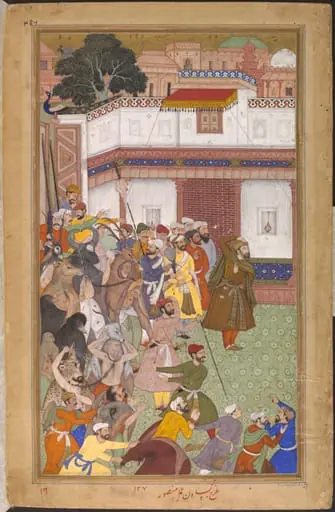
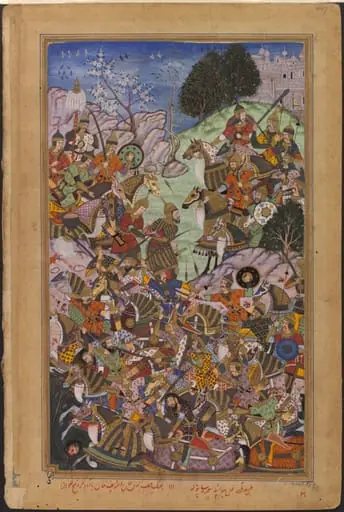
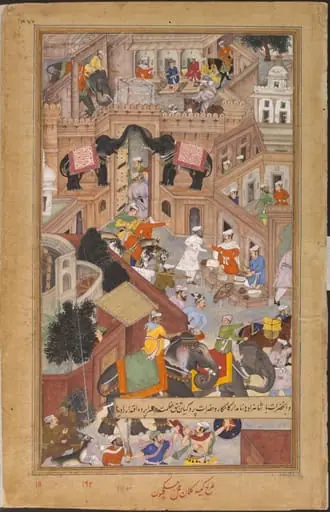
The painting comes from the Akbarnama, a book about the Mughal ruler.
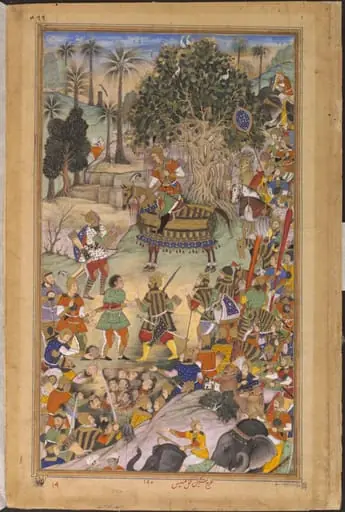
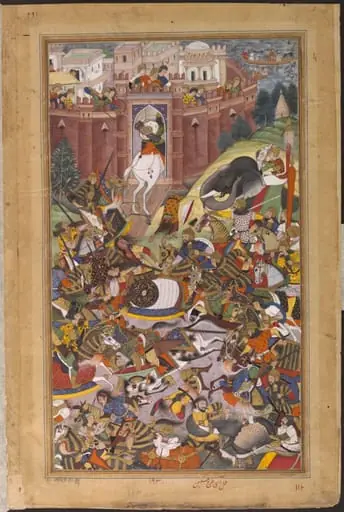
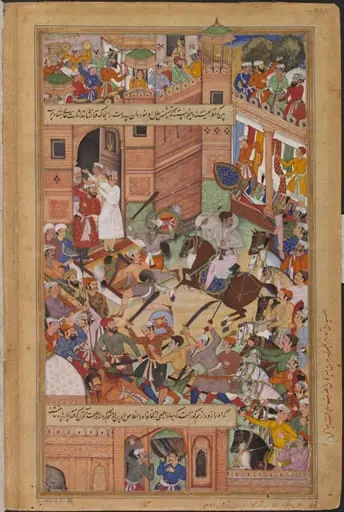
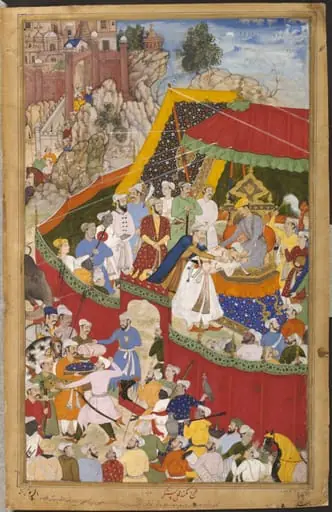
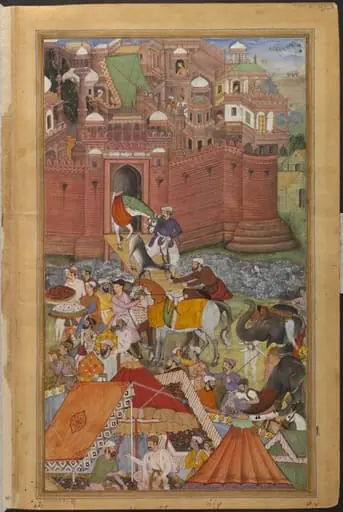
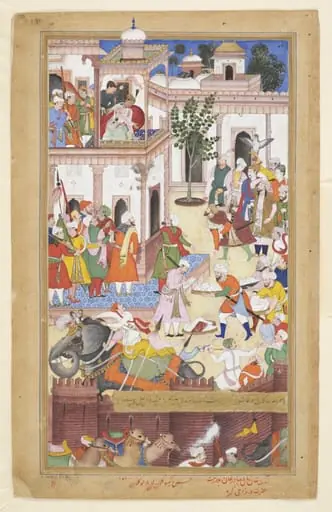
Akbar rides a black horse through a busy Indian street.
A Persian artist named Farrukh Beg painted this scene around 1590.
He worked alone on every detail, like faces and clothes.
The painting comes from the Akbarnama, a book about the Mughal ruler.
Akbar took Surat in 1573, and this shows his victory.
The colors are bright, but the horse stands out most.
Look up Farrukh (Beg) to see more art by this hand.
Overview
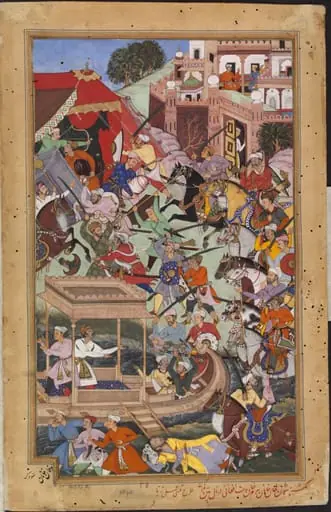
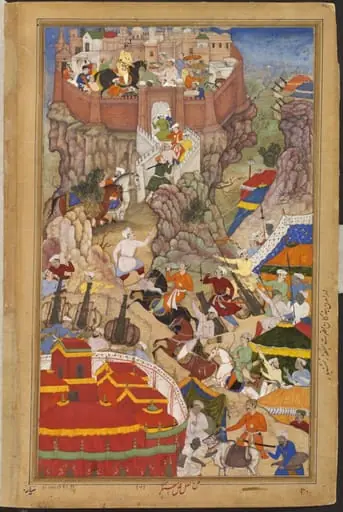
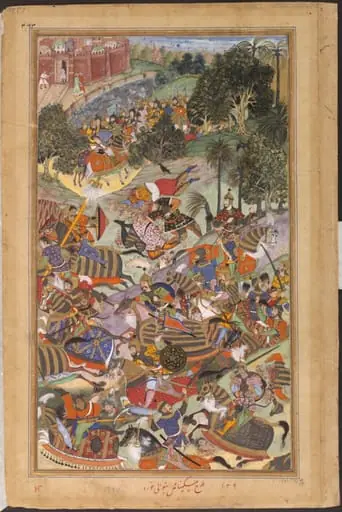
This painting depicts Mughal emperor Akbar riding a black horse through a street scene, commemorating his capture of Surat in 1573. Created by Iranian artist Farrokh Beg around 1590, it is part of the Akbarnama, a chronicle of Akbar's reign.
Subject & Meaning
The scene shows Akbar's triumphant entry into Surat, highlighting his military conquest. The artwork is one of many illustrations in the Akbarnama, a historical text commissioned by Akbar to record his achievements.
Technique & Style
Farrokh Beg worked alone on this painting, handling composition and details such as faces and clothing. The inscription on a building in the background showcases his calligraphic skill. The use of bright colors is notable, with the black horse being a focal point.
History & Provenance
The Akbarnama was written between 1590 and 1596 by Abu'l Fazl, Akbar's court historian. This illustrated version is believed to be the earliest, created between 1592 and 1595 by top royal artists, including Farrokh Beg, who joined Akbar's service in 1585.
Artist & collection
Artist
Farrukh’s paintings feel like overheard gossip frozen in ink and gold—the emperor Akbar’s face comes alive with a raised eyebrow and a knowing smirk, as if the artist caught him mid-joke.