Artwork
Balbhadra, Subhadra and Jagannatha
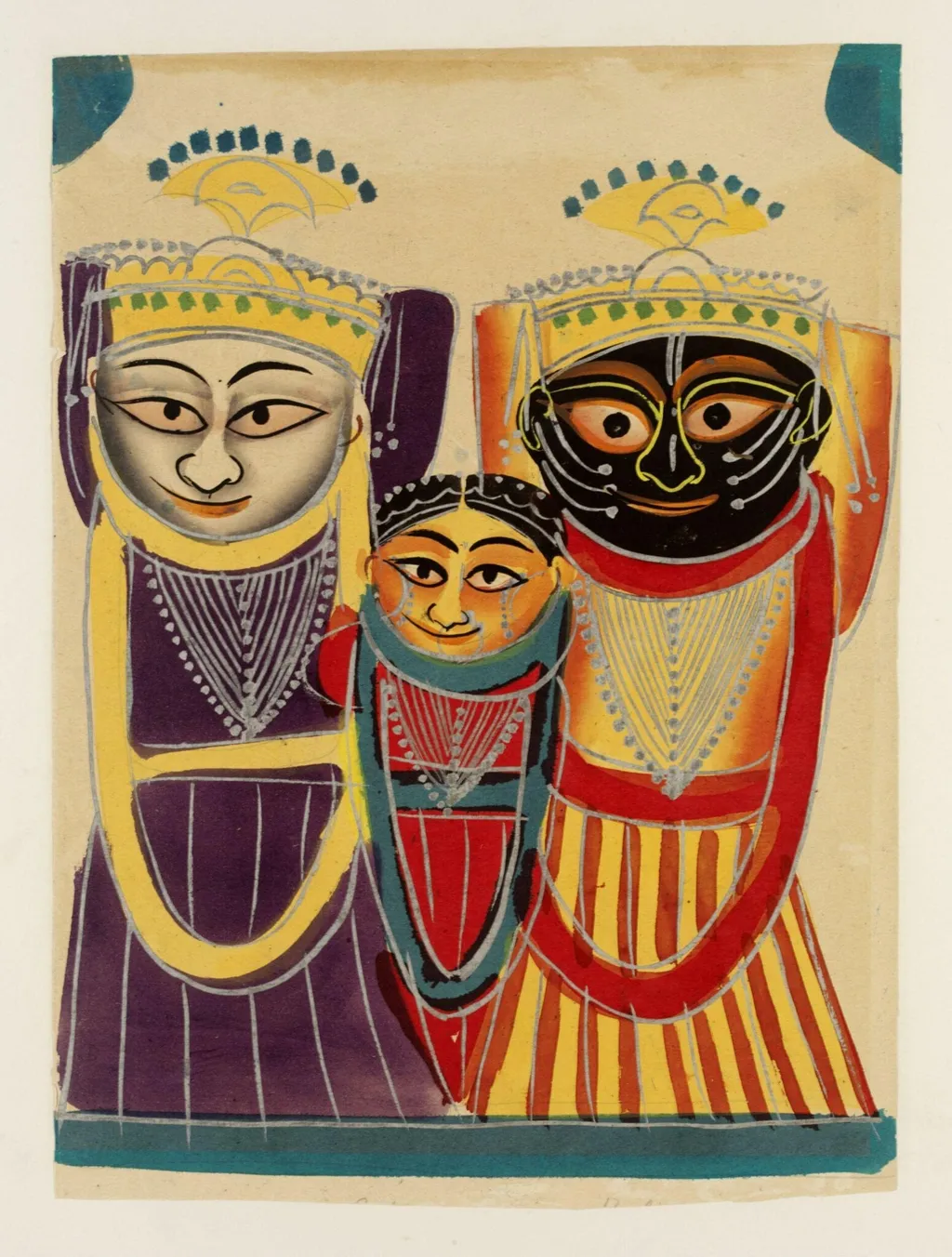
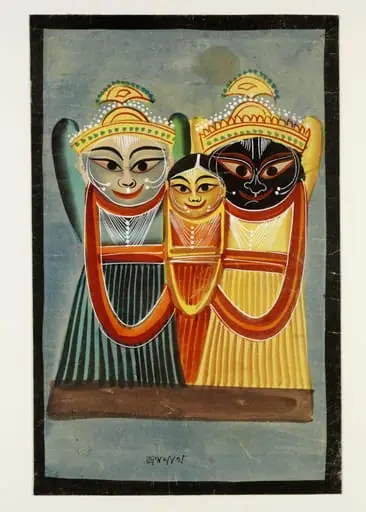
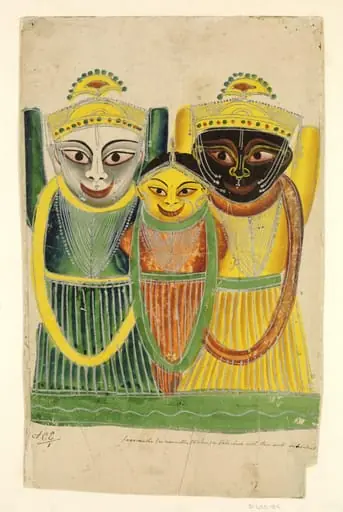
Balbhadra, Subhadra and Jagannatha is a paint painting by the Impressionist artist Unknown. It dates from 1880 and is held in the collection of the Victoria and Albert Museum. This opaque watercolor on paper, created in 1880, portrays three Hindu deities—Balabhadra, Subhadra, and Jagannatha—arranged side by side.
About this work
Overview
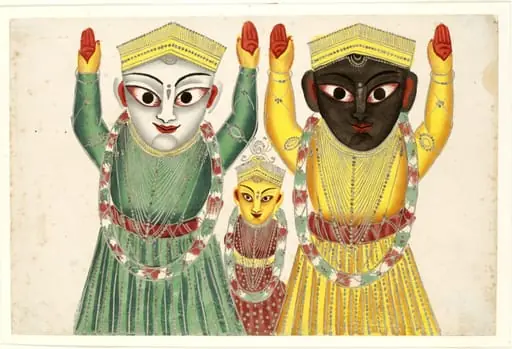
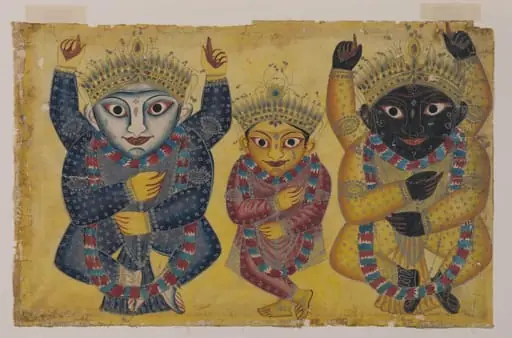
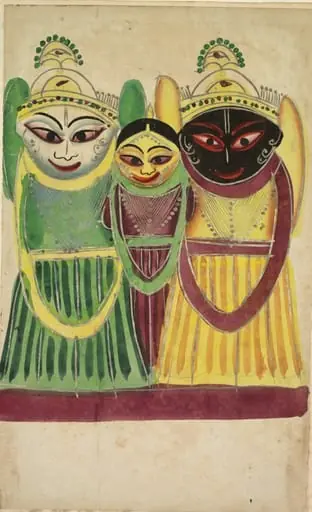
This opaque watercolor on paper, created in 1880, portrays three Hindu deities—Balabhadra, Subhadra, and Jagannatha—arranged side by side. Each figure is rendered in vivid, contrasting robes and headpieces, set against a light brown ground with modest green accents in the corners. The composition reflects a folk-art aesthetic, marked by bold outlines and simplified facial features.
Subject & Meaning
Balabhadra, Subhadra, and Jagannatha are central figures in the Jagannath tradition of Odisha, representing divine siblings. Their depiction together underscores themes of familial unity and religious devotion, inviting viewers to contemplate the interrelated roles of these deities within the broader Hindu pantheon.
Technique & Style
The work employs opaque watercolor, a medium that yields solid, saturated colors and a matte surface. Executed with clear, decisive lines, the painting emphasizes bright hues and flat areas of tone, aligning with folk visual conventions while also echoing the loose brushwork and emphasis on color found in late‑19th‑century Impressionism.
History & Provenance
The piece formed part of a larger album assembled by J. Lockwood Kipling between 1865 and 1893, which contained 196 prints, paintings, and drawings largely sourced from Upper Indian and Bengali bazaars. In 1917 Rudyard Kipling, Lockwood’s son, donated the album to the museum, ensuring its preservation within a public collection.
Artist & collection

 Domestic Scene
 Giacomo and Cardinal Marco, investing Andrea, Abbot of San Zeno, with his Benefice
 The Nymph of Fontainebleau
 Portrait of a Woman
 Madonna and Child with Saints in the Enclosed Garden
 Venus and Minerva
 Family Group of Four on Sofa
 Wall painting from Room H of the Villa of P. Fannius Synistor at Boscoreale