Artwork
Balbhadra, Subhadra and Jagannatha
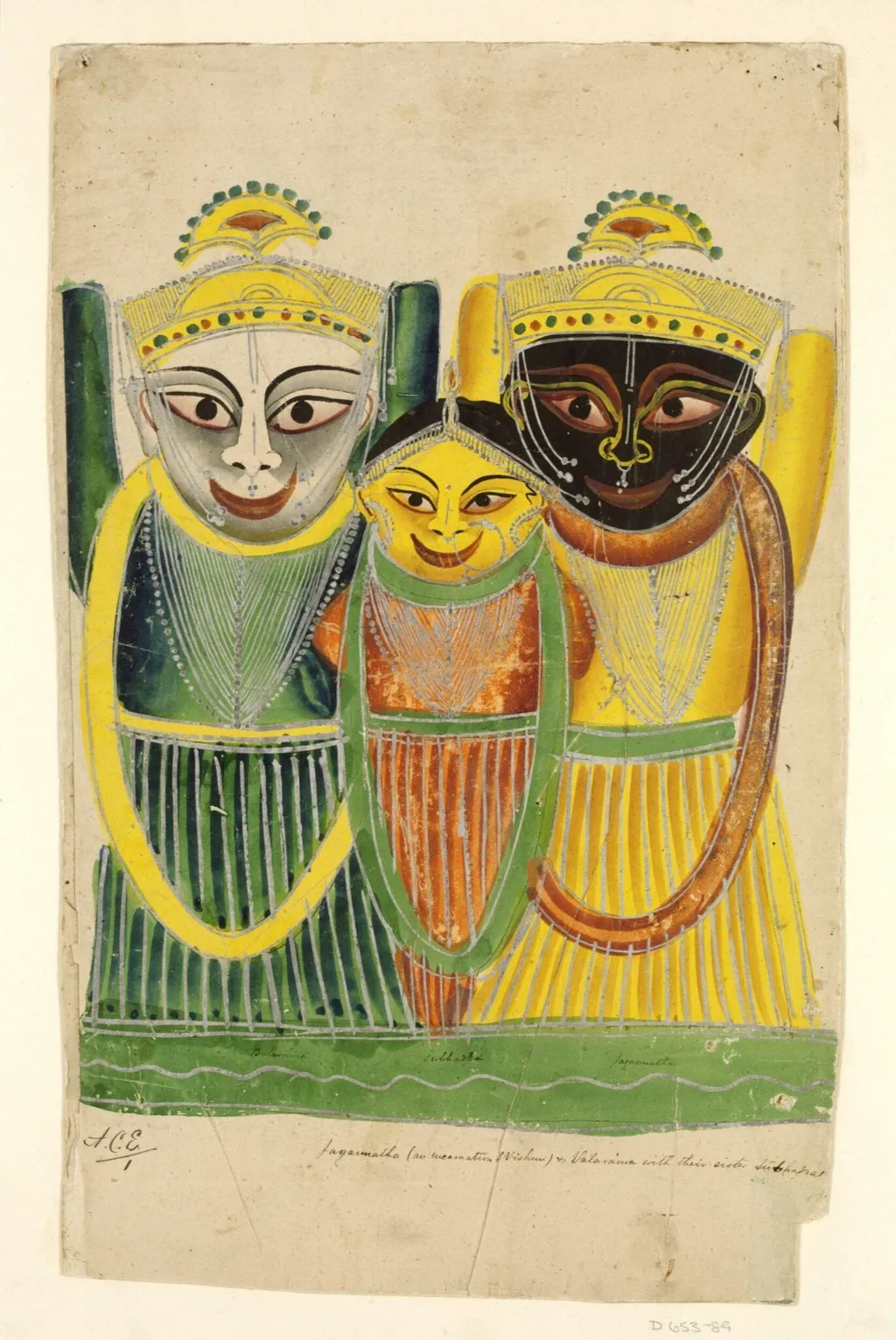
Balbhadra, Subhadra and Jagannatha is a paint painting by the Impressionist artist Unknown. It dates from 1850 and is held in the collection of the Victoria and Albert Museum.
About this work
Overview
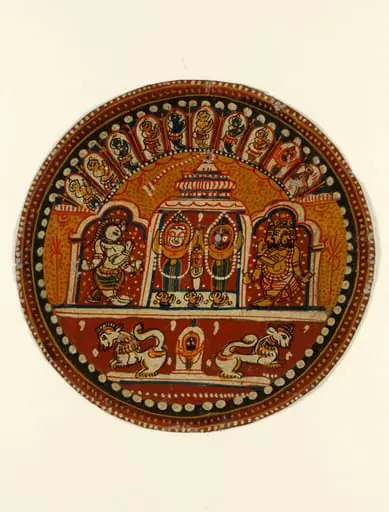
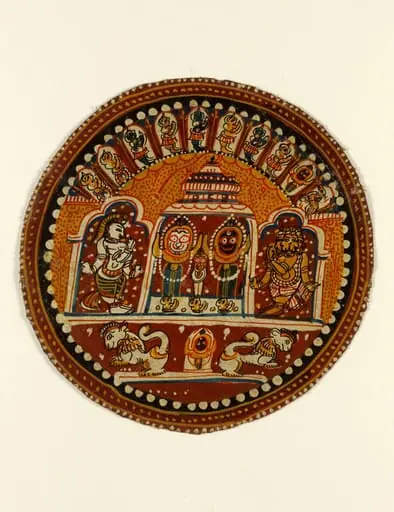
The work is a watercolor on paper enhanced with tin alloy detailing, portraying the three deities Balabhadra, Subhadra and Jagannatha as they appear in the wooden cult images of the Puri temple. The figures stand side by side, arms raised, each rendered in flat, vivid hues and outlined in bold black lines, a visual language characteristic of the Kalighat folk tradition.
Subject & Meaning
The composition emphasizes their divine unity while preserving individual attributes such as distinct crowns and garlands.
Balabhadra, Subhadra and Jagannatha are shown in their ritual forms: Balabhadra with a pale complexion, Subhadra in a reddish‑golden garment, and Jagannatha with a darkened face. Their faces are painted white, yellowish and black respectively, underscoring traditional iconographic color codes. The composition emphasizes their divine unity while preserving individual attributes such as distinct crowns and garlands.
Technique & Style
The artist employed watercolor washes for the flat color fields, reinforced by tin‑alloy appliqués that outline the crowns, necklaces and decorative trims. Silver lines trace the garlands and multi‑string necklaces, while the tiaras of Balabhadra and Jagannatha feature more intricate alloy work than Subhadra’s. The overall approach combines simple patterns with strong outlines, echoing the aesthetic of Kalighat paintings.
Context
Kalighat painting emerged in 19th‑century Bengal as a popular, itinerant art form, often depicting religious subjects for devotional use. This piece follows that tradition, translating the temple’s wooden idols into a portable, paper‑based format that could be displayed or sold beyond the shrine’s precincts.
Legacy
By rendering the Puri deities in a folk visual idiom, the work illustrates how sacred iconography was adapted for broader audiences. It stands as an example of how regional devotional art intersected with emerging commercial practices, preserving ritual imagery in a format accessible to lay worshippers.
Artist & collection

 Domestic Scene
 Giacomo and Cardinal Marco, investing Andrea, Abbot of San Zeno, with his Benefice
 The Nymph of Fontainebleau
 Portrait of a Woman
 Madonna and Child with Saints in the Enclosed Garden
 Venus and Minerva
 Family Group of Four on Sofa
 Wall painting from Room H of the Villa of P. Fannius Synistor at Boscoreale
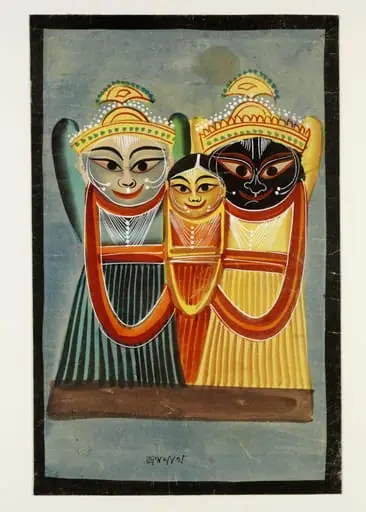 Balbhadra, Subhadra and Jagannatha
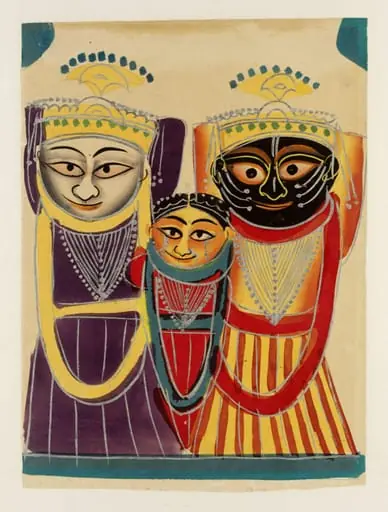 Balbhadra, Subhadra and Jagannatha
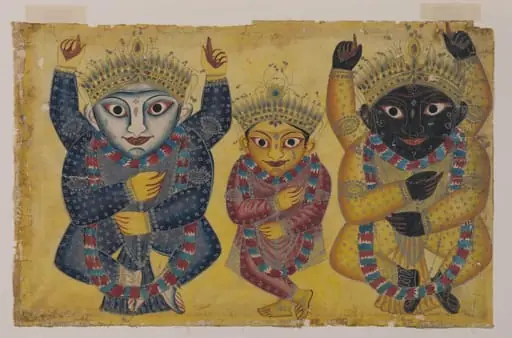 Balabhadra, Subhadra and Jagannatha
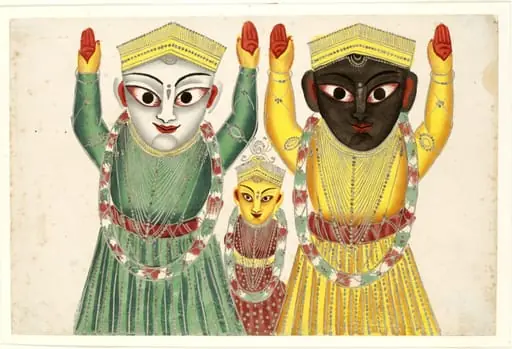 Jagannatha, Balabhadra and Subhadra
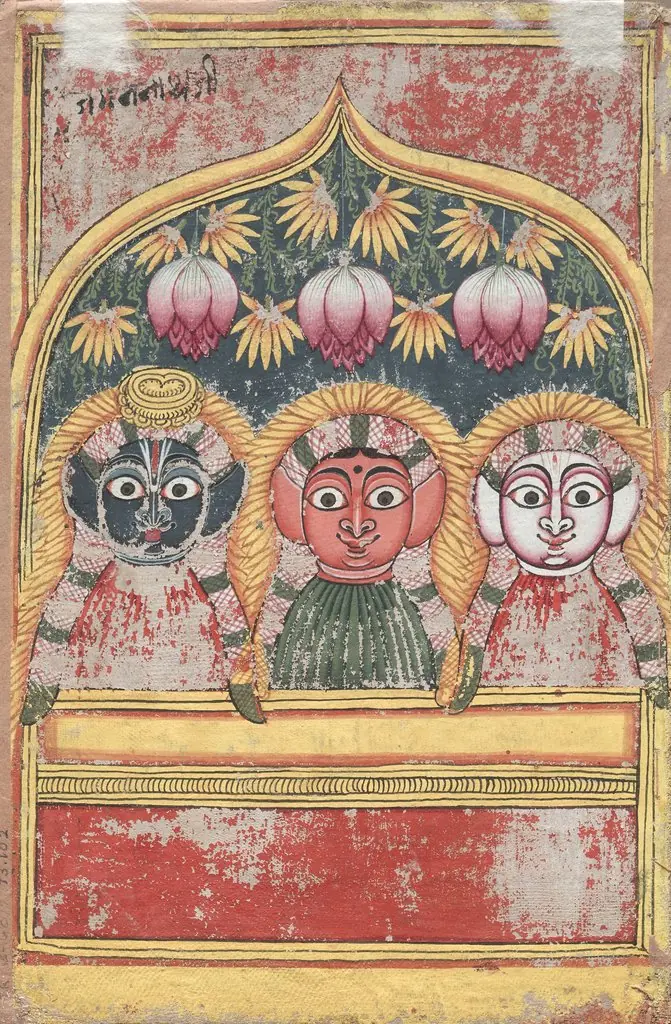 Jagannath, Subhadra and Balarama in an Arch (verso)
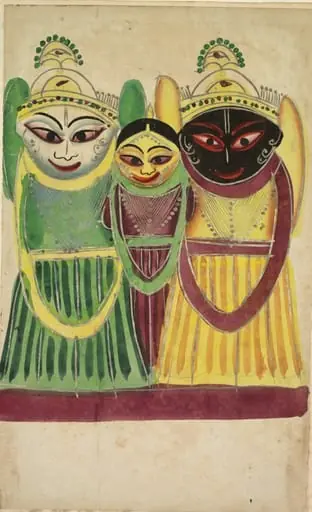 Jagannatha Trio (verso)
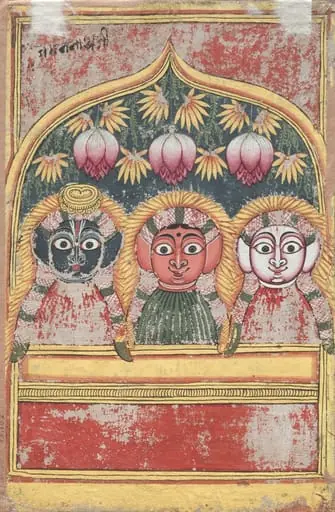 Jagannath, Subhadra and Balarama in an Arch (verso)
 Jagannath traid
 The Jagannath triad
 Shiva, Parvati and Ganesha