Artwork
Bas-relief showing chariots, war and mounted warriors and a bivouac from Palace of Kuyunjik, period of Ashua-bari-pal (668-626 B.C.). Paris: Louvre
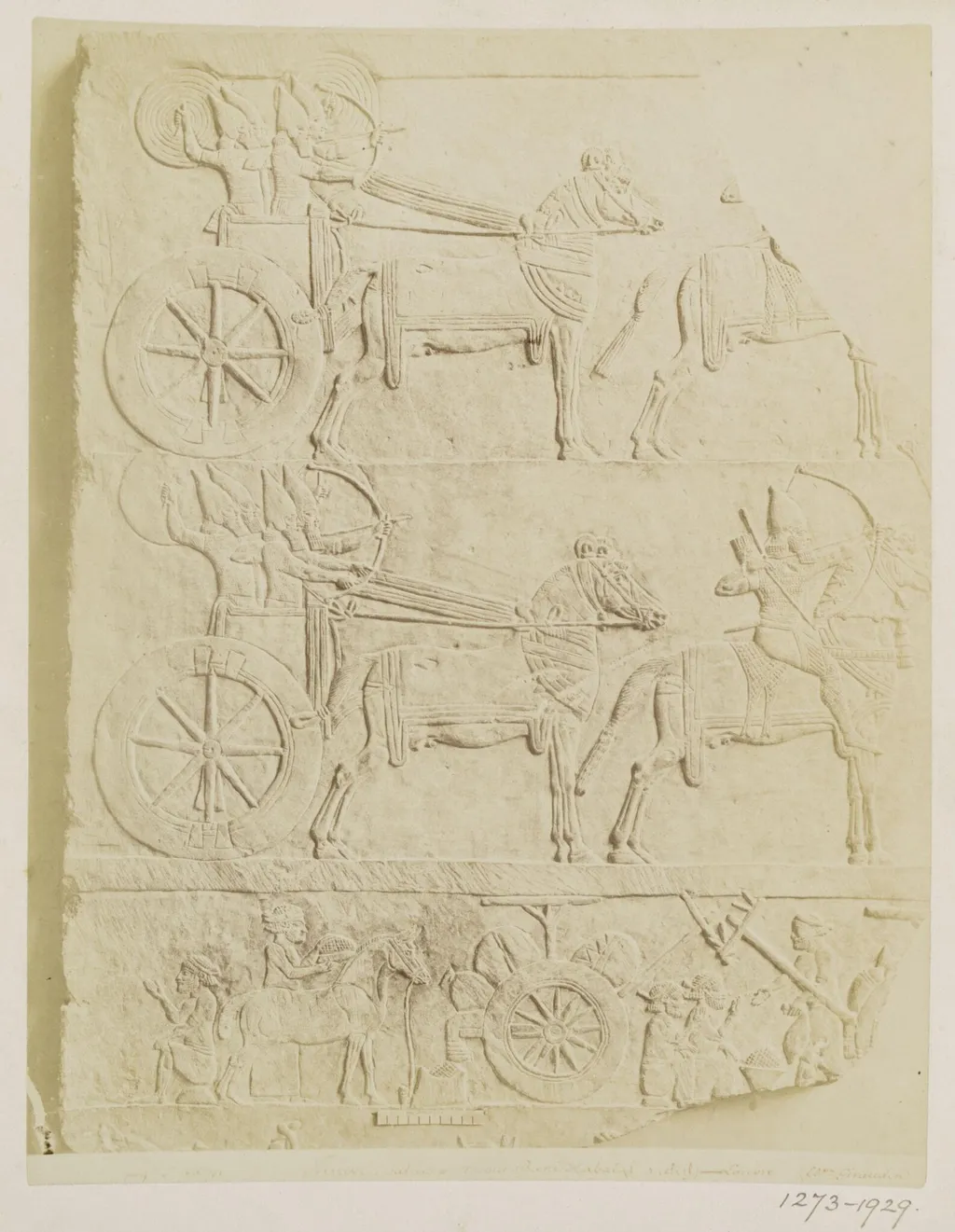
Bas-relief showing chariots, war and mounted warriors and a bivouac from Palace of Kuyunjik, period of Ashua-bari-pal (668-626 B.C.). Paris: Louvre is a photographic photography by the Impressionist artist Unknown. It dates from 1884 and is held in the collection of the Victoria and Albert Museum. A photographic record of an Assyrian bas-relief from the Palace of Kuyunjik, created during the reign of Ashurbanipal (668–626 B.
About this work
Overview
A photographic record of an Assyrian bas-relief from the Palace of Kuyunjik, created during the reign of Ashurbanipal (668–626 B.
A photographic record of an Assyrian bas-relief from the Palace of Kuyunjik, created during the reign of Ashurbanipal (668–626 B.C.), is part of a larger collection amassed by John Singer Sargent. The image captures a scene of military procession and encampment carved into stone, preserved through careful documentation. The photograph was among 611 images donated to the Victoria and Albert Museum by Sargent’s sisters in 1925, reflecting his broad visual curiosity and travels across Europe, the Middle East, and beyond.
Subject & Meaning
The relief depicts Assyrian warriors in chariots advancing across open terrain, accompanied by mounted troops and camp attendants setting up tents. These scenes were originally carved to glorify royal military power, illustrating conquest and logistical control. The composition emphasizes movement and order, reinforcing the king’s dominance over both land and people. Such imagery served as political propaganda, visible to visitors and subjects within the palace corridors.
Technique & Style
The stone carving exhibits deep, precise incisions that render every detail—musculature, fabric folds, weapon glints—with clarity. The photographer preserved these textures by avoiding overexposure or blur, ensuring the relief’s sharpness remains legible. The contrast between the dynamic battle line and the orderly bivouac behind it reflects Assyrian artistic conventions: controlled composition, hierarchical scale, and narrative clarity without perspective.
History & Provenance
The original relief once adorned the walls of Ashurbanipal’s palace in Nineveh, part of a vast decorative program celebrating royal achievements. After the palace’s destruction, fragments were excavated in the 19th century and dispersed across European collections. Sargent photographed it during one of his travels, likely between 1890 and 1916. His sisters donated the photograph to the V&A in 1925, where it was cataloged alongside other architectural and sculptural records.
Context
Sargent’s photographic collection was assembled during extensive travels, partly to gather visual references for his mural cycle at the Boston Public Library. While he took some images himself, most in this group were acquired from professional photographers abroad. The V&A classified them geographically and thematically, treating them as scholarly tools rather than artistic works, aligning with the museum’s mission to support study in design and decoration.
Legacy
The photograph endures as a document of both ancient art and 19th-century collecting practices. It preserves the relief’s condition at a time when many Assyrian sculptures were being removed from their original context. Today, it bridges two eras of visual culture: the imperial imagery of ancient Mesopotamia and the scholarly documentation habits of the Victorian and Edwardian periods.
Artist & collection

 Domestic Scene
 Giacomo and Cardinal Marco, investing Andrea, Abbot of San Zeno, with his Benefice
 The Nymph of Fontainebleau
 Portrait of a Woman
 Madonna and Child with Saints in the Enclosed Garden
 Venus and Minerva
 Family Group of Four on Sofa
 Wall painting from Room H of the Villa of P. Fannius Synistor at Boscoreale
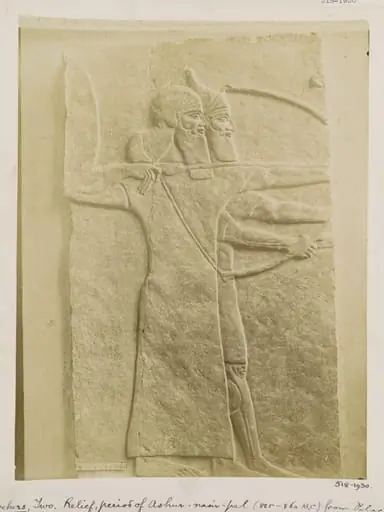 Relief depicting two Assyrian archers from the period of Ashur-Nasir-Pal II (885-860 B.C.) from the Palace of Nimrud. Louvre, Paris
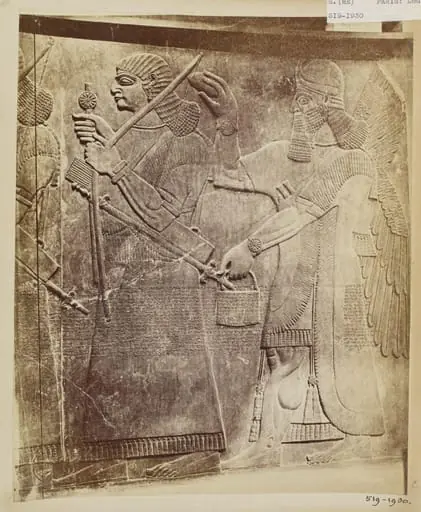 Sculpture depicting a royal Assyrian armsbearer with attendant genius from the period of Ashur-nasir-pal II (885-860 B.C.), Louvre, Paris
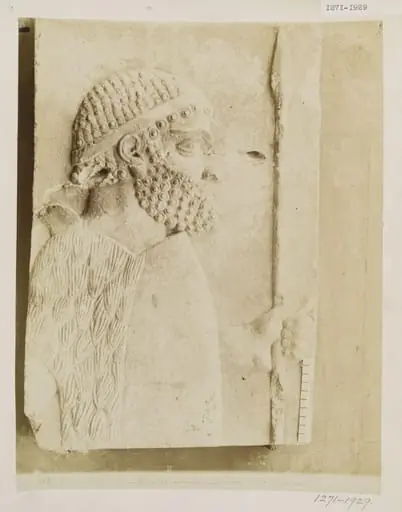 Bas-relief of a warrior, Louvre, Paris
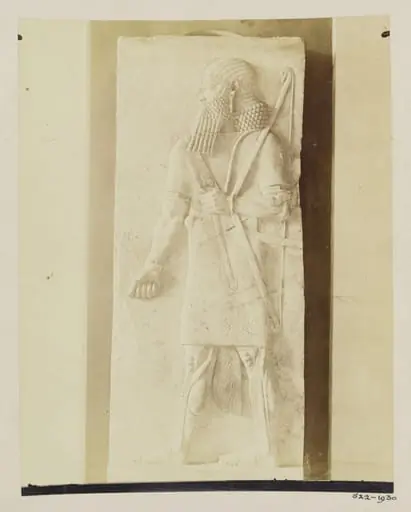 Sculpture of Assyrian archer, 9th century B.C., Louvre, Paris
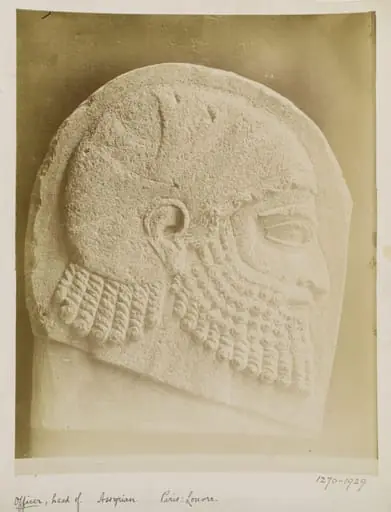 Relief of head of Assyrian officer. Paris: Louvre
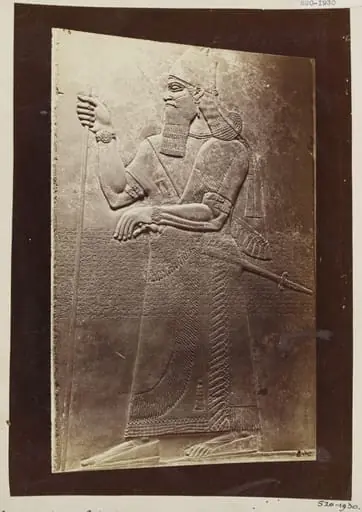 Relief depicting Assyring King Ashur-Nasir-Pal II (885-860 B.C.), Louvre, Paris
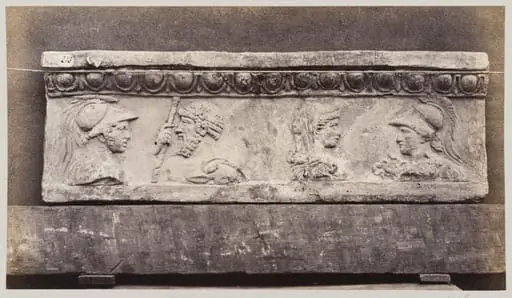 Bas-relief portion of frieze with Jupiter, Mars, Juno and Minerva in terra cotta
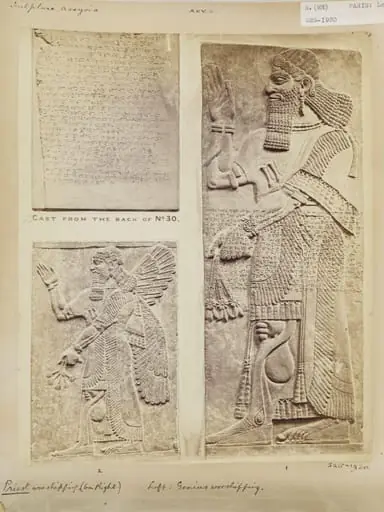 Assyrian sculpture, priest worshipping and genius worshipping, Paris: Louvre
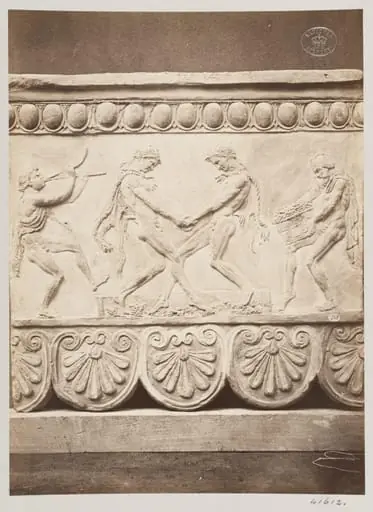 Bas-relief portion of a frieze of Satyrs treading the wine press in terra cotta