Artwork
Basket-makers
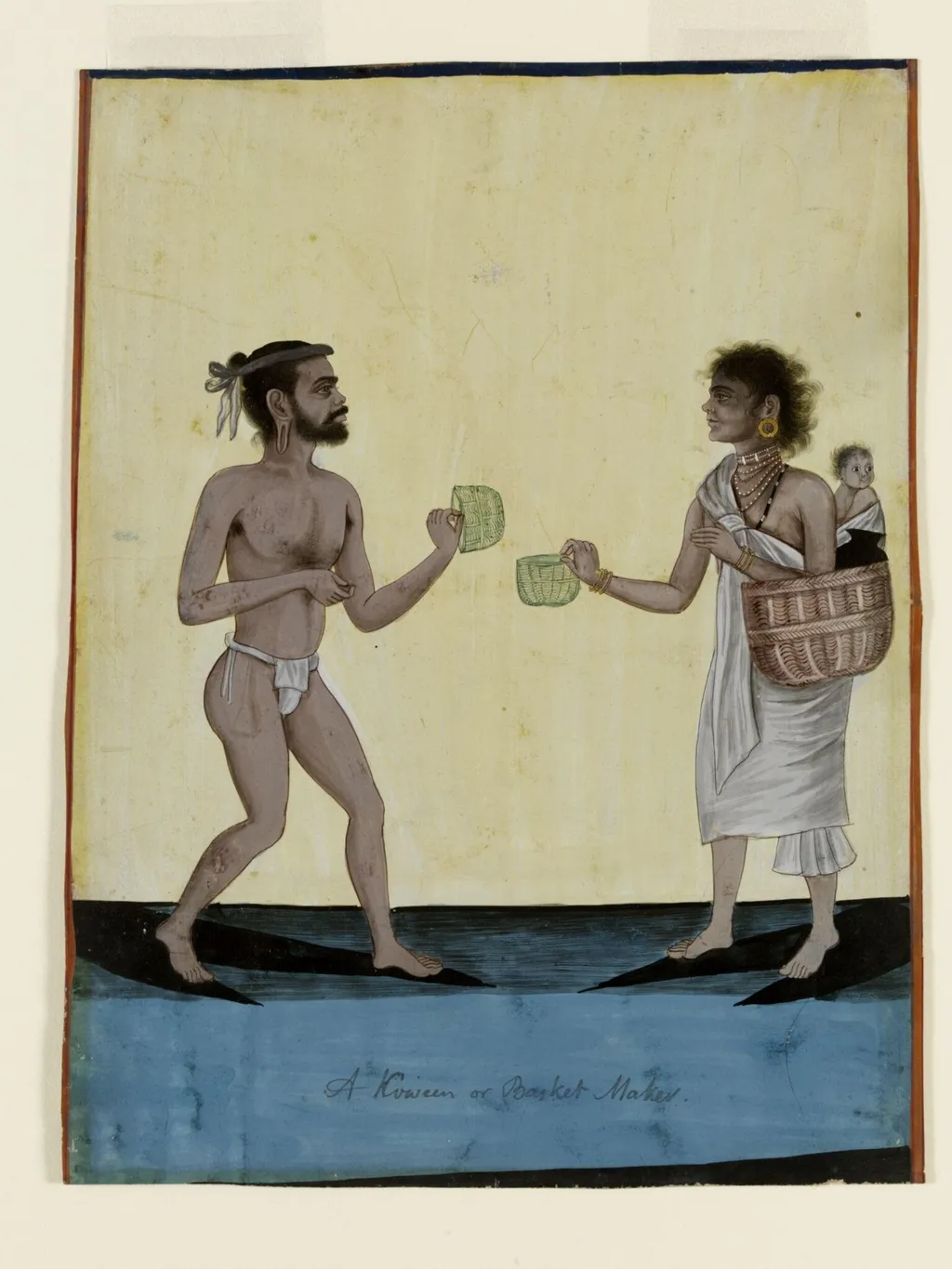
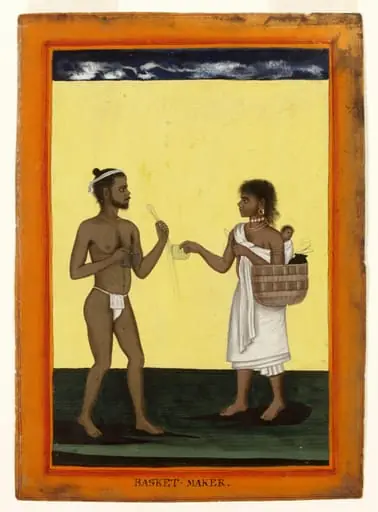
Basket-makers is a paint painting by the Romanticist artist Unknown. It dates from 1790 and is held in the collection of the Victoria and Albert Museum. This painting is one of sixteen in a series documenting occupational roles in colonial India.
About this work
Overview
The series was produced by multiple artists, with this piece distinguished by its use of a pale yellow background, contrasting with others that employed blue.
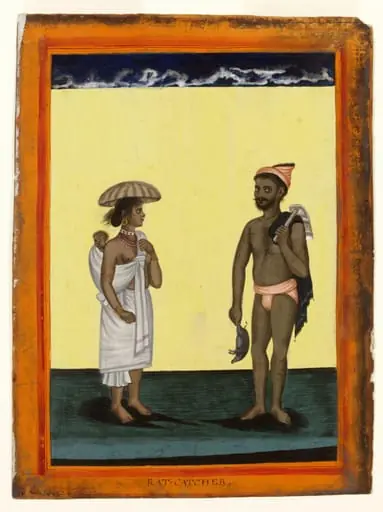
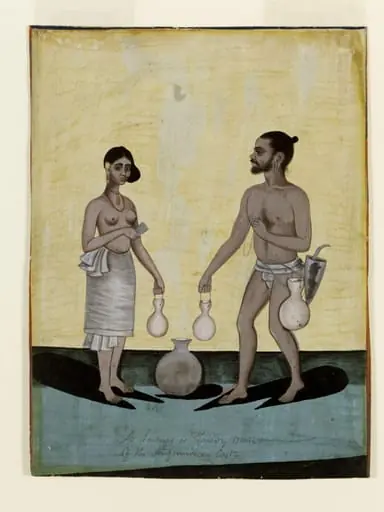
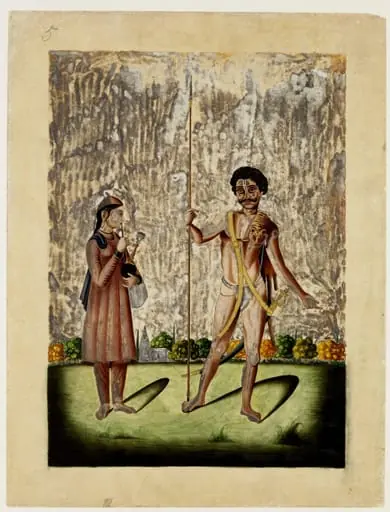
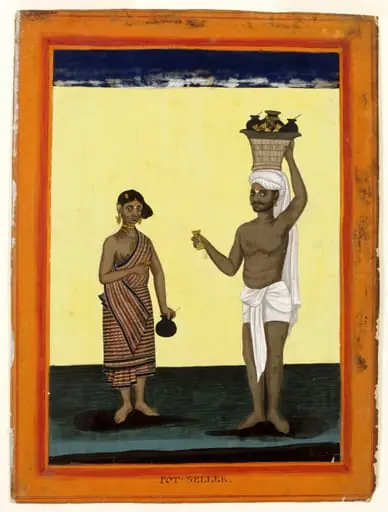
This painting is one of sixteen in a series documenting occupational roles in colonial India. It portrays two figures engaged in basket-making, set against a uniform yellow ground. The work was transferred to the British Museum in 1879 from the India Museum and entered its collection records the following year. The series was produced by multiple artists, with this piece distinguished by its use of a pale yellow background, contrasting with others that employed blue.
Subject & Meaning
The figures represent a male and female basket-maker, their labor made visible through the woven objects they hold and carry. The woman bears a child secured in a basket on her back, linking domestic and economic roles. Their bare feet and minimal attire suggest rural or working-class status. The scene avoids idealization, presenting daily work without narrative flourish, aligning with the series’ documentary intent to catalog social roles.
Technique & Style
The painting employs flat planes of color and strong, unmodulated outlines, rejecting chiaroscuro and spatial depth. Forms are simplified, with no shading or atmospheric effects. The background is uniformly yellow, isolating the figures and emphasizing their roles over environment. The style reflects a regional aesthetic, possibly influenced by local manuscript traditions, prioritizing clarity and symbolic representation over naturalism.
History & Provenance
Created during the early 19th century, the painting was part of a commissioned series documenting Indian castes and trades. It entered the India Museum’s collection before being transferred to the British Museum in 1879. Its inclusion in the museum’s 1880 register confirms its formal accession. The work’s origins lie in colonial ethnographic projects aimed at systematizing knowledge of Indian society through visual cataloging.
Context
The series emerged during a period when British administrators and ethnographers sought to classify Indian society through visual and textual records. Unlike Romantic depictions of rural life, these works avoided emotional or heroic tones. Instead, they functioned as administrative documents, reflecting colonial interests in order and categorization, with artists likely trained in local traditions but working under colonial oversight.
Legacy
The painting survives as a record of how colonial institutions visually defined labor and social roles in India. Its stylistic simplicity and lack of individualization reflect its function as typological documentation rather than artistic expression. Today, it contributes to scholarly understanding of 19th-century ethnographic practices and the intersection of art, power, and classification in colonial contexts.
Artist & collection

 Domestic Scene
 Giacomo and Cardinal Marco, investing Andrea, Abbot of San Zeno, with his Benefice
 The Nymph of Fontainebleau
 Portrait of a Woman
 Madonna and Child with Saints in the Enclosed Garden
 Venus and Minerva
 Family Group of Four on Sofa
 Wall painting from Room H of the Villa of P. Fannius Synistor at Boscoreale