Artwork
blid
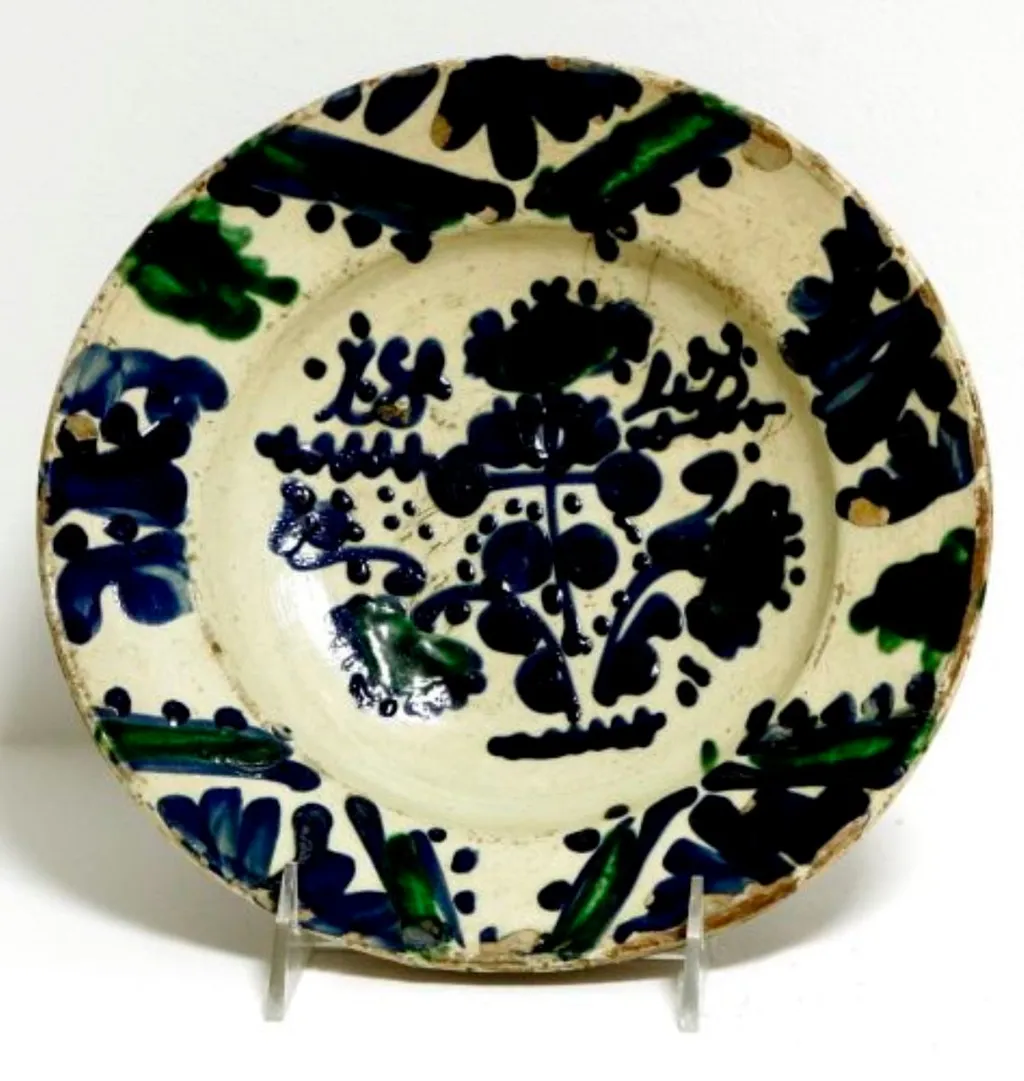
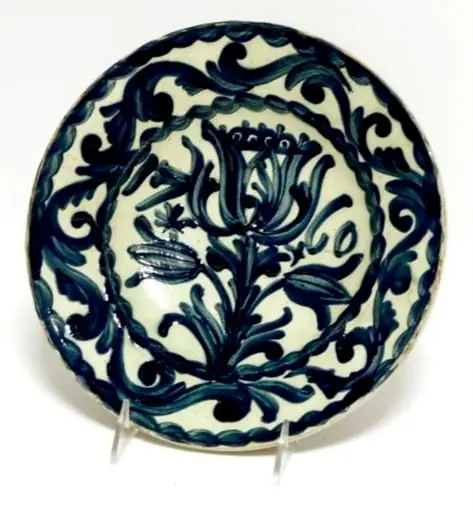
blid is a print by the Romanticist artist Unknown. It dates from 1848 and is held in the collection of the Romanian Peasant Museum. A circular ceramic dish with a pale cream ground, this object features a narrow border of dark blue, stylized floral motifs along its rim.
About this work
Overview
A circular ceramic dish with a pale cream ground, this object features a narrow border of dark blue, stylized floral motifs along its rim.
A circular ceramic dish with a pale cream ground, this object features a narrow border of dark blue, stylized floral motifs along its rim. At its center lies a compact arrangement of blue dots and lines suggesting a tree form, with a faint greenish mark at its core. The mark, small but distinct, resembles a Latin cross. Surface wear along the edges indicates age and use, suggesting it was handled regularly in its original context.
Subject & Meaning
The central motif combines natural and symbolic elements: a tree-like structure, common in medieval iconography, is anchored by a subtle cross. This fusion may imply spiritual growth or divine presence within nature. The cross, though minimal, is deliberately placed at the heart of the design, possibly signaling religious devotion or a devotional function. The floral border may represent earthly beauty framed by sacred meaning.
Technique & Style
The dish was likely hand-painted using mineral pigments on a glazed ceramic surface. The blue border and central design were applied with steady, controlled brushwork, emphasizing simplicity over detail. The greenish cross was painted with a lighter pigment, possibly copper-based, and applied with precision despite its small scale. The overall aesthetic favors restraint, aligning with early medieval decorative traditions that valued symbolic clarity over ornamentation.
History & Provenance
Though exact origins are unrecorded, the form and decoration suggest production in a monastic or regional workshop between the 9th and 12th centuries. Similar vessels have been found in ecclesiastical contexts across Western Europe. The wear on the rim indicates domestic or liturgical use over time. Its survival suggests it was valued enough to be preserved, though its specific provenance remains undocumented beyond stylistic parallels.
Context
This dish likely belonged to a household or religious community where everyday objects carried symbolic weight. In medieval Christian culture, simple motifs like the cross and tree were widely understood as references to salvation and eternal life. Its modest scale and decoration reflect a broader trend of integrating faith into domestic objects, where spiritual meaning was embedded in routine use rather than monumental display.
Legacy
The dish exemplifies how early medieval artisans conveyed complex ideas through minimal visual language. Its combination of natural and sacred forms influenced later devotional objects, particularly in monastic ceramics. Though not widely known today, it stands as a quiet testament to the integration of faith into material culture, where even humble items carried layers of spiritual significance through subtle design.
Artist & collection

 Domestic Scene
 Giacomo and Cardinal Marco, investing Andrea, Abbot of San Zeno, with his Benefice
 The Nymph of Fontainebleau
 Portrait of a Woman
 Madonna and Child with Saints in the Enclosed Garden
 Venus and Minerva
 Family Group of Four on Sofa
 Wall painting from Room H of the Villa of P. Fannius Synistor at Boscoreale
 farfurie
 blid
blid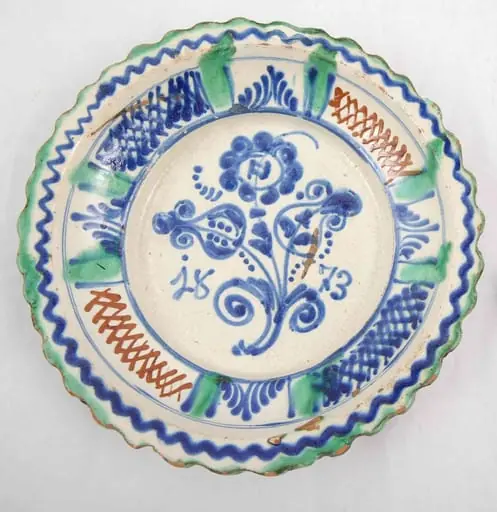 farfurie
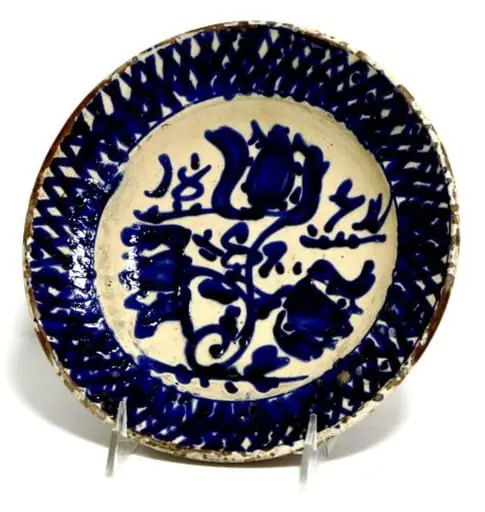
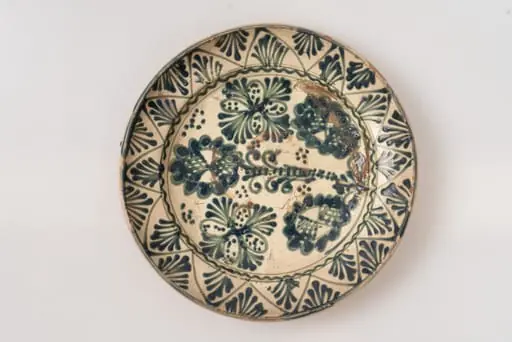 Farfurie de formă semi-adâncă, cu buză lată, răsfrântă; este angobată pe fața interioară cu un strat de humă albă, peste care este pictat cu cornul decorul monocromatic, format din motive florale și fitomorfe foarte stilizate (tulpină cu cinci flori și frunze, reprezentate pe centrul farfuriei) și geometrice (o linie în formă de zig-zag, pe toată lungimea buzei, completată cu motive formate din linii verticale, dispuse în formă de triunghi; linii circulare simple și linie circulară ondulată ce marchează bordura interioară a farfuriei; puncte, linii hașurate). Buza farfuriei este marcată cu o dungă de culoare albastră. Cromatica: alb, albastru. Farfuria este acoperită pe fața decorată cu un strat de smalț transparent.
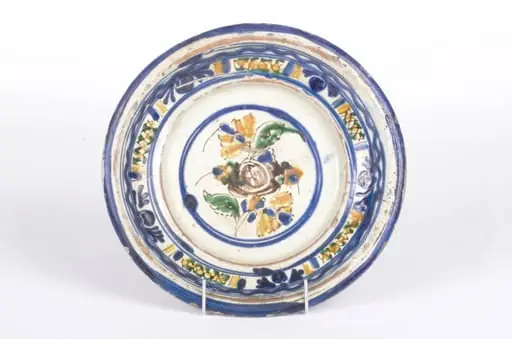 Vasul ceramic este de formă circulară, ușor adâncit, cu pereți evazați și ondulați. Decorul este amplasat pe două registre: primul registru se găsește la partea inferioară a buzei și se înscrie perimetral pe aceasta cu motive geometrice și florale (cercuri), al doilea registru este plasat central pe fundul vasului și prezintă același tip de motive. Cromatică: fond: alb-crem; motive: albastru; galben; verde; maro.
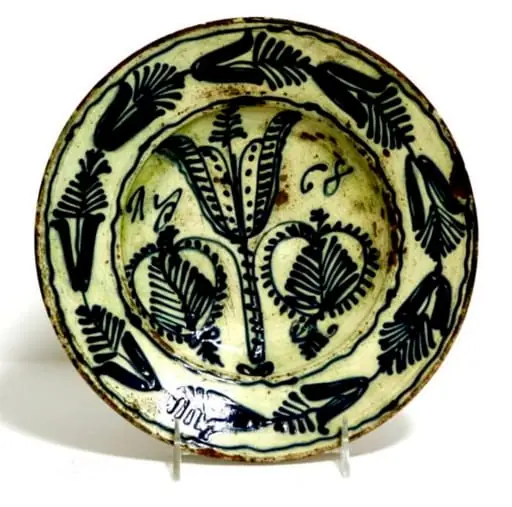
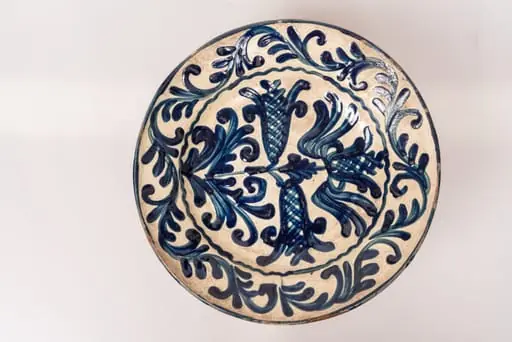 Farfurie semi-adâncă, cu buză răsfrântă; piesa este modelată la roata olarului și este angobată pe fața interioară cu humă albă. Decorul monocromatic este pictat cu pensula și se compune din motive decorative florale și vegetale stilizate (o floare de crin cu doi boboci și cu frunze, plasate central pe fundul farfuriei; buza farfuriei este acoperită cu un șir continuu de motive vegetale). Muchia buzei este marcată de o linie albastră iar bordura interioară a farfuriei de o linie vălurită. Cromatica: alb, albastru. Fața ornamentată a farfuriei este acoperită cu un strat de smalț transparent.
 castron
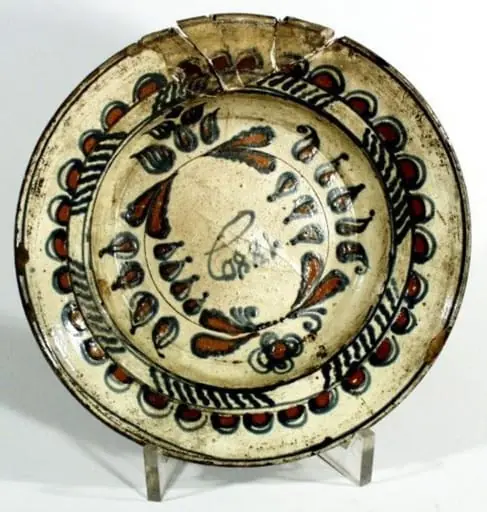 farfurie
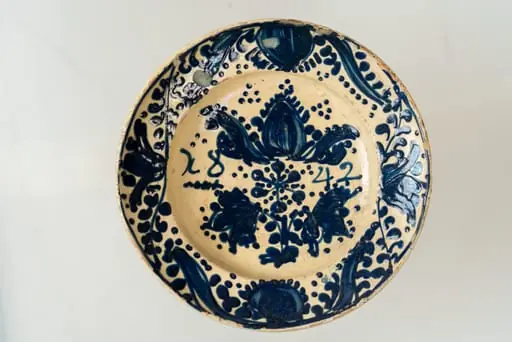 Farfurie adâncă, cu corp scund și buză lată, răsfrântă. Piesa este modelată la roata olarului, angobată cu humă albă pe fața interioară a acesteia. Decorul este realizat prin pictare cu cornul și cu pensula și constă în motive decorative vegetale stilizate (flori și frunze) și geometrice (puncte), dispuse pe întreaga suprafață a farfuriei. Central, pe fundul farfuriei, este înscris anul fabricației "1842", deoparte și de alta a registrului decorativ central. Cromatica decorului: alb, albastru. Farfuria este smălțuită pe interior, cu smalț transparent.
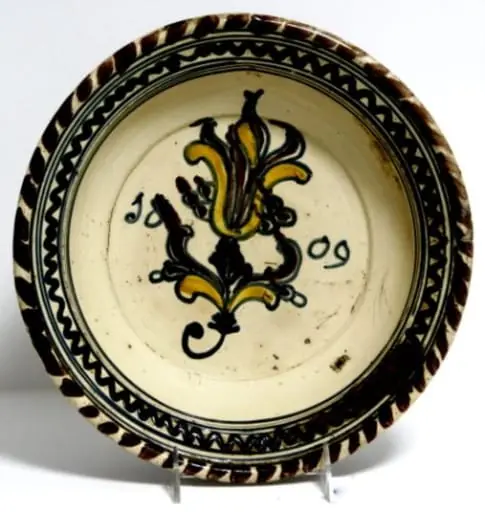
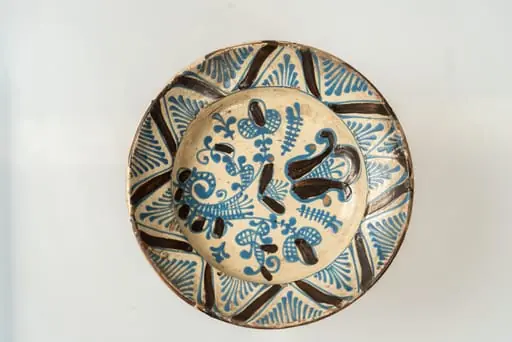 Farfurie adâncă, cu buză răsfrântă; piesa este modelată la roata olarului și este angobată cu humă albă pe fața interioară. Decorul este realizat prin pictare cu pensula și cu cornul și se compune din motive decorative florale stilizate (amplasate central, pe fundul farfuriei) și motive decorative geometrice, pe buza farfuriei (dungi de culoare maro, grupuri de linii paralele sub forma motivului de brăduț, linii hașurate). Cromatica: alb, maro, albastru. Fața farfuriei este acoperită cu un strat de smalț transparent.
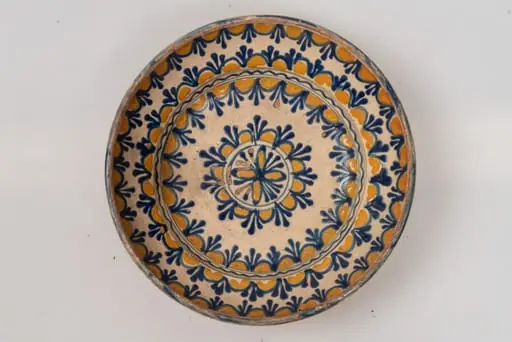 Farfurie adâncă, cu buza evazată și ușor concavă; este acoperită pe fața interioară cu un strat de angobă albă peste care este pictat cu pensula și cu cornul decorul format din motive geometrice și florale geometrizate: central pe fundul farfuriei se regăsește o floare cu petale galbene și contur albastru, încadrată într-un cerc dublu de culoare albastră, decorat pe exterior cu un șir format din semicercuri cu contur albastru și interior galben, separate de câte trei linii albastre în formă de V. Alte trei șiruri circulare formate din aceleași motive decorează buza și peretele farfuriei. Bordura interioară a farfuriei este marcată cu linii circulare simple și o linie circulară ondulată de culoare albastră iar muchia buzei cu o dungă albastră. Suprafața ornamentată a farfuriei este acoperită cu un strat de smalț transparent. Cromatica: alb, galben, albastru.
 blid
blid