Artwork
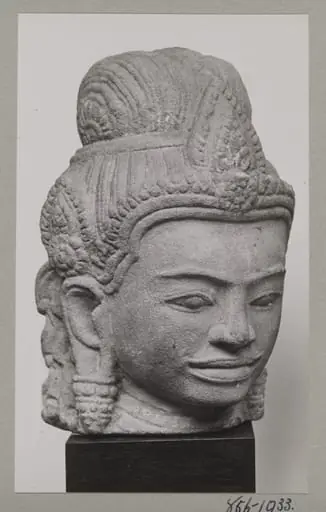
Cambodian sandstone sculpture of head of Deva, 10th century, V&A Museum, London
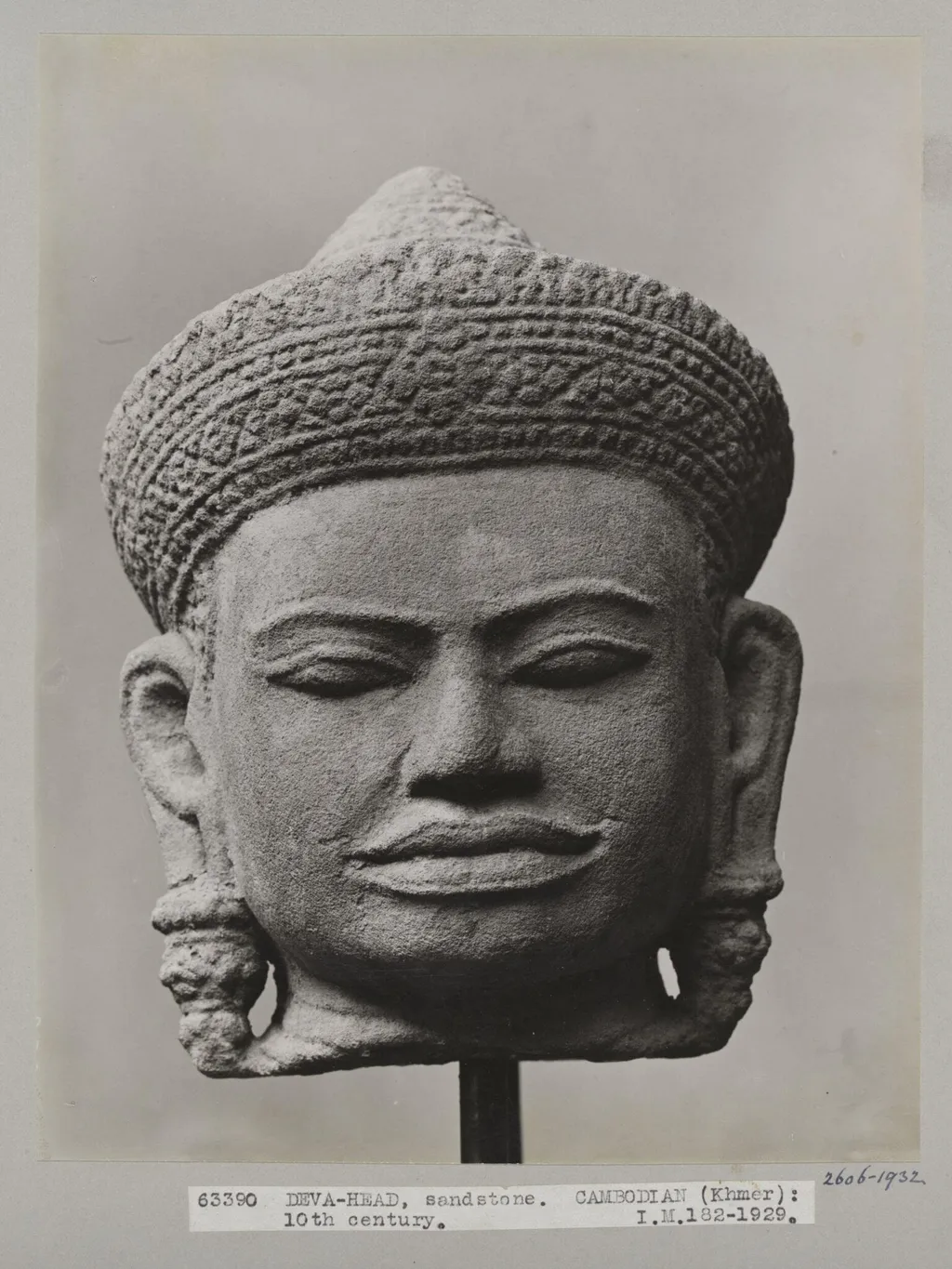
Cambodian sandstone sculpture of head of Deva, 10th century, V&A Museum, London is a photographic photography by Unknown. It dates from 1924 and is held in the collection of the Victoria and Albert Museum. A 10th-century Cambodian sandstone head, depicting a Deva, is held in the Victoria and Albert Museum’s collection.
About this work
Overview
The piece reflects the artistic traditions of the Khmer Empire during a period of flourishing temple construction and divine iconography.
A 10th-century Cambodian sandstone head, depicting a Deva, is held in the Victoria and Albert Museum’s collection. The sculpture, carved from smooth gray stone, survives as a fragment of a larger religious figure. It was documented in a black-and-white photographic record, preserving its form for study and display. The piece reflects the artistic traditions of the Khmer Empire during a period of flourishing temple construction and divine iconography.
Subject & Meaning
The sculpture represents a Deva, a celestial being in Khmer Hindu-Buddhist cosmology. Its serene expression, with closed eyelids and faint smile, conveys inner stillness and divine detachment. The pointed beard and large earrings are conventional markers of celestial status, distinguishing the figure from mortal rulers or ascetics. These features suggest a being of elevated spiritual authority, neither wrathful nor active, but eternally composed.
Technique & Style
Carved from fine-grained sandstone, the head exhibits a polished surface and subtle modeling. The hair is rendered as a smooth, rounded cap, contrasting with the defined contours of the beard and ear ornaments. The eyes are half-lidded, not hollowed, suggesting a meditative state rather than physical sight. The style is restrained, avoiding dramatic expression in favor of harmonious proportions, typical of 10th-century Khmer religious sculpture.
History & Provenance
The sculpture likely originated in the Angkor region during the reign of the Khmer Empire, a time when stone carving for temple decoration reached high refinement. Its journey to the V&A is undocumented prior to its inclusion in the museum’s collection, but many such fragments were collected in the late 19th and early 20th centuries during European archaeological expeditions in Southeast Asia.
Context
This head would have once formed part of a larger statue, possibly adorning a temple wall or shrine dedicated to a deity. In Khmer religious architecture, Deva figures served as guardians or attendants to higher gods, positioned to convey spiritual order. The calm demeanor aligns with broader Southeast Asian aesthetic values that equated divine presence with tranquility and balance.
Legacy
Though fragmentary, the sculpture remains a significant example of early Khmer stone carving. It contributes to scholarly understanding of how divine figures were visually encoded in Cambodian art. Its preservation in a Western museum reflects broader colonial-era collecting practices, while its quiet presence continues to inform contemporary appreciation of Southeast Asian religious aesthetics.
Artist & collection

 Domestic Scene
 Giacomo and Cardinal Marco, investing Andrea, Abbot of San Zeno, with his Benefice
 The Nymph of Fontainebleau
 Portrait of a Woman
 Madonna and Child with Saints in the Enclosed Garden
 Venus and Minerva
 Family Group of Four on Sofa
 Wall painting from Room H of the Villa of P. Fannius Synistor at Boscoreale
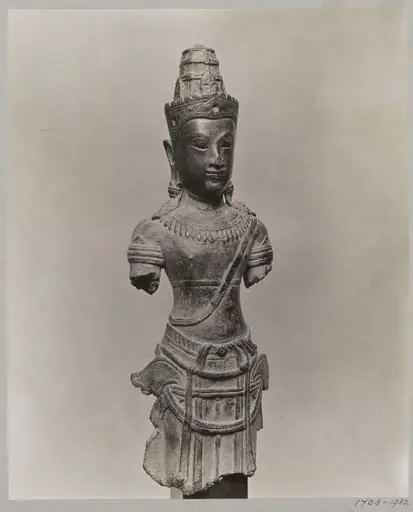 Bronze Cambodian sculpture of Bodhisattva, ca. 13th century, A.D., V&A Museum, London
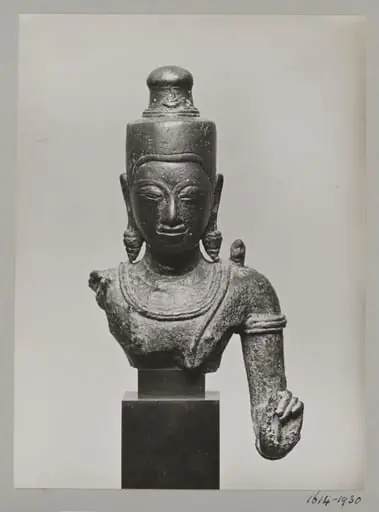 Bronze Cambodian sculpture of Buddha, ca. 13th century, V&A Museum, London
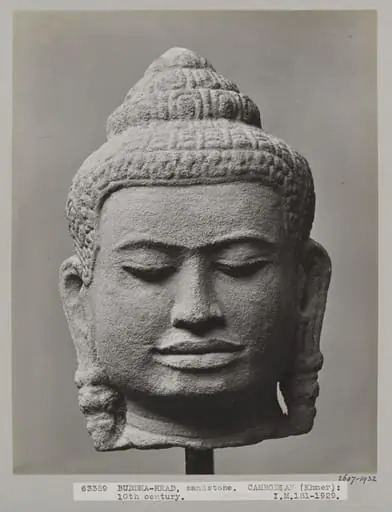 Cambodian Bayon style sandstone sculpture of head of Buddha, 10th century A.D., V&A Museum, London
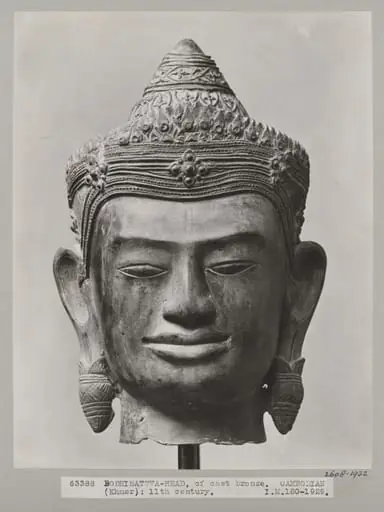 Cambodian bronze sculpture of head of Bodhisattva, 11th century A.D., V&A Museum, London
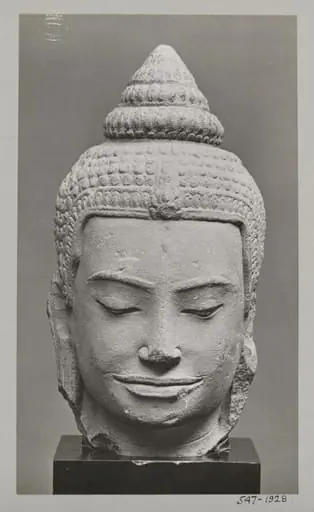 Sandstone sculpture of head of Buddha, Siam, 9th century A.D., V&A Museum, London
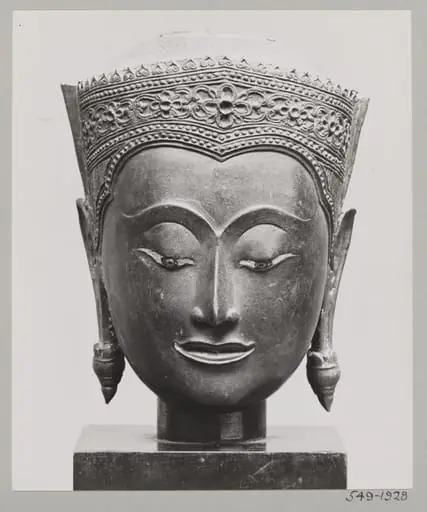 Siamese bronze sculpture of Buddha, 14th or 15th century, V&A Museum
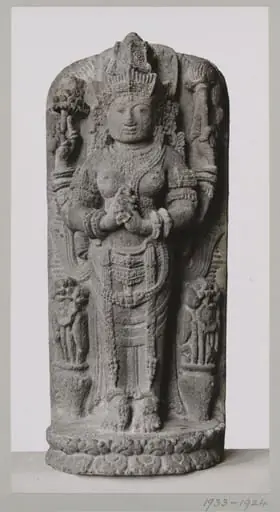 East Javanese volcanic rock sculpture, relief figure of Umā, early 15th century, V&A Museum, London
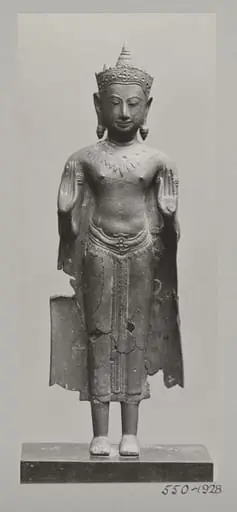 Bronze sculpture of standing figure of the Dipankara Buddha, V&A Museum
 Sculpture, head of Asura, Ankor region, 12th - 13th century, H.G. Quaritch Wales collection
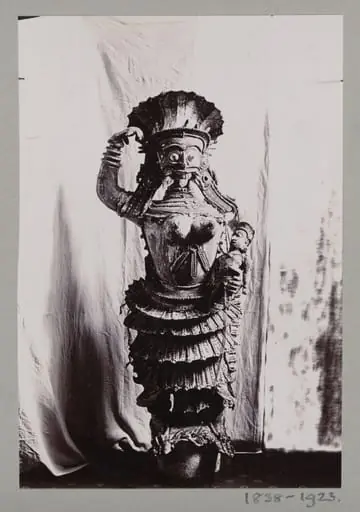 Carved wood sculpture, Goddess, Javanese (?)