Artwork
Cană de apă mare, bitronconică, cu gâtul înalt și buza evazată, modelată la roată, arsă, smălțuită, interior și exterior până aproape de bază, cu trei câmpuri ornamentale florale, pictate cu pensula. Aceasta prezintă un guler obținut la modelare format din două linii paralele aflate la o distanță de 1 cm printre ele, ce prezintă puncte albe pictate între ele. Toarta este ornamentată cu linii albe pictate în număr de cinci. Aceasta prezintă o impresiune cu degetul în pasta moale, sub toartă. Cromatică: fond: alb; cărămiziu; decor: verde; albastru; negru; cărămiziu.
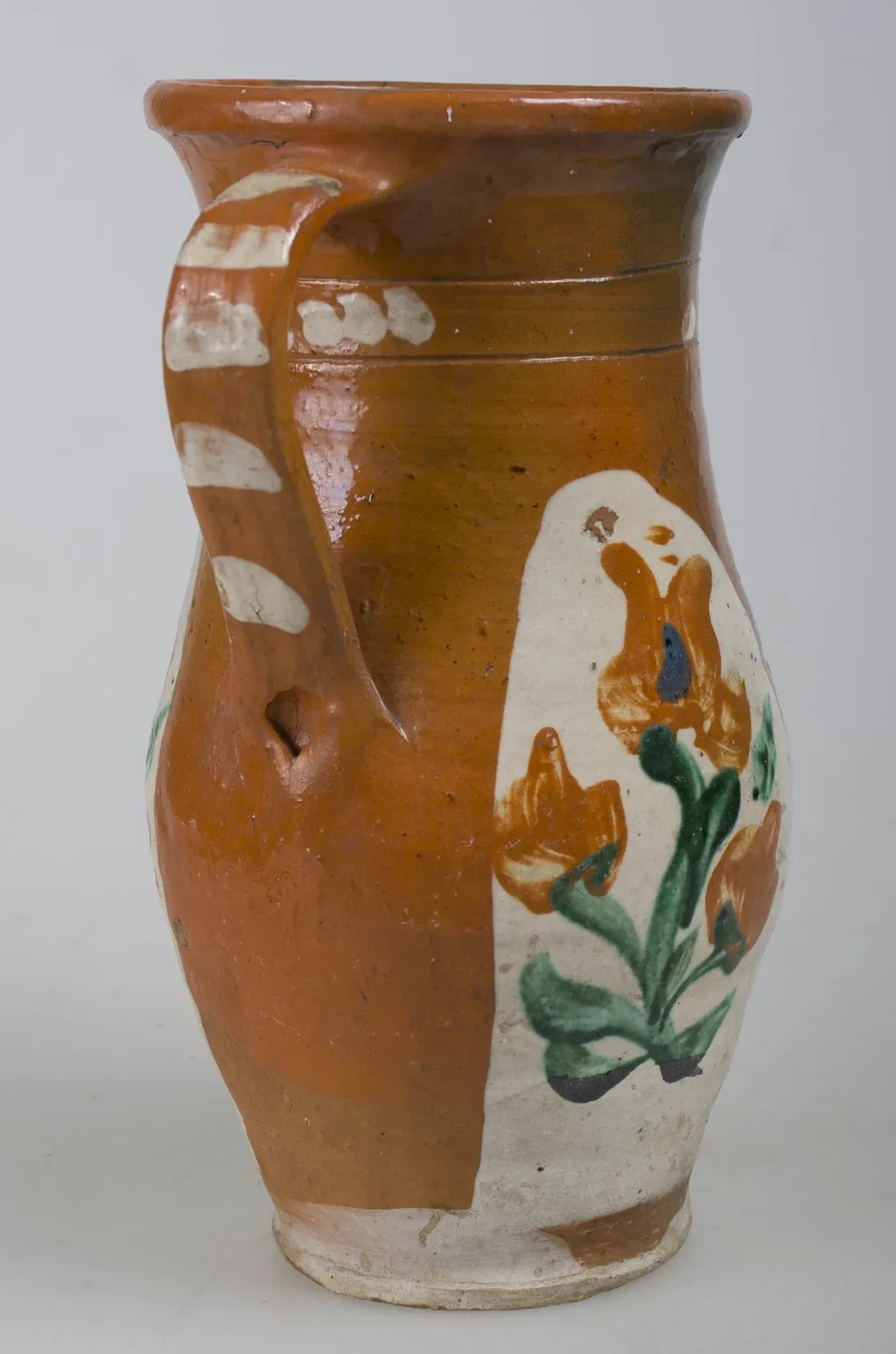
Cană de apă mare, bitronconică, cu gâtul înalt și buza evazată, modelată la roată, arsă, smălțuită, interior și exterior până aproape de bază, cu trei câmpuri ornamentale florale, pictate cu pensula. Aceasta prezintă un guler obținut la modelare format din două linii paralele aflate la o distanță de 1 cm printre ele, ce prezintă puncte albe pictate între ele. Toarta este ornamentată cu linii albe pictate în număr de cinci. Aceasta prezintă o impresiune cu degetul în pasta moale, sub toartă. Cromatică: fond: alb; cărămiziu; decor: verde; albastru; negru; cărămiziu. is a print by Unknown. It dates from 1850 and is held in the collection of the ASTRA National Museum Complex. This large ceramic pitcher features a bitronconic form with a tall neck and flared lip, shaped on a wheel and fired to hardness.
About this work
Overview
This large ceramic pitcher features a bitronconic form with a tall neck and flared lip, shaped on a wheel and fired to hardness.
This large ceramic pitcher features a bitronconic form with a tall neck and flared lip, shaped on a wheel and fired to hardness. Both interior and exterior surfaces are glazed up to near the base, creating a smooth, sealed finish. The vessel’s structure is functional yet refined, with a distinct collar formed by two parallel ridges spaced one centimeter apart, adorned with small white dots between them.
Subject & Meaning
Ornamental bands depict stylized floral motifs painted in green, blue, black, and reddish tones against a white and russet background. The arrangement suggests a symbolic or decorative intent rather than narrative storytelling. The repetition of geometric lines and floral patterns may reflect regional aesthetic traditions, possibly tied to domestic or ceremonial use, though no explicit iconographic meaning is evident.
Technique & Style
The vessel was wheel-thrown and fired, then coated in slip and painted with fine brushwork. The decoration employs a limited palette of mineral-based pigments, applied with precision to create contrast against the clay body. A finger impression beneath the shoulder indicates handling during the leather-hard stage. The five white lines on the shoulder and the dotted collar demonstrate a deliberate, measured approach to surface patterning.
History & Provenance
Though exact origin and date are unspecified, the form and decoration align with ceramic traditions from the Balkans or Eastern Europe during the late medieval or early modern period. The glazing technique and painted motifs suggest local production, possibly for household or market use. No documented collection history is available, but the object’s condition implies continuous use and careful preservation.
Context
This pitcher belongs to a broader category of utilitarian ceramics that combined practicality with decorative expression. Similar vessels appear in regional archaeological contexts, often found in domestic settings. The use of bold, simple colors and repetitive motifs reflects a cultural preference for clarity and rhythm in everyday objects, distinguishing it from more elaborate courtly wares of the same era.
Legacy
The pitcher exemplifies the enduring value placed on handmade ceramic forms in pre-industrial societies. Its preservation highlights the continuity of local craft practices, where aesthetic choices were shaped by material limits and functional needs. Though not widely documented, such objects contribute to understanding the visual culture of rural and small-town communities across southeastern Europe.
Artist & collection

 Domestic Scene
 Giacomo and Cardinal Marco, investing Andrea, Abbot of San Zeno, with his Benefice
 The Nymph of Fontainebleau
 Portrait of a Woman
 Madonna and Child with Saints in the Enclosed Garden
 Venus and Minerva
 Family Group of Four on Sofa
 Wall painting from Room H of the Villa of P. Fannius Synistor at Boscoreale
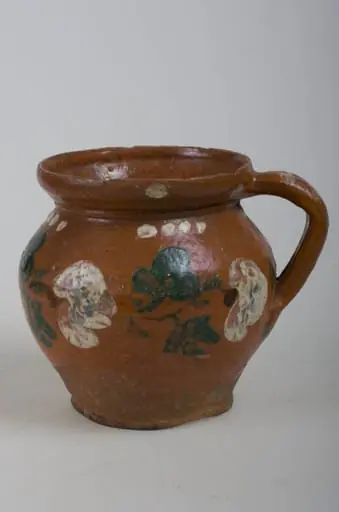 Ulcea de pus la grindă, cu corpul globular, gâtul scurt, buza evazată modelată la roată, arsă, smălțuită (interior și exterior până sub toartă), pictată cu pensula (motivele ornamentale). Motive florale și geometrice (puncte și linii). Vasul prezintă o impresiune sub toartă. Toarta are cinci linii albe transversale. Cromatică: fond: cărămiziu; decor: alb; verde; albastru.
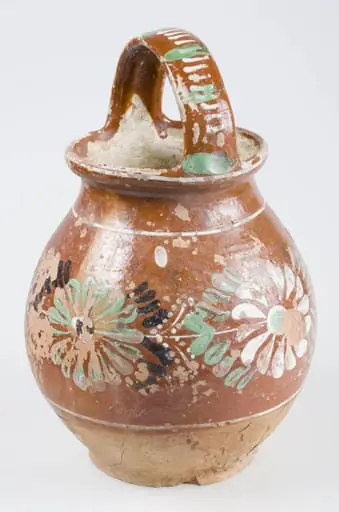 Oală de formă bitronconică modelată la roată, arsă, pictată cu pensula și smălțuită. Vasul prezintă o toartă dispusă diametral pe gură, denumită mănușă. Vasul prezintă smălțuire pe 2/3 din exterior, peste care este aplicat decorul. Ornamentația este realizată cu ajutorul motivelor geometrice, floarale și vegetale. Pe corpul vasului sunt aplicate trei linii orizontale la distanțe egale una față de cealaltă. Linia din mijloc are rolul de a face încadrarea modelului, linia trecând exact prin mijlocul modelului. Astfel între celelalte două linii este încadrat un rând format din flori cu petale mari, fiecare floare fiind înconjurată de un rând de petale, delimitata de câte două frunze. Pe mănușă sunt aplicate linii verticale, scurte cât lățimea acesteia. Vasul prezintă angobare și smălțuire la interior. Cromatică: cărămiziu; alb; verde; albastru.
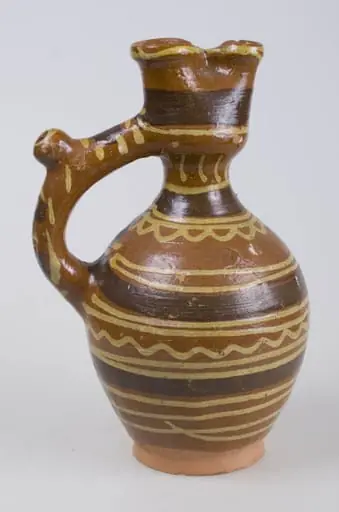 Recipientul este confecționat din lut, cu pântecul extins în zona mediană, cu gât îngust și gură bilobată. Acesta prezintă ciur la gură și în interior piatră sunătoare. Obiectul este prevăzut cu o toartă tubulară cu țâță pentru scurgerea lichidului, lipită de gât și de mijlocul diametrului maxim al corpului. Ulciorul este smălțuit până aproape de fundul vasului. Decorul este format din motive geometrice, pictate cu cornul, pe toată suprafața corpului, inclusiv pe mâner: linii circulare, linii vălurite, linii oblice dispuse vertical, semicercuri pe umeri. Cromatică: fond: cărămiziu; decor: galben; maro închis.
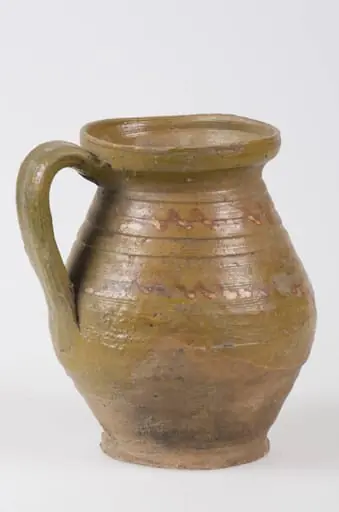 Vas bitronconic cu gât scurt și foarte profilat, cu gura înaltă și dreaptă. Prezintă o toartă care pleacă de sub buză și se unește cu corpul sub zona diametrului maxim. Este smălțuit în interior și la exterior (parțial nesmălțuit în partea de jos). În partea superioară prezintă un decor geometric realizat din cinci linii incizate și două linii în val pictate. Toarta este decorată cu puncte. Cromatică: fond: cărămiziu și pe alocuri verziu; motive: alb; maroniu. Prezintă uzură funcțională.
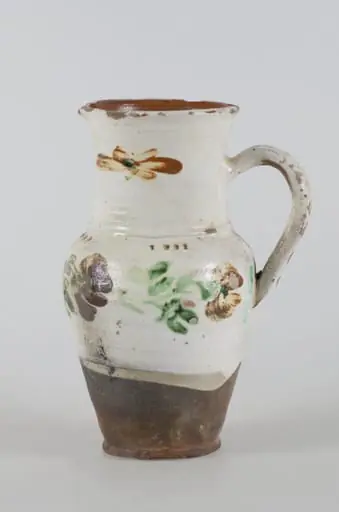 Recipient din lut de formă bitronconică, cu un gât cilindric și buza evazată. Smălțuit două treimi din partea superioară. Buza are o țuguiere pentru scurgere. Prezintă motive geometrice, vegetale, florale, pictate cu pensula. Prevăzut cu mâner în partea superioară, pentru manipulare. În interior, vasul este cărămiziu, la exterior fond: crem; motive: maro; verde; galben.
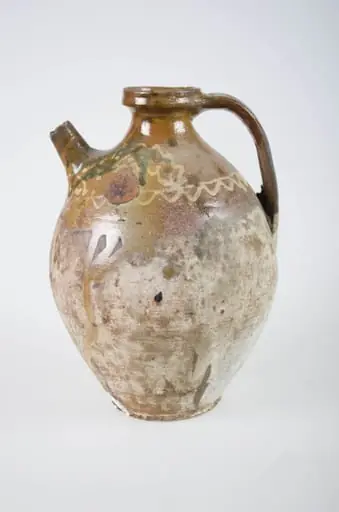 Vas de formă ovoidală cu gât lung, cu gura largă și buza înălțată. Prezintă o toartă care pleacă din gura vasului și se unește cu corpul în zona diametrului maxim. Din umăr, în partea opusă torții pleacă o țâță scurtă (burciuc). Vasul este smălțuit pe exterior în partea superioară unde prezintă și un decor format din motive geometrice: linie și linie în val deasupra cărora se regăsesc motive florale. Cromatica: fond: cărămiziu; motiver: alb-gălbui, verde. Prezintă uzură funcțională.
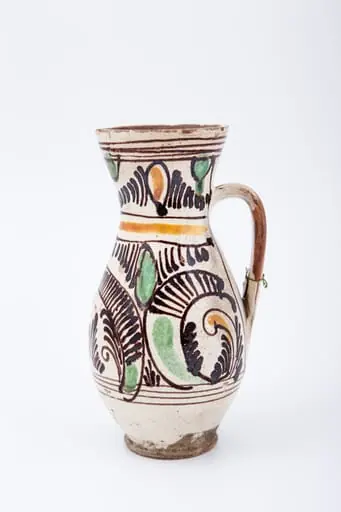 Cănceu piriform prevăzut cu o toartă, gât scurt și evazat, toarta dispusă de la gât la diametrul maxim al vasului. Suprafața decorativă a vasului este împărțită în două registre dispuse vertical, separate printr-o bandă lată verde așezată pe gâtul vasului. Primul registru prezintă motive geometrice stilizate: linii subțiri verticale și frunze stilizate, conturul fiind trasat cu cornul, pictate în interior cu galben și verde. Al doilea registru prezintă motive geometrice stilizate, linii, benzi interesectate decorate jumătate cu linii subțiri orizontale maro, jumătate pictate cu verde sau galben, cercuri hașurate care simbolizează motive florale și linii verticale subțiri maro. Decorul central este încadrat în partea inferioară și superioară de linii subțiri, paralele maro. Cromatică: alb; verde; maro; galben.
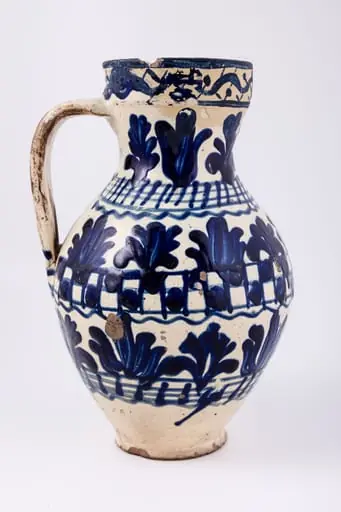 Cană piriformă prevăzută cu o toartă dreaptă și lată, gura rotundă. Suprafața decorativă a vasului este împărțită în șapte registre decorative: cel din partea superioară, pe buza vasului este dispus orizontal, iar celelalte șase, dispuse vertical. Primul registru, așezat pe marginea dreaptă a cănii redă o linie vălurită intercalată de puncte. Registrul al doilea, al patrulea și al șaselea prezintă motive fitomorfe și florale, brăduți intercalați de lalele înflorite stilizate. Registrul al treilea, dispus pe gâtul cănii și al șaptelea, dispus la bază, prezintă linii circulare orizontale intersectate de linii verticale. Registrul al patrulea prezintă tabla de șah. Toarta este pictată cu pensula. Cromatica: alb, albastru-cobalt.
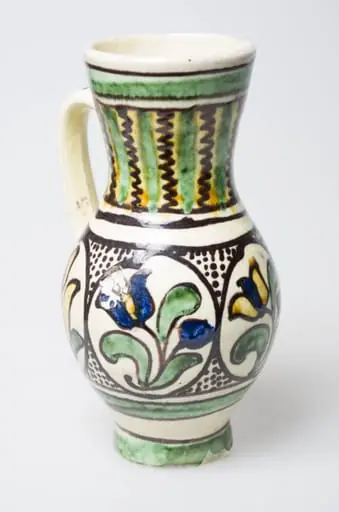 Recipient ceramic de formă ovoidală, smălțuit, cu gâtul lung, fund inelar și buza dreaptă. Prevăzut cu o toartă arcuită, care pleacă din mijlocul gâtului spre partea inferioară a vasului. Intens stilizat cu motive florale, vegetale și geometrice, pictate cu pensula, în două registre diferite. În primul registru, situat în zona gâtului, sunt pictate dungi late și linii meandrice dispuse pe verticală, alternativ. Aproape de gura vasului, sunt prezente dungi late și linii circulare. În al doilea registru întâlnim patru flori încadrate în cercuri și între acestea, puncte mici, umplând astfel cu decorații toată zona bombată a recipientului. Registrele sunt delimitate între ele de trei linii circulare. În partea inferioară, întâlnim ca și la gură, o dungă lată încadrată de două linii circulare. Prezent motiv geometric pe toartă sub formă de linie vălurită. Cromatică: fundal: alb; motive: galben; albastru; verde; maro închis.