Artwork
Oală de formă bitronconică modelată la roată, arsă, pictată cu pensula și smălțuită. Vasul prezintă o toartă dispusă diametral pe gură, denumită mănușă. Vasul prezintă smălțuire pe 2/3 din exterior, peste care este aplicat decorul. Ornamentația este realizată cu ajutorul motivelor geometrice, floarale și vegetale. Pe corpul vasului sunt aplicate trei linii orizontale la distanțe egale una față de cealaltă. Linia din mijloc are rolul de a face încadrarea modelului, linia trecând exact prin mijlocul modelului. Astfel între celelalte două linii este încadrat un rând format din flori cu petale mari, fiecare floare fiind înconjurată de un rând de petale, delimitata de câte două frunze. Pe mănușă sunt aplicate linii verticale, scurte cât lățimea acesteia. Vasul prezintă angobare și smălțuire la interior. Cromatică: cărămiziu; alb; verde; albastru.
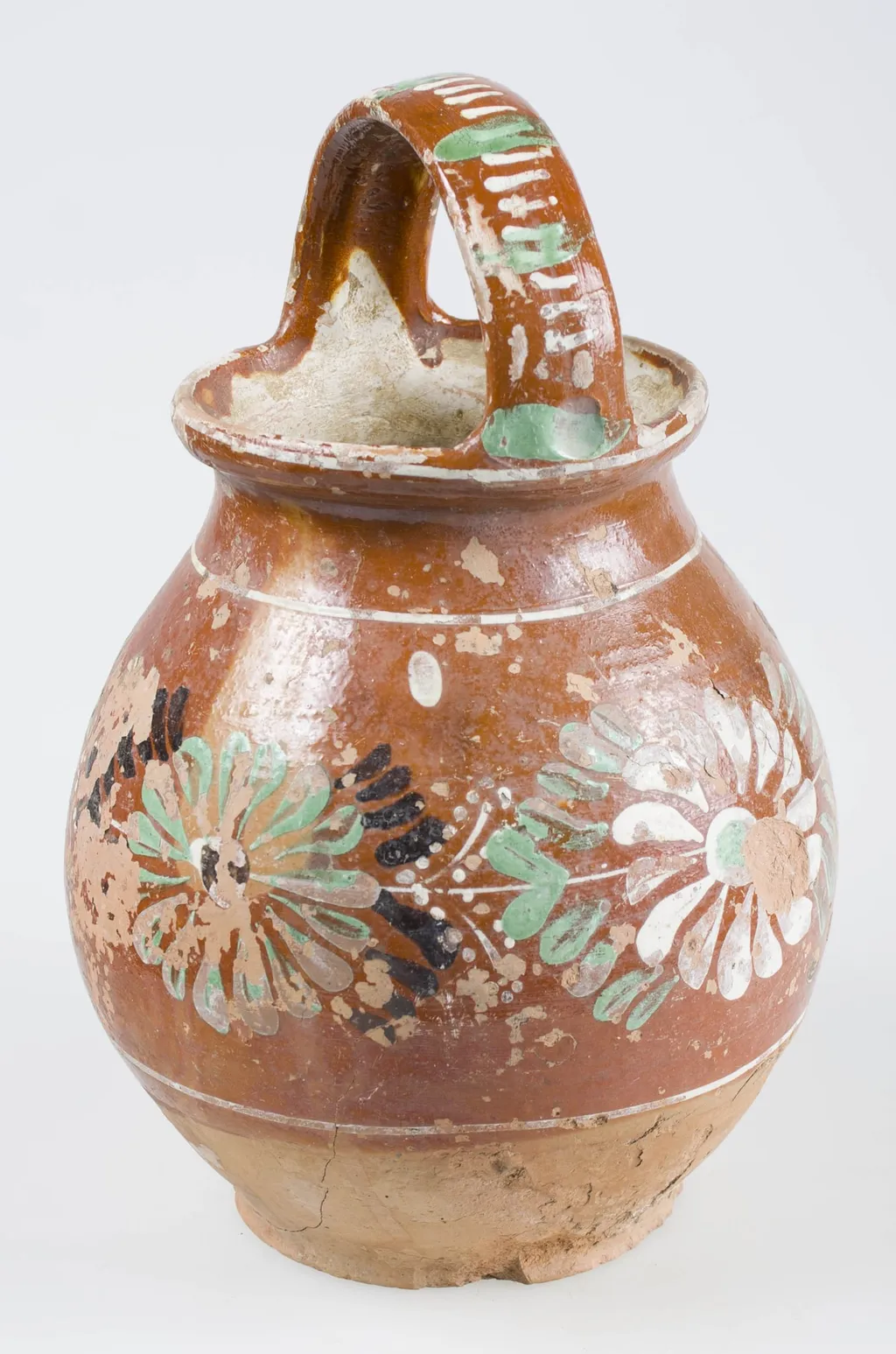
Oală de formă bitronconică modelată la roată, arsă, pictată cu pensula și smălțuită. Vasul prezintă o toartă dispusă diametral pe gură, denumită mănușă. Vasul prezintă smălțuire pe 2/3 din exterior, peste care este aplicat decorul. Ornamentația este realizată cu ajutorul motivelor geometrice, floarale și vegetale. Pe corpul vasului sunt aplicate trei linii orizontale la distanțe egale una față de cealaltă. Linia din mijloc are rolul de a face încadrarea modelului, linia trecând exact prin mijlocul modelului. Astfel între celelalte două linii este încadrat un rând format din flori cu petale mari, fiecare floare fiind înconjurată de un rând de petale, delimitata de câte două frunze. Pe mănușă sunt aplicate linii verticale, scurte cât lățimea acesteia. Vasul prezintă angobare și smălțuire la interior. Cromatică: cărămiziu; alb; verde; albastru. is a photography by Unknown. It dates from 1850 and is held in the collection of the ASTRA National Museum Complex.
About this work
Overview
The vessel is a clay jar of a bi‑truncated shape, finished with a wheel‑thrown form, fired and then painted with brushwork before being covered in glaze. Its exterior is largely glazed, with decorative motifs applied over the glaze, while the interior is both glazed and painted. The jar features a distinctive handle, known locally as a "mănușă," resembling a glove or cup attached to the rim.
Subject & Meaning
The decoration consists of geometric, floral and vegetal patterns organized in three equally spaced horizontal bands. The central band frames a row of large, multi‑petaled flowers each surrounded by a secondary ring of petals and flanked by pairs of leaves. Short vertical strokes accent the "mănușă" handle, emphasizing its functional and symbolic role in traditional pottery.
Technique & Style
The potter applied a base glaze to two‑thirds of the exterior, then painted the ornamental designs with pigments in brick‑red, white, green and a hint of blue.
The potter applied a base glaze to two‑thirds of the exterior, then painted the ornamental designs with pigments in brick‑red, white, green and a hint of blue. The glaze provides a glossy surface that enhances the painted colors, while the interior receives both glaze and paint. The three horizontal lines are incised or painted to divide the body into equal sections, a common compositional device in regional ceramics.
History & Provenance
The jar originates from a tradition of ethnographic pottery where the "mănușă" handle is a characteristic feature. Its worn surface and chipped paint indicate extensive use before entering a museum collection, likely acquired through ethnographic fieldwork or donation to a cultural institution specializing in folk artifacts.
Context
Such vessels were typically used for storage or transport of liquids and dry goods in rural households. The decorative scheme reflects local aesthetic preferences, combining stylized flora with geometric order, and the color palette aligns with regional ceramic traditions that favored earthy reds and greens complemented by occasional blue accents.
Artist & collection

 Domestic Scene
 Giacomo and Cardinal Marco, investing Andrea, Abbot of San Zeno, with his Benefice
 The Nymph of Fontainebleau
 Portrait of a Woman
 Madonna and Child with Saints in the Enclosed Garden
 Venus and Minerva
 Family Group of Four on Sofa
 Wall painting from Room H of the Villa of P. Fannius Synistor at Boscoreale
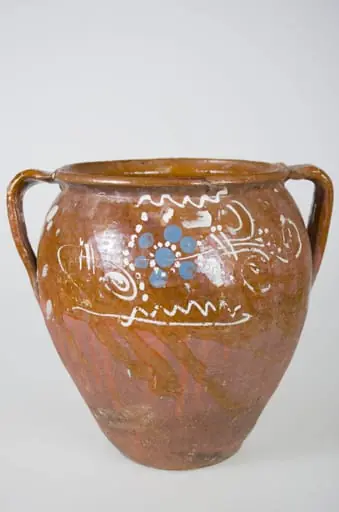 Vas de formă bitronconică și buză răsfrântă, smălțuit în partea superioară. Prezintă două toarte ce unesc partea cu gabarit maxim cu buza vasului. Decorații realizate în partea superioară, prin pictare cu pensula, într-un registru delimitat de o linie albă ondulată dispusă circular sub buză și o alta dublată de o linie dreaptă în zona diametrului maxim a vasului. Motive floral-vegetale, punctiforme și liniare, ilustrând două flori, câte una pe fiecare parte, cu petale albastre sugerate de puncte. Cromatică: fond: brun; motive: albastru; alb.
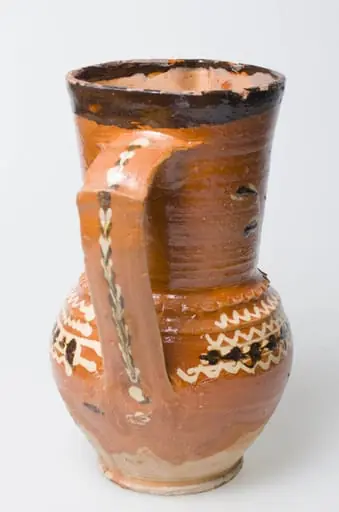 Vasul este confecționat din lut, având forma bitronconică, cu gura largă. Acesta este prevăzut cu o toartă pentru prindere fixată, în partea superioară de margine, iar în partea inferioară de zona bombată a vasului. Obiectul este decorat cu linii vălurite și motive florale. Cromatică: fond: maro; decor: alb; negru.
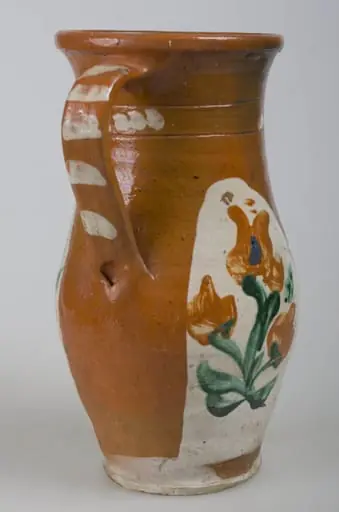 Cană de apă mare, bitronconică, cu gâtul înalt și buza evazată, modelată la roată, arsă, smălțuită, interior și exterior până aproape de bază, cu trei câmpuri ornamentale florale, pictate cu pensula. Aceasta prezintă un guler obținut la modelare format din două linii paralele aflate la o distanță de 1 cm printre ele, ce prezintă puncte albe pictate între ele. Toarta este ornamentată cu linii albe pictate în număr de cinci. Aceasta prezintă o impresiune cu degetul în pasta moale, sub toartă. Cromatică: fond: alb; cărămiziu; decor: verde; albastru; negru; cărămiziu.
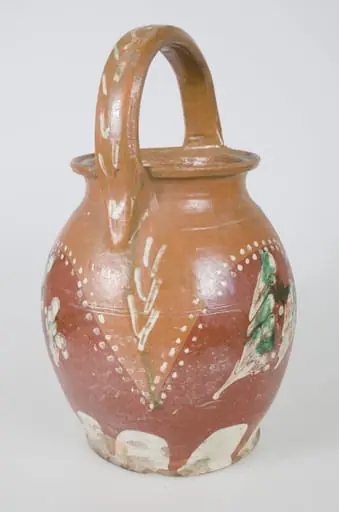 Vas smălțuit de formă ovoidală, bombat la mijloc, gât scurt cu buza dreaptă și evazată. Prevăzut cu o toartă semicirculară care pornește din buză, peste gură, și se prinde diametral opus (mănușar). Pe toartă este prezent motivul bradului realizat din linii albe unite în forma literei ”V”, înșiruite una după alta. Pe corpul vasului se găsesc trei registre circulare convexe, conturate cu câte două șiruri de puncte albe. În interiorul registrelor sunt decorații cu motive florale-vegetale stilizate. Între registre se găsesc câte trei decorații cu motivul bradului. La bază este conturat cu un șir de semicerucri pline. Cromatică: fond: cărămiziu; motive: brun; verde; alb.
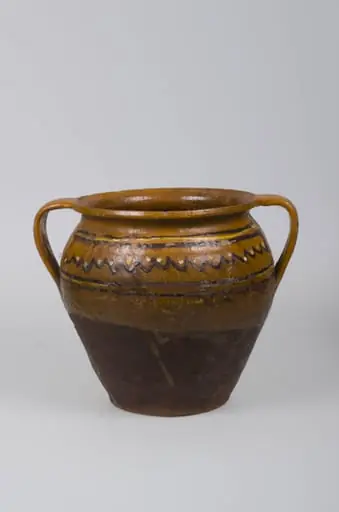 Vasul are formă bitronconică, prevăzut cu două toarte dispuse vertical în opoziție una față de cealalltă. Gâtul foarte profilat și buza evazată. Toartele pornesc din buza vasului și se unesc cu corpul în zona diametrului vasului, fiind aplatizate. Oala are urme de ardere secundară; este smălțuită în interior și în exterior (doar jumătatea superioară). Este folosită atât la pregătirea hranei cât și pentru păstrarea alimentelor și pentru transportul hranei la câmp. Oala este decorată pe umăr cu motive geometrice: linii drepte, linie în val, puncte. Cromatică cărămiziu; galben; maro închis.
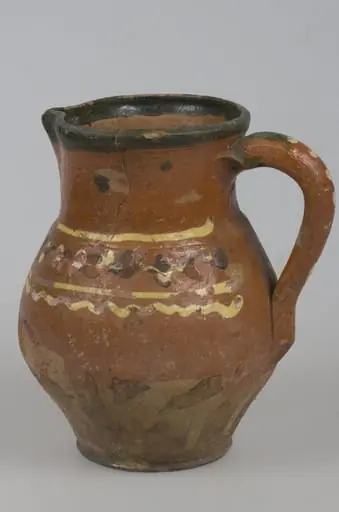 Vas de lut de mici dimensiuni, bombat, cu gât lung și puțin evazat, cu gură largă și cioc de scurgere. Toarta pornește de sub gură și coboară până în zona diametrului maxim al vasului. Este smălțuit în interior și exterior. Decorul dispus pe umărul vasului este format din: motive florale: o cunună din frunze încadrată de motive geometrice: o linie circulară în partea superioară și o linie circulară și una în val în partea inferioară. Buza vasului este vopsită în interior și exterior. Toarta este decorată cu puncte de culoare albă. Cromatică: fond: cărămiziu; motive: alb; verde; negru.
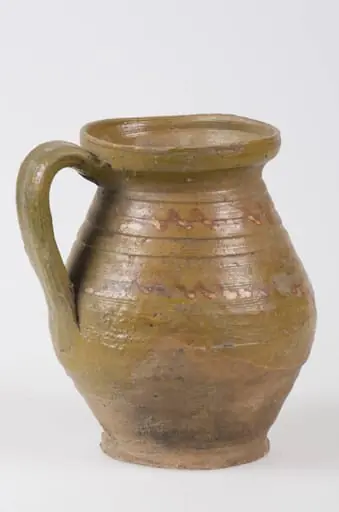 Vas bitronconic cu gât scurt și foarte profilat, cu gura înaltă și dreaptă. Prezintă o toartă care pleacă de sub buză și se unește cu corpul sub zona diametrului maxim. Este smălțuit în interior și la exterior (parțial nesmălțuit în partea de jos). În partea superioară prezintă un decor geometric realizat din cinci linii incizate și două linii în val pictate. Toarta este decorată cu puncte. Cromatică: fond: cărămiziu și pe alocuri verziu; motive: alb; maroniu. Prezintă uzură funcțională.
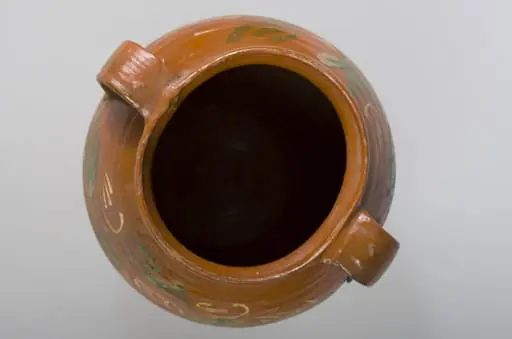 Vas de formă bitronconică, cu gât scurt cu buză rotunjită și evazată. Oala este smălțuită interior și pe 2/3 din exterior. Prezintă două toarte late ce unesc buza vasului de zona diametrului maxim. Decorații în registru floral-vegetal, dispuse concentric, în partea superioară a vasului, compuse din linii ondulate și palmate. Cromatică: fond: cărămiziu; motive: alb, verde.
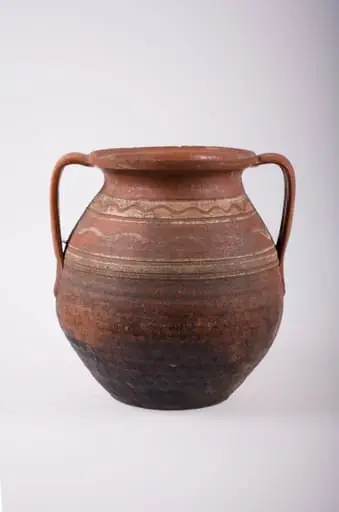 Oala bombată cu două toarte late, aplatizate, dispuse de o parte și de alta a gurii vasului; buză evazată; decorată în exterior cu motive geometrice: linii, linii vălurite pe un registru de cromatică albă. Cromatică: fond: maro; motive: alb-gălbui. Smălțuită pe gura vasului, interior și pe mânerul vasului.
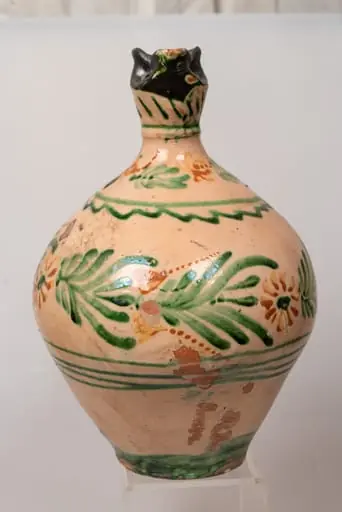 Piesă cu corp sfericl bombat, cu gât profilat, cu gât și gură îngustă, bilobată, cu cior. Din pântecul vasului pornește o toartă tubulară cu orificiu pronunțat pentru băut (cu țâță), care se unește cu vasul sub buza acestuia. Fața exterioară a ulciorului este angobată cu un strat de humă albă, peste care este pictat decorul, cu pensula și cu cornul, astfel: pe partea superioară a vasului, între două grupări de linii concentrice apare o bandă decorată cu motiv floral (o floare rotundă cu multe petale) alternând cu motivul fitomorf caracteristic centrului: frunze alungite, de culoare verde. Pe cant, delimitată de banda decorativă de pe burta vasului de către două linii concentrice, realizate drept și în valuri, este dispusă o bandă decorativă mai îngustă, cu motiv floral și motiv fitomorf delimitat de gât de un brâu colorat. Sub buza bilobată sunt realizate o serie de linii oblice paralele pictate, care continuă pe toată suprafața torții. Fundul vasului este marcat cu o bandă lată orizontală, pictată. Cromatica: alb, maro, verde. Vasul este acoperit cu un strat de smalț transparent.
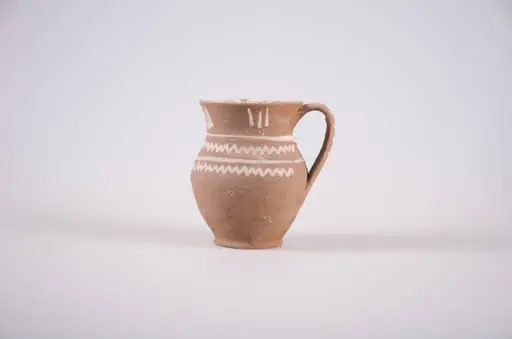 Recipient bitronconic cu gura largă. Are o toartă laterală care pleacă din buză până la diametrul maxim al vasului. Decor cu motive geometrice pe partea superioară a vasului și pe toartă: linii paralele, doua cercuri, linii ondulate. Cromatică: fond: cărămiziu; motive din angobă albă. Vasul este nesmălțuit.