Artwork
Vas de lut de mici dimensiuni de formă bitronconică și cu cioc de scurgere a apei la partea superioară cu gât scurt și buza evazată. Prevăzută cu o toartă care pornește de pe umărul vasului și se unește cu corpul sub diametrul maxim. Smălțuită în interior și exterior. În jumătatea superioară este decorată de o parte și de alta a torții cu motive florale: flori cu patru respectiv cinci petale. Toarta este decorată cu o linie albă. Cromatică: interior: alb; exterior: maro; motive: alb; verde.
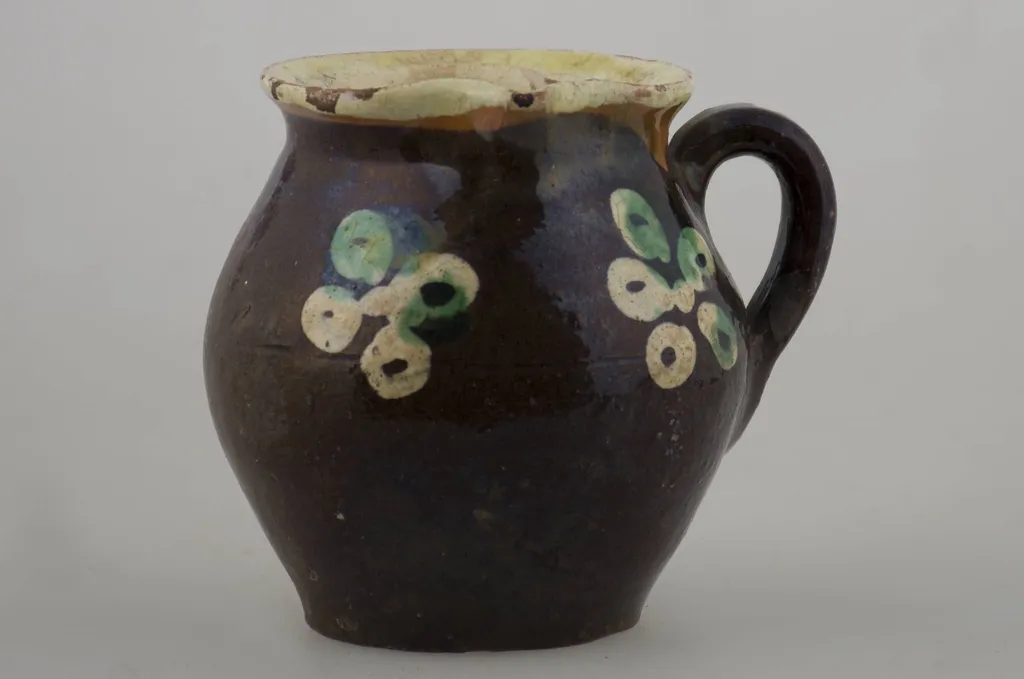
Vas de lut de mici dimensiuni de formă bitronconică și cu cioc de scurgere a apei la partea superioară cu gât scurt și buza evazată. Prevăzută cu o toartă care pornește de pe umărul vasului și se unește cu corpul sub diametrul maxim. Smălțuită în interior și exterior. În jumătatea superioară este decorată de o parte și de alta a torții cu motive florale: flori cu patru respectiv cinci petale. Toarta este decorată cu o linie albă. Cromatică: interior: alb; exterior: maro; motive: alb; verde. is a photography by Unknown. It dates from 1850 and is held in the collection of the ASTRA National Museum Complex. A small, bitronconical clay vessel with a short neck and flared lip, this pitcher features a spout at the top for pouring.
About this work
Overview
Both interior and exterior surfaces are glazed, with the inside exhibiting a smooth, glossy finish and the outside a matte, dark brown tone.
A small, bitronconical clay vessel with a short neck and flared lip, this pitcher features a spout at the top for pouring. A handle extends from the shoulder to the lower body, just below the widest point. Both interior and exterior surfaces are glazed, with the inside exhibiting a smooth, glossy finish and the outside a matte, dark brown tone. The vessel shows signs of wear, including chipping along the rim and surface fading, consistent with prolonged use.
Subject & Meaning
Decorative motifs consist of simple floral patterns, each composed of four or five petals rendered in white, with green centers and small black dots at their cores. These motifs flank the handle on either side, suggesting a symbolic or aesthetic emphasis on natural forms. The lack of complex iconography implies a functional object adorned with everyday botanical imagery, possibly reflecting local floral traditions or seasonal cycles.
Technique & Style
The vessel is hand-formed and glazed, with paint applied in flat, unshaded strokes that avoid modeling or depth. The floral designs are executed with restrained precision, using limited pigments: white, green, and black on a maroon ground. The handle is integrated structurally and decoratively, marked by a single white line running its length. The overall aesthetic prioritizes utility over ornamentation, characteristic of utilitarian pottery from a pre-industrial tradition.
History & Provenance
Though exact origin and date are unspecified, the form, glazing, and decoration align with regional ceramic practices in Southeastern Europe, likely dating to the late medieval or early modern period. The wear patterns and material degradation suggest domestic use over an extended period. No documented collection history exists, but similar vessels are found in archaeological contexts associated with rural households.
Context
This pitcher belongs to a broader category of small, functional ceramics used for storing or pouring liquids in pre-industrial communities. Its compact size and spout design indicate use in domestic or agricultural settings, possibly for water, wine, or oil. The floral decoration, while minimal, reflects a cultural preference for natural motifs, common in folk pottery where ornamentation was both decorative and spiritually or symbolically resonant.
Legacy
The vessel exemplifies a tradition of handmade ceramics that valued functionality and local materials over mass production. Its simple floral patterns and restrained palette persist in regional folk art, influencing later revivals of traditional pottery techniques. Though not widely documented, such objects remain important artifacts in understanding everyday material culture and artisanal practices in rural European communities.
Artist & collection

 Domestic Scene
 Giacomo and Cardinal Marco, investing Andrea, Abbot of San Zeno, with his Benefice
 The Nymph of Fontainebleau
 Portrait of a Woman
 Madonna and Child with Saints in the Enclosed Garden
 Venus and Minerva
 Family Group of Four on Sofa
 Wall painting from Room H of the Villa of P. Fannius Synistor at Boscoreale
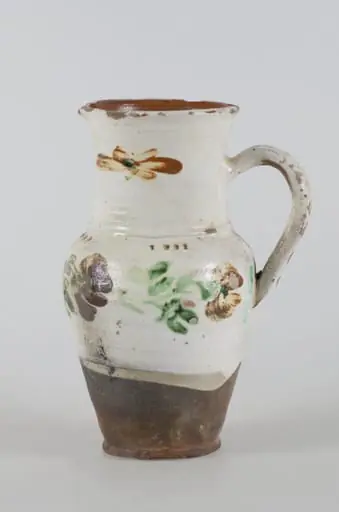 Recipient din lut de formă bitronconică, cu un gât cilindric și buza evazată. Smălțuit două treimi din partea superioară. Buza are o țuguiere pentru scurgere. Prezintă motive geometrice, vegetale, florale, pictate cu pensula. Prevăzut cu mâner în partea superioară, pentru manipulare. În interior, vasul este cărămiziu, la exterior fond: crem; motive: maro; verde; galben.
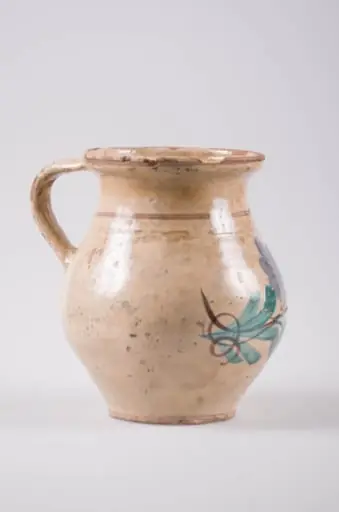 Oală de formă bitronconică de culoare bej. Decorul este reprezentat de motive florale: floarea este încadrată de linii albe realizate cu degetul; motive vegetale, motive geometrice: în partea superioară decorație circulară, linii. Prezintă toartă curbată. Smălțuită. Cromatică: fond: bej; motive: verde; albastru; maroniu.
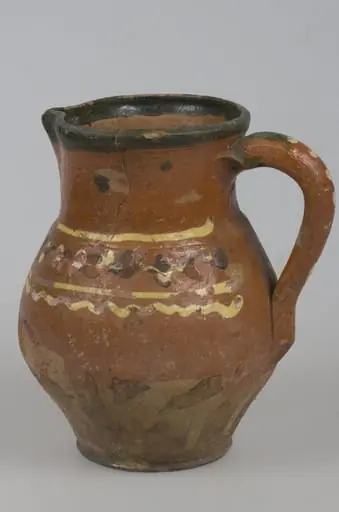 Vas de lut de mici dimensiuni, bombat, cu gât lung și puțin evazat, cu gură largă și cioc de scurgere. Toarta pornește de sub gură și coboară până în zona diametrului maxim al vasului. Este smălțuit în interior și exterior. Decorul dispus pe umărul vasului este format din: motive florale: o cunună din frunze încadrată de motive geometrice: o linie circulară în partea superioară și o linie circulară și una în val în partea inferioară. Buza vasului este vopsită în interior și exterior. Toarta este decorată cu puncte de culoare albă. Cromatică: fond: cărămiziu; motive: alb; verde; negru.
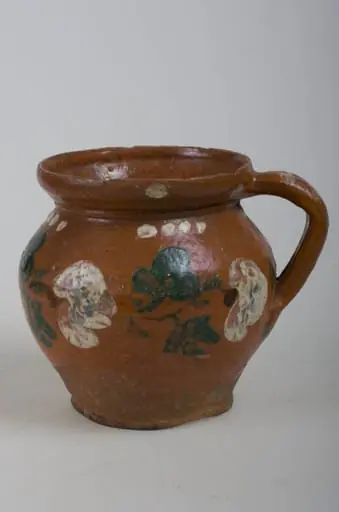 Ulcea de pus la grindă, cu corpul globular, gâtul scurt, buza evazată modelată la roată, arsă, smălțuită (interior și exterior până sub toartă), pictată cu pensula (motivele ornamentale). Motive florale și geometrice (puncte și linii). Vasul prezintă o impresiune sub toartă. Toarta are cinci linii albe transversale. Cromatică: fond: cărămiziu; decor: alb; verde; albastru.
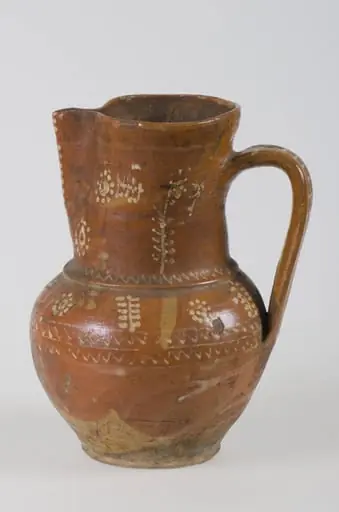 Cană înaltă cu o toartă și gura ovoidală terminată cu un cioc pe partea opusă torții. Toarta pornește de sub gură și se termină sub diametrul maxim al vasului. Smălțuită exterior. Decorată pe toată suprafața cu motive florale stilizate, motive fitomorfe (frunze stilizate) și motive geometrice: linie, linie ondulată, punct. Cromatică: fond: maroniu; motive: alb.
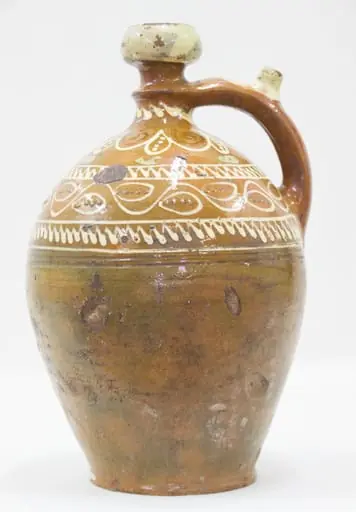 Ulcior de formă bitronconică cu gura îngustă și rotundă, cu o toartă și un orificiu pentru scurgerea lichidului, smălțuit și decorat pe jumătatea superioară cu motive vegetale (ghirlande) și geometrice (spirale; patru cercuri concentrice cu o linie șerpuită între ele).Cromatică: maro (fond), decor - galben, bej, alb, verde. Jumătatea inferioară a obiectului este nesmălțuită.
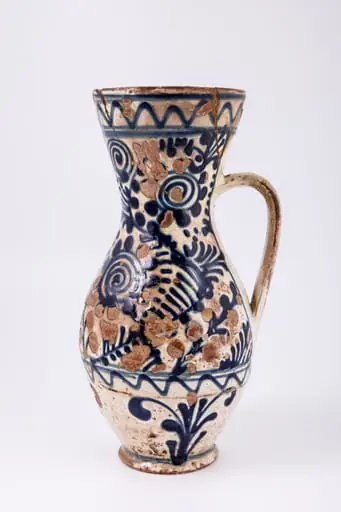 Cană cu corpul bombat, gât scurt, toarta dispusă de la gât la diametrul maxim al vasului. Suprafața decorativă a vasului este încadrată între linii subțiri și vălurite dispuse în partea superioară și inferioare. Decorul central reprezintă calea cu sori alcătuită din lujeri, linii paralel dispuse sub formă de raze, cercuri pline și floarea-soarelui stilizată. Cromatica: alb și albastru cobalt.
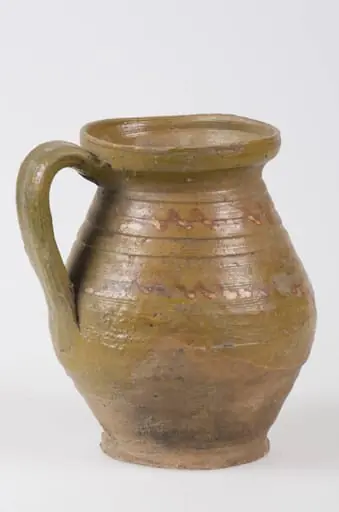 Vas bitronconic cu gât scurt și foarte profilat, cu gura înaltă și dreaptă. Prezintă o toartă care pleacă de sub buză și se unește cu corpul sub zona diametrului maxim. Este smălțuit în interior și la exterior (parțial nesmălțuit în partea de jos). În partea superioară prezintă un decor geometric realizat din cinci linii incizate și două linii în val pictate. Toarta este decorată cu puncte. Cromatică: fond: cărămiziu și pe alocuri verziu; motive: alb; maroniu. Prezintă uzură funcțională.
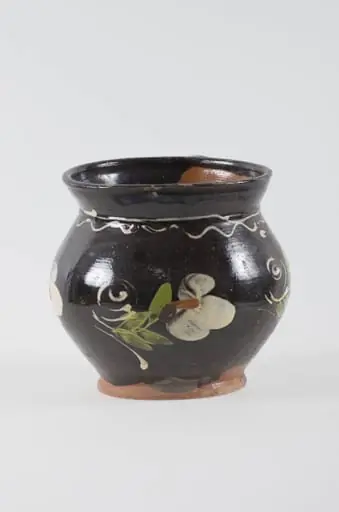 Vasul este de lut smălțuit și are formă bitronconică. Este prevăzut cu o toartă semicirculară și cu buza profilată înspre exterior. Decorat cu motive geometrice (linii drepte, curbe) și motive florale. Cromatică: fond: maro; motive: alb; verde; maro deschis.
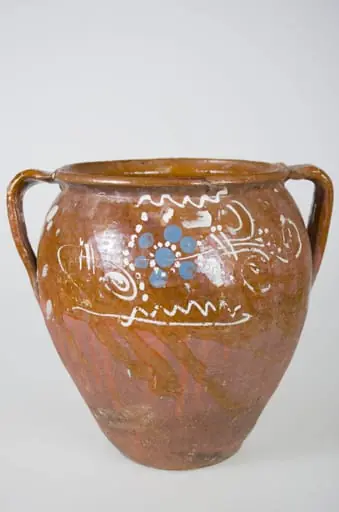 Vas de formă bitronconică și buză răsfrântă, smălțuit în partea superioară. Prezintă două toarte ce unesc partea cu gabarit maxim cu buza vasului. Decorații realizate în partea superioară, prin pictare cu pensula, într-un registru delimitat de o linie albă ondulată dispusă circular sub buză și o alta dublată de o linie dreaptă în zona diametrului maxim a vasului. Motive floral-vegetale, punctiforme și liniare, ilustrând două flori, câte una pe fiecare parte, cu petale albastre sugerate de puncte. Cromatică: fond: brun; motive: albastru; alb.
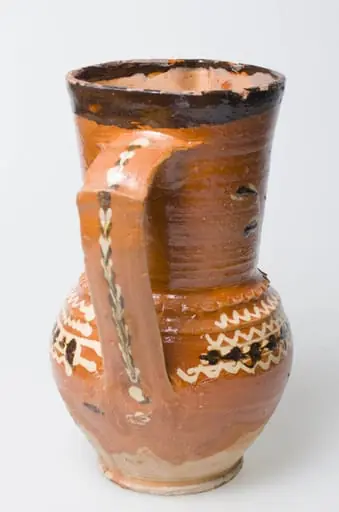 Vasul este confecționat din lut, având forma bitronconică, cu gura largă. Acesta este prevăzut cu o toartă pentru prindere fixată, în partea superioară de margine, iar în partea inferioară de zona bombată a vasului. Obiectul este decorat cu linii vălurite și motive florale. Cromatică: fond: maro; decor: alb; negru.