Artwork
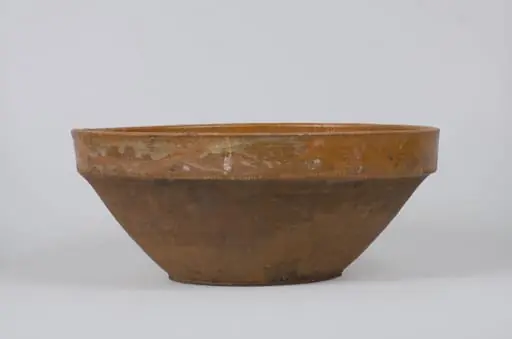
Castron de formă tronconică, adâncit. Marginea acestuia este foarte înaltă, fiind smălțuit în interior și exterior (buza). Pe margine este decorat cu motive vegetale și florale. Cromatică: fond cărămiziu; alb; verde; albastru. Castronul era folosit pentru depozitarea alimentelor.
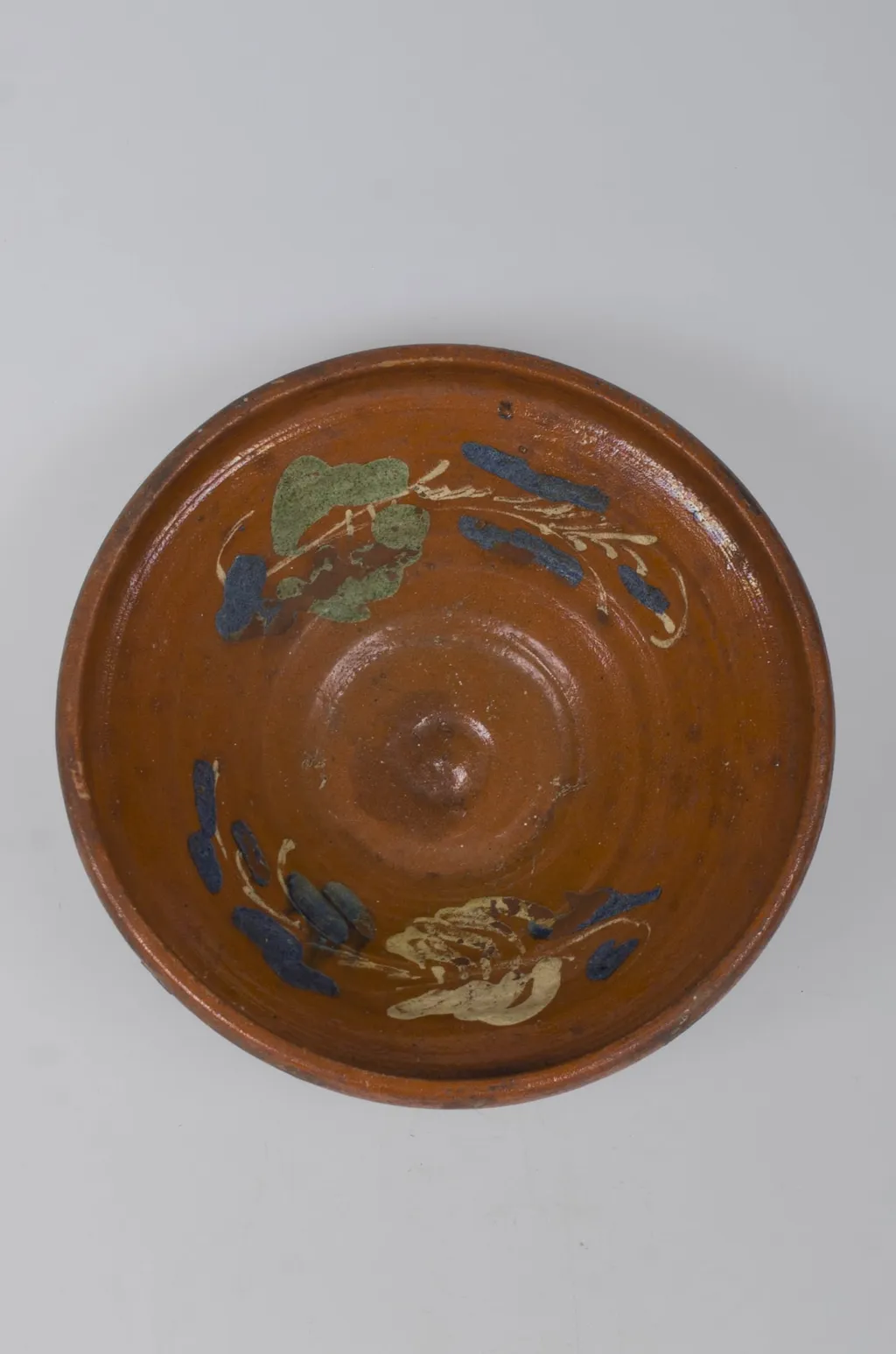
Castron de formă tronconică, adâncit. Marginea acestuia este foarte înaltă, fiind smălțuit în interior și exterior (buza). Pe margine este decorat cu motive vegetale și florale. Cromatică: fond cărămiziu; alb; verde; albastru. Castronul era folosit pentru depozitarea alimentelor. is a photography by Unknown. It dates from 1850 and is held in the collection of the ASTRA National Museum Complex. This conical-shaped ceramic vessel features a tall, flared rim smoothed with glaze on both interior and exterior surfaces.
About this work
Overview
This conical-shaped ceramic vessel features a tall, flared rim smoothed with glaze on both interior and exterior surfaces. Its base is rounded, and the body is formed from fine clay, fired to a warm, earthy tone. The surface is uniformly polished, giving it a subtle sheen. Designed for storage, its form prioritizes durability and functionality over ornamental complexity.
Subject & Meaning
Decorative motifs along the rim consist of stylized leaves and floral patterns, rendered in green, blue, and pale gold. These elements suggest a connection to natural cycles and seasonal abundance, common themes in utilitarian ceramics of the period. The simplicity of the designs implies symbolic intent rather than narrative detail, reinforcing the vessel’s role in daily sustenance.
Technique & Style
The bowl was wheel-thrown and coated with a transparent glaze that enhances the clay’s natural hue while sealing the surface. Pigments were applied before firing, using a limited palette of mineral-based colors. Brushwork is direct and unrefined, indicating production in a workshop setting where efficiency and consistency were prioritized over individual artistry.
History & Provenance
This type of vessel was commonly produced in regional ceramic workshops during the late medieval or early modern period. Similar examples have been found in domestic contexts across the Balkans and Eastern Europe, often associated with food storage in rural households. Its preservation suggests it was valued for practical use rather than ceremonial display.
Context
In households of the time, such vessels were essential for preserving grains, dried fruits, or fermented foods. The glazed rim prevented moisture loss and contamination, while the high edge reduced spillage. The decorative band served both aesthetic and protective functions, marking the boundary between functional interior and handled exterior.
Legacy
This form influenced later regional pottery traditions, where glazed rims and vegetal motifs persisted in utilitarian wares. Though mass-produced, surviving examples offer insight into everyday material culture, revealing how functional needs shaped artistic expression in pre-industrial communities.
Artist & collection

 Domestic Scene
 Giacomo and Cardinal Marco, investing Andrea, Abbot of San Zeno, with his Benefice
 The Nymph of Fontainebleau
 Portrait of a Woman
 Madonna and Child with Saints in the Enclosed Garden
 Venus and Minerva
 Family Group of Four on Sofa
 Wall painting from Room H of the Villa of P. Fannius Synistor at Boscoreale
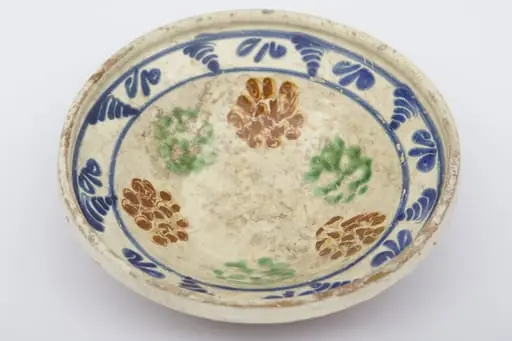 Vas ceramic de dimensiuni medii, smălțuit la interior, având formă tronconică. Blidul a fost decorat cu motive geometrizante și fitomorfe stilizate. Primul registru, dispus pe fundul piesei este format din șase flori verzi și maro, intercalate. Marginal, pe buza profilată a fost realizat cel de-al doilea registru, fiind trasate două linii circulare, care încadrează motive vegetale albastre, succesive. Blidul era folosit pentru servirea hranei. Prezintă uzură funcțională. Cromatică: fond: cărămiziu; crem; motive: albastru; maro; verde.
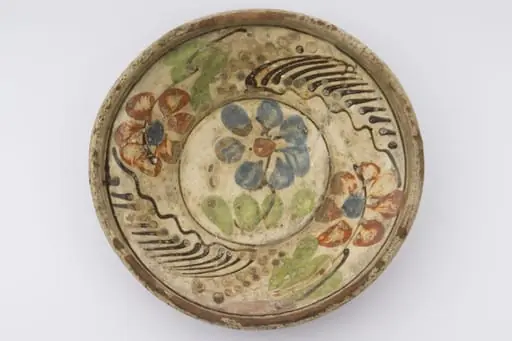 Obiect de uz casnic, realizat din lut, smălțuit la interior, de formă circulară cu profil tronconic și cu buza dreaptă. Decorat prin pictare cu pensula pe întreaga suprafață interioară a vasului cu motive vegetal-florale (flori mari cu frunze) și geometrice (linii circulare, puncte). Central, este pictată o floare albastră. Prezintă urme de uzură funcțională. Rol decorativ. Cromatică: fundal interior alb și exterior cărămiziu; motive: verde, albastru, negru, maro.
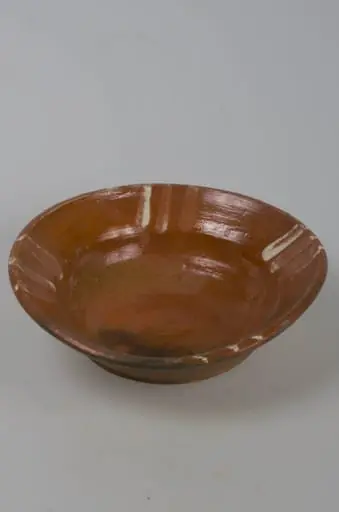 Farfurie de formă tronconică, cu fundul adânc, rotunjit în interior, iar în exterior plat. Buza farfuriei lată și răsfrântă oblic. Decorată cu motive geometrice, pe margine sunt patru grupuri de câte trei linii de culoare albă ca ornament. Interiorul farfuriei este smălțuit. Cromatică: fond: cărămiziu; motive: alb.
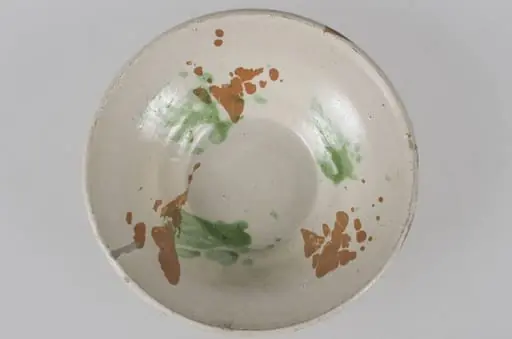 Vasul din lut de formă tronconică cu fundul adâncit prezintă marginea superioară dreapta. Obiectul este smălțuit în exterior brun iar în interior prezintă un fond alb pe care sunt dispuse ornamente prin stropire, cu pete de diferite dimensiuni de culoare maro și verde. Cromatică: fond exterior: cărămiziu; fond interior: alb; motive: maro; verde.
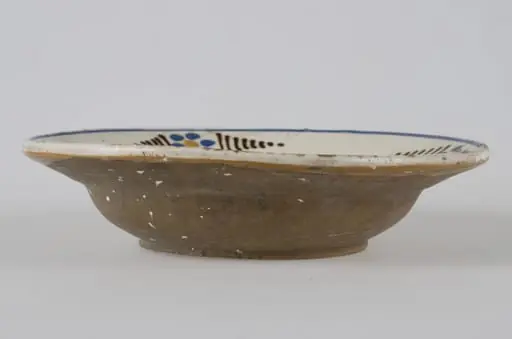 Vas adânc din lut, de formă tronconică, cu marginea evazată. Pe fundalul de culoare albă este decorat cu motive geometrice: linie circulară, linii curbe, puncte pe buza vasului; motive vegetale și florale, pe centrul vasului. Cromatică: fond: alb; motive: albastru; verde; maro; cărămiziu.
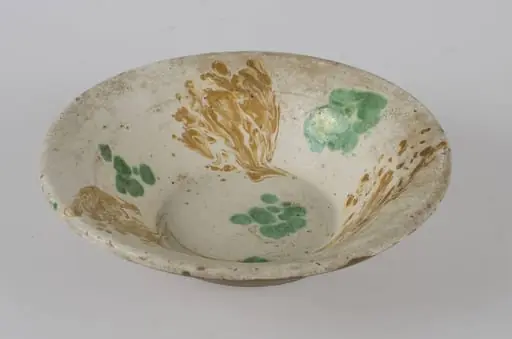 Vas adânc din lut, de formă tronconică, cu marginea evazată. Pe fundalul de culoare crem, sunt pictate în șapte registre pete de diferite forme și dimensiuni de culoare maro și verde. Blidul este smălțuit la interior și pe buză, la exterior.
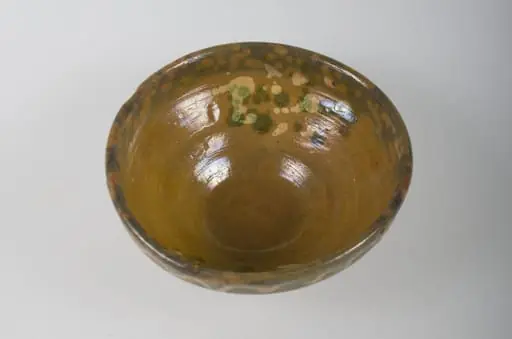 Vas de formă tronconică, cu pereții oblici și buza înaltă, lucrat neîngrijit. Este smălțuit în interior și exterior (parțial). Este decorat pe interior cu un mănunchi de puncte albe și verzi. Buza este decorată în exterior cu motive geometrice: linie în val. Cromatică: motive: fond: maro; motive: alb; verde.
 Vas de formă tronconică, foarte adâncită, cu buza înălțată. Este smălțuit în interior și exterior. În zona mediană interioară a vasului se identifică un registru decorativ alcătuit din motive florale și vegetale stilizate, geometrice (punctul și cercul) iar pe fundul vasului se identifică un cerc realizat din puncte. Motivele decorative sunt realizate prin pictare, foarte șterse. Cromatică: fond cărămiziu; verde; galben.