Artwork
Colosseum, Rome
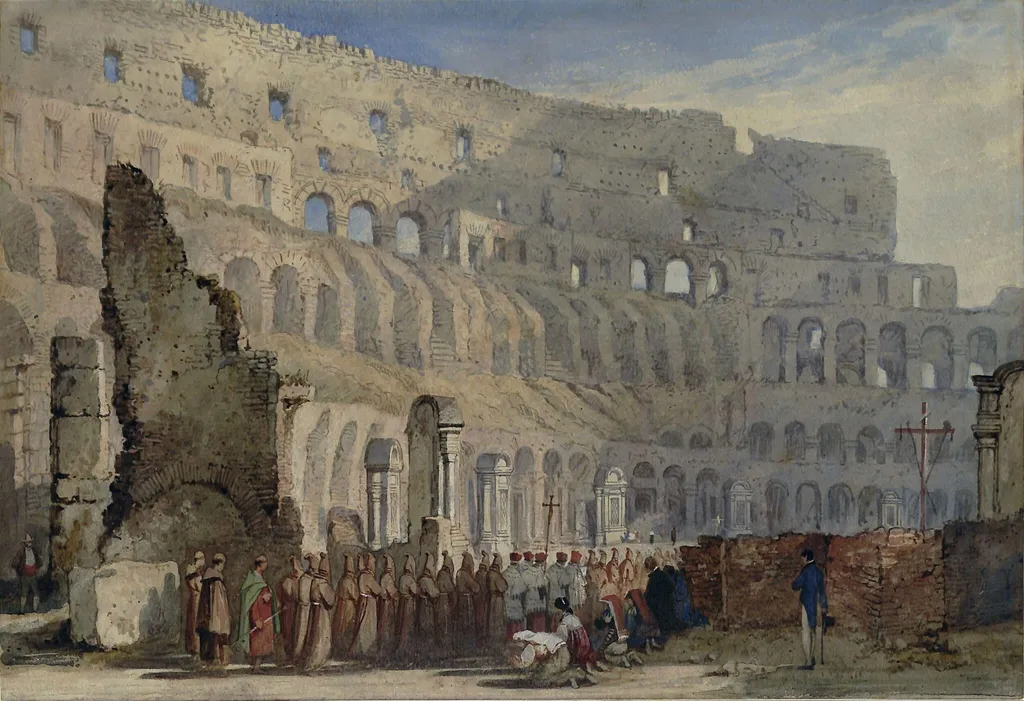
Colosseum, Rome is a watercolor work on paper by Unknown. It dates from 1850 and is held in the collection of the Victoria and Albert Museum.
About this work
Overview
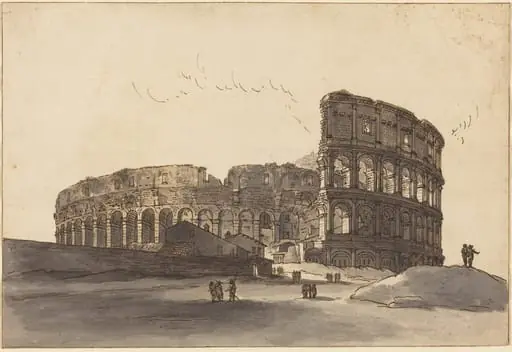
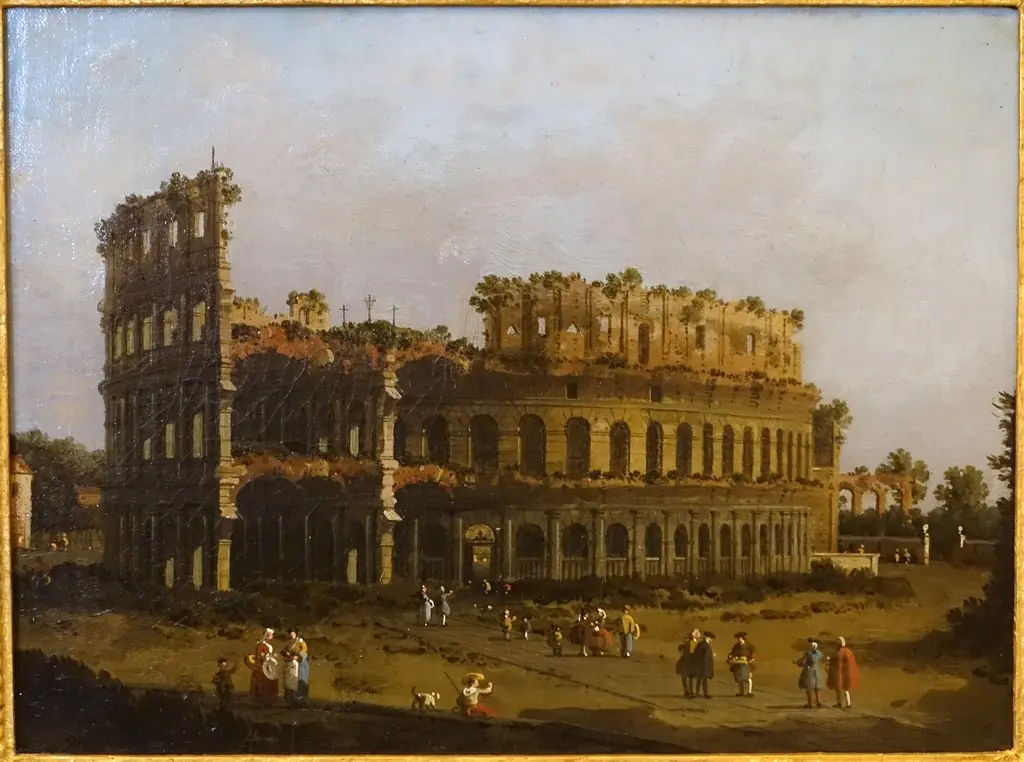
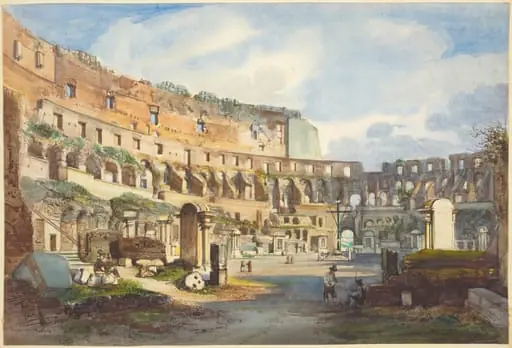
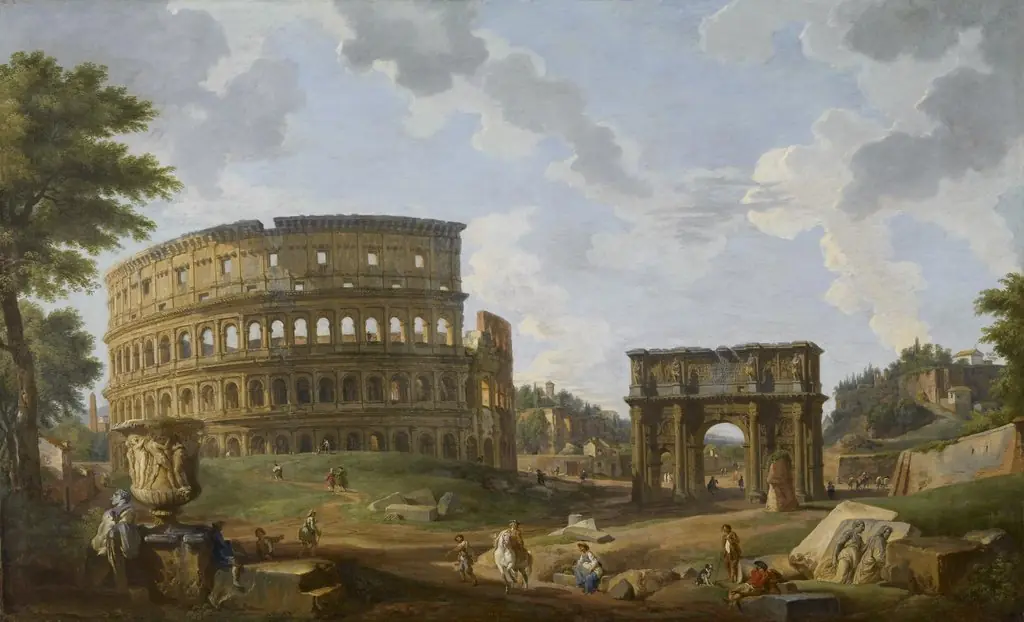
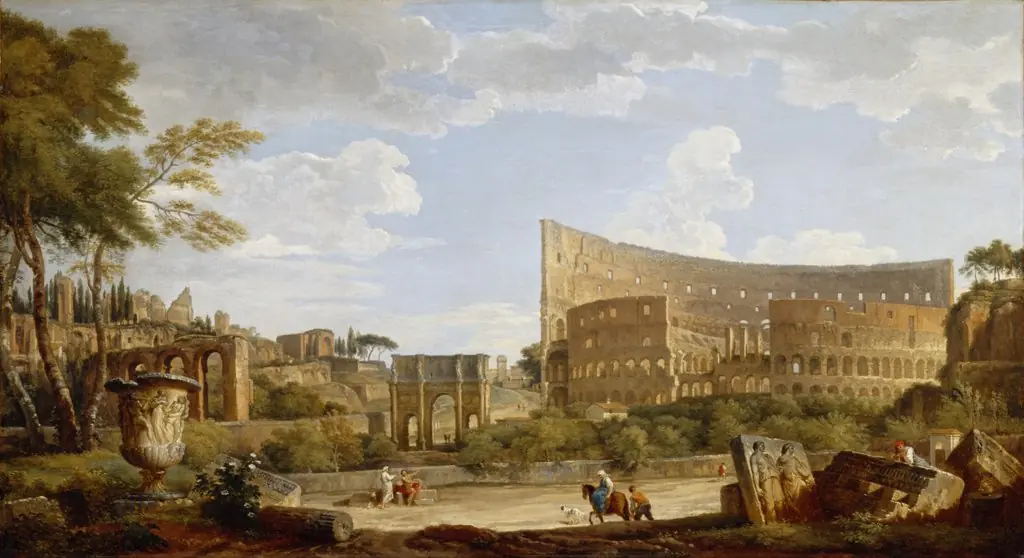
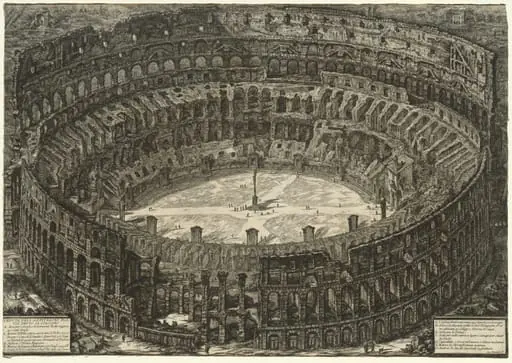
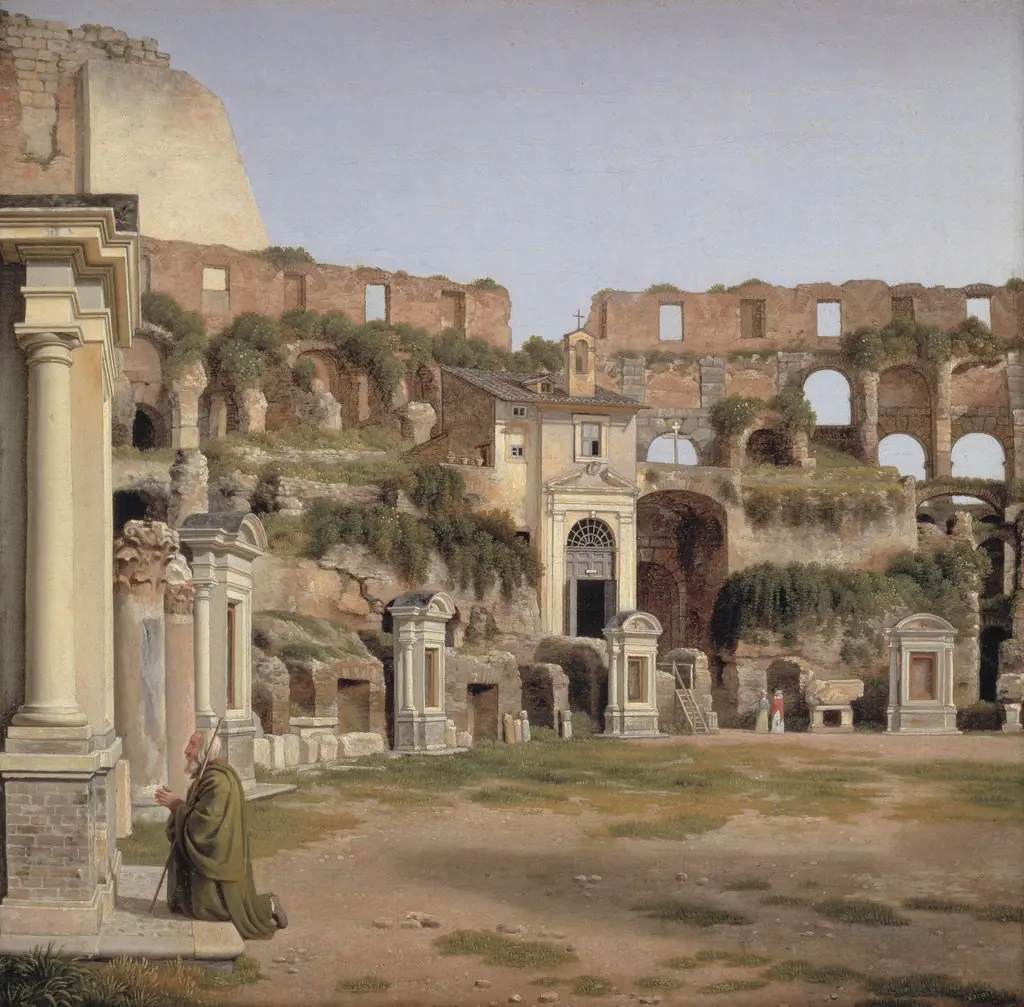
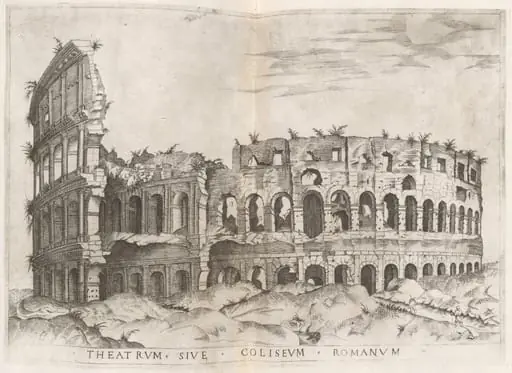
This watercolour depicts the Colosseum in Rome as a weathered ruin, inhabited by small figures moving through its broken arches and fragmented walls. Rendered in soft, muted tones, the work captures the quiet decay of the ancient structure under a pale sky. The absence of dramatic action or vibrant color emphasizes stillness, inviting contemplation rather than spectacle.
Subject & Meaning
The scene portrays the Colosseum not as a monument of imperial power, but as a space reclaimed by time and daily life. Figures in historical attire wander among the ruins, suggesting a continuity between past and present. The composition avoids grandeur, instead focusing on the subtle human presence within decay, reflecting a Romantic-era interest in melancholy and memory.
Technique & Style
The artist employs delicate washes and restrained hues to convey the erosion of stone and the softness of aged surfaces. Details are suggested rather than sharply defined, with light blues and earth tones blending to mimic atmospheric perspective. The brushwork is gentle, avoiding bold lines, which enhances the sense of quiet dissolution and temporal passage.
History & Provenance
The work’s origin is undocumented, but its style aligns with 19th-century British watercolourists who traveled to Italy to record antiquities.
The work’s origin is undocumented, but its style aligns with 19th-century British watercolourists who traveled to Italy to record antiquities. Likely created during the period when archaeological interest in Roman ruins was growing, it may have been made for private collectors or as a study for larger works. Its current location is unknown, though similar pieces reside in institutions like the Victoria and Albert Museum.
Context
In the early 1800s, the Colosseum was a popular subject for artists and travelers drawn to its symbolic weight as a relic of fallen empire. This watercolour reflects a broader cultural shift from viewing ruins as mere relics to seeing them as evocative landscapes of time and loss. Such works contributed to the Romantic idealization of antiquity as a source of emotional and aesthetic reflection.
Legacy
Though not widely exhibited, this piece contributes to a tradition of intimate ruin studies that influenced later architectural photography and conservation awareness. Its subdued tone and focus on human scale helped redefine how ancient monuments were visually interpreted—moving away from heroic reconstruction toward quiet, observational documentation.
Artist & collection

 Domestic Scene
 Giacomo and Cardinal Marco, investing Andrea, Abbot of San Zeno, with his Benefice
 The Nymph of Fontainebleau
 Portrait of a Woman
 Madonna and Child with Saints in the Enclosed Garden
 Venus and Minerva
 Family Group of Four on Sofa
 Wall painting from Room H of the Villa of P. Fannius Synistor at Boscoreale