Artwork
Colosseum
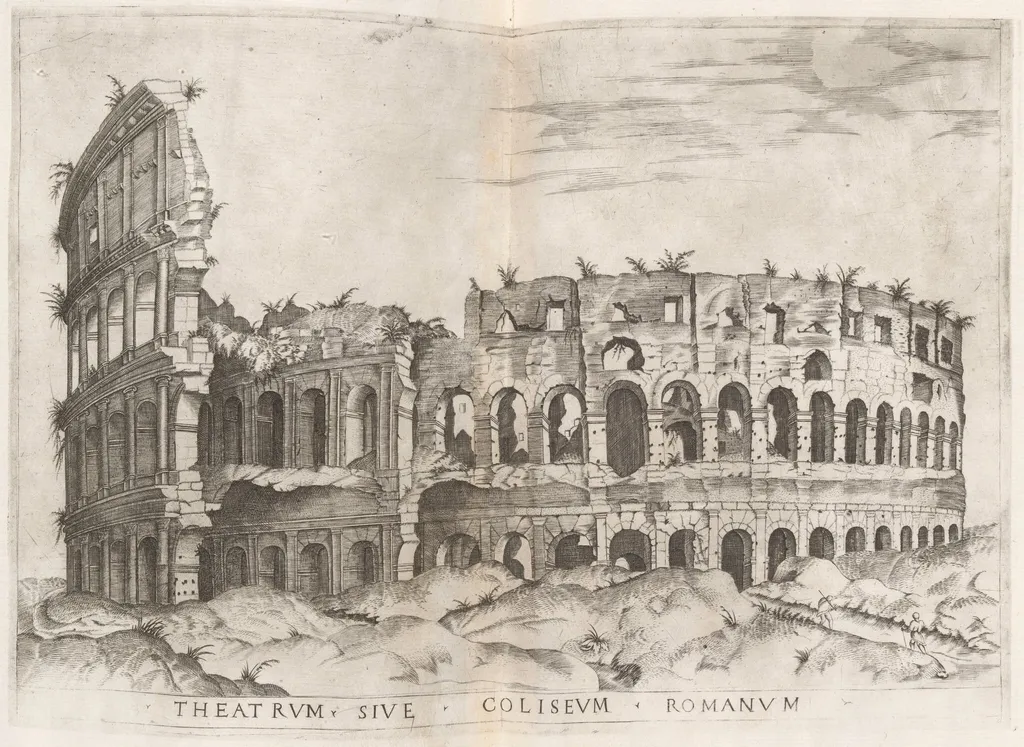
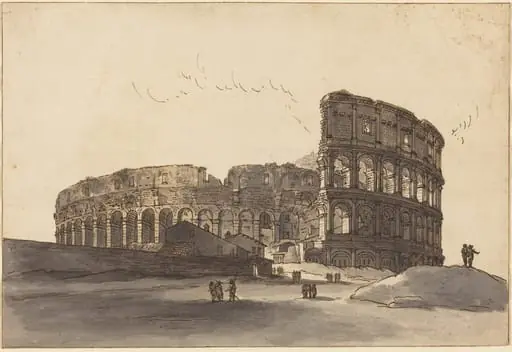
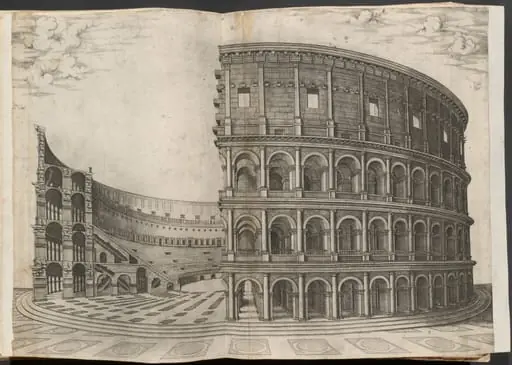
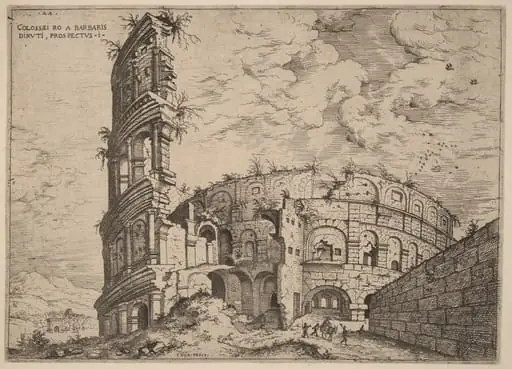
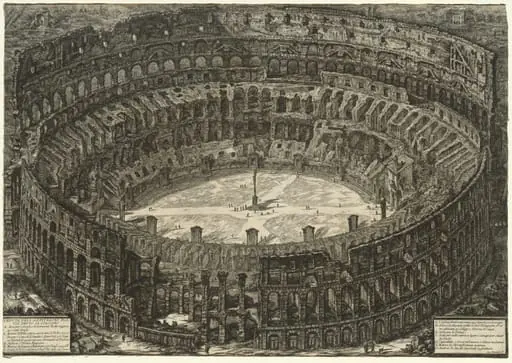
Colosseum is an ink print by the Renaissance artist Italian 16th Century. It dates from 1555 and is held in the collection of the National Gallery of Art.
About this work
Overview
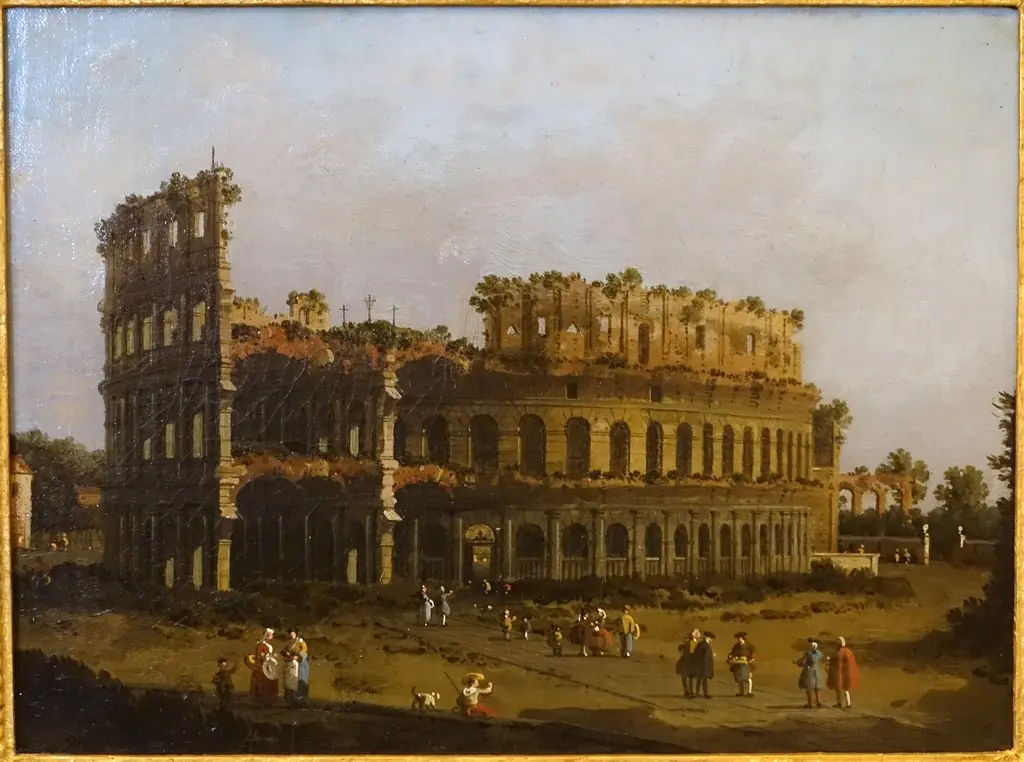
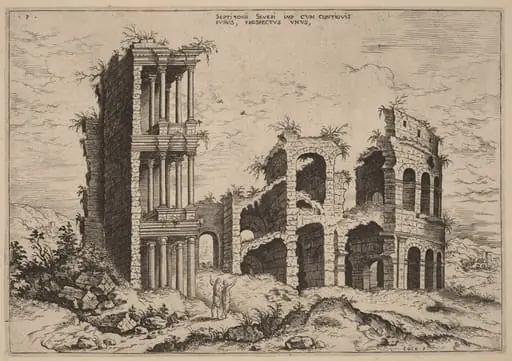
This engraving depicts the Roman Colosseum in a state of advanced decay, overgrown with vegetation and populated by people climbing its structure. The title *Theatrum Sive Colosseum Romanum* confirms the subject.
Subject & Meaning
The print showcases the Colosseum, ancient Rome's renowned venue for public spectacles and games, highlighting its transformation from a hub of activity to a ruin, possibly commenting on the transience of power and civilization.
Technique & Style
Executed in engraving, the work features bold black lines against a light background, capturing intricate architectural details, the textures of nature reclaiming the site, and the figures of climbers, all rendered with precise, expressive lines.
History & Provenance
While specific details about the engraving's creation (date, artist) are not provided, its depiction aligns with 17th- to 18th-century European interests in antiquity and the Grand Tour, often prompting artworks documenting Roman ruins.
Context
Created in an era fascinated by classical antiquity, this engraving reflects the European Grand Tour's influence, where travelers would document and artistically interpret ancient Roman sites like the Colosseum, blending archaeology with aesthetic appeal.
Legacy
As a document of the Colosseum's state at the time, the engraving contributes to the historical record of the monument's preservation challenges and Chiaroscurist artistic trends in printmaking, influencing later depictions of ancient ruins.
Artist & collection

Artist
A 16th-century Italian sculptor left us small bronze works in dark brown and gold.