Artwork
The Colosseum
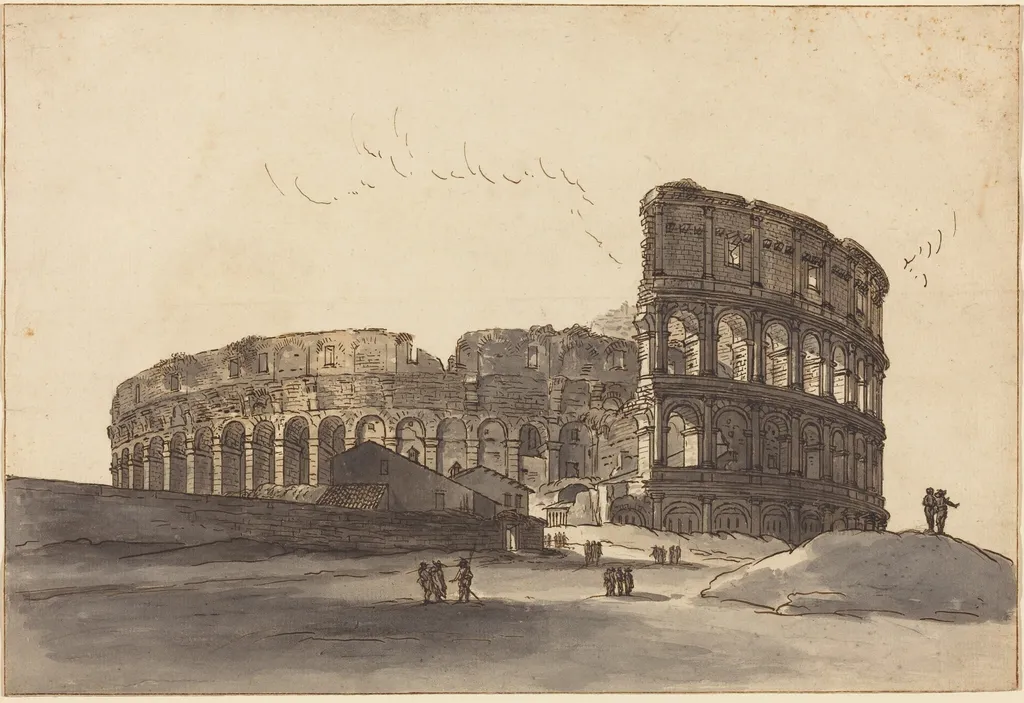
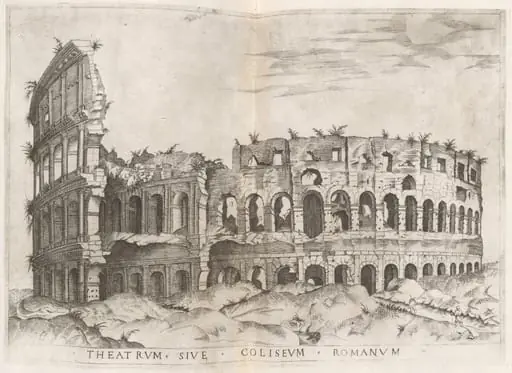
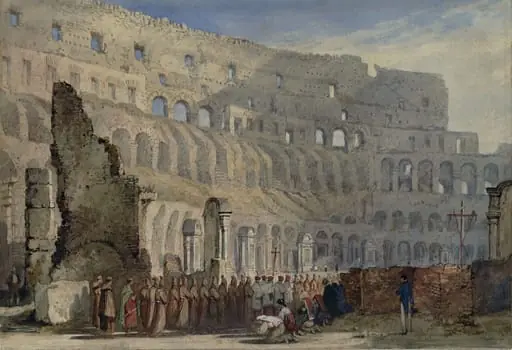
The Colosseum is an ink drawing by the Romanticist artist Victor Jean Nicolle. It dates from 1790 and is held in the collection of the National Gallery of Art.
About this work
Overview
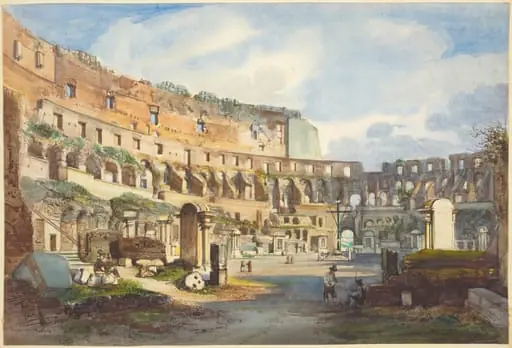
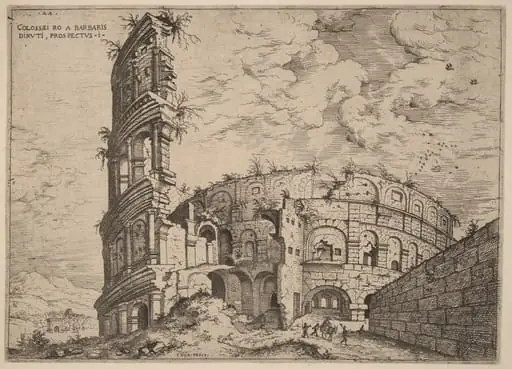
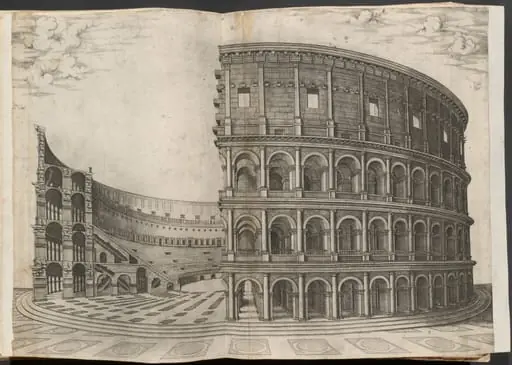
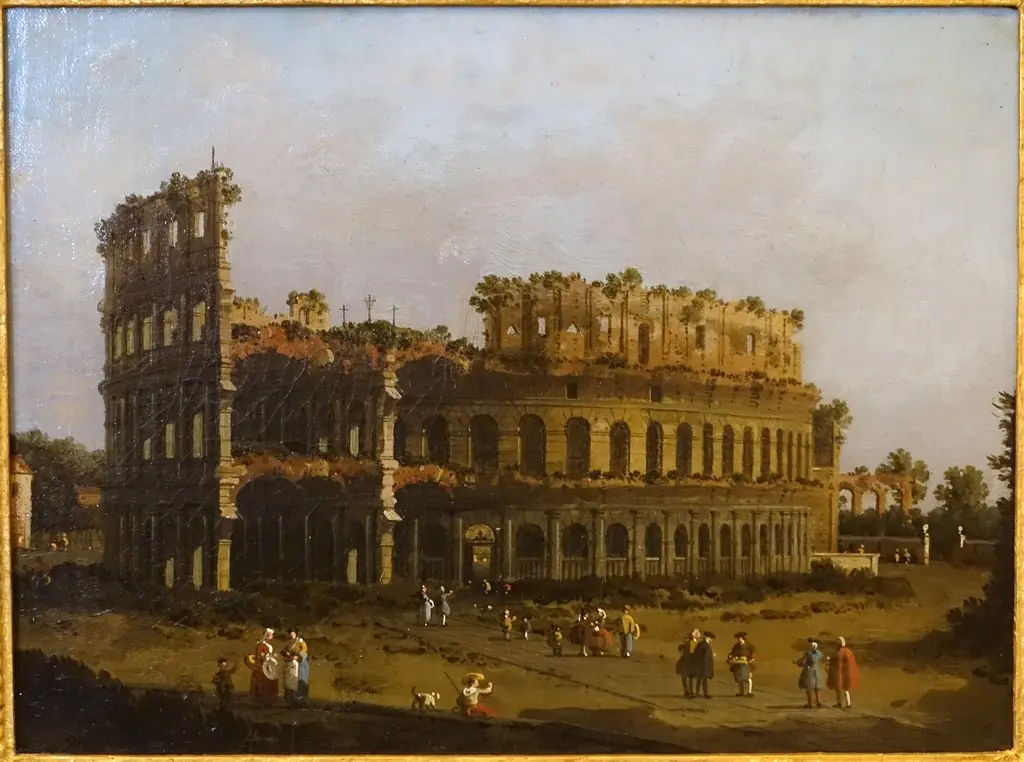
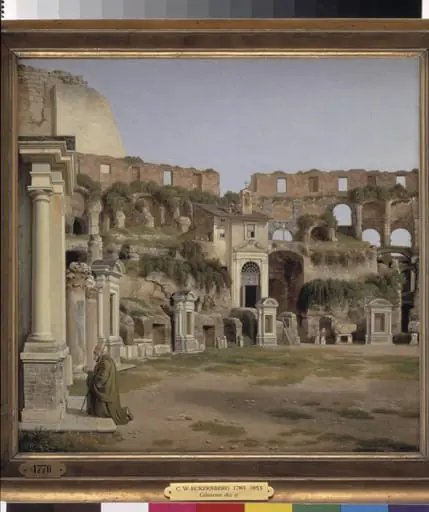
Victor Jean Nicolle’s 1790 drawing depicts the ancient Roman amphitheatre known as the Colosseum. Executed with pen and brown ink, the image is enriched by a gray‑brown wash applied over graphite on laid paper. The composition presents the massive, weathered stone structure, its circular arches and fragmented walls rendered in subdued tones that emphasize its dilapidated state.
Subject & Meaning
The work captures the Colosseum as a ruin, foregrounding its crumbling masonry and missing sections. Small figures are shown strolling around the base, underscoring the monument’s scale and the passage of time. By focusing on decay, the drawing reflects a Romantic interest in the melancholy beauty of historic remnants and the transience of human achievement.
Technique & Style
Nicolle employed a combination of pen line work and brown ink to outline architectural details, while a gray‑brown wash softens the surface and creates atmospheric depth. Graphite underdrawing on laid paper provides a tonal foundation, allowing the wash to model light and shadow. The muted palette and emphasis on texture are characteristic of late‑18th‑century Romantic drawing practices.
History & Provenance
Created in 1790, the drawing belongs to the period when European artists traveled to Italy to study classical antiquities. While specific ownership records are limited, the piece is catalogued among Nicolle’s architectural studies, which were circulated among patrons interested in antiquarian subjects during the Enlightenment and early Romantic eras.
Context
The late eighteenth century saw a surge of interest in Roman ruins, fueled by archaeological discoveries and Grand Tour experiences. Nicolle’s rendering aligns with contemporary scholarly efforts to document ancient sites, serving both artistic and documentary purposes. The emphasis on ruinous detail mirrors broader cultural fascinations with the sublime and the passage of history.
Artist & collection