Artwork
Compe.
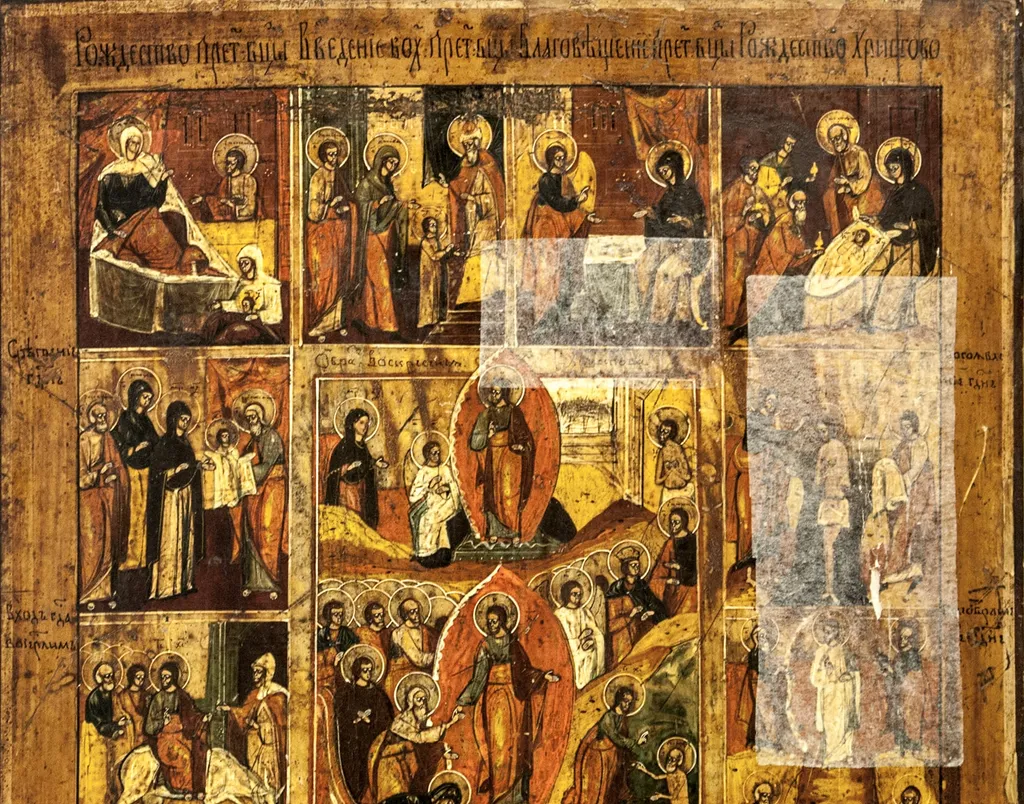
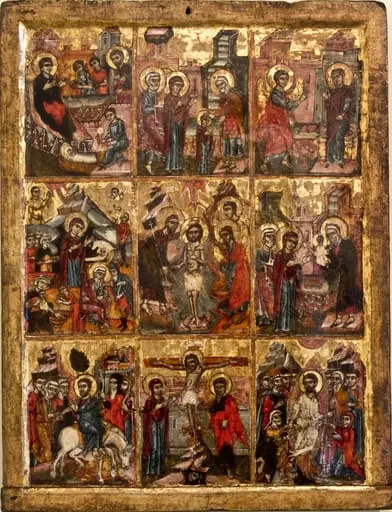
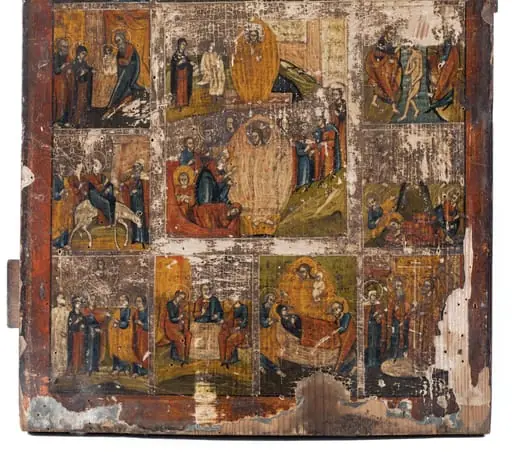
Compe. is a drawing by Unknown. It dates from 1850 and is held in the collection of the "Dimitrie Gusti" National Village Museum. This ink drawing compiles multiple episodes from the life of Christ, arranged in a single composition.
About this work
Overview
The work is held in the collection of the Museum of Ethnography, where its preservation offers insight into pre-modern religious practices in Eastern Europe.
This ink drawing compiles multiple episodes from the life of Christ, arranged in a single composition. Executed with fine, dense linework, it reflects a tradition of devotional imagery intended for private contemplation. The work is held in the collection of the Museum of Ethnography, where its preservation offers insight into pre-modern religious practices in Eastern Europe. The artist remains unidentified, but the precision suggests training in iconographic conventions.
Subject & Meaning
The drawing includes key events from the Christian liturgical calendar: the Annunciation, Nativity, Baptism, Entry into Jerusalem, Transfiguration, Last Supper, Dormition, and Resurrection. These scenes were selected not for narrative continuity but for their spiritual significance, allowing the viewer to meditate on salvation history. Their compact arrangement implies a portable, personal object, possibly used in home prayer or as a guide for spiritual reflection.
Technique & Style
The image is rendered in meticulous pen and ink, employing fine cross-hatching and stippling to model forms and suggest depth within a flat, hierarchical space. Details are rendered with precision, yet the scale remains small, indicating it was meant for close, intimate viewing. The style aligns with late medieval and early modern Orthodox devotional drawings, prioritizing symbolic clarity over naturalism, with figures arranged in orderly, compartmentalized fields.
History & Provenance
The drawing entered the Museum of Ethnography’s collection through documented acquisitions, likely from a private or ecclesiastical source in the Russian or Ukrainian cultural sphere. Its condition suggests careful handling over time, though no definitive date or origin has been established. No signatures or inscriptions identify the maker, but its craftsmanship points to a skilled artisan working within a regional tradition of religious illustration.
Context
This work belongs to a broader category of Orthodox devotional graphics produced for lay use, especially in areas where access to painted icons was limited. Such drawings served as visual aids for prayer and instruction, often copied from established models. Their production coincided with increased literacy and personal piety in the 17th–18th centuries, reflecting a shift toward individualized religious experience beyond formal church services.
Legacy
Though not widely known outside specialized collections, this drawing exemplifies the quiet persistence of hand-drawn religious imagery in Eastern Christian communities. It preserves a mode of spiritual expression that predates mass-produced prints and remains a tangible link to domestic piety in pre-industrial societies. Its presence in an ethnographic museum underscores its value as a cultural artifact rather than a fine art object.
Artist & collection
Museum
"Dimitrie Gusti" National Village Museum
Continue through works from the same source collection.
 Domestic Scene
 Giacomo and Cardinal Marco, investing Andrea, Abbot of San Zeno, with his Benefice
 The Nymph of Fontainebleau
 Portrait of a Woman
 Madonna and Child with Saints in the Enclosed Garden
 Venus and Minerva
 Family Group of Four on Sofa
 Wall painting from Room H of the Villa of P. Fannius Synistor at Boscoreale
 Scene din viața lui Iisus și a Maicii Domnului
 Mainchi
 Dubl al
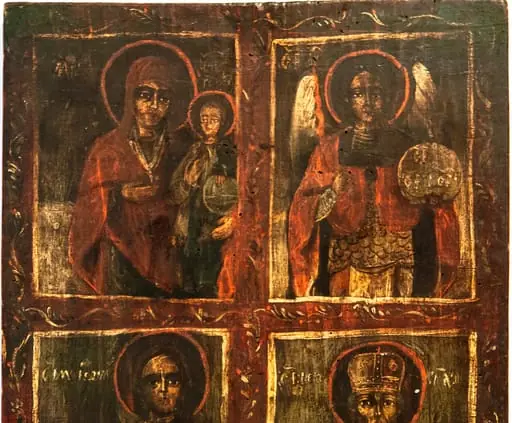 Icoaoziț
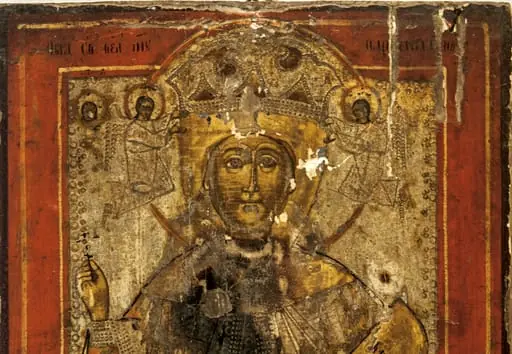 Sfânta Paraschiva este reprezentată frontal, 3/4, încoronată de doi arhangheli (după prescurtările de pe aureole) Nimbul trasat cu roșu depășește linia chenarului și partea superioară a coroanei. Ochii Sfintei, fin trasați, sunt îndreptați spre privitor, impunând un aer sever. Tehnica iluminării treptate cu elemente specifice: accentuarea zonei ochilor, tonurile de pământ ale umbrelor. Tunica decorată cu motive florale ample de culoare deschisă, incizate în stratul de grund. Mantie închisă în față, cu decor linar și bordură lată cu motive geometrice (4 rânduri de puncte și cerculețe incizate în grund). Pe cap, umeri lăsat pe spate, un maforion de culoare deschisă. În mâna dreaptă, Sfânta ține o cruce mică, rusească, în stânga un rotulus desfășurat cu inscripția scrisă în limba slavonă: Cred în unul Dumnezeu… alte inscripții: pe chenar de o parte și de alta a nimbului: Chipul Sf. Mucenițe Parascheva Vineri, în colțul stâng al icoanei IS HR și ѾOН pe nimbul cruciger al lui Iisus, reprezentat ca pe mahrama Veronicăi. Cromatica: Chenar roșu cu două linii galbene și mărginit cu brun; fond - foița metalică decorată prin incizare și ștanțare; Stratul pictural prezintă zgârieturi, arsură.În partea de sus un cui bătut necorespunzător. Pe spate, un bilet, cu ștampila Miliția oraș Deta, cu însemnarea: "Abandonate".
 Scene biblice
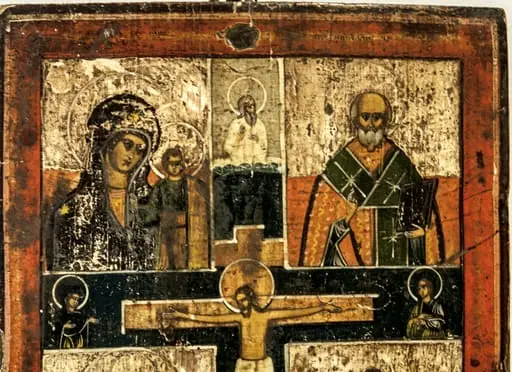 Răstshka
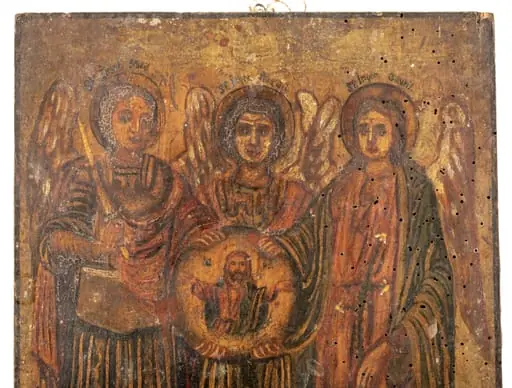 Sfinții îngeri: Mihail, Rafael, Gavril
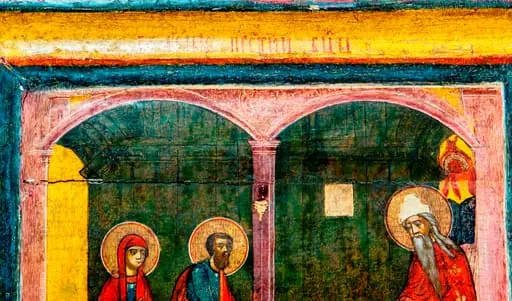 Intru co
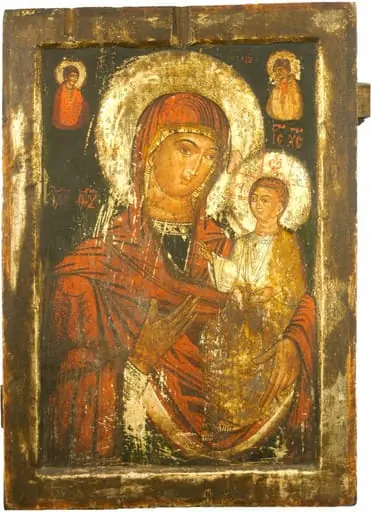 Maica Domnului cu Pruncul