Artwork
Mainchi
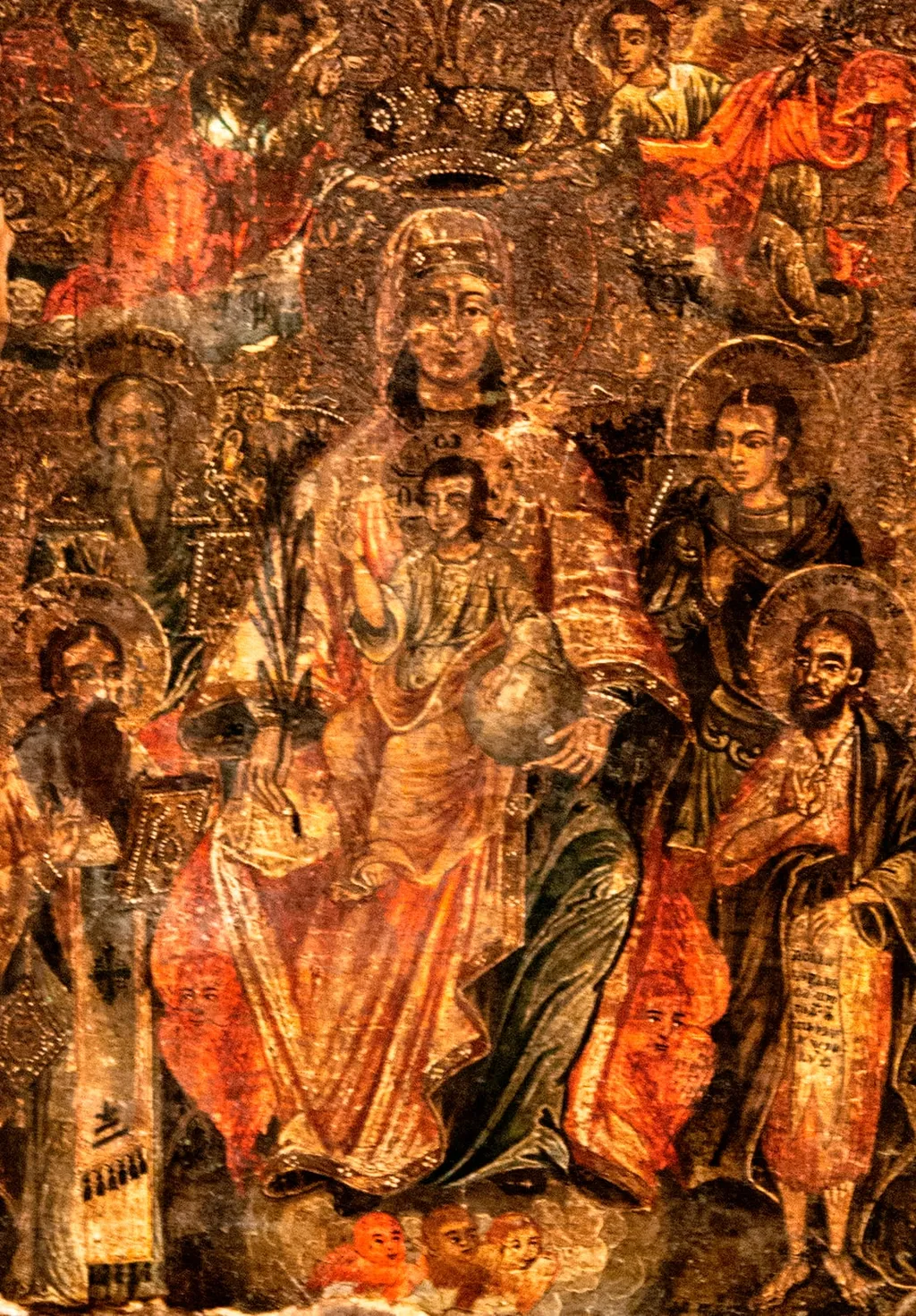
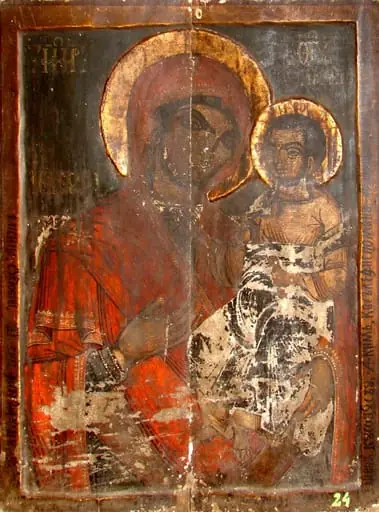
Mainchi is a drawing by Unknown. It is held in the collection of the "Dimitrie Gusti" National Village Museum. A faded ink or tempera drawing on a fragile surface, this work depicts a group of figures arranged in a tight, semi-circular formation.
About this work
Overview
A faded ink or tempera drawing on a fragile surface, this work depicts a group of figures arranged in a tight, semi-circular formation. The palette is muted, dominated by earthy browns and subdued golds, with traces of red surviving in folds of fabric. The surface shows signs of extensive handling—scratches, abrasions, and pigment loss suggest prolonged use or ritual exposure.
Subject & Meaning
The central figure cradles a small child, surrounded by others whose gazes converge inward, suggesting a moment of communal focus or reverence. The formal posture and lack of naturalism imply a ceremonial or sacred context, possibly depicting a religious or ancestral gathering. The child may symbolize continuity, innocence, or divine presence within a lineage or ritual.
Technique & Style
Figures are rendered with rigid, linear forms and minimal modeling, reflecting a stylized tradition rather than naturalistic representation. The use of cross-hatching is evident in shading garments and defining contours, a method common in early manuscript illumination and devotional art. Surface wear indicates the work was not merely displayed but actively engaged with over time.
History & Provenance
The condition of the drawing—faded pigments, surface abrasions, and layered wear—suggests it was part of a devotional object, perhaps a portable panel or manuscript folio used in private or communal rites. Its survival implies it was preserved despite deterioration, possibly due to its spiritual significance or association with a specific community or lineage.
Context
This work aligns with medieval or early Renaissance devotional imagery from regions where portable religious art was common, such as Byzantine or Italo-Byzantine traditions. The inward-facing composition and hierarchical scale reflect symbolic priorities over spatial realism. Similar figures appear in liturgical manuscripts and icons from the 12th to 15th centuries.
Legacy
Though not widely known, the drawing exemplifies the enduring role of tactile, intimate religious imagery in pre-modern societies. Its stylistic choices influenced later regional traditions that valued symbolic presence over anatomical accuracy. The persistence of such works in collections today underscores their role as cultural artifacts of quiet, sustained devotion.
Artist & collection
Museum
"Dimitrie Gusti" National Village Museum
Continue through works from the same source collection.
 Domestic Scene
 Giacomo and Cardinal Marco, investing Andrea, Abbot of San Zeno, with his Benefice
 The Nymph of Fontainebleau
 Portrait of a Woman
 Madonna and Child with Saints in the Enclosed Garden
 Venus and Minerva
 Family Group of Four on Sofa
 Wall painting from Room H of the Villa of P. Fannius Synistor at Boscoreale
 Compe.
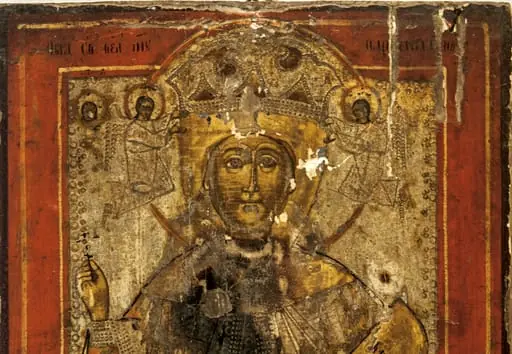 Sfânta Paraschiva este reprezentată frontal, 3/4, încoronată de doi arhangheli (după prescurtările de pe aureole) Nimbul trasat cu roșu depășește linia chenarului și partea superioară a coroanei. Ochii Sfintei, fin trasați, sunt îndreptați spre privitor, impunând un aer sever. Tehnica iluminării treptate cu elemente specifice: accentuarea zonei ochilor, tonurile de pământ ale umbrelor. Tunica decorată cu motive florale ample de culoare deschisă, incizate în stratul de grund. Mantie închisă în față, cu decor linar și bordură lată cu motive geometrice (4 rânduri de puncte și cerculețe incizate în grund). Pe cap, umeri lăsat pe spate, un maforion de culoare deschisă. În mâna dreaptă, Sfânta ține o cruce mică, rusească, în stânga un rotulus desfășurat cu inscripția scrisă în limba slavonă: Cred în unul Dumnezeu… alte inscripții: pe chenar de o parte și de alta a nimbului: Chipul Sf. Mucenițe Parascheva Vineri, în colțul stâng al icoanei IS HR și ѾOН pe nimbul cruciger al lui Iisus, reprezentat ca pe mahrama Veronicăi. Cromatica: Chenar roșu cu două linii galbene și mărginit cu brun; fond - foița metalică decorată prin incizare și ștanțare; Stratul pictural prezintă zgârieturi, arsură.În partea de sus un cui bătut necorespunzător. Pe spate, un bilet, cu ștampila Miliția oraș Deta, cu însemnarea: "Abandonate".
 Pogorârea Sf. Duh
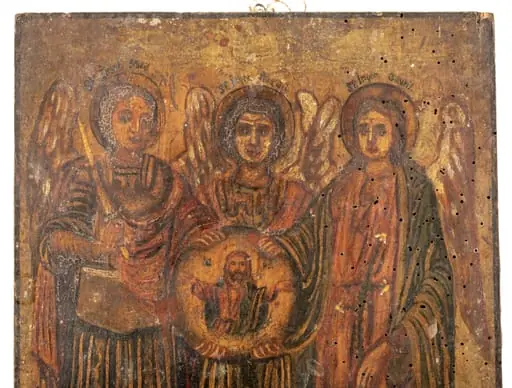 Sfinții îngeri: Mihail, Rafael, Gavril
 Icoaoziț
 Maic
Maic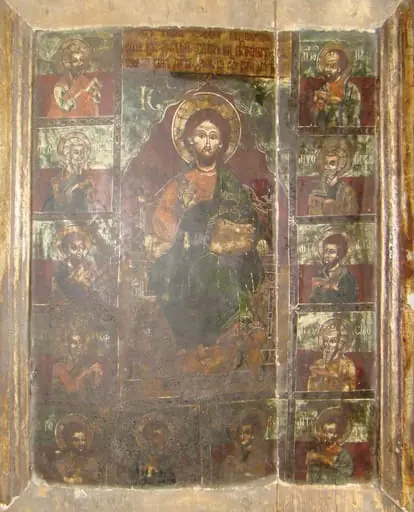 Iisus Hristos Pantocrator, înconjurat de apostoli
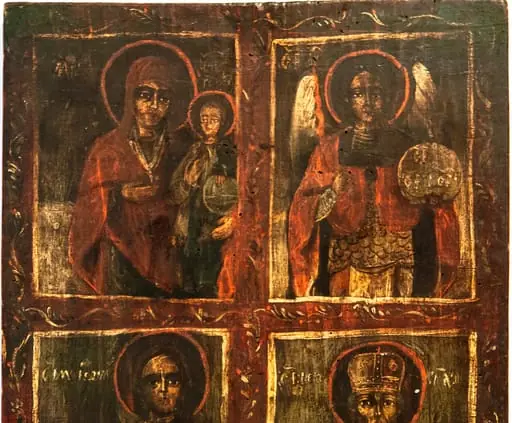
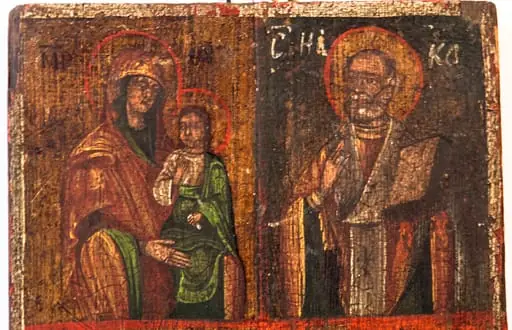 Icoana cu patru scene în care sunt reprezentați: Maica Domnului cu Pruncul(tipul Hodighitria), Sfântul Nicolae, sfântul Gheorghe, cuvioasa Paraschiva. Toți sunt redați 3/4, din semiprofil, pe un fond de culoare(galben) care servește și ca suport pentru pictură, la două casete peste acesta s-a aplicat albastru( fond la sf. Nicolae) și roșu (fond la Cuvioasa Paraschiva, continuat ca bandă de separație orizontală între registre.Pictura este ușor naivă și stângace, dar zugravul cunoștea canoanele picturi bizantine, chipurile sunt expresive, proporțiile respectate, se observă virtuozitate în realizarea faldurilor. Maica Domnului este înveșmântată cu maforion roșu deschis, drapaj galben, intradosul verde și stola bleumarin. Pruncul binecuvintează cu mâna dreaptă, în stânga ține un rotulus. Înveșmântat cu chiton alb și himation verde. Sfântul ierarh Nicolae binecuvintează cu dreapta în stânga ține Evanghelia. Are capul descoperit fruntea înaltă, barba și părul scurte. Sacos roșu cu drapaj galben, stihar bleumarin, epitrahil alb. Sfântul Gheorghe, tânăr, poartă o lorică argintie, tunică albastră, mantie roșii cu drapaj galben.. În dreapta ține o cruce, în stânga o lance.Cuvioasa Paraschiva poartă un maforion întunecat, tunică roșie cu drapaj galben și mâneci verzi.În dreapta ține o cruce mică, în stânga niște mătănii.Nimburile trasate cu o linie roșie. Chenar- bandă albă.
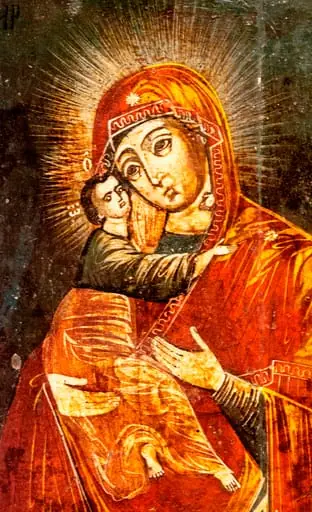
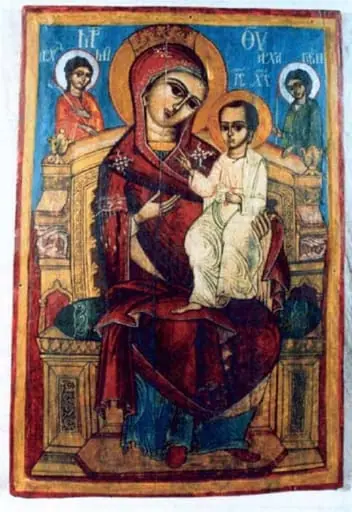 Maica cu Pruncul/Maica Împărăteasă-Doamnă
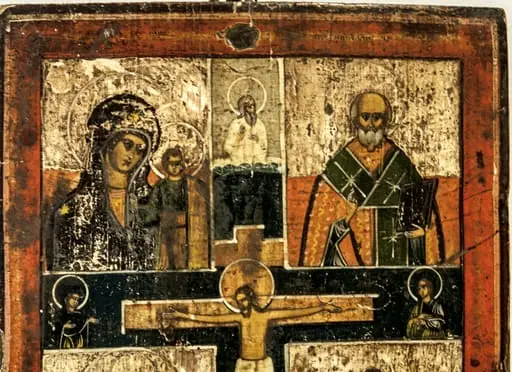 Răstshka
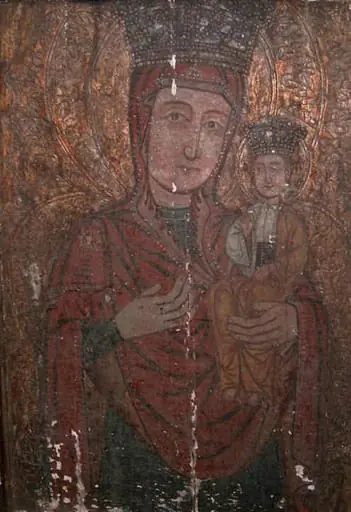 Madona cu Pruncul
 Maica Domnului cu Pruncul