Artwork
Carpet Merchant's Shop Cairo
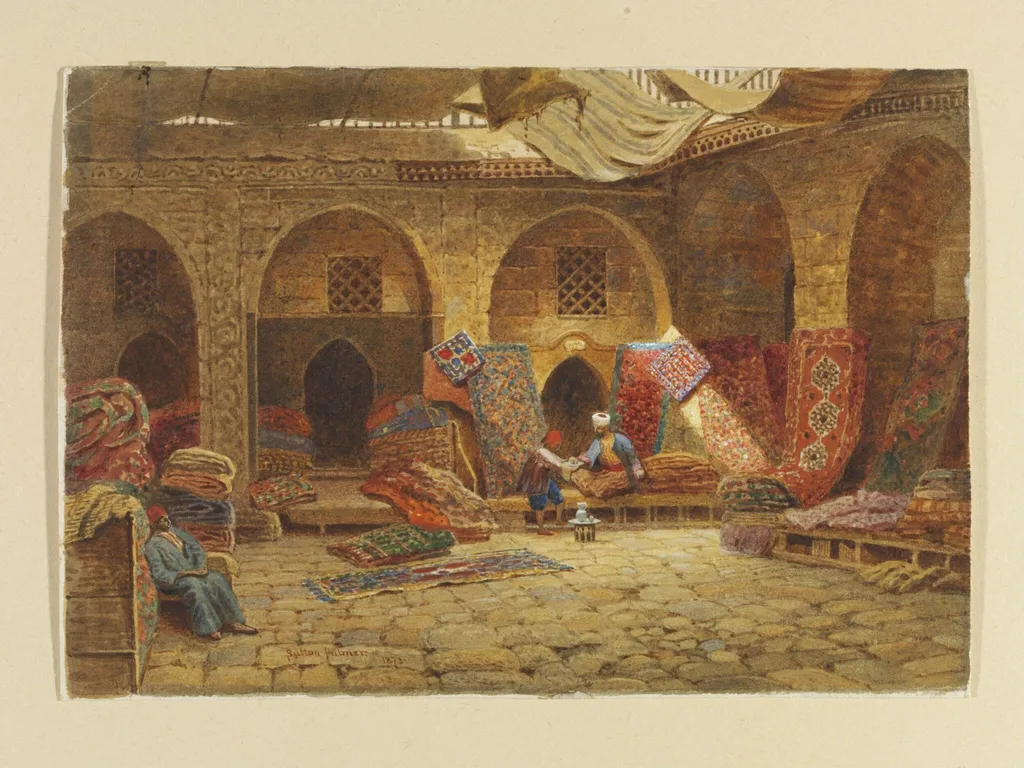
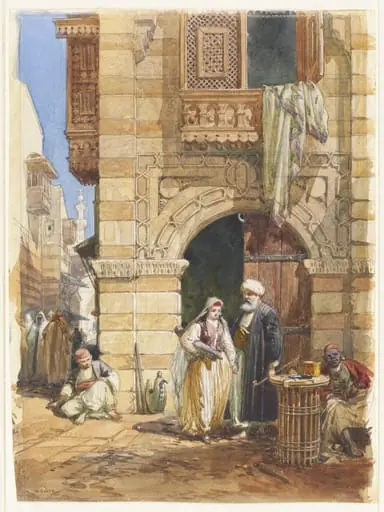
Carpet Merchant's Shop Cairo is a watercolor work on paper by the Impressionist artist Harry Sutton Palmer. It dates from 1873 and is held in the collection of the Victoria and Albert Museum.
About this work
Overview
Harry Sutton Palmer painted this watercolour during his 1873–74 journey through the Near East, capturing a moment in a carpet merchant’s shop in Cairo.
Harry Sutton Palmer painted this watercolour during his 1873–74 journey through the Near East, capturing a moment in a carpet merchant’s shop in Cairo. The work is part of a series of observations he made while traveling, later exhibited in London. Executed in transparent watercolour, it reflects his interest in everyday commercial life in Egypt, rendered with attention to light and material detail rather than idealized spectacle.
Subject & Meaning
The scene depicts a quiet commercial interaction within a textile shop: one man sits amid stacked carpets, another gestures toward a rolled rug, possibly negotiating a sale. A third figure lingers outside, observing. The composition suggests the rhythm of daily trade without drama or narrative climax. The focus on ordinary figures and their surroundings underscores the work’s documentary intent, portraying commerce as a grounded, unglamorous reality.
Technique & Style
Palmer employed delicate watercolour washes to render the rich textures of woven carpets—reds, blues, and golds—against the muted stone walls. Sunlight filters through narrow openings, casting sharp shadows that define the space and animate the fabrics. The brushwork is precise yet fluid, emphasizing surface variation: the roughness of stone, the softness of wool, the sheen of dyed threads. Light becomes a structural element, guiding the viewer’s eye through the cluttered interior.
History & Provenance
Created during Palmer’s travels in 1873–74, the work entered private hands after his exhibitions in London. It was acquired by R. Appleby in May 1973, marking a significant shift in its ownership after nearly a century. No public record exists of its display between the 1870s and 1973, suggesting it remained in private collections, likely valued for its ethnographic detail rather than artistic fame.
Context
Palmer’s work emerged during a period of heightened European interest in Middle Eastern daily life, driven by travel, colonial expansion, and Orientalist art. Unlike grand historical scenes, his focus on modest interiors and unposed figures aligns with a quieter, observational tradition. His watercolours contributed to a growing visual archive of Egyptian commerce, distinct from the theatricalized depictions common in contemporary painting.
Legacy
Though not widely known today, Palmer’s watercolours remain valuable as understated records of 19th-century Egyptian urban life. His attention to texture, light, and unidealized figures offers a counterpoint to more sensationalized Orientalist works. The piece is now held in private hands, but its subject matter and technique resonate with collections like the Victoria and Albert Museum’s, which preserve similar ethnographic watercolours from the era.
Artist & collection
Artist
Harry Sutton Palmer kept a tiny tin of watercolors in his coat pocket so he could sketch any view he liked.

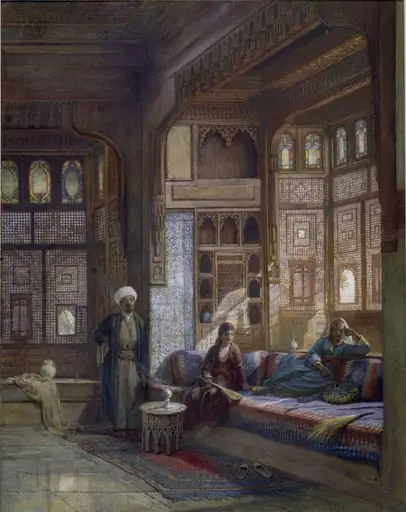 A room in the house of Shayk Sadat, Cairo
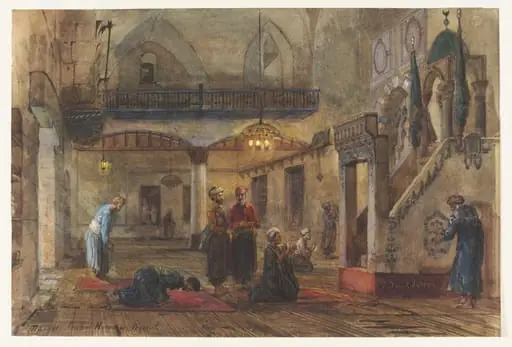 Mosque. Souk el Hommos. Byrout
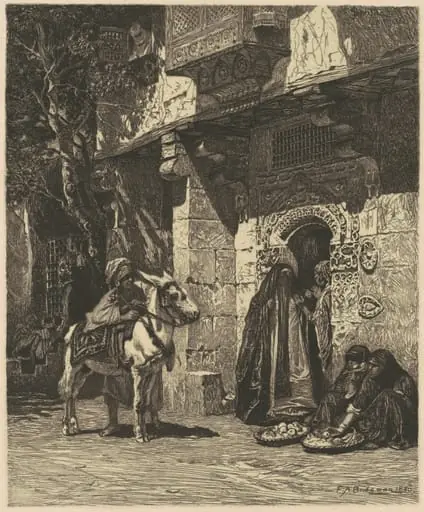 A Lady of Cairo Visiting
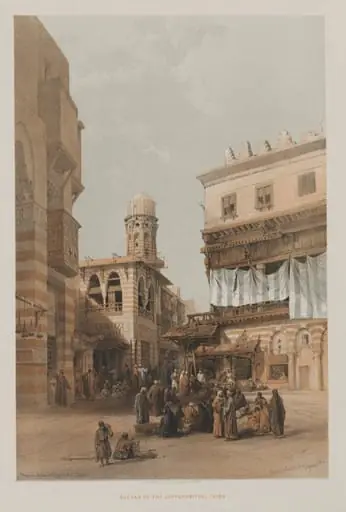 Egypt and Nubia, Volume III: Bazaar of the Coppersmiths, Cairo
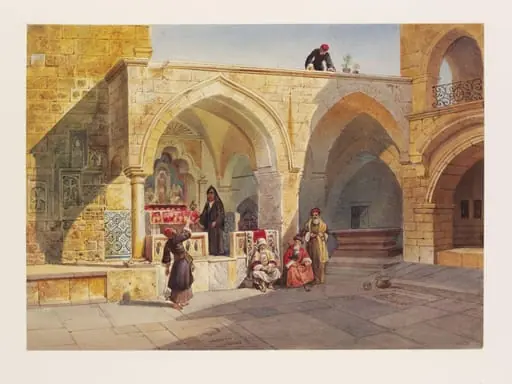 Court of the House of Caiaphus
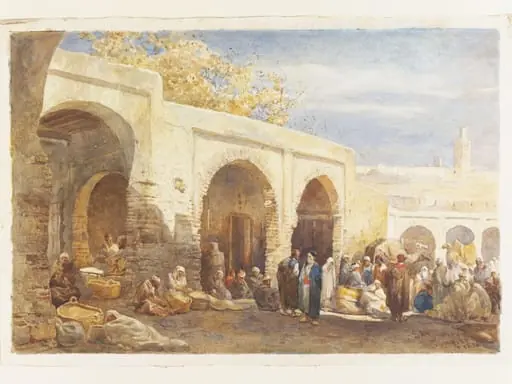 The Corn Market, Tangier
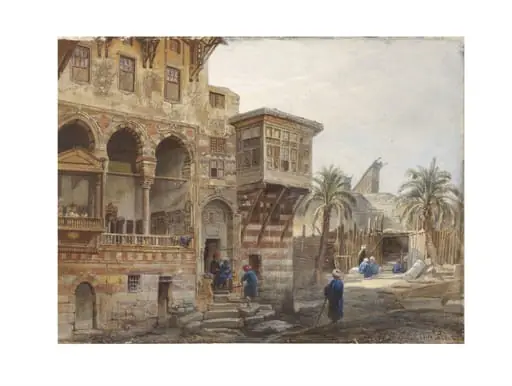 Exterior of the House of the Memluk Raduan Bey, Cairo
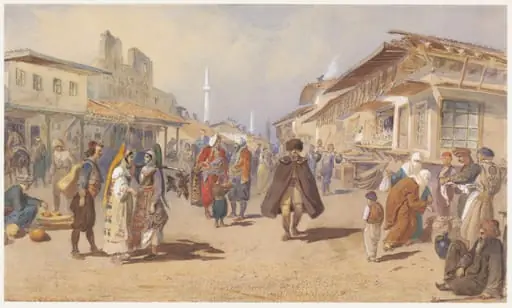 Vue de Belgrad la ruine du Prince Eugene
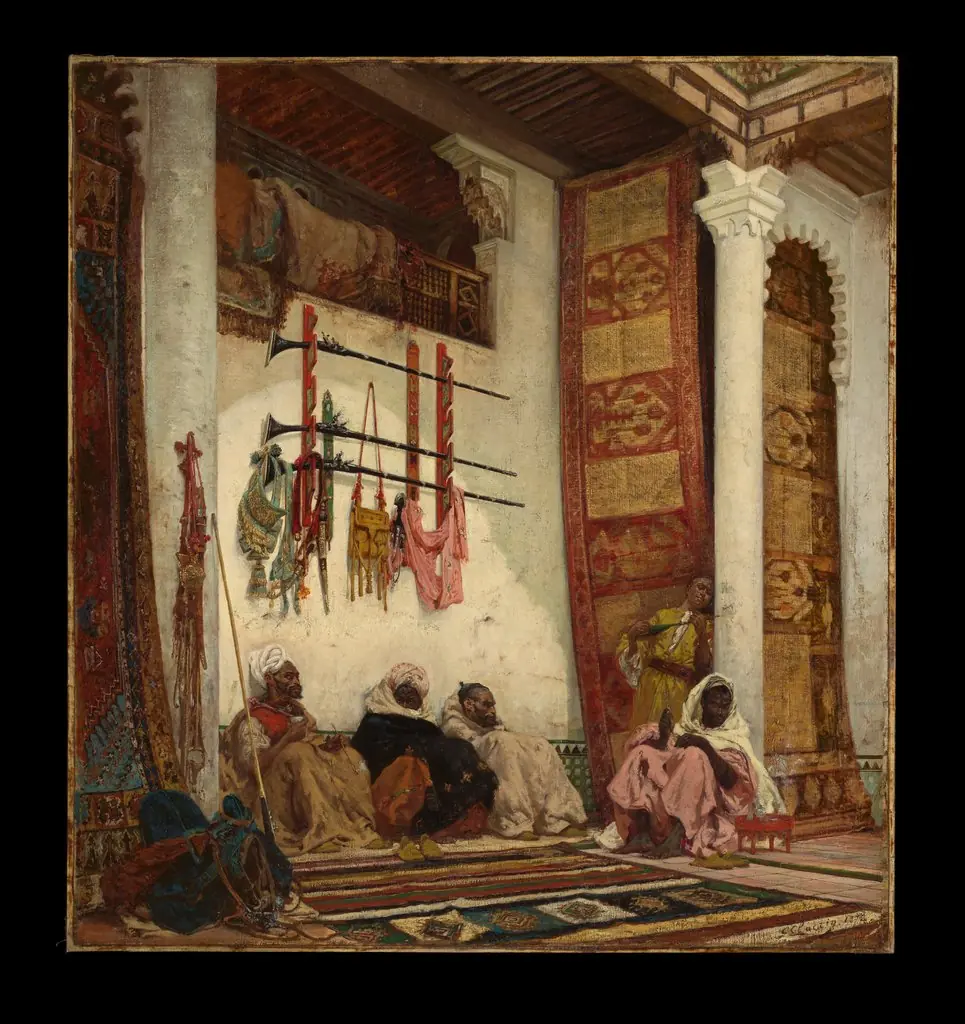 The Opium Smokers
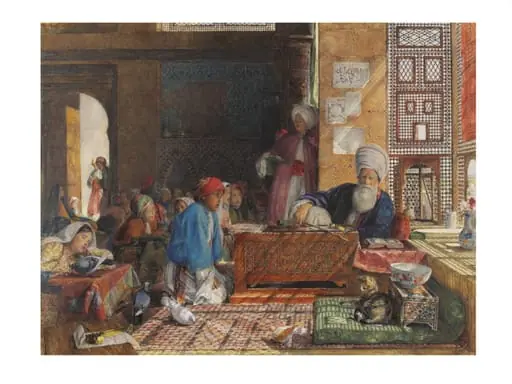 Interior of a school, Cairo
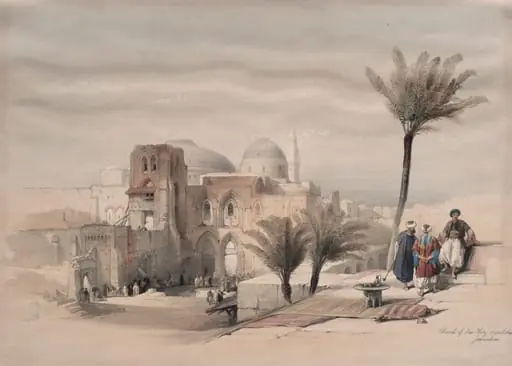 Church of the Holy Sepulchre, Jerusalem
 Street Scene in Cairo