Artwork
Courtier Hunting a Lion
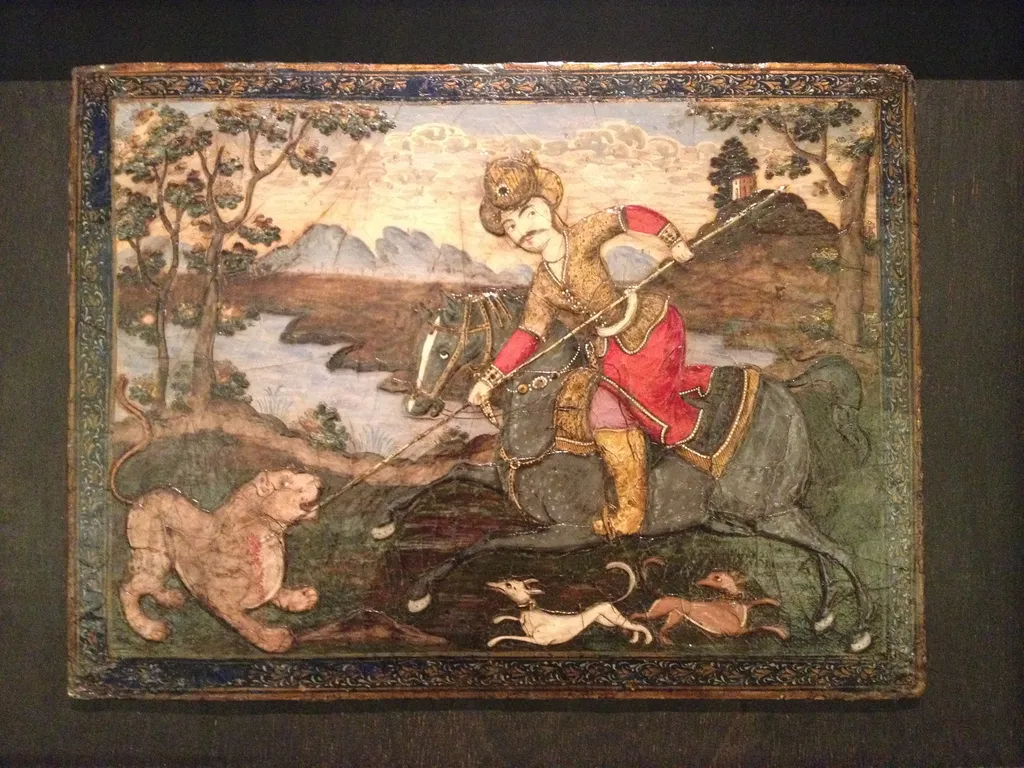
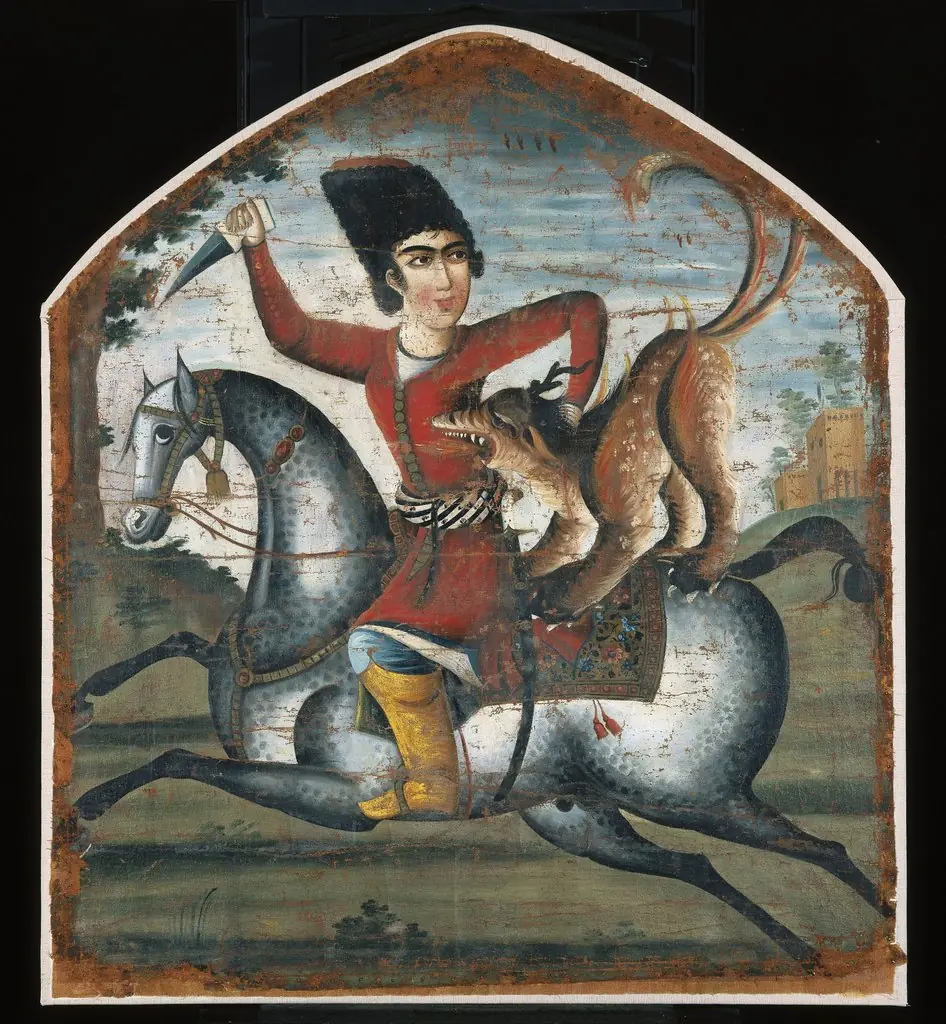
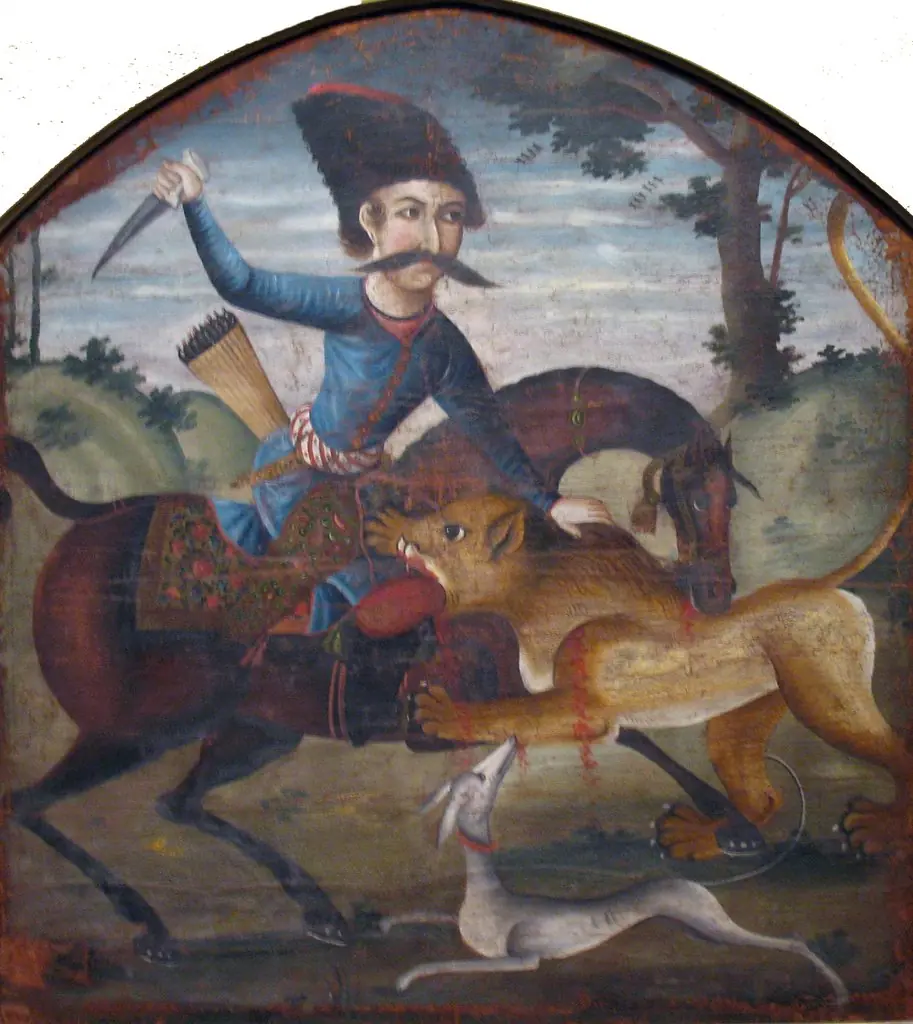
Courtier Hunting a Lion is an oil painting by Unknown. It dates from 1800 and is held in the collection of the Israel Museum. This oil painting portrays a noble figure on horseback engaged in a hunt, facing a lion in a dramatic, dynamic encounter.
About this work
Overview
This oil painting portrays a noble figure on horseback engaged in a hunt, facing a lion in a dramatic, dynamic encounter. Set against a landscape of water, trees, and distant hills, the scene emphasizes ritualized power rather than raw violence. The composition balances the hunter’s ornate presence with the lion’s untamed energy, creating a tension between control and wildness.
Subject & Meaning
The figure, likely a courtier or royal hunter, is depicted in elaborate red and gold attire, signaling status and authority. The lion, shown mid-motion, embodies danger and nobility, common symbols in aristocratic hunting imagery. The scene reflects ideals of courage and dominion over nature, typical of elite portraiture in cultures where the hunt was both sport and political theater.
Technique & Style
Oil paint is used to render fine details in the rider’s embroidery, the horse’s trappings, and the lion’s musculature. Brushwork varies between smooth, polished surfaces on fabric and looser, textured strokes for the animal and landscape. The background’s soft focus contrasts with the sharp definition of the central figures, guiding the viewer’s attention to the confrontation.
History & Provenance
The painting resides in the Israel Museum, though its origin and creator remain undocumented in public records. Its stylistic elements suggest a connection to early modern European or Ottoman courtly traditions, possibly produced in the 16th or 17th century. Its presence in Jerusalem indicates acquisition through collection or diplomatic exchange, but its prior provenance is unverified.
Context
Hunting scenes were common in aristocratic art across Eurasia, serving as metaphors for power and virtue. Similar imagery appears in Persian miniatures, Spanish court paintings, and Mughal albums. This work aligns with those traditions, reflecting a shared visual language among elite classes who used the hunt to assert identity, skill, and social hierarchy.
Legacy
Though not widely published or reproduced, the painting contributes to the museum’s collection of non-Western and cross-cultural court art. It offers insight into how European and Islamic artistic conventions merged in depictions of nobility. Its preservation allows ongoing study of symbolic representation in early modern visual culture.
Artist & collection

 Domestic Scene
 Giacomo and Cardinal Marco, investing Andrea, Abbot of San Zeno, with his Benefice
 The Nymph of Fontainebleau
 Portrait of a Woman
 Madonna and Child with Saints in the Enclosed Garden
 Venus and Minerva
 Family Group of Four on Sofa
 Wall painting from Room H of the Villa of P. Fannius Synistor at Boscoreale