Artwork
The Shiite Imam Ali
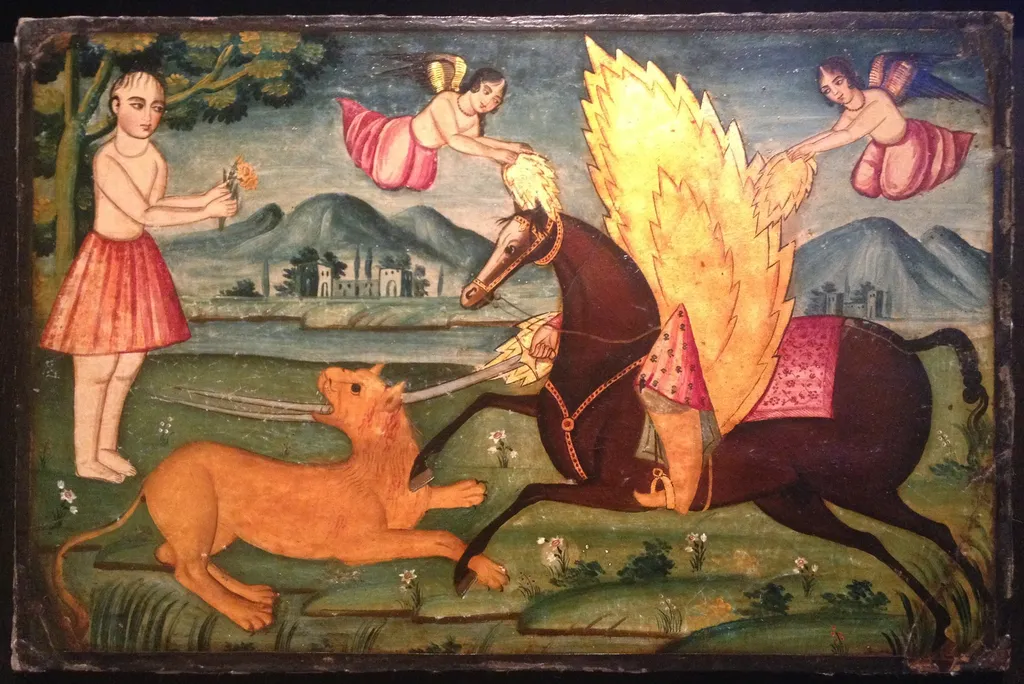
The Shiite Imam Ali is an oil painting by Unknown. It dates from 1850 and is held in the collection of the Israel Museum.
About this work
Overview
The oil painting titled The Shiite Imam Ali depicts a fantastical scene in which a dark‑bodied, yellow‑winged horse bearing a rider confronts a lion lying on the ground with its mouth open. The composition is set within a landscape of mountains and water, and includes two winged female figures in pink skirts hovering above the scene.
Subject & Meaning
The central encounter between the mounted rider and the subdued lion suggests a narrative of triumph or protection, while the presence of the winged women—one holding a flower and the other reaching toward the horse’s mane—adds a symbolic, possibly allegorical layer that may relate to spiritual or mythic themes associated with the figure of Imam Ali.
Technique & Style
Executed in oil, the work employs vivid, saturated hues that heighten the sense of motion. The contrast between the dark horse, bright wings, and the pink and green attire of the rider indicates a layered approach, possibly involving glazing to achieve depth and luminosity in the colors.
Context
The painting’s fantastical elements—winged animals and figures—place it within a tradition of religious or mythological illustration, where symbolic creatures often convey moral or theological ideas. The inclusion of a Shiite Imam as a subject aligns the work with devotional art intended for a specific cultural audience.
Legacy
While specific details of the painting’s reception are not recorded, its striking palette and dynamic arrangement exemplify the use of allegorical imagery in contemporary religious art, reflecting ongoing artistic strategies to visualize spiritual narratives.
Artist & collection

 Domestic Scene
 Giacomo and Cardinal Marco, investing Andrea, Abbot of San Zeno, with his Benefice
 The Nymph of Fontainebleau
 Portrait of a Woman
 Madonna and Child with Saints in the Enclosed Garden
 Venus and Minerva
 Family Group of Four on Sofa
 Wall painting from Room H of the Villa of P. Fannius Synistor at Boscoreale
 Courtier Hunting a Lion
 Hunter on Horseback Attacked by a Mythical Beast
 Berittener Jäger, von einem Löwen attackiert
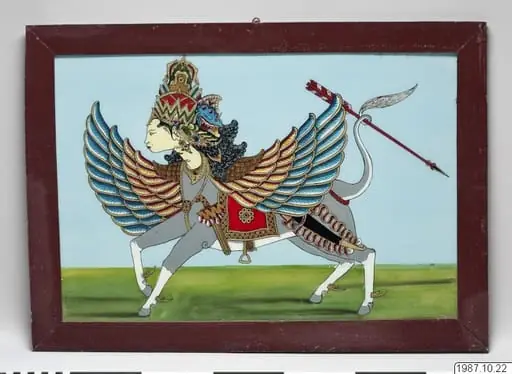 painting, glass painting, working bouraq
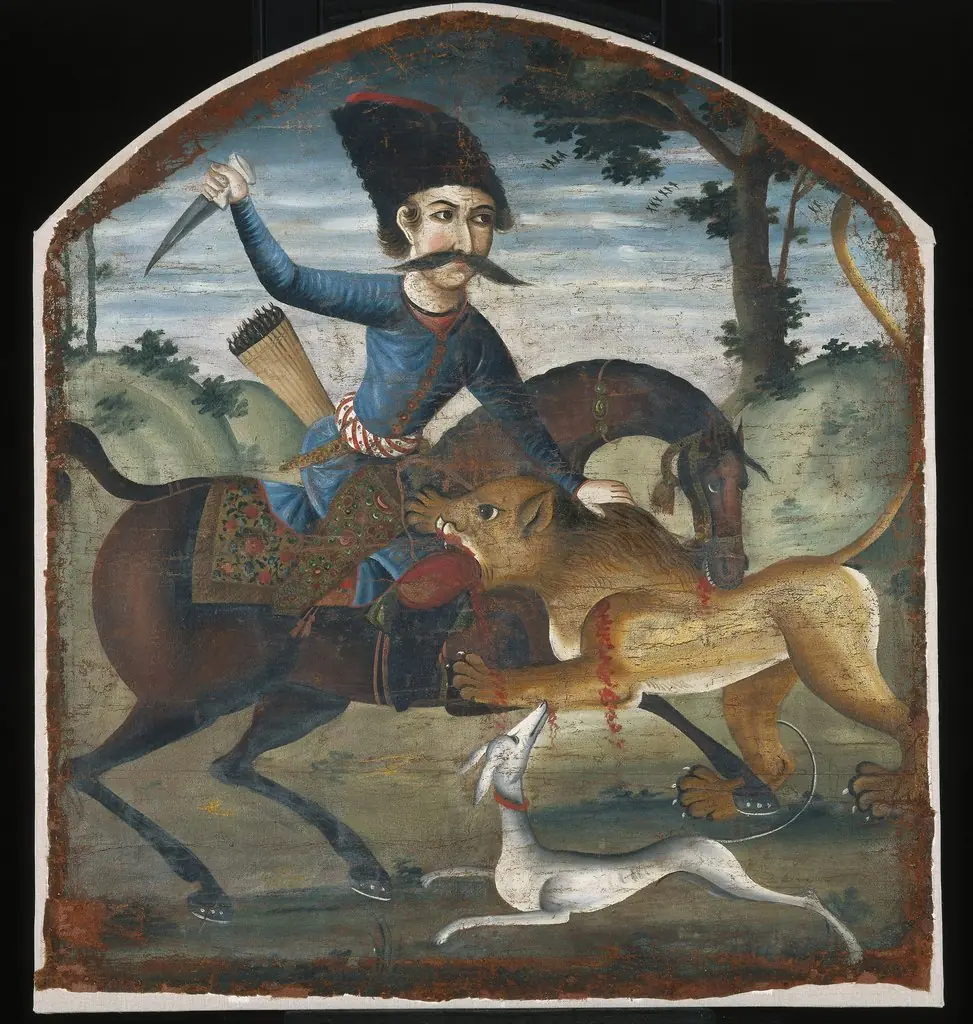 Hunter on Horseback Attacked by a Lion
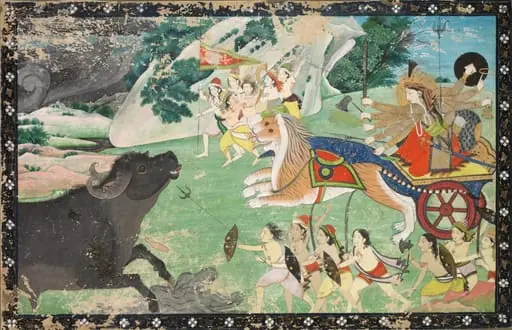 Durga Slaying Mahisha
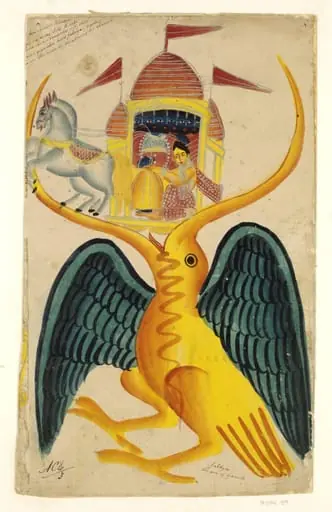 Ravana, Sita and Jatayu
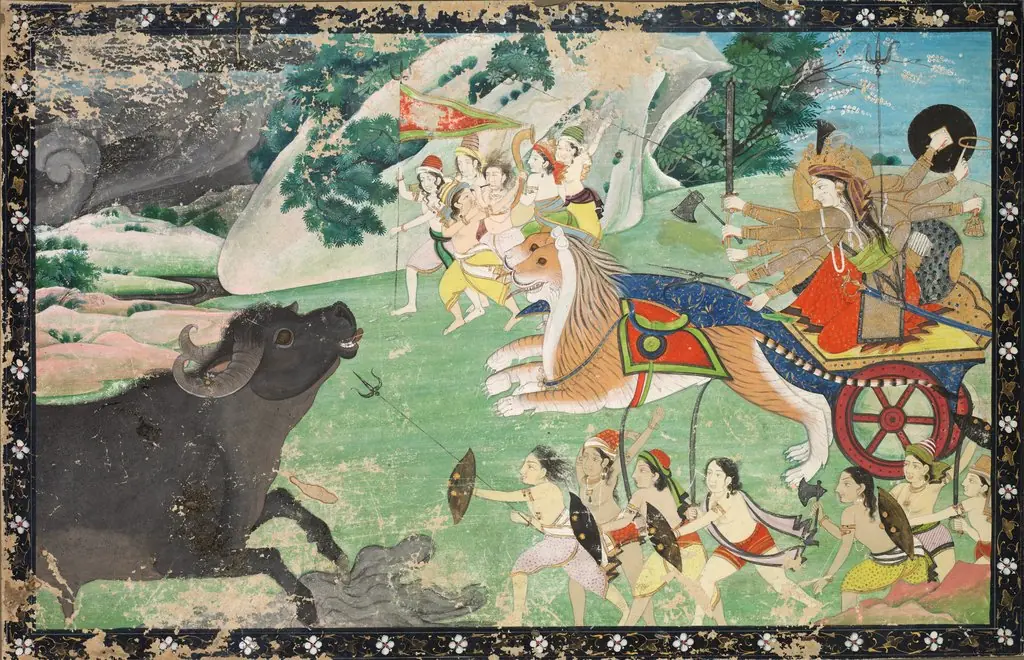 Durga Slaying Mahisha
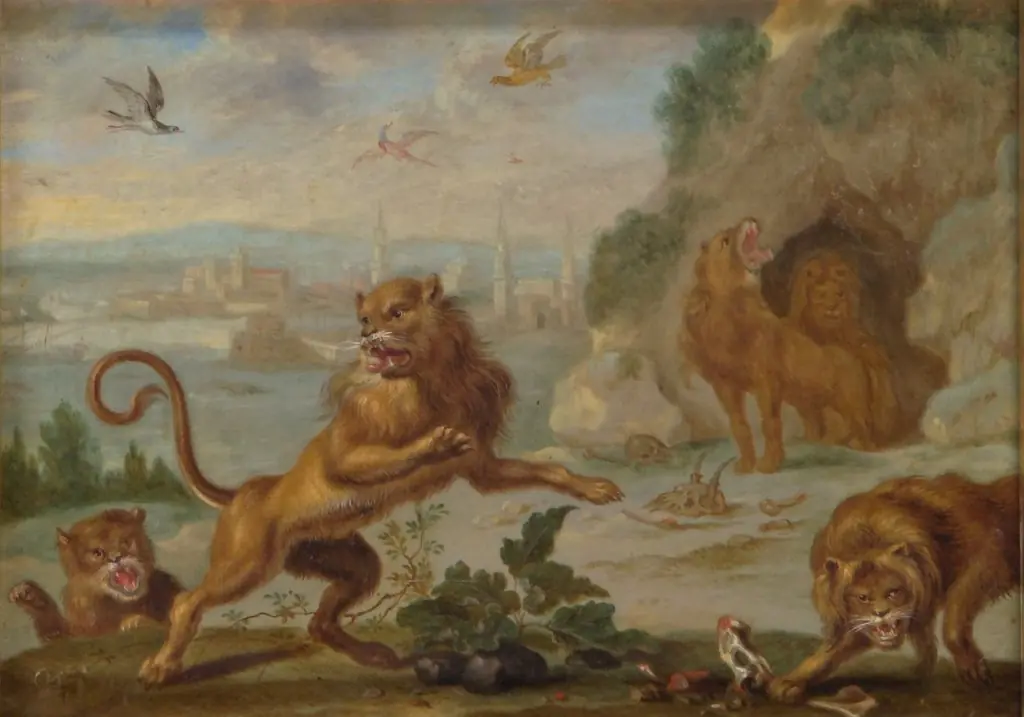 Ansichten aus den vier Weltteilen mit Szenen von Tieren: Tripolis
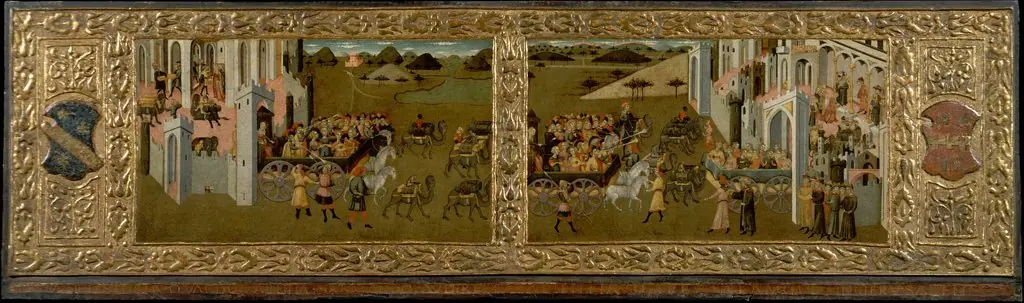 King Solomon and the Queen of Sheba
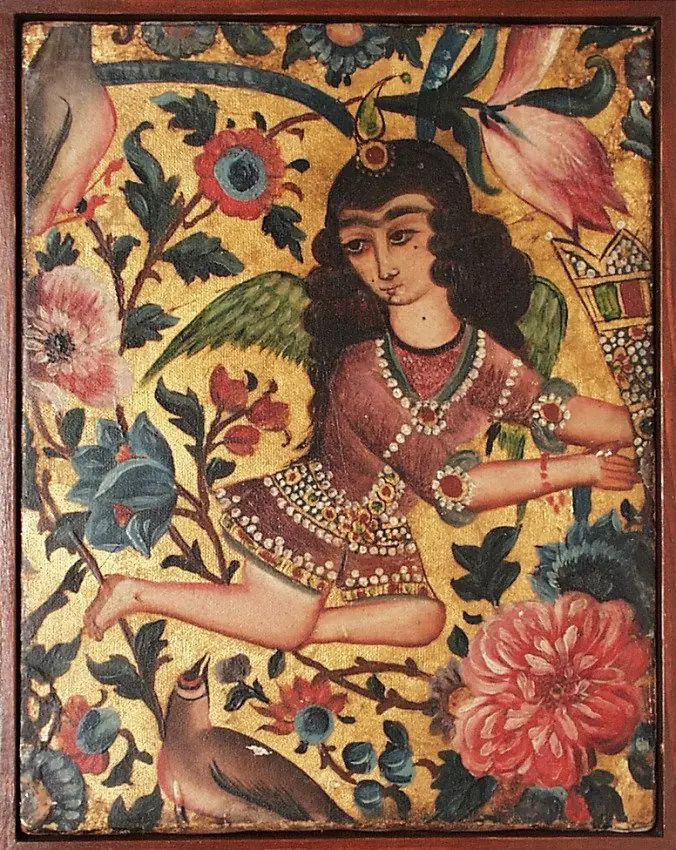 Angel with Crown
 Icoană cu scene biblice pe două registre