Artwork
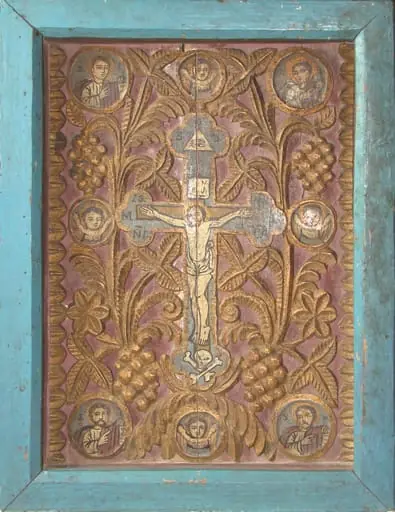
Cruce de tâmplă; Icoană pe lemn: Iisus Răstignit
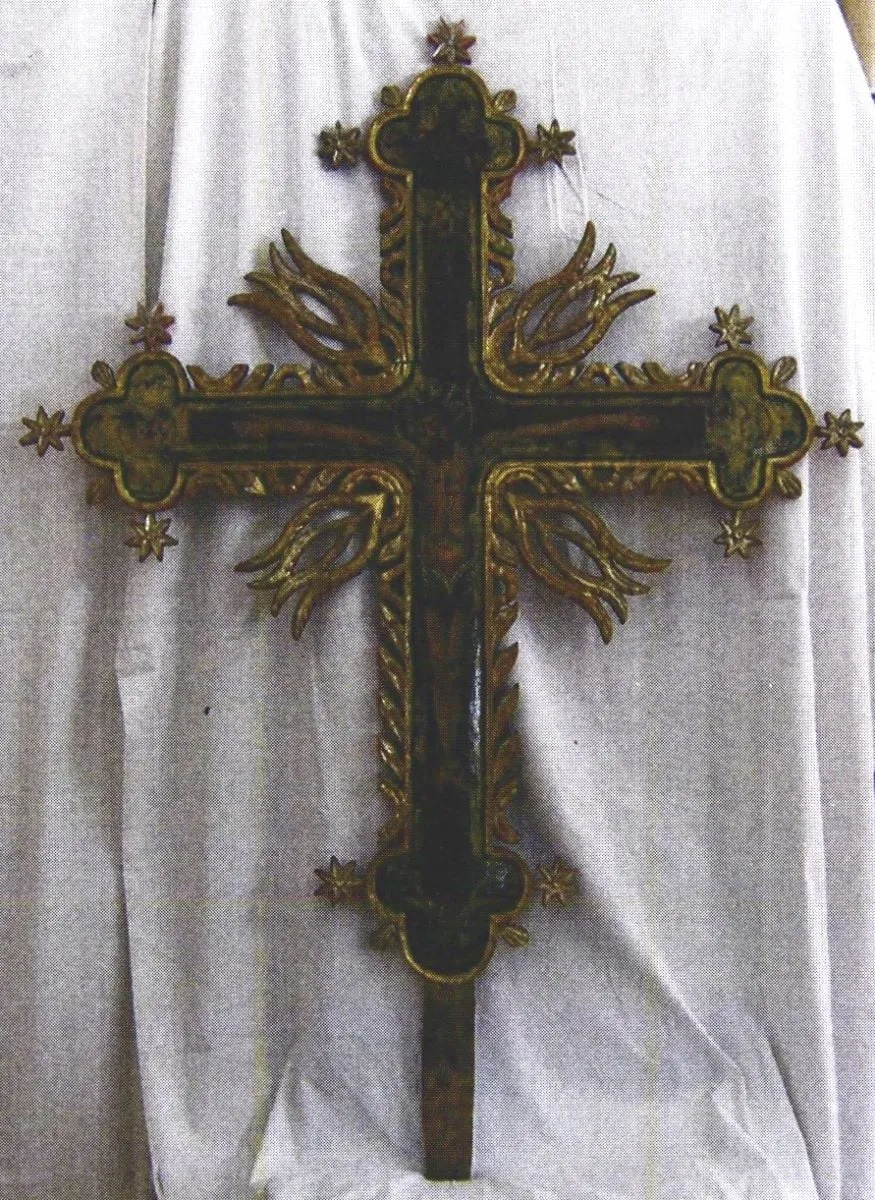
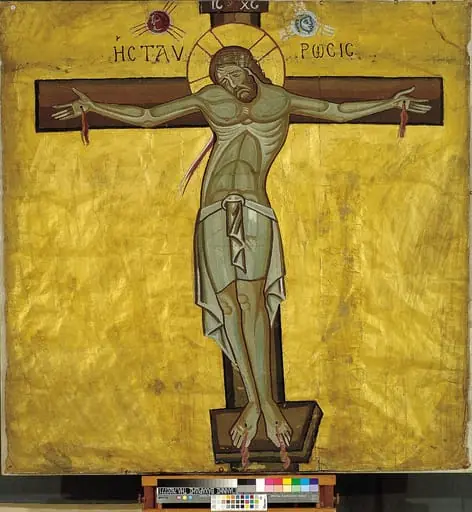
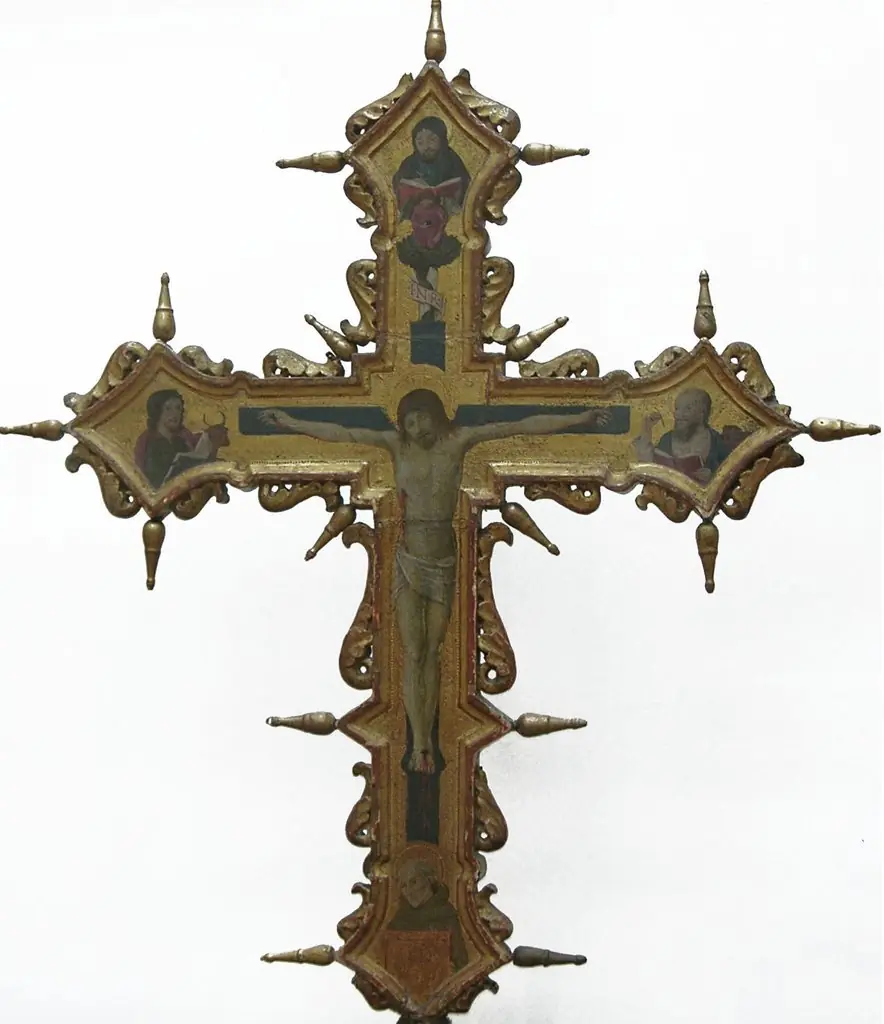
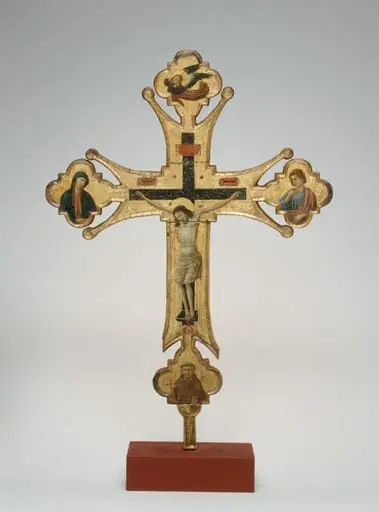
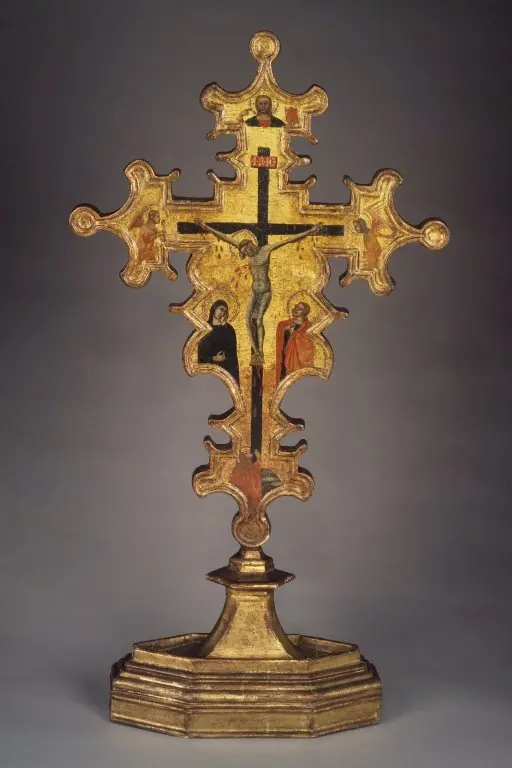
Cruce de tâmplă; Icoană pe lemn: Iisus Răstignit is a drawing by the Romanticist artist Unknown. It dates from 1810 and is held in the collection of the National Museum of Bukovina. This wooden icon depicts a crucifixion cross rendered in gold and brown pigments on a dark ground.
About this work
Overview
The cross is shown resting on a white cloth, its arms terminating in stylized, leaf-like forms with small facial features painted at their centers.
This wooden icon depicts a crucifixion cross rendered in gold and brown pigments on a dark ground. The cross is shown resting on a white cloth, its arms terminating in stylized, leaf-like forms with small facial features painted at their centers. The central shaft features a narrow, finely detailed dark band, contrasting with the luminous gold surface. Though it suggests metalwork, the image is entirely painted on wood, adhering to traditional iconographic conventions.
Subject & Meaning
The cross represents Christ’s crucifixion, central to Christian devotion. The leaf-like terminals and miniature faces may symbolize divine presence or angelic witnesses, common in Eastern Orthodox iconography. The dark central band likely signifies the wood of the True Cross or the mystery of sacrifice. The gold background emphasizes sacredness, while the cloth beneath grounds the image in ritual practice, suggesting liturgical use.
Technique & Style
The image is executed in tempera or similar pigments on a wooden panel, with gold leaf applied to highlight the cross’s form. Details are rendered with fine brushwork, particularly in the facial features and central band. The composition is symmetrical and flattened, avoiding perspective in favor of symbolic clarity. The contrast between gold and dark tones directs focus to the cross as an object of veneration.
History & Provenance
The work originates from a region with strong Eastern Orthodox traditions, likely Romania or nearby areas, where wooden icons were commonly produced for domestic or church use. Its style aligns with 18th- to 19th-century folk iconography, where local artisans adapted canonical forms with regional motifs. The Museum of Ethnography holds similar pieces, indicating its cultural context within rural religious practice.
Context
Such icons were used in private prayer and family altars, serving as focal points for devotion. The inclusion of small faces on the cross arms reflects a local interpretive tradition, blending theological symbolism with folk aesthetics. Unlike monumental church icons, these were portable and intimate, reflecting the personal piety of their owners within a predominantly agrarian society.
Legacy
This icon exemplifies the persistence of traditional icon-painting methods in rural communities long after urban centers adopted more Western styles. Its preservation in ethnographic collections highlights its role as a cultural artifact, not merely a religious object. It continues to inform studies on regional religious expression and the transmission of symbolic forms in Eastern Europe.
Artist & collection
 Domestic Scene
 Giacomo and Cardinal Marco, investing Andrea, Abbot of San Zeno, with his Benefice
 The Nymph of Fontainebleau
 Portrait of a Woman
 Madonna and Child with Saints in the Enclosed Garden
 Venus and Minerva
 Family Group of Four on Sofa
 Wall painting from Room H of the Villa of P. Fannius Synistor at Boscoreale