Artwork
Daughter of the Dey of Algiers
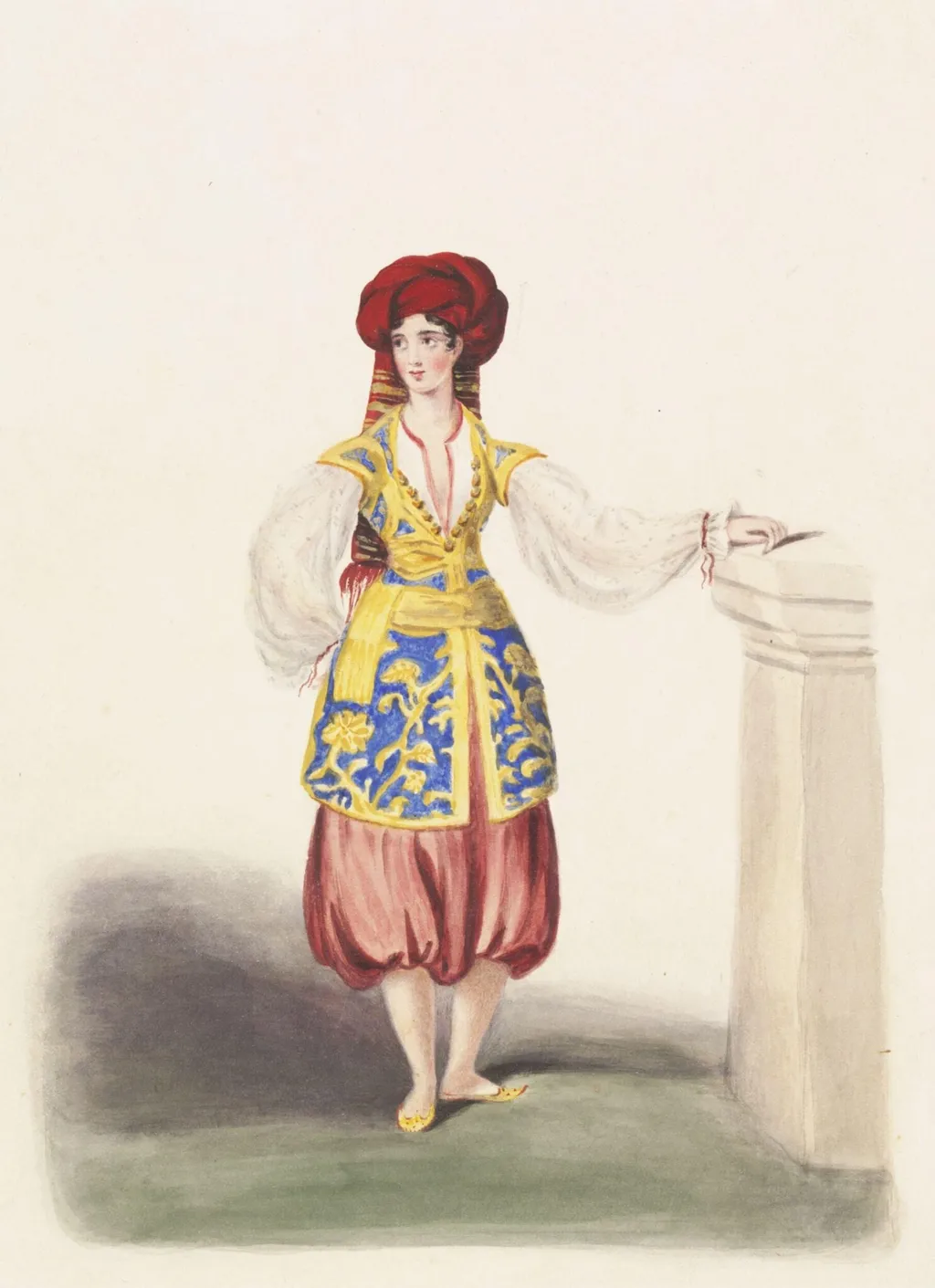
Daughter of the Dey of Algiers is a watercolor work on paper by the Orientalist artist Unknown. It dates from 1820 and is held in the collection of the Victoria and Albert Museum. This watercolor, dated around 1820, portrays a woman linked to the ruling elite of Algiers under the Dey.
About this work
Overview
Its modest scale and medium suggest it was made for personal or documentary use rather than public display.
This watercolor, dated around 1820, portrays a woman linked to the ruling elite of Algiers under the Dey. Attributed to an anonymous hand, it was once mistakenly linked to C. de Brocktorff, a claim never substantiated. Acquired by W. T. Spencer in 1973, the piece passed into private hands thereafter. Its modest scale and medium suggest it was made for personal or documentary use rather than public display.
Subject & Meaning
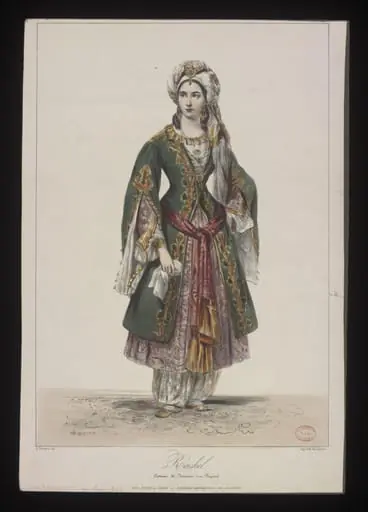
The figure is depicted in elaborate attire that evokes North African dress, though its accuracy is uncertain. She stands formally, one hand resting on a pillar, the other holding a scroll—possibly symbolizing authority, literacy, or ceremonial role. The setting lacks architectural detail, focusing attention on her presence. The image may reflect European fascination with Ottoman North African elites, blending observation with imaginative convention.
Technique & Style
Executed in watercolor, the work employs loose, fluid brushwork and a restrained palette of reds, yellows, and blues against a muted background. The colors are applied thinly, allowing the paper to show through, lending a sense of immediacy. Details like fabric patterns and folds are suggested rather than meticulously rendered, emphasizing spontaneity over precision. The plain backdrop isolates the figure, heightening her visual prominence.
History & Provenance
The painting entered modern records in 1973 when acquired by W. T. Spencer. Prior ownership is undocumented, and its creation context remains obscure. Early attributions to C. de Brocktorff lack supporting evidence and have been dismissed by scholars. No exhibition history or contemporary references to the work are known, leaving its original purpose and audience speculative.
Context
Created during a period of heightened European interest in North African courts, the image reflects a trend of depicting foreign dignitaries through a lens of exoticism. While inspired by real cultural elements, the costume and setting likely blend observation with romanticized stereotypes. Such works were often produced for private collectors seeking visual narratives of distant lands, not as ethnographic records.
Legacy
The painting survives as a quiet artifact of 19th-century cross-cultural representation. It offers no clear authorship or documented reception, yet its composition reveals how European artists interpreted non-European figures through stylized forms. It remains a modest but instructive example of how identity, power, and perception were visually negotiated in colonial-era imagery.
Artist & collection

 Domestic Scene
 Giacomo and Cardinal Marco, investing Andrea, Abbot of San Zeno, with his Benefice
 The Nymph of Fontainebleau
 Portrait of a Woman
 Madonna and Child with Saints in the Enclosed Garden
 Venus and Minerva
 Family Group of Four on Sofa
 Wall painting from Room H of the Villa of P. Fannius Synistor at Boscoreale
 Une Demoiselle Grecque de Livadie
 A young woman in Turkish dress
 Kalyoncu, or Sea Captain
 Print Collection
 Untitled
 A Sultana
 H Beard Print Collection
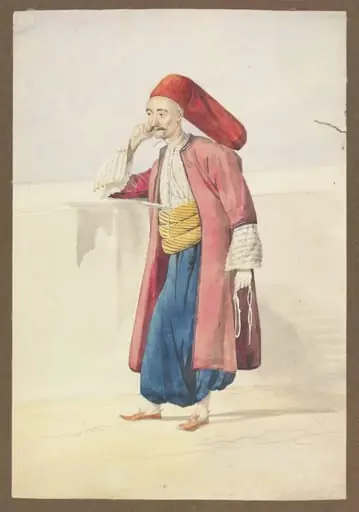 An Official at the Court of the Sultan
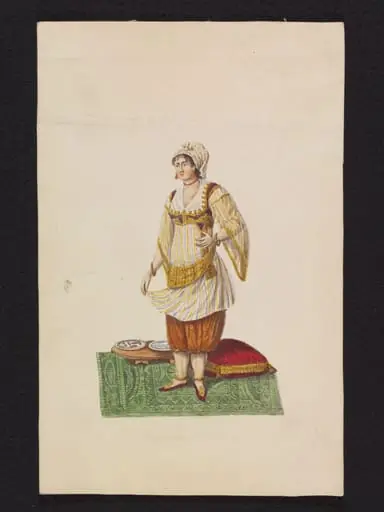 Algeerine at home
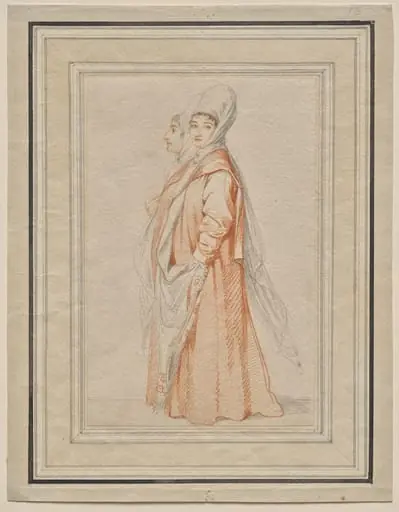 Two Veiled Young Women, probably Lilla Amnani and Her Sister
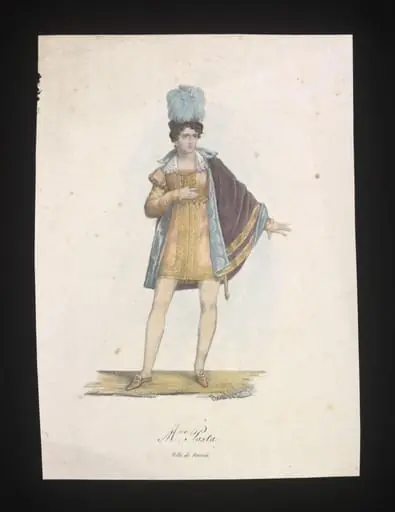 Madame Pasta
 Moullah Chéite - (à Gandjà ou Elisavetopol.)