Artwork
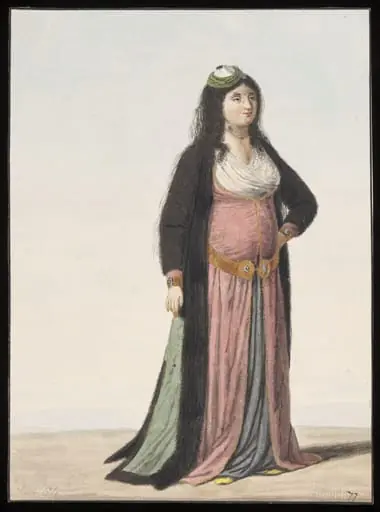
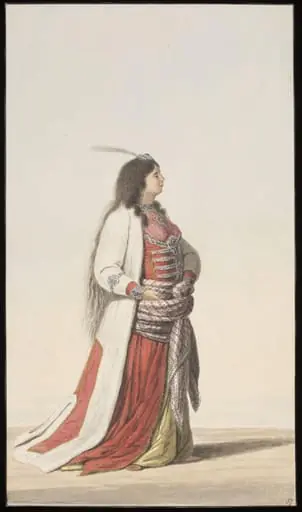
A Sultana
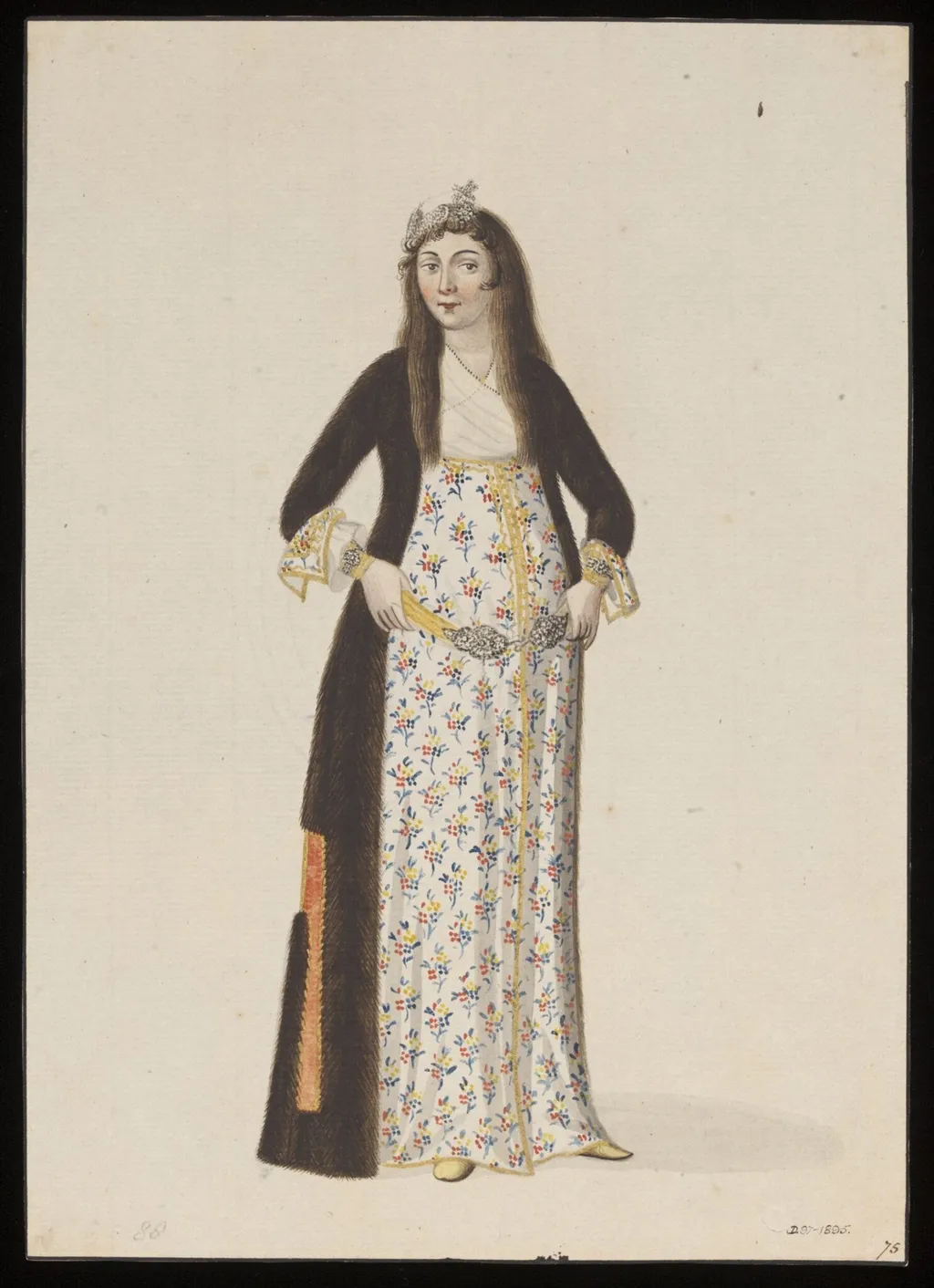
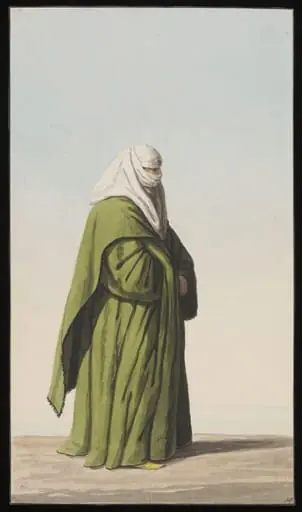
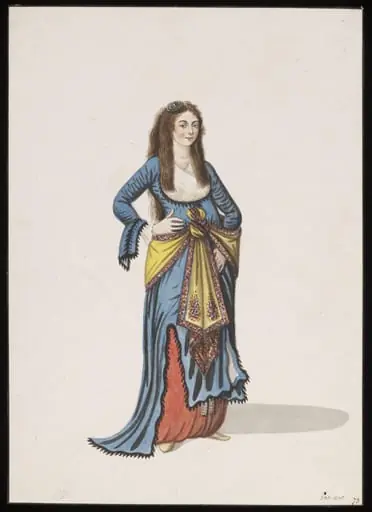
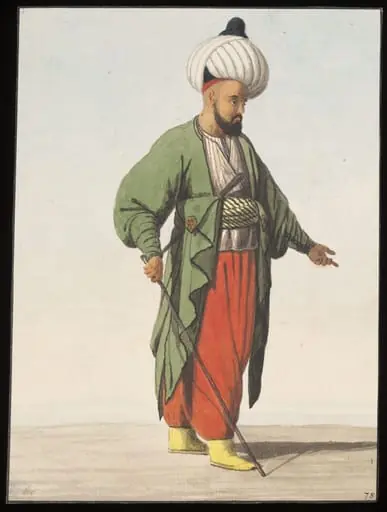
A Sultana is a watercolor work on paper by the Orientalist artist Anonymous Greek artist. It dates from 1809 and is held in the collection of the Victoria and Albert Museum. This watercolour is part of a larger collection commissioned by British diplomat Stratford Canning during his early service in Istanbul.
About this work
Overview
Created between 1808 and the early 1810s, the series documents Ottoman architecture, interiors, and daily life through the eyes of a foreign observer.
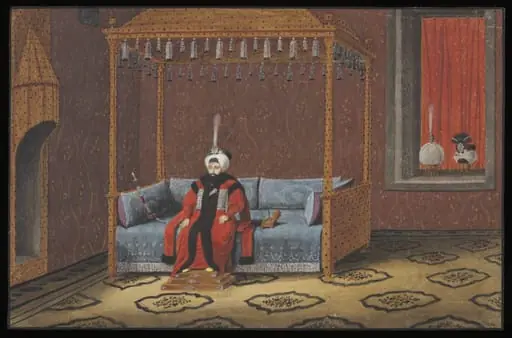
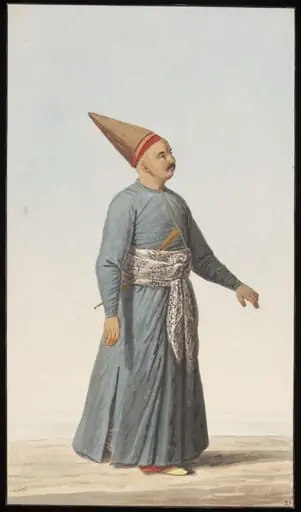
This watercolour is part of a larger collection commissioned by British diplomat Stratford Canning during his early service in Istanbul. Created between 1808 and the early 1810s, the series documents Ottoman architecture, interiors, and daily life through the eyes of a foreign observer. The works were produced by an unnamed local artist, likely trained in the Ottoman tradition but influenced by European visual practices, offering a rare hybrid record of the period.
Subject & Meaning
The image captures a sultana, likely a member of the Ottoman imperial harem, rendered with attention to costume, setting, and poise. Rather than exoticizing the subject, the depiction reflects an attempt at observational accuracy, informed by Canning’s diplomatic access and the artist’s intimate knowledge of courtly life. The portrait serves as both ethnographic record and personal memento, preserving a glimpse into a world largely closed to Western eyes.
Technique & Style
The watercolour employs layered pigments, combining the opaque richness of bodycolour typical of Ottoman manuscript illustration with the linear precision and spatial depth of European draftsmanship. Fine brushwork defines textile patterns and architectural details, while subtle washes model form and light. This synthesis suggests an artist fluent in both local and imported visual languages, bridging two artistic traditions without fully submitting to either.
History & Provenance
The drawings were assembled during Canning’s tenure in Istanbul and remained in his family after his return to Britain. In 1895, his daughter Charlotte donated the complete set to the Victoria and Albert Museum. The artist’s identity remains unconfirmed, though scholarly consensus points to a Greek painter connected to Konstantin Kapidagli’s circle. Charles Cockerell’s 1810 visit to the embassy and his sketches after the artist’s work further corroborate the series’ authenticity and contemporary recognition.
Context
In the early 19th century, European diplomats in Istanbul sought to document Ottoman society as part of broader cultural and political engagement. Canning’s commission was unusual in its scale and reliance on a local artist rather than foreign travelers. The resulting images reflect a moment when Ottoman visual culture was being observed, recorded, and subtly reshaped by cross-cultural exchange, offering a counterpoint to more sensationalized Western depictions of the East.
Legacy
The series stands as a significant archive of Ottoman visual life, preserved through the collaboration of a British diplomat and an anonymous local artist. Its preservation in the V&A ensures continued scholarly access, while Cockerell’s copies in the British Museum highlight its influence on British architectural study. The works remain a quiet testament to the complexity of cultural representation during a period of shifting imperial relations.
Artist & collection

![A Pasha travelling with his escort[?], by Anonymous Greek artist](https://artifactworldgallery.com/img/anonymous-greek-artist--a-pasha-travelling-with-his-escort--01de32b8fcf30843-w320.webp)
![A Greek woman[?], by Anonymous Greek artist](https://artifactworldgallery.com/img/anonymous-greek-artist--a-greek-woman--6cf3019da43d0709-w320.webp)
![A Dervish[?], by Anonymous Greek artist](https://artifactworldgallery.com/img/anonymous-greek-artist--a-dervish--3c8916f5a95abb6a-w320.webp)