Artwork
Depictions of Impeyan pheasant (male) and a Western horned pheasant of Northern India
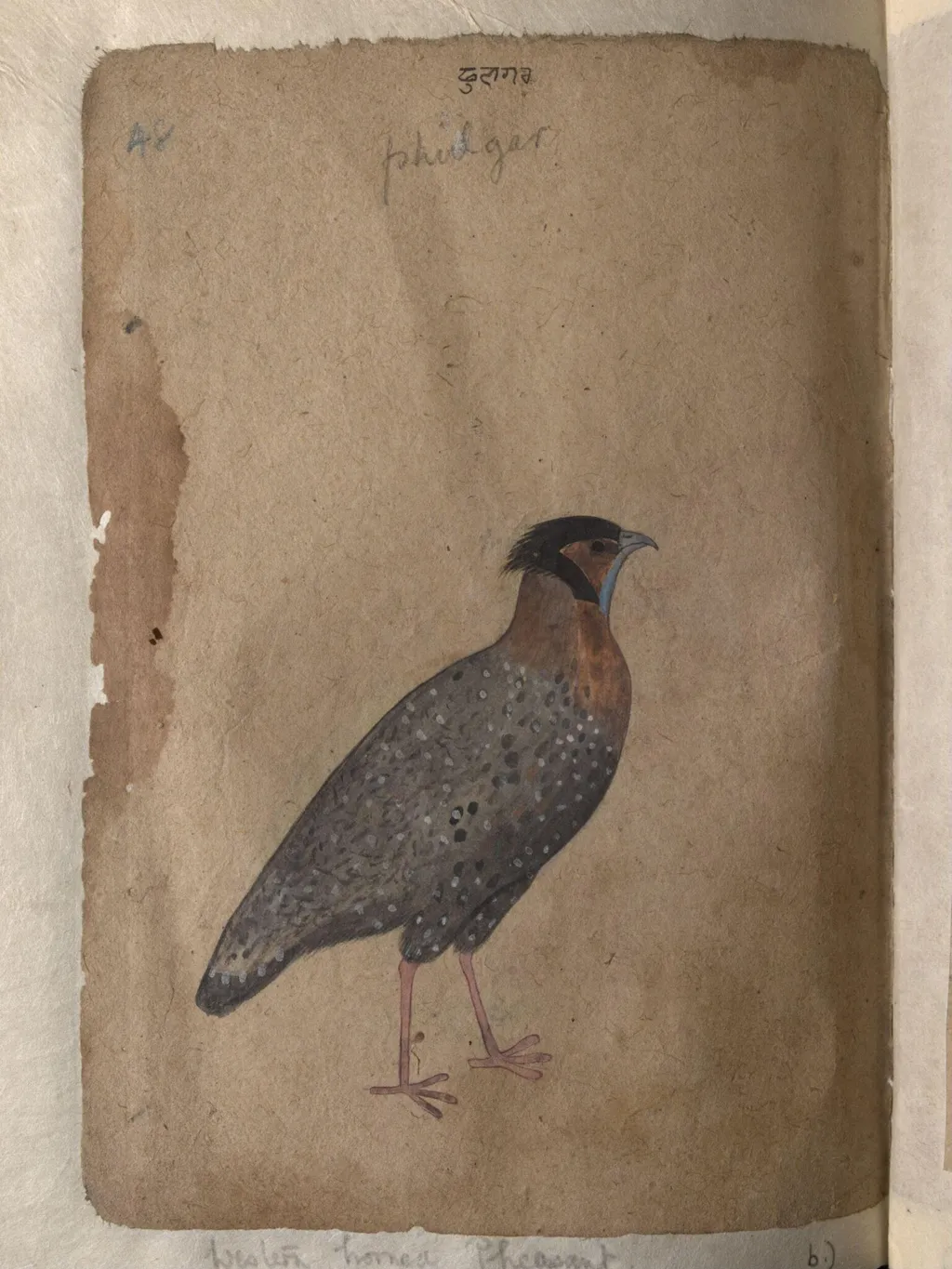
Depictions of Impeyan pheasant (male) and a Western horned pheasant of Northern India is a paint painting by the Patna School of Painting artist Unknown. It dates from 1820 and is held in the collection of the Victoria and Albert Museum.
About this work
Overview
Two watercolor paintings from 1820 depict male specimens of the Impeyan pheasant and the Western horned pheasant, both native to northern India.
Two watercolor paintings from 1820 depict male specimens of the Impeyan pheasant and the Western horned pheasant, both native to northern India. Executed with botanical precision, they were later donated to a public collection in 1929 by Robert Scott Greenshields, a former British civil servant with decades of service in Bengal and Assam. The works reflect a tradition of natural history illustration tied to colonial administrative observation.
Subject & Meaning
The paintings focus on two distinct pheasant species, rendered in isolation against a neutral background to emphasize anatomical detail. The Impeyan pheasant displays a dark gray body with white speckling, a reddish-brown neck, and a prominent black crest. The Western horned pheasant, though less detailed in the note, is similarly portrayed with scientific intent. The handwritten label ‘phidger’ suggests local nomenclature, hinting at the intersection of indigenous knowledge and colonial documentation.
Technique & Style
The works are executed in watercolor on paper, with fine brushwork capturing feather texture and subtle tonal shifts. The birds are depicted frontally, facing right, in alert postures that convey vitality without narrative context. The plain light-brown background eliminates distraction, focusing attention on form and plumage. The paper shows signs of age—minor tears and fading—consistent with its use as a field study or specimen record rather than a decorative piece.
History & Provenance
Created around 1820, the paintings were held privately until 1929, when Robert Scott Greenshields, who served in the Indian Civil Service from 1879 to 1910, donated them. His long residence in northeastern India suggests the works may have been collected during his postings, possibly by local artists or as part of administrative documentation. The donation reflects a broader trend of colonial-era natural history materials entering public collections in the early 20th century.
Context
These paintings emerged during a period when British officials and naturalists systematically recorded India’s biodiversity. Such illustrations often served scientific, educational, or administrative purposes, bridging European taxonomy with regional species. The presence of a local term like ‘phidger’ indicates that indigenous names were sometimes recorded alongside formal classifications, though rarely credited in official archives.
Legacy
The paintings contribute to a historical archive of South Asian avian species documented under colonial rule. Their survival and donation underscore the role of civil servants in preserving natural history materials. Though not widely exhibited, they remain valuable as primary records of species appearance and nomenclature in early 19th-century northern India, offering insight into the methods and limitations of contemporary natural observation.
Artist & collection

 Domestic Scene
 Giacomo and Cardinal Marco, investing Andrea, Abbot of San Zeno, with his Benefice
 The Nymph of Fontainebleau
 Portrait of a Woman
 Madonna and Child with Saints in the Enclosed Garden
 Venus and Minerva
 Family Group of Four on Sofa
 Wall painting from Room H of the Villa of P. Fannius Synistor at Boscoreale
 Depictions of Chukor partridge and Impeyan pheasant of Northern India
 Depictions of Common (or grey) quail and a Black partridge of Northern India
 Depictions of a (unfinished drawing) and a Rock bush-quail of Northern India
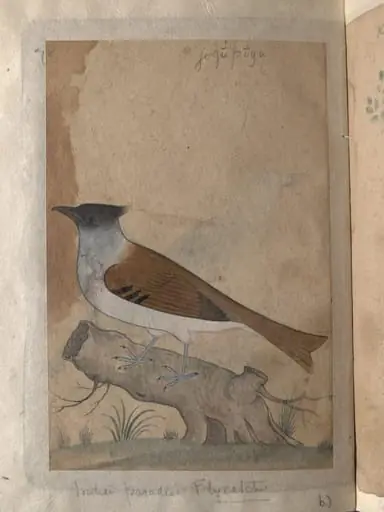 Depictions of Indian house crow and a Indian paradise flycatcher of Northern India
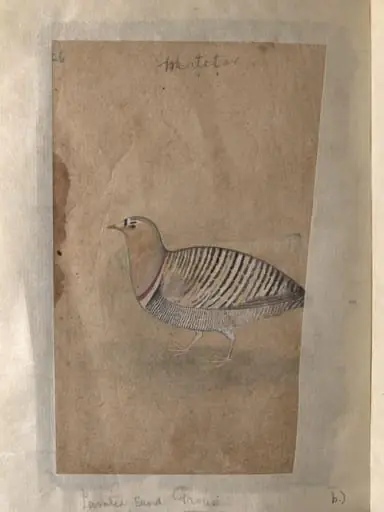 Depictions of a Indian house-sparrow and a Painted sand-grouse (male) of Northern India
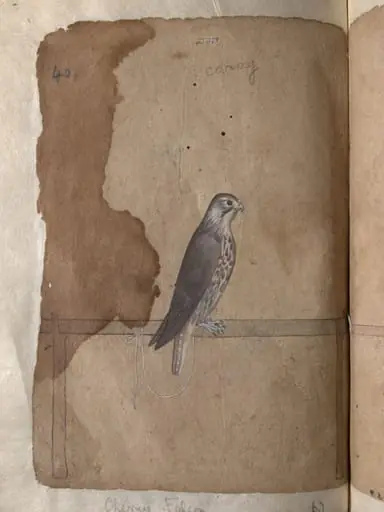 Depictions of a Eastern peregrine falcon and Cherrug falcon of Northern India
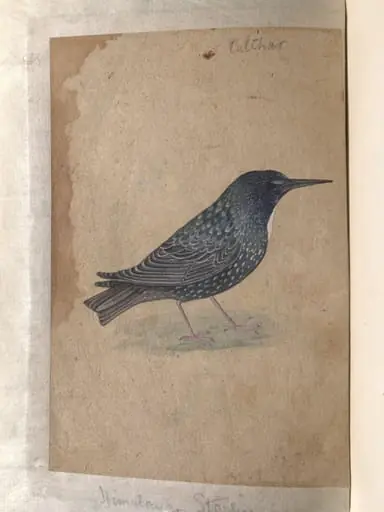 Depictions of white-cheeked bulbul and a Himalayan starling of Northern India
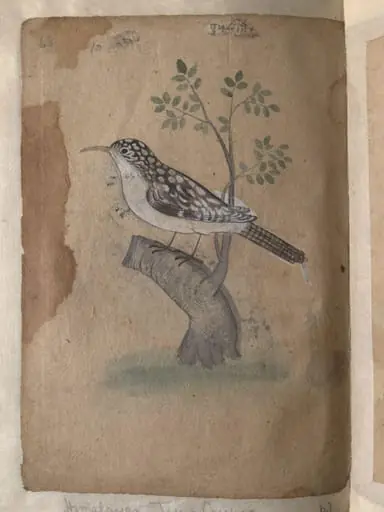 Depictions of a Common Indian myna and a Himalayan tree-creeper of Northern India
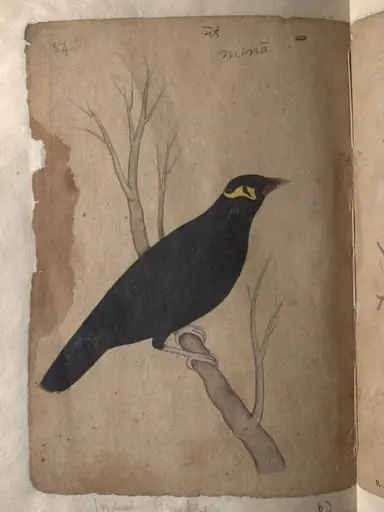 Depictions of a Domestic pigeon and Indian grackle of Northern India
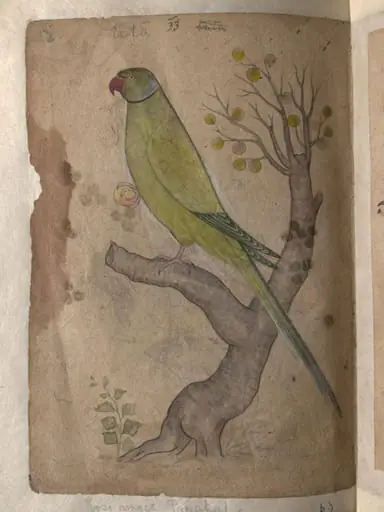 Depictions of Striated scops owl and Rose-ringed parakeet of Northern India
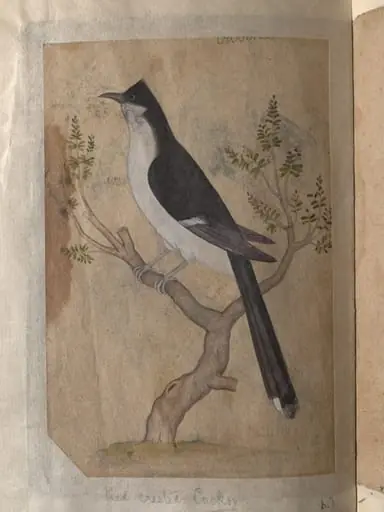 Depictions of a Indian fruit-bat and Pied crested cuckoo of Northern India