Artwork
Depictions of a Sarus crane and Parus crane
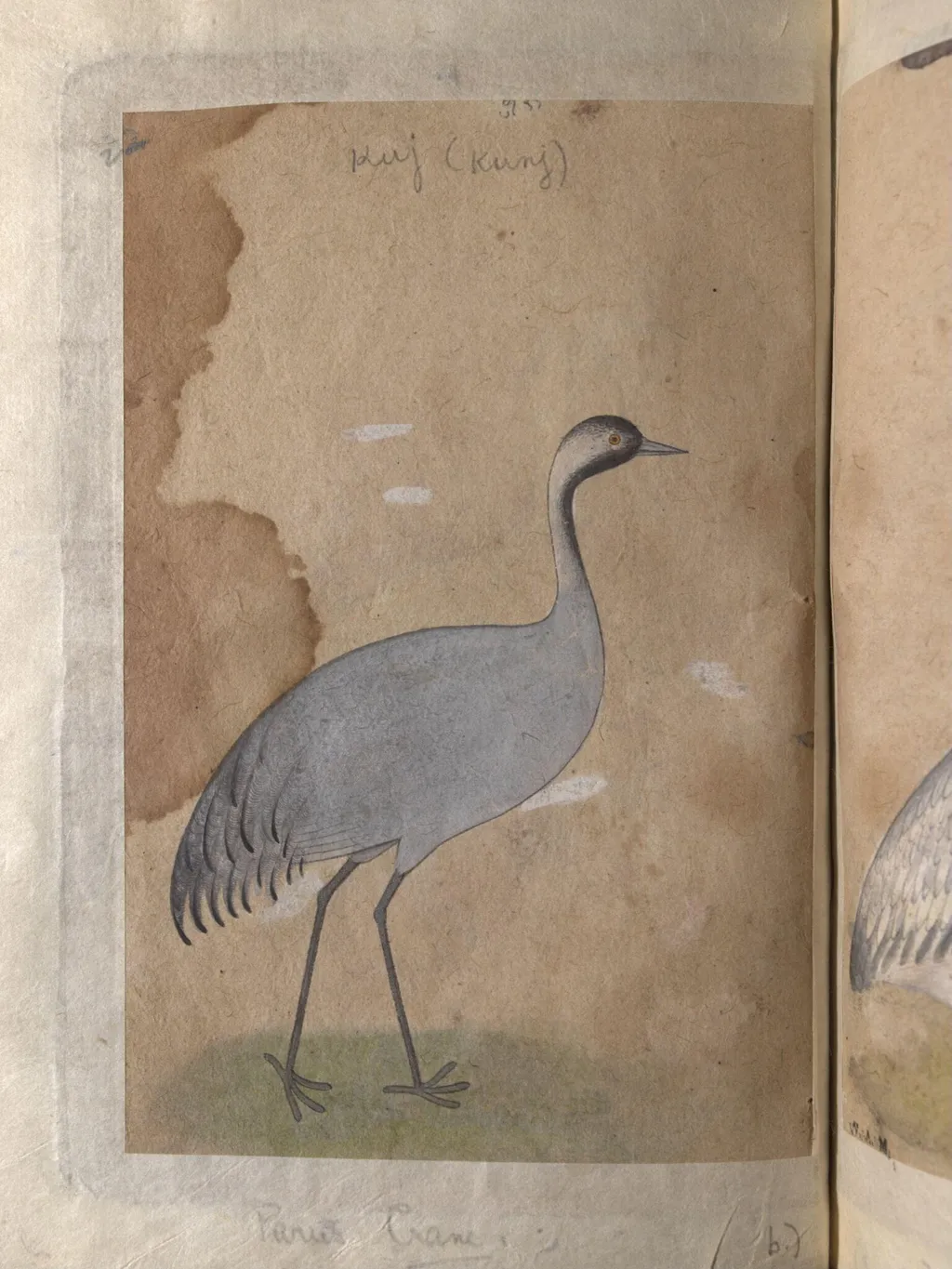
Depictions of a Sarus crane and Parus crane is a paint painting by the Romanticist artist Unknown. It dates from 1820 and is held in the collection of the Victoria and Albert Museum.
About this work
Overview
This 1820 watercolour painting on stained paper features a single bird, identified as a crane, prominently depicted on a green patch against a faded brown background with white streaks. The composition emphasizes the bird's form through simple lines and flat colors.
Subject & Meaning
The subject is a crane, specifically noted as either a Sarus crane or a Parus crane in the original context, though the visual description aligns more closely with the Sarus crane, known for its grey plumage and long neck. The artwork's focus on the bird's shape and minimal background suggests an interest in naturalistic representation.
Technique & Style
The artist employed watercolour on stained paper, mounted on an album folio. The style is characterized by simple, outlining lines and the use of flat, non-gradient colors, prioritizing the clarity of the bird's silhouette over detailed texture or depth.
History & Provenance
Created circa 1820 by an unknown artist, the painting was later owned by Robert Scott Greenshields, a member of the Indian Civil Service from 1879 to 1910. It was donated to the collection in 1929.
Context
Given its creation around 1820 and later association with the Indian Civil Service, the painting may reflect the era's botanical and zoological illustration trends, possibly inspired by observations in Bengal or Assam.
Legacy
While the artist remains unknown, the piece contributes to the historical record of early 19th-century natural history art, particularly in the colonial Indian context. Its simplicity and focus on a specific species highlight the period's interest in detailed, if not always scientifically precise, representations of nature.
Artist & collection

 Domestic Scene
 Giacomo and Cardinal Marco, investing Andrea, Abbot of San Zeno, with his Benefice
 The Nymph of Fontainebleau
 Portrait of a Woman
 Madonna and Child with Saints in the Enclosed Garden
 Venus and Minerva
 Family Group of Four on Sofa
 Wall painting from Room H of the Villa of P. Fannius Synistor at Boscoreale
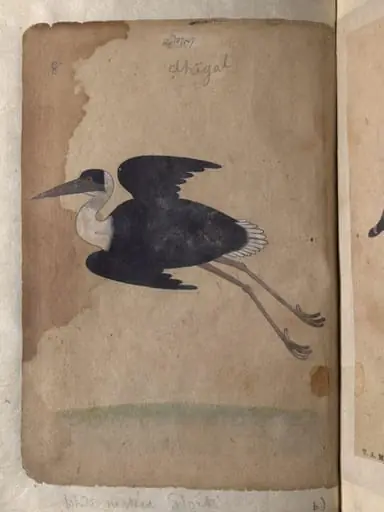 Depictions of a Demoiselle crane and a White-necked stork, of Northern India
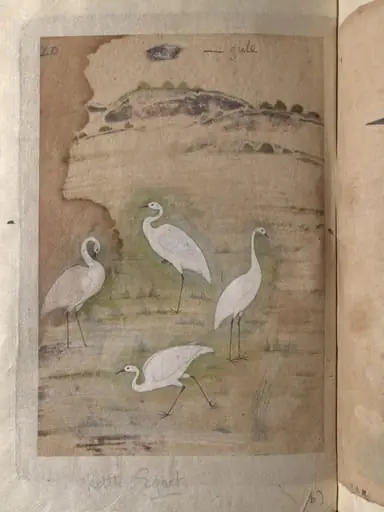 Depictions of a Bar-headed goose and four Little egrets
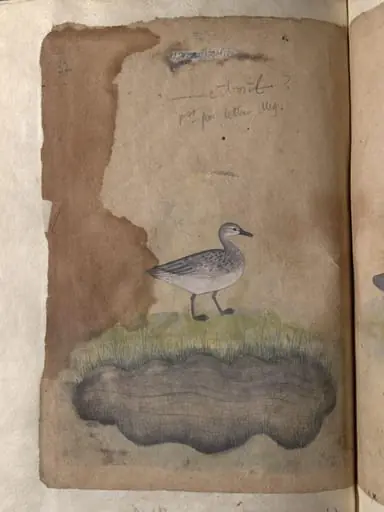 Depictions of an Indian darter and Duck (unidentified) of Northern India
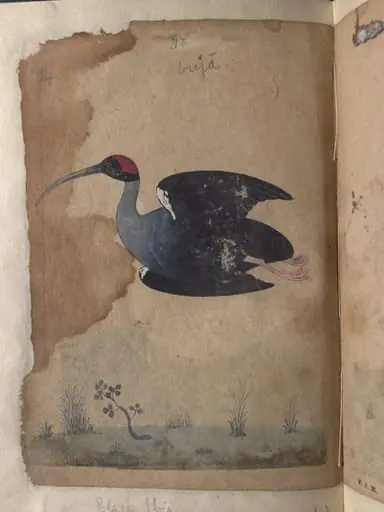 Depictions of a Domestic goose and Black ibis inocotis, of Northern India
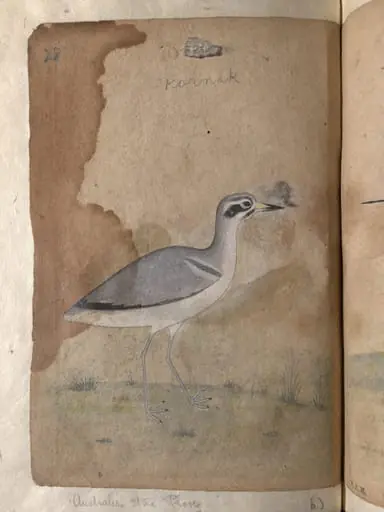 Depictions of a Mallard and Australian black-fronted plover of Northern India
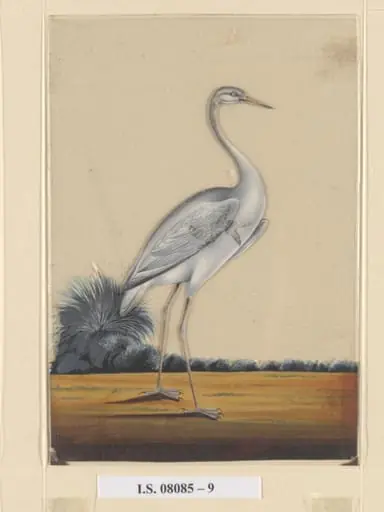 A sarus crane
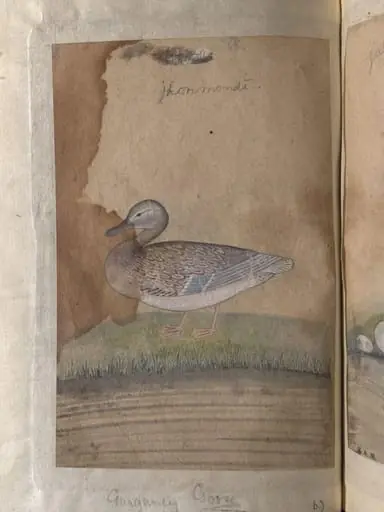 Depictions of a sandpiper and Garganey goose of Northern India
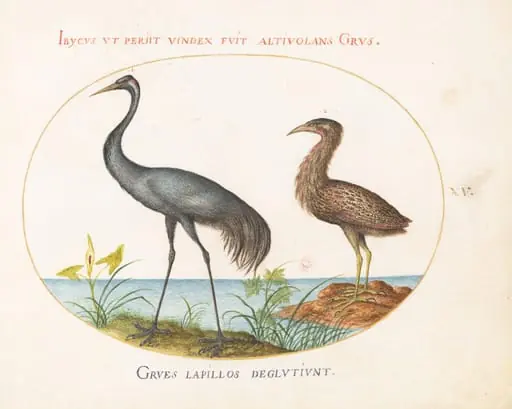 Plate 15: Common Crane and Bittern(?)
 Depictions of Striated scops owl and Rose-ringed parakeet of Northern India