Artwork
Depictions of a Demoiselle crane and a White-necked stork, of Northern India
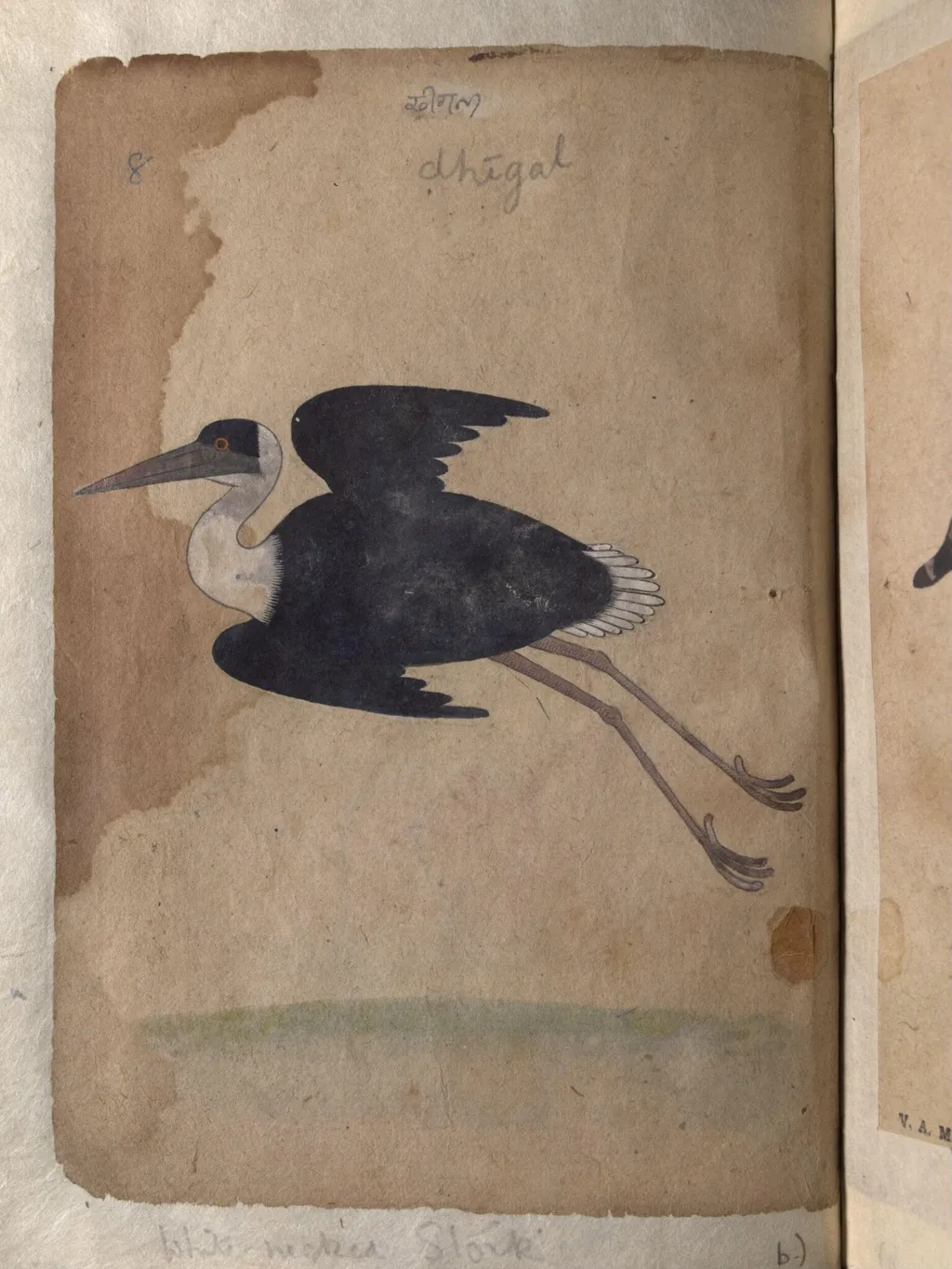
Depictions of a Demoiselle crane and a White-necked stork, of Northern India is a paint painting by the Patna School of Painting artist Unknown. It dates from 1820 and is held in the collection of the Victoria and Albert Museum. This watercolor painting from around 1820 depicts two birds native to Northern India: a Demoiselle crane and a White-necked stork.
About this work
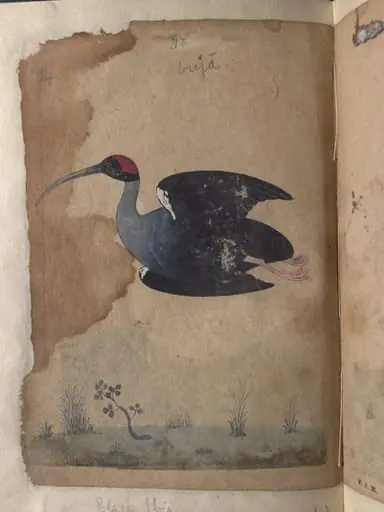
Its body is mostly black, with white feathers on its belly and a splash of orange near its eye.
This is a simple, flat drawing of a big bird with a long neck and beak. Its body is mostly black, with white feathers on its belly and a splash of orange near its eye. The bird’s legs are long, and it stands on a thin green line that looks like grass or water.
The word *dhigal* is written next to it in a script that might be Hindi. This suggests the bird is from Northern India, where such drawings were made around 1820.
Look up Victoria and Albert Museum to see more drawings like this.
Overview
This watercolor painting from around 1820 depicts two birds native to Northern India: a Demoiselle crane and a White-necked stork.
Subject & Meaning
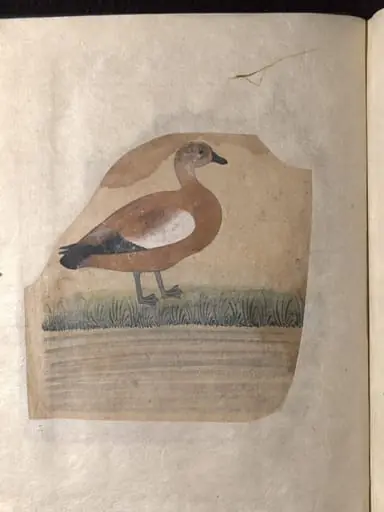
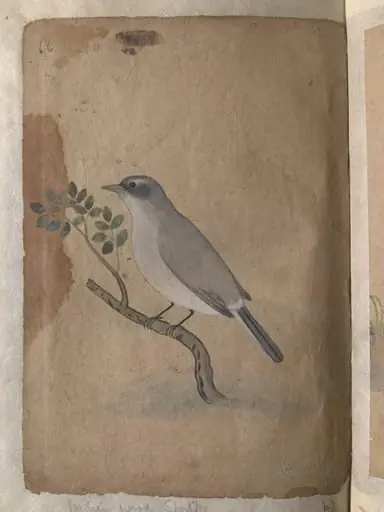
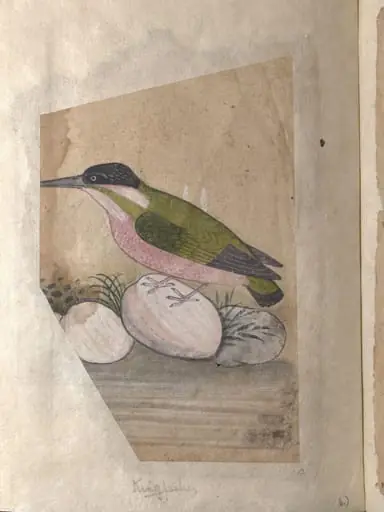
The birds are rendered in a straightforward style, with attention to their distinctive features, such as long necks and beaks. The inclusion of the word 'dhigal' in a local script suggests the artist's interest in identifying the species.
Technique & Style
The painting features flat, simple drawings with an emphasis on capturing the birds' characteristic plumage and postures. The use of watercolor allows for subtle coloration, such as the orange accent near the bird's eye.
History & Provenance
The painting was donated to the collection in 1929 by Robert Scott Greenshields, who had served in the Indian Civil Service in Bengal and Assam from 1879 to 1910.
Artist & collection

 Domestic Scene
 Giacomo and Cardinal Marco, investing Andrea, Abbot of San Zeno, with his Benefice
 The Nymph of Fontainebleau
 Portrait of a Woman
 Madonna and Child with Saints in the Enclosed Garden
 Venus and Minerva
 Family Group of Four on Sofa
 Wall painting from Room H of the Villa of P. Fannius Synistor at Boscoreale
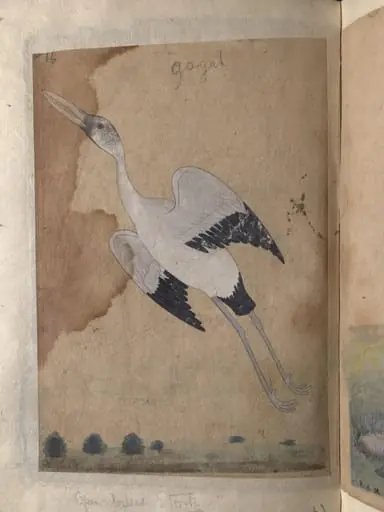 Depictions of a Spur-winged plover and Open-billed stork of Northern India,
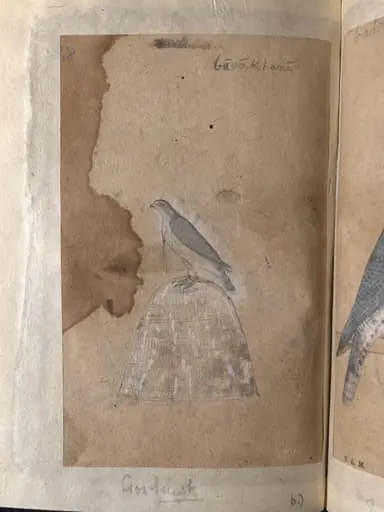 Depictions of a Bronze-winged dove and a Goshawk of Northern India
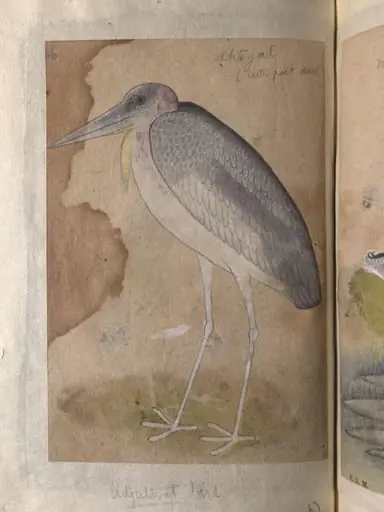 Depictions of Night heron (male) and Adjutant bird of Northern India
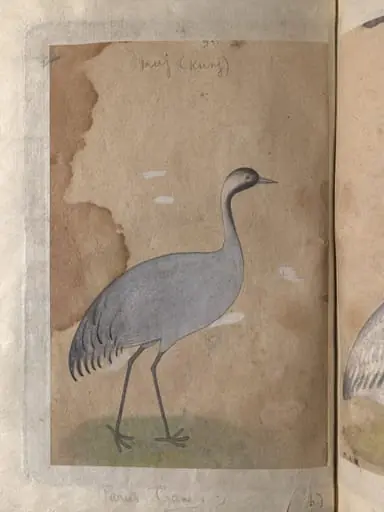 Depictions of a Sarus crane and Parus crane
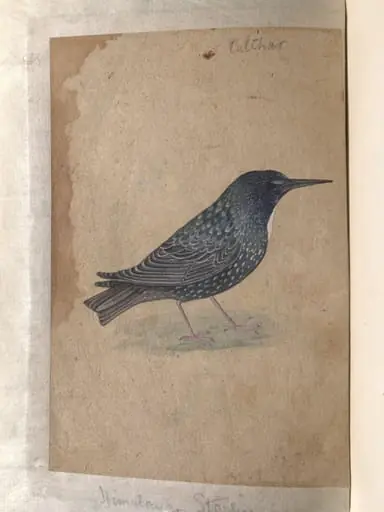 Depictions of white-cheeked bulbul and a Himalayan starling of Northern India
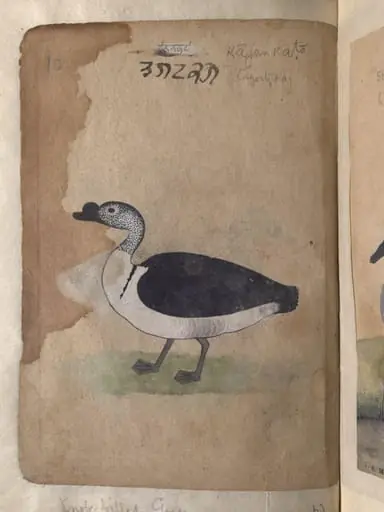 Depictions of a Grey lag goose and Knob-billed goose, of Northern India
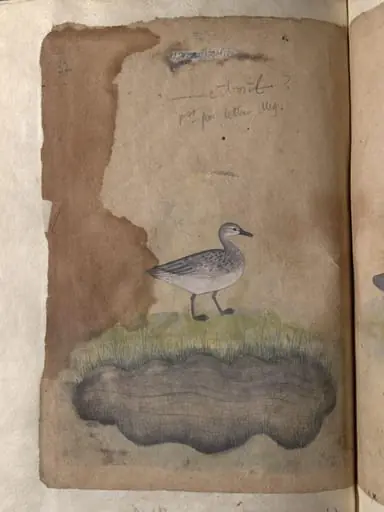 Depictions of an Indian darter and Duck (unidentified) of Northern India
 Depictions of a Domestic goose and Black ibis inocotis, of Northern India
 Depictions of a White wagtail and a Brahminy duck of Northern India
 Depictions of a Indian spotted dove and a Common Indian wood-shrike of Northern India
 Depictions of a Plumbeous redstart and a Kingfisher of Northern India
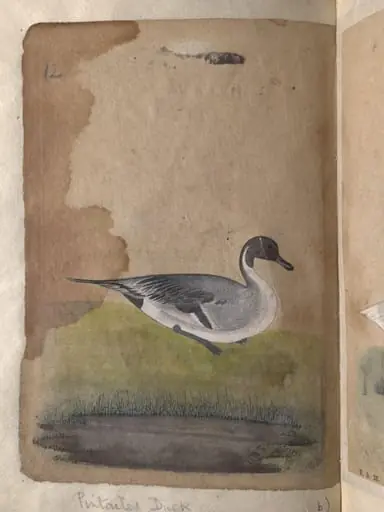 Depictions of a Gadwall duck and Pintailed duck of Northern India