Artwork
Depictions of an Indian darter and Duck (unidentified) of Northern India
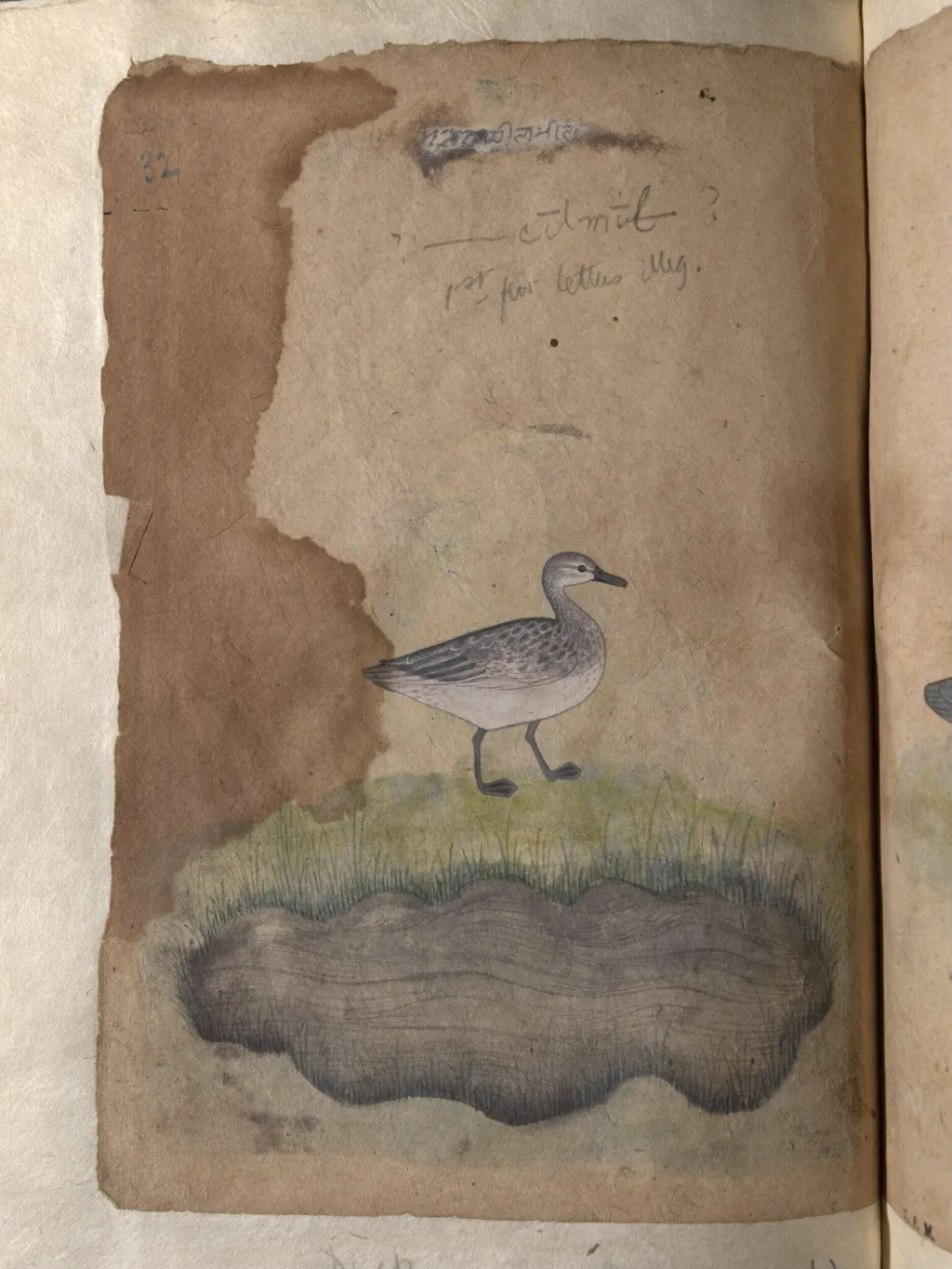
Depictions of an Indian darter and Duck (unidentified) of Northern India is a paint painting by the Romanticist artist Unknown. It dates from 1820 and is held in the collection of the Victoria and Albert Museum. Two watercolor sketches on stained paper, mounted in an album folio, depict avian species native to northern India.
About this work
Overview
The sheets show signs of age, including wear, tears, and faint inscriptions, suggesting they were handled and studied over time.
Two watercolor sketches on stained paper, mounted in an album folio, depict avian species native to northern India. Created around 1820 by an unnamed artist, the works were later donated to the Victoria and Albert Museum in 1929 by Robert Scott Greenshields, a former colonial administrator. The sheets show signs of age, including wear, tears, and faint inscriptions, suggesting they were handled and studied over time.
Subject & Meaning
The images portray an Indian darter and an unidentified duck, both observed in a wetland setting. The darter, with its elongated neck and speckled plumage, is rendered with attention to anatomical detail, while the duck is simplified, possibly due to the artist’s haste or limited reference. These studies likely served scientific or documentary purposes, reflecting colonial-era efforts to catalog regional wildlife.
Technique & Style
The artist employed loose, rapid brushwork to suggest water and foliage, using minimal strokes to imply movement and texture. Feathers are indicated by fine, directional lines rather than detailed rendering. The background is deliberately flat and unmodeled, focusing attention on the birds. The use of stained paper and faded ink suggests the sketches were made under field conditions, prioritizing speed over finish.
History & Provenance
The sketches entered the museum’s collection in 1929 through Robert Scott Greenshields, who served in the Indian Civil Service for over three decades. His role in Bengal and Assam placed him in regions where such naturalist studies were common among officials. The album’s existence implies a personal interest in local fauna, possibly linked to administrative duties or amateur natural history.
Context
These works emerged during a period when British officials in India frequently documented local flora and fauna, often for scientific or imperial records. Similar sketches were compiled in private albums, sometimes shared among colonial circles. Unlike formal zoological illustrations, these pieces reflect informal, on-site observation, blending utility with personal curiosity.
Legacy
The sketches remain part of a broader archive of colonial-era natural history drawings, valued for their directness and unpolished observation. Though unsigned and undated precisely, they contribute to understanding how wildlife was visually recorded outside institutional frameworks. Their preservation underscores the role of individual collectors in sustaining regional biological documentation.
Artist & collection

 Domestic Scene
 Giacomo and Cardinal Marco, investing Andrea, Abbot of San Zeno, with his Benefice
 The Nymph of Fontainebleau
 Portrait of a Woman
 Madonna and Child with Saints in the Enclosed Garden
 Venus and Minerva
 Family Group of Four on Sofa
 Wall painting from Room H of the Villa of P. Fannius Synistor at Boscoreale
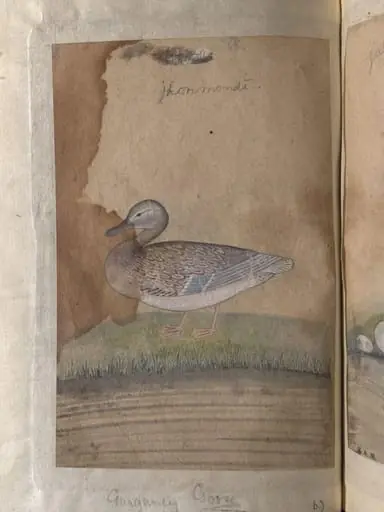 Depictions of a sandpiper and Garganey goose of Northern India
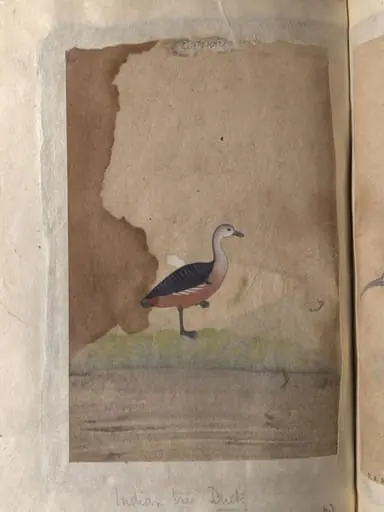 Depictions of a spot-bill duck and an Indian tree duck of Northern India
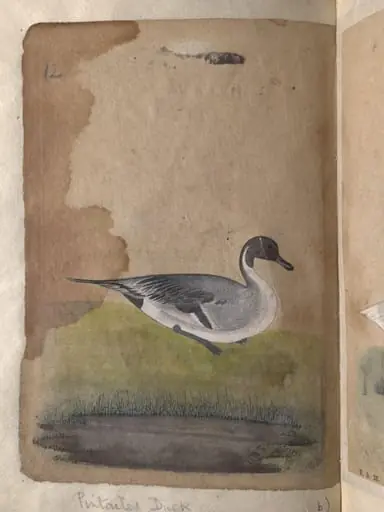 Depictions of a Gadwall duck and Pintailed duck of Northern India
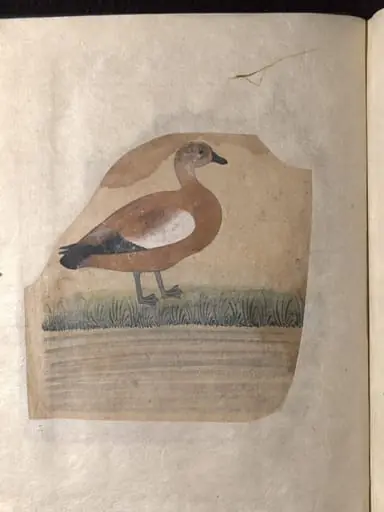 Depictions of a White wagtail and a Brahminy duck of Northern India
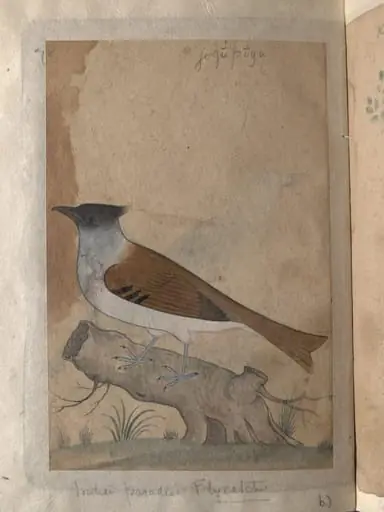 Depictions of Indian house crow and a Indian paradise flycatcher of Northern India
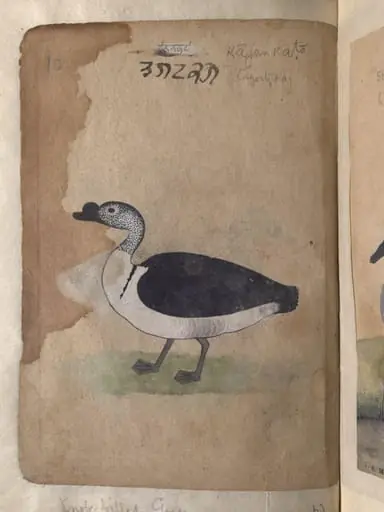 Depictions of a Grey lag goose and Knob-billed goose, of Northern India
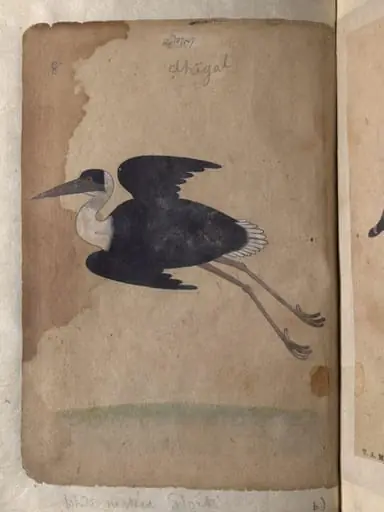 Depictions of a Demoiselle crane and a White-necked stork, of Northern India
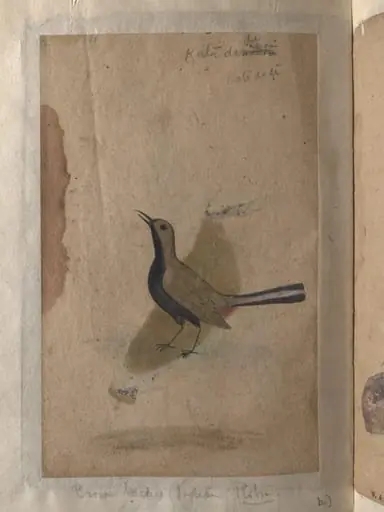 Depictions of a India pitta and Brown-backed Indian robin of Northern India
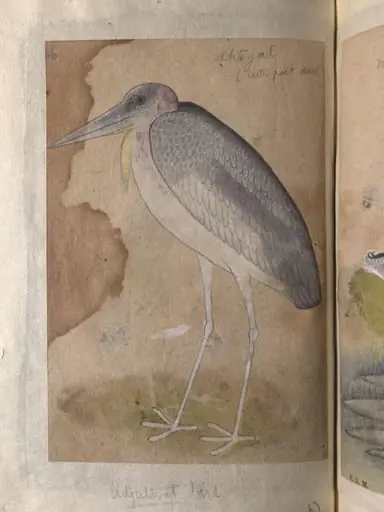 Depictions of Night heron (male) and Adjutant bird of Northern India
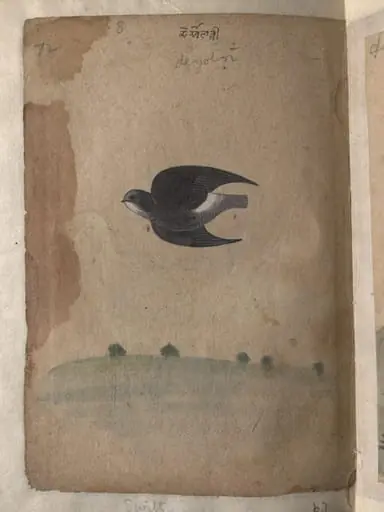 Depictions of a Green pigeon (?) and a Common house-swift of Northern India