Artwork
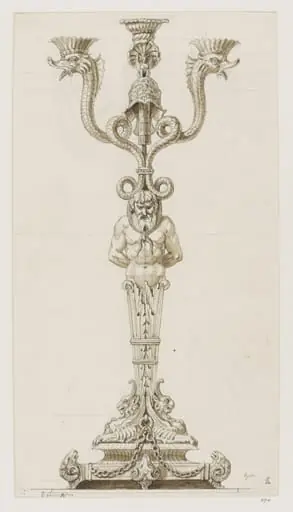
Design for a free-standing structure
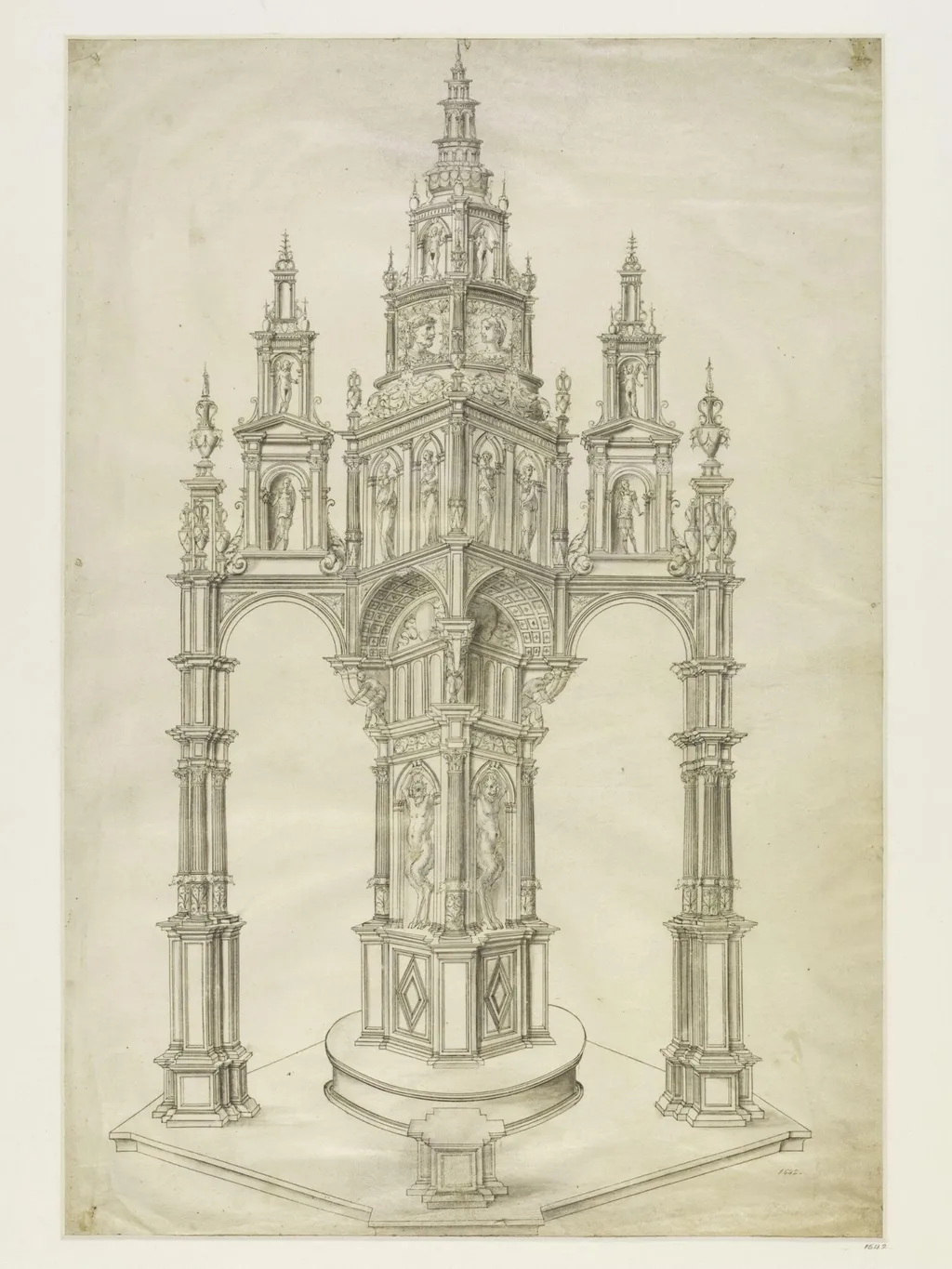
Design for a free-standing structure is a drawing by the Renaissance artist Unknown. It dates from 1540 and is held in the collection of the Victoria and Albert Museum.
About this work
Overview
The drawing depicts an elaborate, freestanding pavilion rendered in a highly ornamental style, characterized by flowing curves and intricate scrollwork reminiscent of a fanciful gazebo. Though traditionally attributed to the 16th‑century French architect Jacques Androuet du Cerceau, the work’s authorship remains uncertain, and the creator has not been identified.
Subject & Meaning
The composition incorporates a varied program of decorative figures, including satyrs, Roman soldiers, and a recognizable cupid, suggesting a synthesis of mythological and classical motifs that would have appealed to the Renaissance taste for allegorical ornamentation.
Technique & Style
Executed as a drawing, the piece employs fine line work to delineate the complex architectural forms and the surrounding figural elements. The ornamental vocabulary aligns with the Mannerist penchant for exuberant surface treatment and the influence of Italian treatises by Sebastiano Serlio and Andrea Palladio on French design.
History & Provenance
The drawing entered the collection of the Victoria and Albert Museum, where it is catalogued among works that illustrate the diffusion of Italian architectural theory in France during the sixteenth century. Its attribution to du Cerceau has been questioned by scholars, who note stylistic divergences from his documented projects.
Context
During the mid‑1500s, French architects frequently produced highly decorative designs for temporary structures such as triumphal arches, garden pavilions, and festival stages. This drawing exemplifies that genre, reflecting the period’s fascination with theatrical architecture and the integration of sculptural ornament.
Artist & collection

 Domestic Scene
 Giacomo and Cardinal Marco, investing Andrea, Abbot of San Zeno, with his Benefice
 The Nymph of Fontainebleau
 Portrait of a Woman
 Madonna and Child with Saints in the Enclosed Garden
 Venus and Minerva
 Family Group of Four on Sofa
 Wall painting from Room H of the Villa of P. Fannius Synistor at Boscoreale
 Magnificent Catafalque in Honor of John III, King of Poland
 Design for a Gothic Fountain
 A Gothic Monstrance
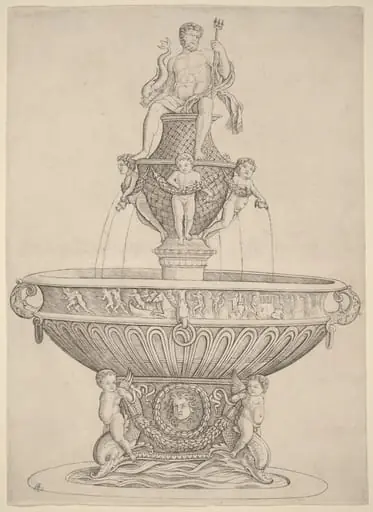 Fountain with Statue of Neptune
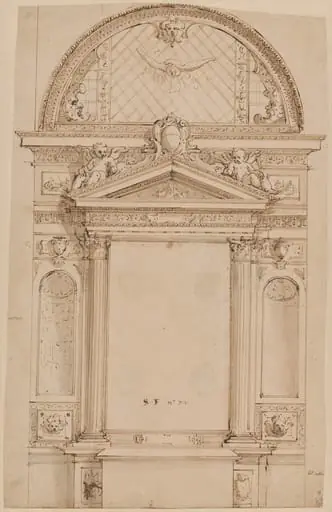 Design for an Altar
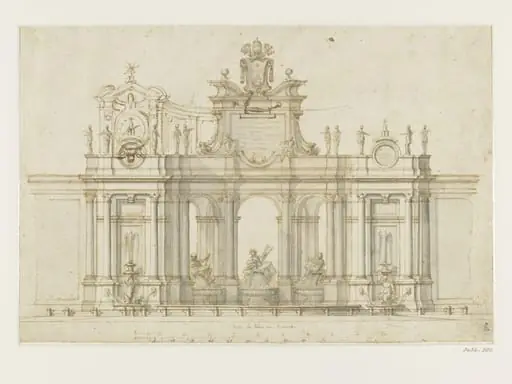 Drawing of a Roman fountain
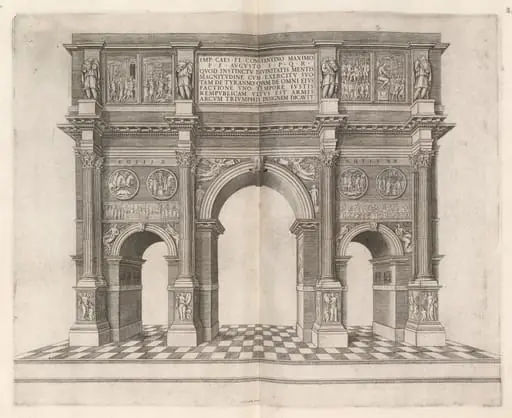 Arch of Constantine
 Design for a Ciborium
 Study for "The Seconda Macchina for the Chinea of 1754: An Allegory of Waterworks"
 Canterbury Cathedral Font Design
 Design for a Catafalque
 Anonymous design for fountain