Artwork
Magnificent Catafalque in Honor of John III, King of Poland
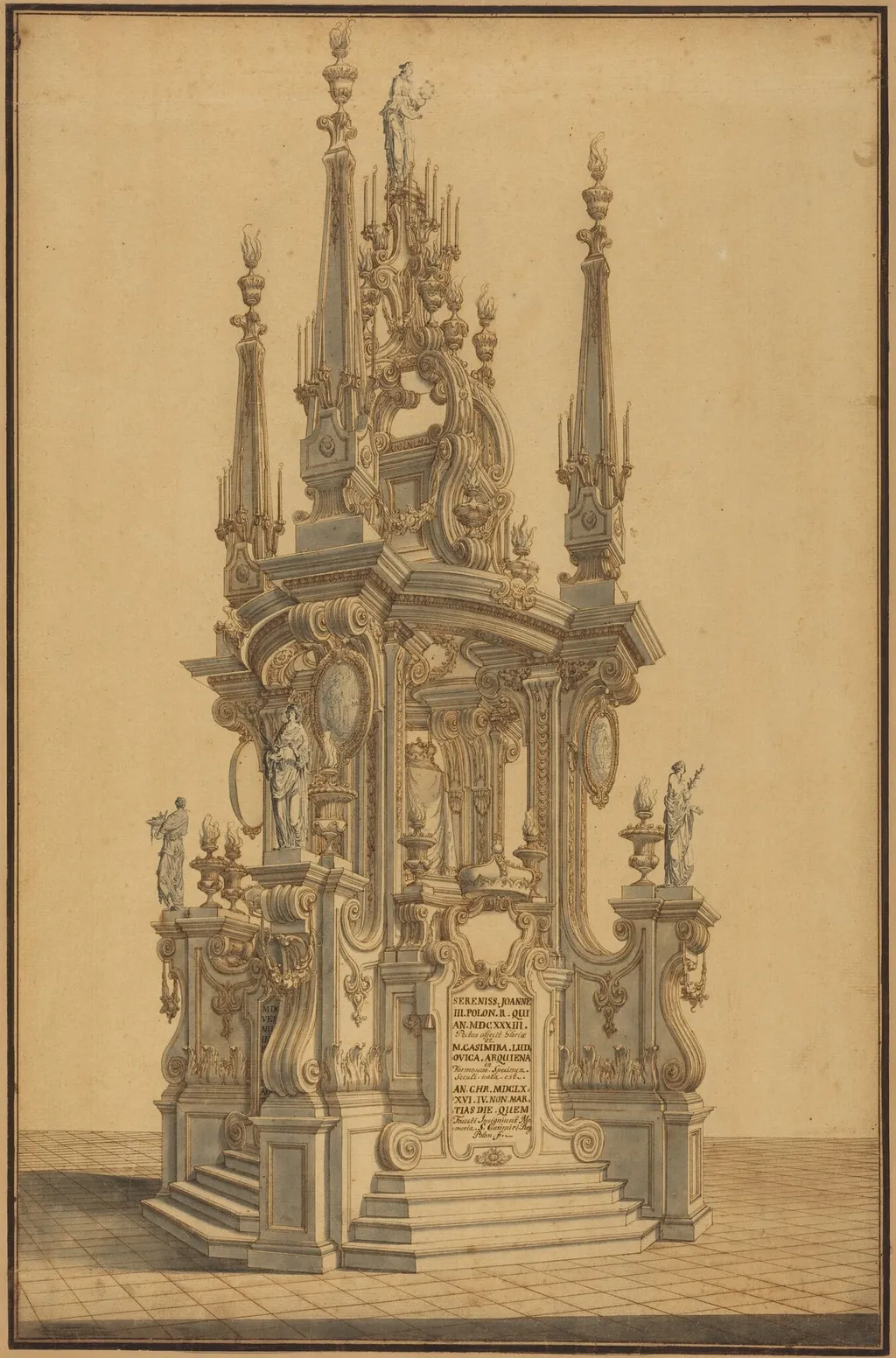
Magnificent Catafalque in Honor of John III, King of Poland is an ink drawing by the Baroque artist Alessandro Galli Bibiena. It dates from 1728 and is held in the collection of the National Gallery of Art.
About this work
Overview
Alessandro Galli Bibiena's 1728 drawing, Magnificent Catafalque in Honor of John III, King of Poland, depicts an elaborate funeral platform designed in the form of a grand architectural structure. Executed in pen and ink with gray wash over graphite on laid paper, the work showcases intricate details and monumental proportions.
Subject & Meaning
The subject is a catafalque, a ceremonial funeral structure, honoring John III, King of Poland. The design reflects the grandeur and solemnity of royal mourning, with symbolic elements such as torch-bearing statues and a crowned or ornate top, conveying reverence and dignity.
Technique & Style
Bibiena's drawing exemplifies Baroque theatricality through dense, intricate details and dramatic architectural forms. The use of pen, brown and gray inks, and gray wash creates a rich, high-contrast visual effect, while the overall composition embodies the era's emphasis on grandeur and emotional intensity.
History & Provenance
Created in 1728 by Alessandro Galli Bibiena, the drawing's provenance is not detailed here, though its inscription names King John III and the year of creation, suggesting it may have been part of funeral preparations or commemorations.
Context
This work is rooted in the Baroque tradition, characterized by dramatic and elaborate designs, often for temporary structures like catafalques. It would have been understood within the context of 18th-century European royal funerary customs and the artistic penchant for grand, symbolic displays of mourning.
Legacy
As a detailed design for a ephemeral structure, the drawing's legacy lies in its representation of Baroque funeral aesthetics and architectural temporary design. It provides insight into the planning and artistic vision behind royal mourning ceremonies of the time.
Artist & collection


 Rococo Altar with a Reliquary Tomb
 Canterbury Cathedral Font Design
 Design for a Gothic Fountain
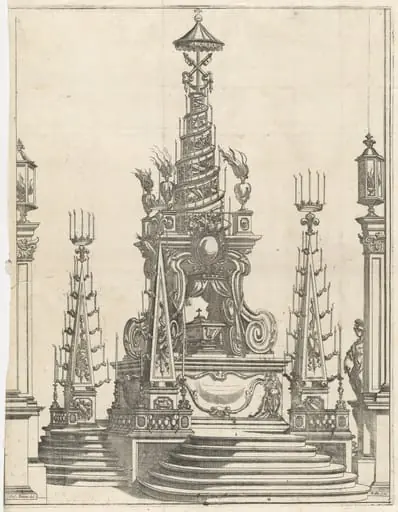 Catafalque for Ranuccio II in the Church of the Steccata
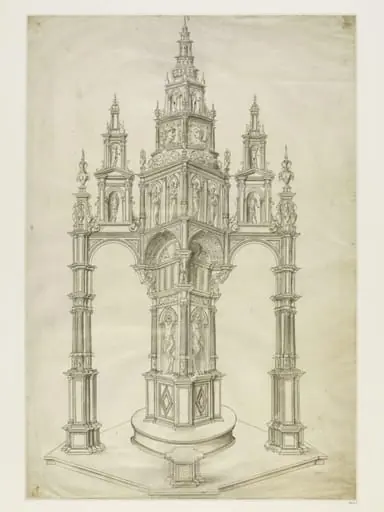 Design for a free-standing structure
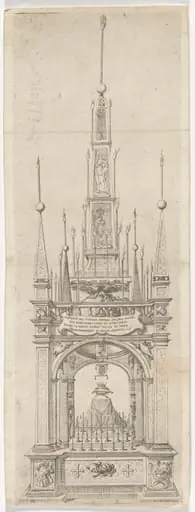 Catafalque for the Funeral of Giulio Thieni, Marquis of Scandiano
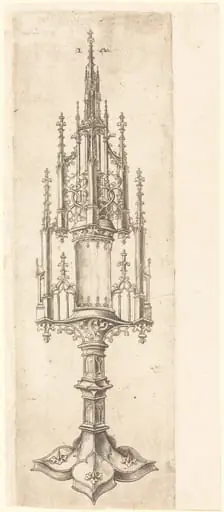 A Gothic Monstrance
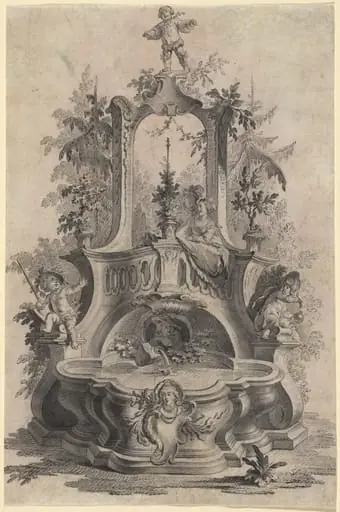 Rococo Fountain with Lovers and the Four Elements
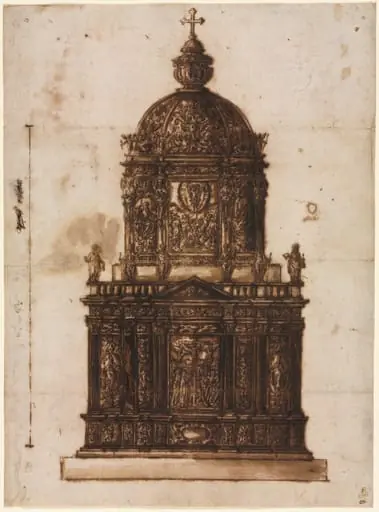 Design for a Ciborium
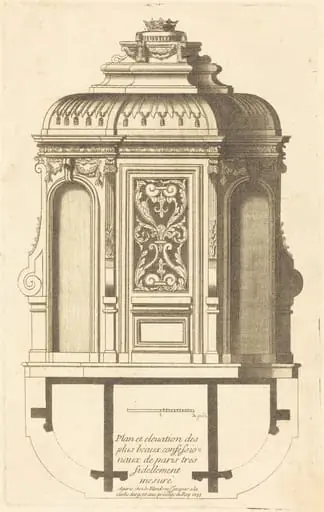 Plan et elevation des plus beaux confessionnaux de Paris, tres fidelemant mesure