Artwork
Design for a Ciborium
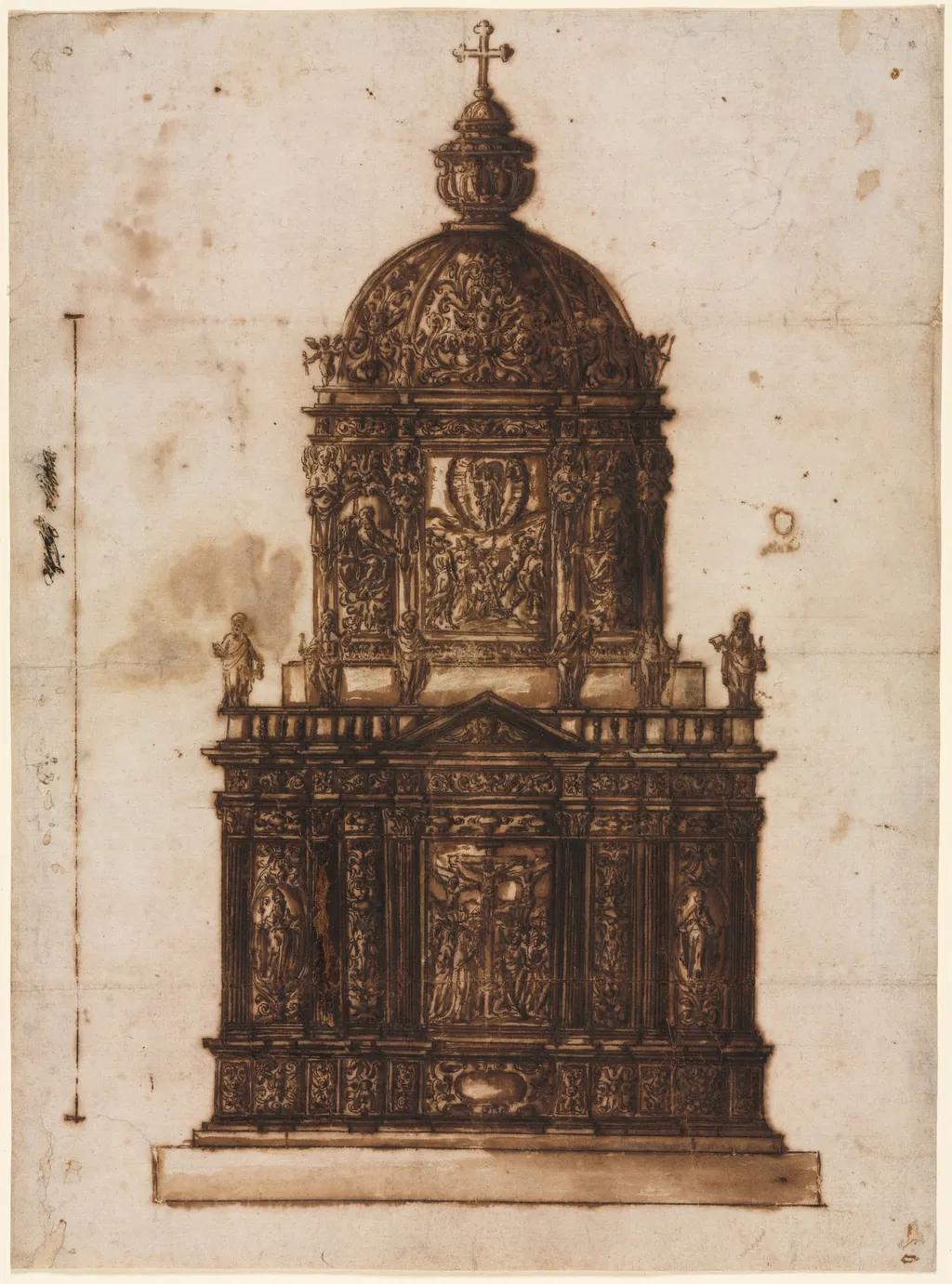
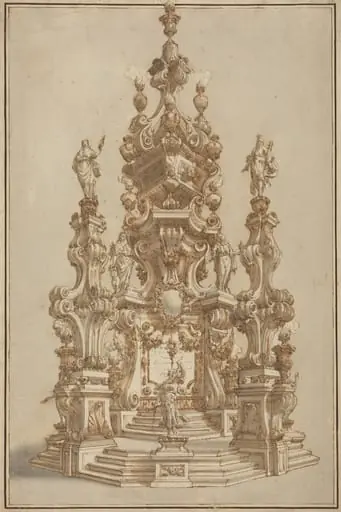
Design for a Ciborium is a drawing by the Baroque artist Fantoni Family Workshop. It dates from 1604 and is held in the collection of the Cleveland Museum of Art.
About this work
Overview
Executed in ink and possibly wash, the design presents a vertical, building-like structure crowned by a dome and topped with a cross.
This architectural drawing, produced around 1604 by the Fantoni Family Workshop, outlines a ciborium—a canopy intended to shelter a sacred altar object in a church. Executed in ink and possibly wash, the design presents a vertical, building-like structure crowned by a dome and topped with a cross. Its elaborate ornamentation reflects the period’s ecclesiastical aesthetic, emphasizing both structural grandeur and symbolic depth.
Subject & Meaning
The ciborium serves as a liturgical focal point, framing the altar where the Eucharist is celebrated. Its sculpted figures, leafy volutes, and narrative panels evoke divine presence and theological narrative. The inclusion of small statues and religious iconography reinforces its role as a sacred enclosure, aligning with Counter-Reformation ideals that emphasized visual devotion and the tangible presence of the holy.
Technique & Style
Rendered with precise linework and layered shading, the drawing demonstrates the workshop’s mastery of architectural perspective and ornamental detail. The swirling foliage, contorted faces, and dynamic figures reflect Mannerist influences transitioning into early Baroque expressiveness. The composition balances verticality with intricate surface decoration, typical of ecclesiastical designs from northern Italian workshops of the period.
History & Provenance
Created for a church commission in northern Italy, the drawing likely served as a working blueprint for a wooden or gilded structure. It entered the Cleveland Museum of Art’s collection through documented acquisitions in the 20th century, preserving a rare example of preparatory ecclesiastical design from a family of skilled artisans active in the early 1600s.
Context
During the early 17th century, Catholic churches across Italy commissioned elaborate ciboria to reinforce liturgical solemnity amid the Counter-Reformation. The Fantoni workshop, based in Lombardy, contributed to this trend by blending architectural rigor with sculptural richness. This drawing exemplifies how artisans translated theological imperatives into physical form through detailed preparatory studies.
Legacy
Though the final ciborium may no longer survive, this drawing endures as a testament to the collaborative process between designers and craftsmen in early modern religious art. It offers insight into the technical and symbolic priorities of ecclesiastical commissions, preserving the visual language of devotion in an era of profound spiritual and artistic transformation.
Artist & collection

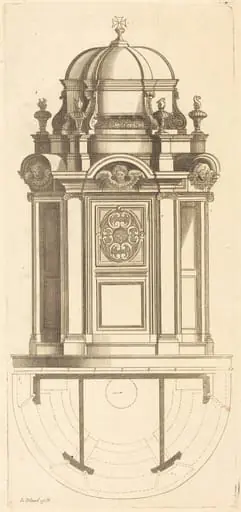 Plan et elevation des plus beaux confessionnaux de Paris, tres fidelemant mesure
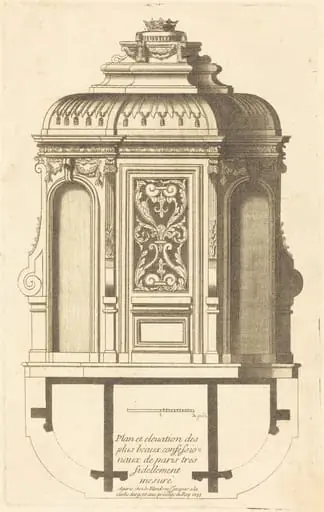 Plan et elevation des plus beaux confessionnaux de Paris, tres fidelemant mesure
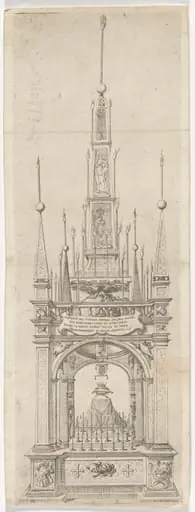 Catafalque for the Funeral of Giulio Thieni, Marquis of Scandiano
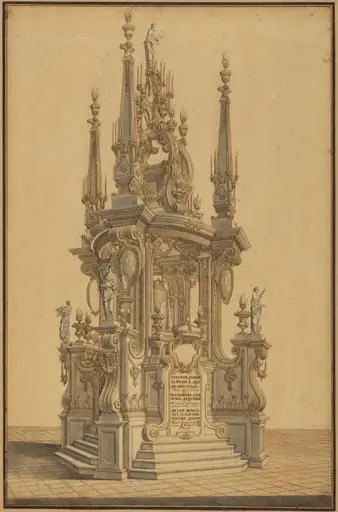 Magnificent Catafalque in Honor of John III, King of Poland
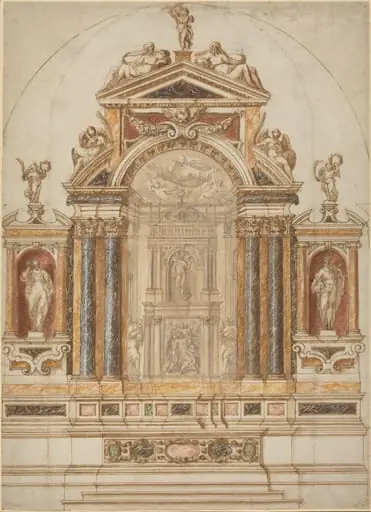 An Elaborate Altar of Colored Marble Ornamented with Sculptures
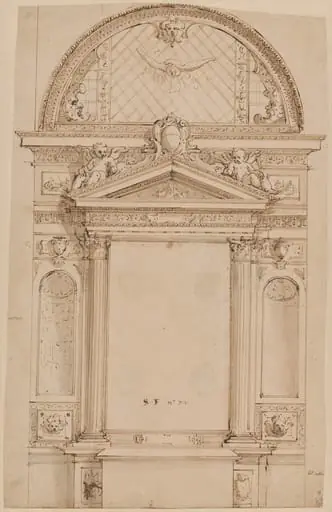 Design for an Altar
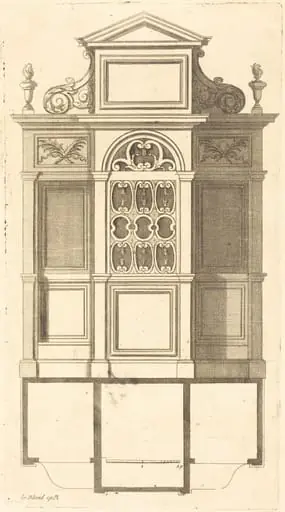 Plan et elevation des plus beaux confessionnaux de Paris, tres fidelemant mesure
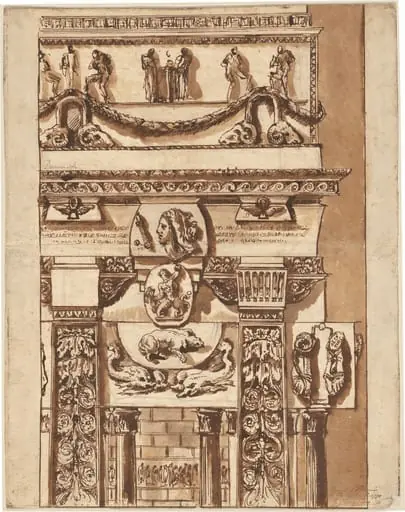 Fantasy of a Façade with Bizarre Ornaments
 Magnificent Catafalque for a Deceased Noble